
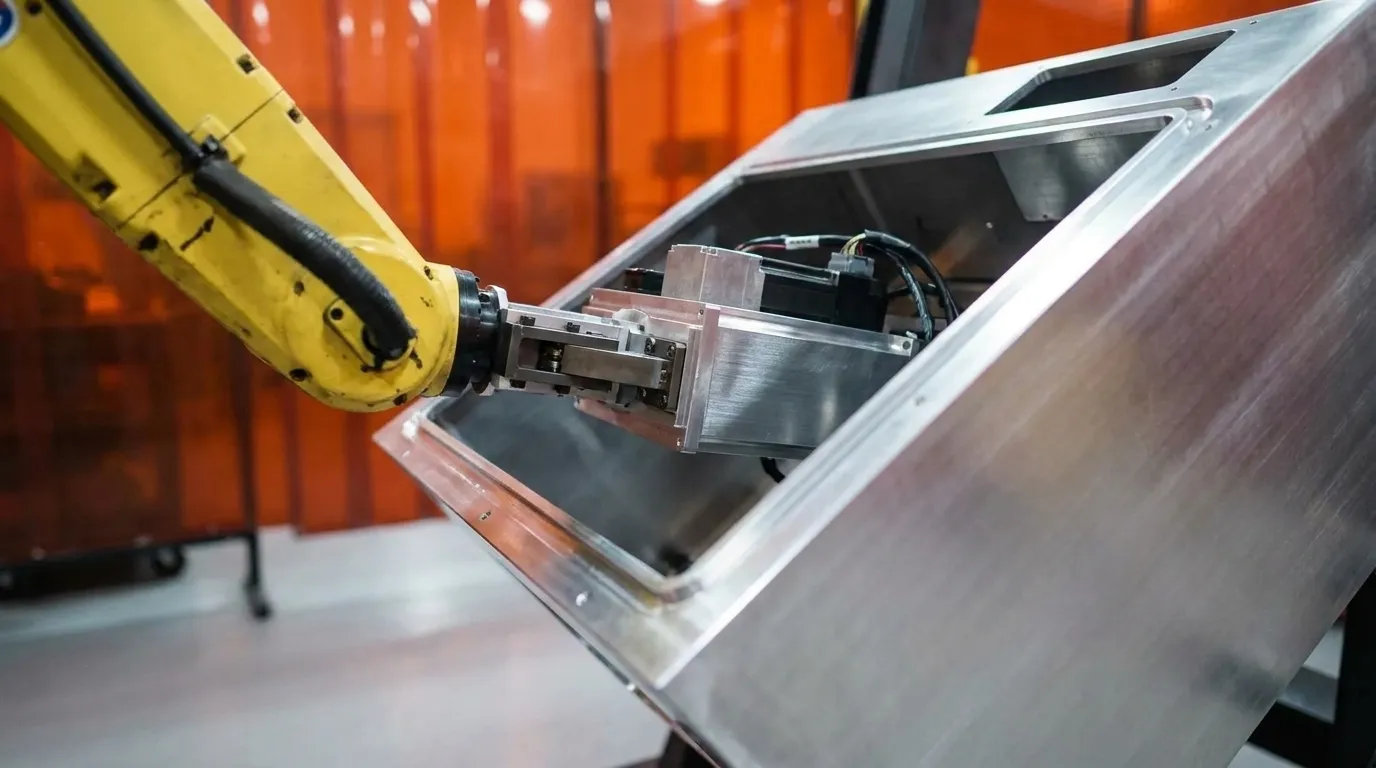
Key takeaways for electromechanical enclosure programs
- Electromechanical assembly combines PCBs, wiring, power supplies and thermal hardware inside enclosures to create functional, shippable systems.
- Choosing a U.S. partner for this work shapes program risk, launch speed and long-term supply stability in sectors such as data centers, medical devices and aerospace.
- Integrated partners that handle fabrication, finishing and assembly in one facility remove multi-vendor handoffs, quality disputes and coordination delays.
- Effective evaluation criteria include ISO 9001:2015 and AS9100D certifications, early DFM collaboration, ITAR registration, UL/CSA compliance and agile production cells that scale without high minimum volumes.
- Connect with FABCON to evaluate a vertically integrated U.S. partner with 220,000 square feet of manufacturing space and deep experience in regulated industries.
Defining electromechanical assembly
An electromechanical assembly combines mechanical structures with electrical systems to perform a defined function. Common configurations include PCBAs mounted in sheet-metal enclosures, motor controllers with integrated power supplies and cooling fans, and medical devices with embedded firmware and calibration routines. The assembly level, whether mechanical integration, electromechanical assembly or complete box build, determines how much electrical, thermal and test content the build includes.
Examples of electromechanical equipment in the field
Electromechanical equipment spans a broad range of industries and applications. Examples include:
- Data center rack-mounted power distribution units and edge compute enclosures
- Traffic management controllers and roadside signal cabinets
- Battery management system enclosures for energy storage deployments
- Patient monitoring systems and surgical instrument housings in medical devices
- Avionics chassis and mission-critical control panels in aerospace and defense
Mechanical assemblies versus electromechanical assemblies
A mechanical assembly involves only structural or moving parts, such as frames, brackets, panels and hardware, with no electrical function. An electromechanical assembly adds electrical systems to that structure, creating a unit that transmits power or signals and performs a functional task. This distinction matters for sourcing because most job shops handle mechanical fabrication only, while electromechanical assembly requires integrated wiring, testing and quality documentation that a pure fabrication shop cannot provide.
Executive summary and evaluation framework for U.S. partners
Directors of Engineering, Strategic Sourcing Managers and Program Leads at mid-to-large U.S. infrastructure firms face recurring supply chain problems. Fragmented vendor bases, design-to-manufacture disconnects, inconsistent quality across fabrication and finishing and inflexibility when programs scale or change all increase risk. Managing separate vendors for metal fabrication, coatings, wiring and assembly creates handoff delays, quality disputes and excess program exposure.
An integrated U.S. partner that owns fabrication, finishing and light electromechanical assembly in one facility addresses these pain points directly. One purchase order replaces multiple vendor relationships. One quality system governs the entire build. One engineering team reviews designs before production begins and supports changes as programs evolve.
Several certifications and standards define baseline requirements for regulated industries when evaluating a U.S. partner.
- ISO 9001:2015 governs quality management systems across industries and supports process control, traceability and continuous improvement across fabrication and assembly.
- AS9100D adds risk management, configuration control and first-article requirements beyond ISO 9001 for aerospace and defense.
- ITAR registration controls access to technical data and hardware and applies to manufacturing defense articles.
- UL and CSA compliance cover electrical safety and enclosure ratings for industrial, medical and energy applications. UL 50, UL 50E and UL 508A govern enclosure construction and industrial control panel safety in U.S. applications.
A practical decision framework for evaluating integrated U.S. partners focuses on several core questions that build a complete picture of capability and fit.
- Whether the partner holds ISO 9001:2015 and, where applicable, AS9100D certification
- Whether the partner performs DFM review before production begins
- Whether fabrication, finishing and light electromechanical assembly occur under one roof
- Whether the partner supports prototype-to-production scaling without high minimum volumes
- Whether the quality system provides full traceability from incoming material through final shipment
- Whether the partner is ITAR registered for defense or government programs
- Whether the partner has demonstrated experience in the relevant industry vertical
Industry landscape for electromechanical box-build services
Electromechanical assembly and box-build services continue to expand in the United States as reshoring and supply-chain consolidation accelerate. Reshoring-driven demand concentrates in aerospace tier-2 and tier-3 suppliers, medical device contract manufacturers, defense subcontractors and energy and data center infrastructure suppliers.
OEMs across industrial equipment, power distribution, transportation and technology sectors face pressure from labor inflation, tariff uncertainty, freight volatility and compliance requirements. These forces drive supplier consolidation strategies that integrate fabrication, finishing and assembly under one accountable partner.
The current market often presents two inadequate options for mid-volume programs. Low-complexity job shops handle basic sheet metal but lack the engineering depth for DFM and cannot manage wiring or electromechanical integration. Large contract manufacturers offer scale but impose high minimum volumes, long onboarding cycles and rigid production structures that do not accommodate evolving bills of materials.
FABCON occupies the critical middle ground. Operating from 220,000 square feet of vertically integrated manufacturing space across two Southern California facilities, FABCON delivers the end-to-end capabilities of a large contract manufacturer with the responsiveness and agility that infrastructure and technology programs require. Industry verticals served include data centers, traffic safety and transportation, energy storage and power distribution, medical devices and aerospace and defense.
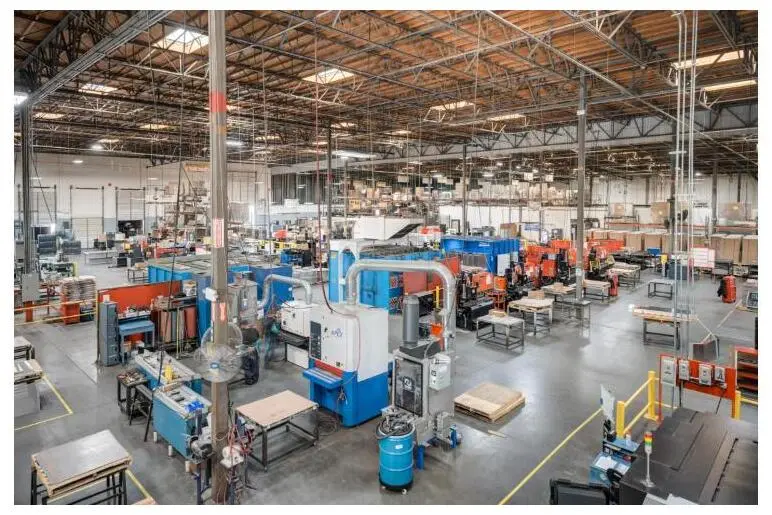
Explore FABCON’s vertically integrated capabilities for specific industry requirements.
Strategic sourcing trade-offs for enclosure assemblies
The core trade-off in sourcing electromechanical enclosure assemblies sits between multi-vendor flexibility and integrated accountability. Multi-vendor models distribute work across suppliers but multiply coordination overhead, revision control exposure and handoff failure points.
Using multiple vendors for sheet metal fabrication increases the number of handoffs, which raises risk around lead times, revision control, quality accountability and internal coordination effort. Quality issues become easier to contain and trace in single-source fabrication because one partner owns the job from process planning through inspection checkpoints.
Automotive and industrial buyers that adopt single-source box-build programs shorten project lead times by consolidating cables, enclosures and final test under one purchase order. The same principle applies to data center, energy storage and defense enclosure programs that require predictable schedules and controlled changes.
DFM collaboration stands out as the most consequential differentiator between integrated partners and transactional job shops. DFM review forms the earliest and most important phase in box-build assembly. Reviews cover enclosure fit and clearances, cable routing and lengths, thermal pathways and airflow, assembly tool access and serviceability of modules. A partner that engages DFM before production begins reduces rework, compresses development cycles and supports scaling from prototype to mid-volume without redesign.
Agile production cells address the scaling inflexibility that characterizes both job shops and large contract manufacturers. Flexible manufacturing cells adapt to changing volumes, mixed SKUs and evolving BOMs, which define many high-growth infrastructure programs.
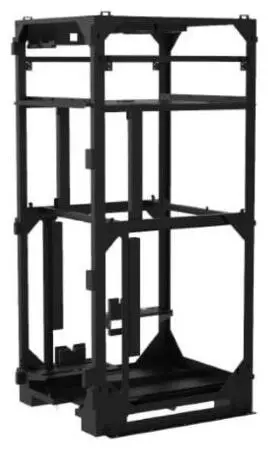
Discuss DFM collaboration and cell-based production options with FABCON’s engineering team.
Current best practices in box-build assembly
A controlled electromechanical box-build assembly program follows a structured sequence of steps and quality gates. Best-practice programs include sequential steps such as design and document review, incoming material inspection, mechanical subassembly, PCB assembly installation, cable and harness integration, grounding and thermal integration, firmware loading and configuration, electrical and functional testing, final inspection and serialization and packaging and shipment release.
Quality gates are embedded throughout the build rather than concentrated at end-of-line inspection. This distributed approach catches defects at the point of origin instead of after downstream operations add cost. Quality gates in box-build assembly include incoming inspection, PCBA acceptance, mechanical subassembly inspection, harness inspection, in-process power test, final functional test, cosmetic inspection and packaging audit.
Several standards govern electromechanical box-build assembly.
- IPC-A-630A provides class-coded acceptance criteria for electronic box assemblies covering enclosure fabrication through cable and harness integration, interconnection, marking, labeling and final testing.
- IPC-A-610 for electronic assembly acceptance, IPC/WHMA-A-620 for cable and wire harness workmanship and J-STD-001 for soldering define workmanship expectations.
- IEC 60529 for IP ratings and IEC 60068 for environmental testing guide enclosure protection and durability.
Mixed-volume production best practices include parallel manufacturing of PCBA, enclosure fabrication and wire harnesses to compress overall lead times. Professional EMS providers enable flexible scaling in box-build assembly from low-volume prototyping to production without requiring customers to maintain fixed in-house assembly lines or equipment.
Review FABCON’s end-to-end assembly process and quality controls for current programs.
Readiness and opportunity assessment for consolidation
Assessing internal readiness for supplier consolidation starts with mapping the current vendor count against the total scope of a finished enclosure assembly. Programs that span three or more vendors for fabrication, finishing, wiring and assembly present strong candidates for consolidation.
Several indicators signal that a program is ready for an integrated partner.
- Recurring handoff delays between fabrication and finishing or assembly vendors
- Quality escapes that cannot be attributed to a single vendor
- Revision control failures caused by document misalignment across suppliers
- Scaling requirements that exceed the capacity or flexibility of current job shops
- Program timelines that cannot absorb multi-vendor coordination overhead
FABCON’s vertically integrated capabilities map directly to these pain points across five primary industry verticals. Data center programs require modular, rack-mounted enclosures with precise cable management and thermal integration. Traffic safety programs demand durable, infrastructure-grade components built for compliance and field reliability. Energy storage deployments need weatherproof enclosures with electromechanical integration for commercial and public environments. Medical device programs require full traceability and precision assembly for carts, lab equipment and medical furniture. Aerospace and defense programs demand AS9100D and ITAR-compliant manufacturing with tight tolerances and integrated electromechanical assembly.
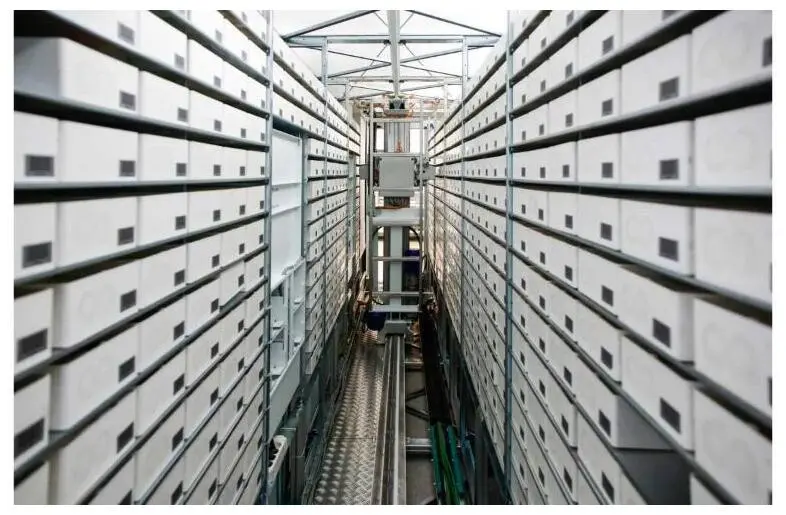
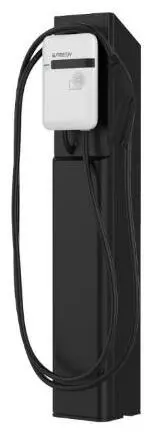
Supplier consolidation improves total landed cost beyond piece price. Consolidation reduces inter-facility transportation, double handling, excess work-in-progress inventory, cumulative lead times, quality variation and administrative expenses such as purchase orders and invoice processing.
Map current programs to FABCON’s integrated capabilities and quantify consolidation benefits.
Common pitfalls in enclosure programs and how to avoid them
Three recurring pitfalls define failed electromechanical enclosure programs. Vendor handoff delays, inconsistent tolerances across fabrication and finishing and scaling inflexibility when volumes or configurations change all undermine performance.
Vendor handoff delays occur when fabrication, coating and assembly are managed by separate suppliers with independent schedules. Each handoff introduces transit time, incoming inspection and the risk of damage or documentation loss. Integrated U.S. ownership removes inter-vendor transit and aligns all process steps to a single production schedule.
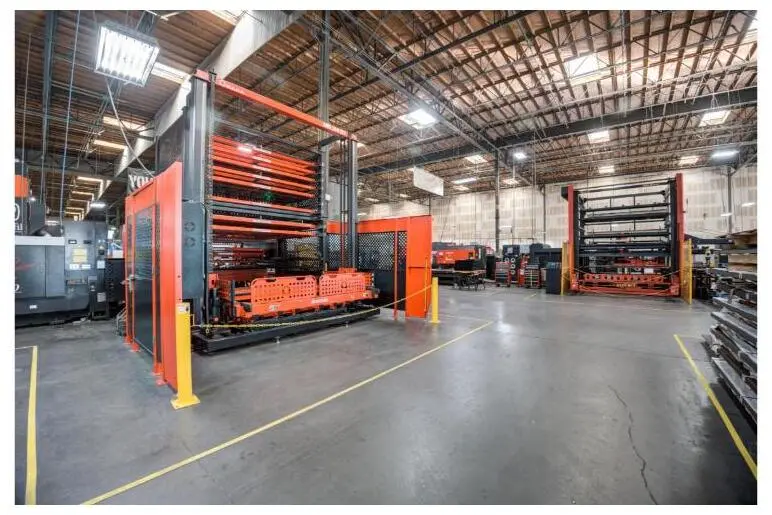
Inconsistent tolerances arise when fabrication and assembly vendors operate under separate quality systems with no shared accountability for the finished assembly. The single-source quality advantage described earlier becomes critical when vendors work under different standards. FABCON’s ISO 9001:2015 and AS9100D certified quality systems govern every stage of the build and support traceability from incoming material through final shipment.
Scaling inflexibility represents a structural weakness of both job shops and large contract manufacturers. Job shops lack the infrastructure to support mid-volume production. Large contract manufacturers impose minimum volumes and onboarding timelines that do not accommodate program evolution. High-mix low-volume manufacturing environments, common for customized electromechanical enclosures, require flexible workflows because BOMs change frequently and minimum order quantities can tie up excess inventory. FABCON’s agile production cells scale from prototype to mid-volume production without the rigidity of large contract manufacturers.
OEMs that shift from multi-vendor sourcing to a consolidated box-build partner typically reduce procurement overhead through fewer purchase orders, incoming inspections and supplier audits.
Work with FABCON to remove handoff risk and tolerance conflicts from enclosure programs.
FAQ
Difference between box-build assembly and electromechanical assembly
Electromechanical assembly refers to the integration of electrical and mechanical components, including PCBs, wiring, power supplies, sensors and enclosure hardware, into a functional unit. Box-build assembly represents a higher-level scope that combines electromechanical assembly with firmware loading, functional testing, serialization, labeling and packaging to produce a shippable finished product. The two terms are often used interchangeably, but box build implies a complete system delivered ready for deployment, while electromechanical assembly may describe a sub-level integration step within a larger program.
How FABCON’s integrated model reduces program risk
Multi-vendor sourcing distributes accountability across separate fabrication, finishing and assembly suppliers. When a quality issue or delay occurs, no single vendor owns the outcome, and root-cause analysis requires coordination across multiple parties. FABCON’s vertically integrated model places fabrication, finishing and light electromechanical assembly in one facility, under one quality system and one program team. This structure removes inter-vendor handoffs, aligns all process steps to a single schedule and supports rapid containment and resolution of quality escapes within one organization.
Required certifications for regulated electromechanical assembly
The baseline certification for any electromechanical assembly partner is ISO 9001:2015, which governs quality management systems, process control and traceability. Aerospace and defense programs require AS9100D certification and ITAR registration. Programs involving industrial control panels or enclosures for U.S. commercial and industrial facilities require compliance with UL standards including UL 50, UL 50E and UL 508A, as well as CSA standards where applicable. Medical device programs require ISO 13485:2016 and FDA registration. FABCON holds ISO 9001:2015 and AS9100D certifications and is ITAR registered, with full compliance with UL and CSA standards.
Impact of DFM collaboration on enclosure outcomes
Design-for-manufacturability collaboration, when conducted before production begins, identifies issues in enclosure fit and clearances, cable routing, thermal pathways and assembly tool access that would otherwise surface as rework during production. A partner that engages DFM early reduces the number of engineering change orders, shortens the time from design release to first article and supports scaling from prototype to mid-volume without structural changes. Partners that begin DFM review only after production starts absorb these costs through rework, schedule delays and quality escapes that could have been prevented upstream.
Conclusion and next steps for electromechanical sourcing
Selecting a U.S. partner for electromechanical assembly for enclosures requires evaluation of four core criteria. Vertical integration across fabrication, finishing and assembly, DFM collaboration capability before production begins, a certified quality system with full traceability and agile production cells that scale without the rigidity of large contract manufacturers all influence long-term program performance.
FABCON has operated as a vertically integrated precision metal fabrication and electromechanical assembly partner since 1977. With the integrated manufacturing capabilities described earlier, ISO 9001:2015 and AS9100D certifications, ITAR registration and UL and CSA compliance, FABCON serves mid-to-large enterprises across data centers, traffic safety, energy storage, medical devices and aerospace and defense.
Programs that currently span multiple vendors for fabrication, finishing and assembly present strong candidates for consolidation. The evaluation checklist in this guide offers a structured starting point for that assessment.
Engage FABCON to consolidate fabrication, finishing and assembly under one accountable U.S. partner.