
Key Takeaways for Data Center Cabinet Sourcing
- Precision metal cabinet manufacturing for data centers depends on in-house CNC fabrication, robotic welding and integrated finishing to maintain dimensional consistency and avoid costly rework.
- Vertical integration across fabrication, finishing and light electromechanical assembly reduces vendor handoffs, lead-time variability and total program cost while improving quality traceability.
- ISO 9001:2015, AS9100D and ITAR certifications, along with first-article inspection reports and material certifications, support compliance and uptime for mission-critical data center infrastructure.
- Agile production cells that handle mid-program BOM changes, volume ramps and new SKUs without large minimums or lengthy re-onboarding provide the scalability hyperscale and edge programs demand.
- Data center programs that need a single U.S. partner across all five evaluation dimensions can contact Fabcon to discuss custom server rack and enclosure requirements.
Technical Capabilities for Precision Data Center Cabinets
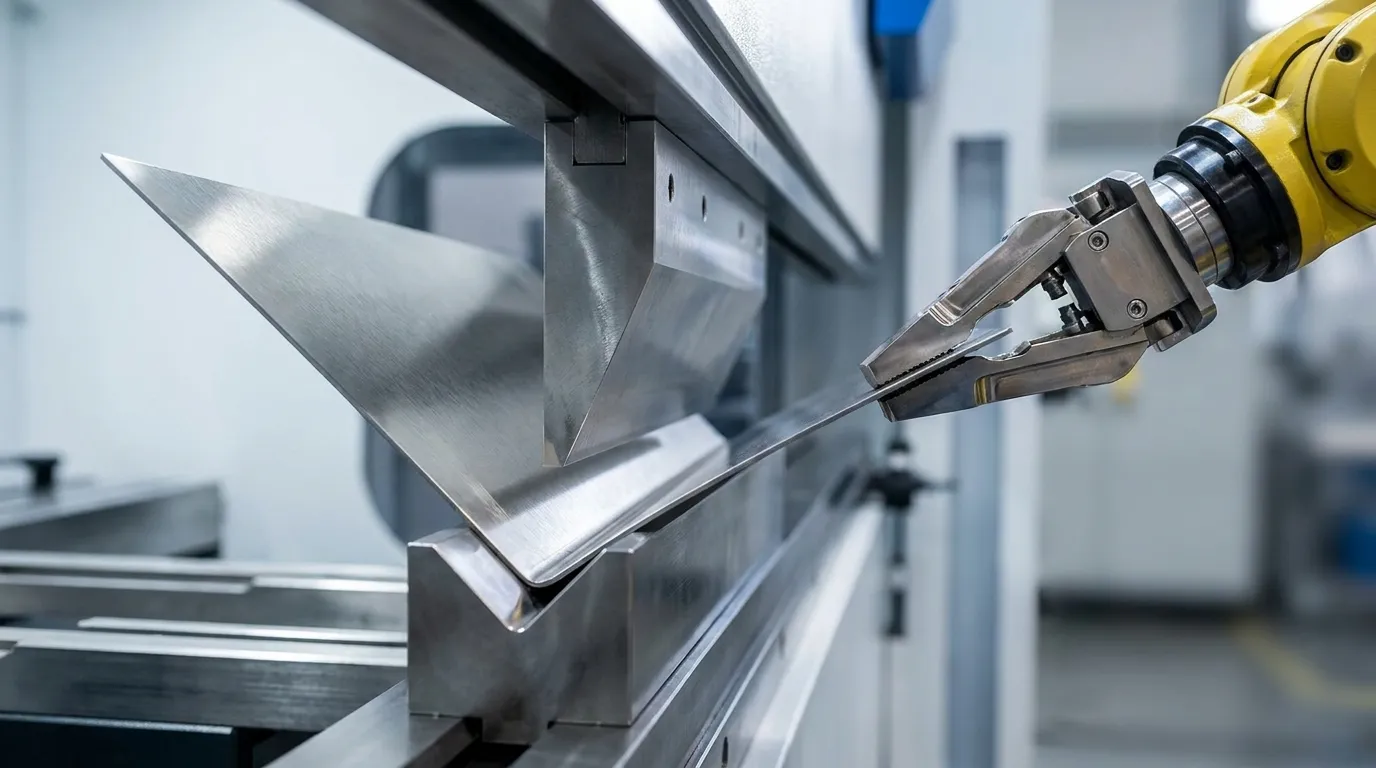
In-house CNC fabrication, robotic welding and integrated finishing form the core of a capable precision metal cabinet manufacturer. When these processes share a facility and a quality system, dimensional consistency carries through every stage of the build. When separate vendors handle these steps, tolerance stack-up and communication gaps introduce variability that is difficult to trace and expensive to correct.
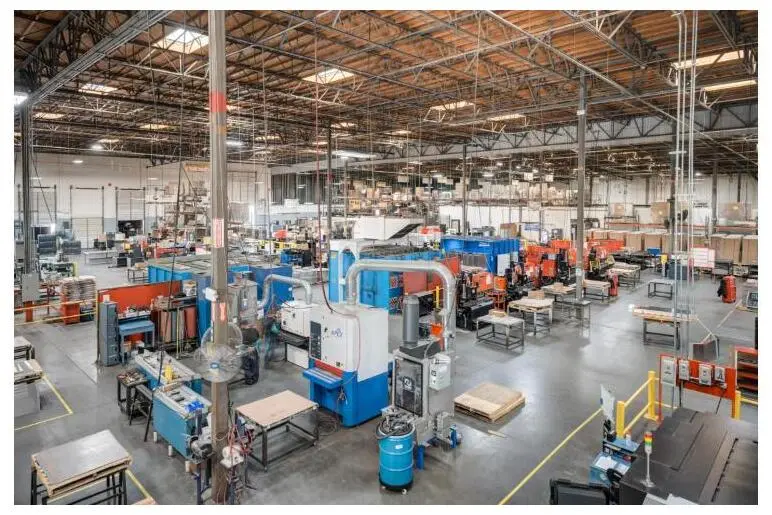
The design-to-manufacture disconnect often creates the greatest program risk at the engineering stage. A manufacturer whose quoting and engineering teams review drawings before production begins can flag manufacturability issues early. That review aligns tolerances to what the production floor can hold and improves bend sequences and hardware insertion points. This collaboration compresses development cycles and reduces the rework that inflates total program cost.
To support this level of control, buyers should confirm that a prospective manufacturer controls laser cutting, forming, welding and finishing internally. Subcontracting even one process introduces a scheduling dependency outside the manufacturer’s control and a quality handoff that complicates traceability.
Integration Scope Across Fabrication, Finishing and Assembly
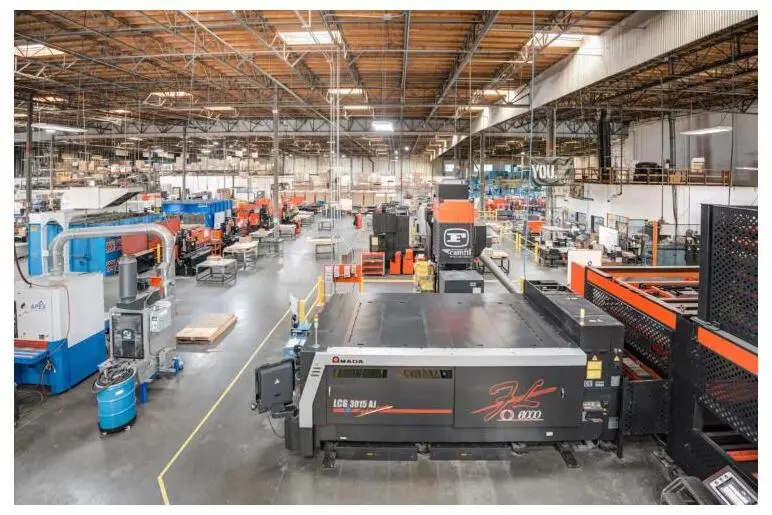
Beyond technical capabilities, integration scope determines how many production steps a single partner owns and how many vendor handoffs a buyer must manage. For data center enclosures and rack systems, relevant steps include metal fabrication, surface finishing such as powder coating or wet paint, hardware insertion, mechanical assembly and light electromechanical assembly including wiring and component integration.
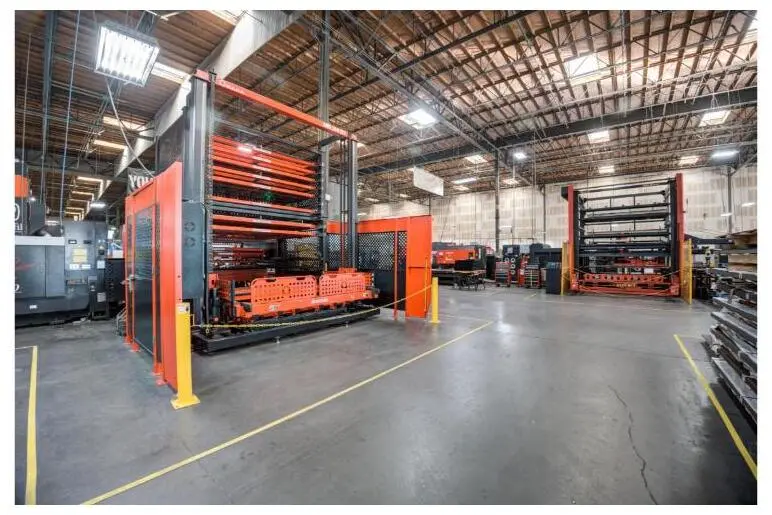
Supplier consolidation improves production quality for complex, custom-engineered components because fewer suppliers can better understand and adhere to critical quality requirements. It also reduces the administrative overhead of managing multiple purchase orders, contracts and delivery schedules for a single finished product. This administrative burden explains why a fragmented vendor base is the most common operational complaint among supply chain leaders sourcing custom data center cabinets.
Each handoff between a fabricator, a finisher and an assembler adds transit time, creates a potential quality dispute and removes visibility from the program. Outsourcing multiple fabrication steps to separate suppliers increases both lead times and total cost of ownership through added handoffs, quality inconsistencies and multiple layers of markup.
When evaluating integration scope, buyers should confirm that the manufacturer can deliver a finished, assembly-ready enclosure under a single purchase order. The evaluation should also clarify whether finishing and light electromechanical assembly occur in-house or through subcontractors.
Quality and Compliance for Mission-Critical Infrastructure
Data center infrastructure operates in environments where a single nonconforming component can affect uptime across thousands of connected systems. Quality management must be audited, documented and traceable across every stage of the build.
The baseline certifications to verify are ISO 9001:2015 for general quality management systems and AS9100D for the more rigorous quality requirements common in mission-critical programs. AS9100 and ISO 9001 certification provides audited quality systems and repeatability for precision sheet metal fabrication of data center server racks, enclosures and infrastructure hardware. ITAR registration applies to programs that intersect with defense or government infrastructure.
Beyond certification, buyers should request first-article inspection reports, material certifications, weld procedure documentation and finish verification records. ISO 9001:2015-certified manufacturers provide data-center contractors with first-article inspection reports, material certifications, mill test reports, weld procedure documentation and finish thickness verification as standard deliverables. These documents support traceability and simplify audits.
Electromechanical assemblies and rack enclosures may also require compliance with EMC standards. Data center rack enclosures, chassis and structural hardware commonly require compliance with NEBS standards including GR-1089-CORE for electromagnetic compatibility and GR-63-CORE for physical protection, along with EMC standards such as the IEC 61000 series, CISPR standards and FCC Part 15. Buyers should confirm that the manufacturer’s quality system supports documentation for these requirements.
Scalability and Flexibility for Evolving Data Center Programs
The data center infrastructure market changes quickly. AI workload growth, edge deployment expansion and evolving cooling architectures often shift rack and enclosure volumes, configurations or bills of material between design phases. A manufacturer’s production model must handle that variability without forcing a renegotiation of minimums or a lengthy re-onboarding process.
Large global contract manufacturers provide scale but impose rigid structures. High minimum order quantities, long onboarding timelines and fixed production lines make them poorly suited to programs where SKUs evolve or volumes ramp gradually. High-volume contract manufacturers typically provide limited engineering collaboration and design-for-manufacturability support, which results in slow communication and stalled development for mid-volume programs that require ongoing design iterations.
Low-complexity job shops present the opposite problem. Prototype-focused job shops often produce inconsistent quality and fluctuating lead times on mid-volume work because they lack the systems, tooling and repeatable workflows needed for stable repeat production.
Agile production cells that can be reconfigured for changing volumes and mixed SKUs provide a practical middle path. Buyers should ask prospective manufacturers how they handle mid-program BOM changes, volume ramps and new SKU introductions without requiring a full re-quote or production line reset.
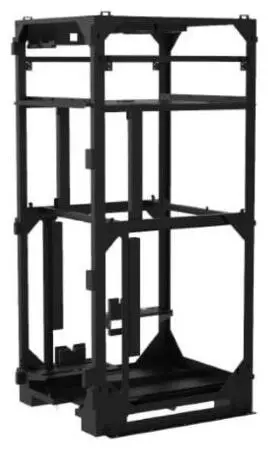
Discuss how Fabcon’s agile production cells handle mid-program changes and volume ramps.
Supply Chain and Logistics for Data Center Enclosures
A single U.S. point of accountability simplifies program management and reduces exposure to geopolitical and logistics risks that affect international supply chains. Domestic supplier relationships reduce OEM exposure to geopolitical and geoeconomic disruptions because a trusted local supplier can increase production to offset an international supplier’s delay.
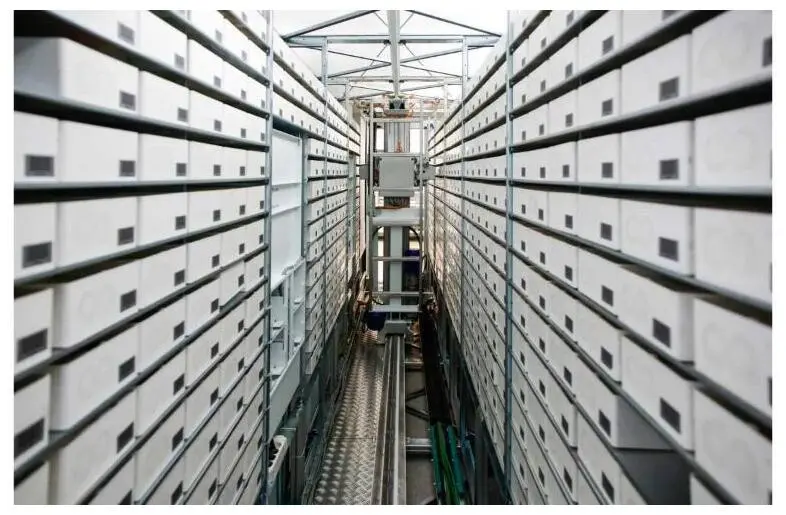
Just-in-time delivery capability supports data center programs where staging space is limited and installation schedules are fixed. A manufacturer that controls fabrication, finishing and assembly internally can align production scheduling to delivery windows without depending on third-party finishing or assembly shops to hit their own lead times.
Program visibility carries equal weight. A manufacturer with integrated operations can provide real-time status across fabrication, finishing and assembly stages rather than requiring the buyer to chase updates across multiple vendors. Buyers should confirm that the manufacturer offers a defined point of contact for program management and can provide delivery documentation that supports receiving and installation scheduling.
Common Objections Procurement Teams Raise
Three objections surface consistently when procurement teams evaluate a switch to a more integrated precision metal cabinet manufacturer.
Cost versus total value. Integrated manufacturers with engineering support, in-house finishing and assembly rarely position as the lowest-cost option on a per-part basis. The relevant comparison is total program cost, which includes rework from poor DFM, delays from vendor handoffs, quality disputes between fabricators and finishers and the internal administrative cost of managing multiple purchase orders. A single accountable partner reduces all of those costs even when the unit price is higher than a build-to-print-only shop.
- Request a total cost of ownership analysis that includes rework rates, lead time variability and vendor management overhead, not just unit price. This analysis provides the baseline for comparison.
- Within that analysis, ask the manufacturer to document how DFM collaboration has reduced rework on comparable programs, which demonstrates the value of engineering support.
- Finally, compare the number of purchase orders and vendor contacts required under the current model versus a consolidated partner to quantify administrative savings.
Ability to scale without large-CM minimums. Mid-volume programs with evolving BOMs rarely fit the production model of large global contract manufacturers. Agile production cells designed for high-mix, mid-volume work allow a manufacturer to support prototype quantities, ramp to production and absorb SKU changes without the overhead rigidity of a top-tier CM. The key is documented experience managing programs from prototype through sustained production.
- Start by asking for references from programs that started at prototype quantities and scaled to production under the same partner, which demonstrates proven scalability.
- Then confirm how the manufacturer handles mid-program BOM revisions and volume changes operationally, moving from stated capabilities to actual processes.
- Finally, verify that production cell configuration can accommodate new SKUs without a full line reset, so operational flexibility matches program needs.
Concerns about switching from an existing metal fabrication supplier. Most build-to-print metal fabrication shops stop at sheet metal and do not offer in-house powder coating, wiring or light electromechanical assembly. Switching to an integrated partner reduces vendor count, eliminates the coordination required to move parts between a fabricator, a finisher and an assembler and places quality accountability under a single quality system. Transition risk stays manageable when the new partner supports a structured onboarding process with DFM review and first-article inspection before full production begins.
- Request a transition plan that includes DFM review, first-article inspection and a parallel run period if volume allows.
- Confirm that the manufacturer’s quality system covers finishing and assembly, not just fabrication.
- Map the current vendor count against the services the integrated partner covers to quantify consolidation benefit.
Next Steps for Selecting a Cabinet Manufacturing Partner
An internal needs assessment gives procurement and engineering teams a clear starting point before issuing a supplier questionnaire. That assessment should document current vendor count, pain points by program phase and the compliance requirements that apply to the enclosures in scope. It then becomes the basis for a structured RFQ that maps each requirement to the five evaluation dimensions in this guide.
The questionnaire should ask prospective manufacturers to document in-house capabilities across fabrication, finishing and assembly. It should also request certification records for ISO 9001:2015, AS9100D and ITAR registration, describe how production cells accommodate volume changes and BOM revisions and explain DFM collaboration processes and first-article inspection deliverables. A follow-up consultation with the manufacturer’s engineering and program management teams should confirm that the responses match how the facility operates.
Fabcon is a U.S. precision metal fabrication and electromechanical assembly partner that satisfies all five evaluation dimensions from a single point of accountability. Operating across 220,000 square feet of vertically integrated manufacturing space in two Southern California facilities, Fabcon combines in-house CNC fabrication, certified welding, powder coating, wet paint, hardware insertion and light electromechanical assembly under one roof. Fabcon holds ISO 9001:2015 and AS9100D certifications and is ITAR registered, with integrated quality systems that provide full traceability from raw material through finished assembly. Agile production cells support programs from prototype through mid-volume production without the minimum order constraints or onboarding rigidity of large global contract manufacturers.
Fabcon’s engineering and quoting teams engage at the design stage to provide DFM collaboration that reduces rework and aligns designs to production capabilities before the first part is cut. For data center infrastructure programs that require custom server racks, enclosures and integrated assemblies with a single U.S. partner, Fabcon provides the engineering depth, integration scope and production agility that fragmented vendor models cannot match.
Start the DFM conversation with Fabcon’s engineering team.
Common Questions Procurement Teams Ask About Precision Metal Cabinet Manufacturers for Data Centers
What certifications should a precision metal cabinet manufacturer hold for data center programs?
The baseline certifications to verify are ISO 9001:2015 for quality management systems and AS9100D for mission-critical programs that require more rigorous process control and traceability. ITAR registration applies when programs intersect with defense or government infrastructure. Beyond those, buyers should request first-article inspection reports, material certifications, weld procedure documentation and finish verification records as standard deliverables. Electromechanical assemblies may also require compliance documentation for EMC standards such as the IEC 61000 series, CISPR standards and FCC Part 15. A manufacturer whose quality system spans fabrication, finishing and assembly under a single certification provides stronger traceability than one that certifies only the fabrication stage and subcontracts the rest.
How does vertical integration reduce supply chain risk for data center enclosure programs?
Vertical integration reduces supply chain risk by placing fabrication, finishing and assembly under a single quality system and a single point of accountability. Each handoff between separate vendors introduces transit time, a potential quality dispute and a gap in program visibility. When those steps occur in-house, the manufacturer controls scheduling across the entire production sequence and can align delivery to the buyer’s installation timeline without depending on third-party schedules. Domestic vertical integration also reduces exposure to geopolitical disruptions and international logistics variability. For data center programs where installation windows are fixed and staging space is limited, that delivery predictability has direct operational value.
What is the difference between a job shop and a vertically integrated precision metal cabinet manufacturer?
A job shop focuses on flexibility for one-off or small-batch custom parts. It typically uses a functional layout that groups equipment by machine type and quotes each order individually without standing agreements or reserved capacity. Job shops rarely offer in-house finishing, assembly or engineering collaboration, which means buyers must manage separate vendors for those steps. A vertically integrated precision metal cabinet manufacturer operates under ongoing program agreements, maintains in-house capabilities across fabrication, finishing and assembly and provides engineering support such as DFM review from the design stage. That integration produces more predictable lead times, consistent quality across production runs and lower total program cost by eliminating outsourcing markups and handoff delays. For mid-volume data center programs with evolving BOMs, the vertically integrated model provides the engineering depth and production stability that job shops cannot match.
How should procurement teams evaluate scalability when selecting a precision metal cabinet manufacturer?
Scalability evaluation should focus on how a manufacturer’s production model handles volume changes, new SKU introductions and BOM revisions mid-program. Large global contract manufacturers offer scale but impose high minimum order quantities, long onboarding timelines and fixed production lines that make them poorly suited to programs where configurations evolve. Low-complexity job shops lack the systems and repeatable workflows needed for stable repeat production at mid-volume. The central consideration is whether the manufacturer uses agile production cells that can be reconfigured for changing volumes and mixed SKUs without a full line reset or a renegotiation of minimums. Buyers should request references from programs that started at prototype quantities and scaled to sustained production under the same partner and confirm how the manufacturer handles mid-program changes operationally rather than in principle.
What does a DFM review process look like for custom data center enclosures?
A design-for-manufacturability review for custom data center enclosures involves the manufacturer’s engineering and quoting teams examining customer drawings, tolerances and material specifications before production begins. The review identifies features that are difficult or costly to produce as designed and proposes modifications that maintain functional requirements while improving manufacturability. It also aligns tolerances to what the production floor can hold across a full production run. For rack and enclosure programs, DFM review typically addresses bend sequences, hardware insertion points, ventilation patterns, finish masking requirements for electrical continuity and tolerance stack-up on tall assemblies. The output is a set of manufacturing routers and work instructions tailored to the production environment. Early DFM collaboration reduces rework, compresses development cycles and supports smooth scaling from prototype to production.