
Key Takeaways
- Fragmented aerospace supply chains create costly handoffs, traceability gaps and coordination failures that escalate as programs scale.
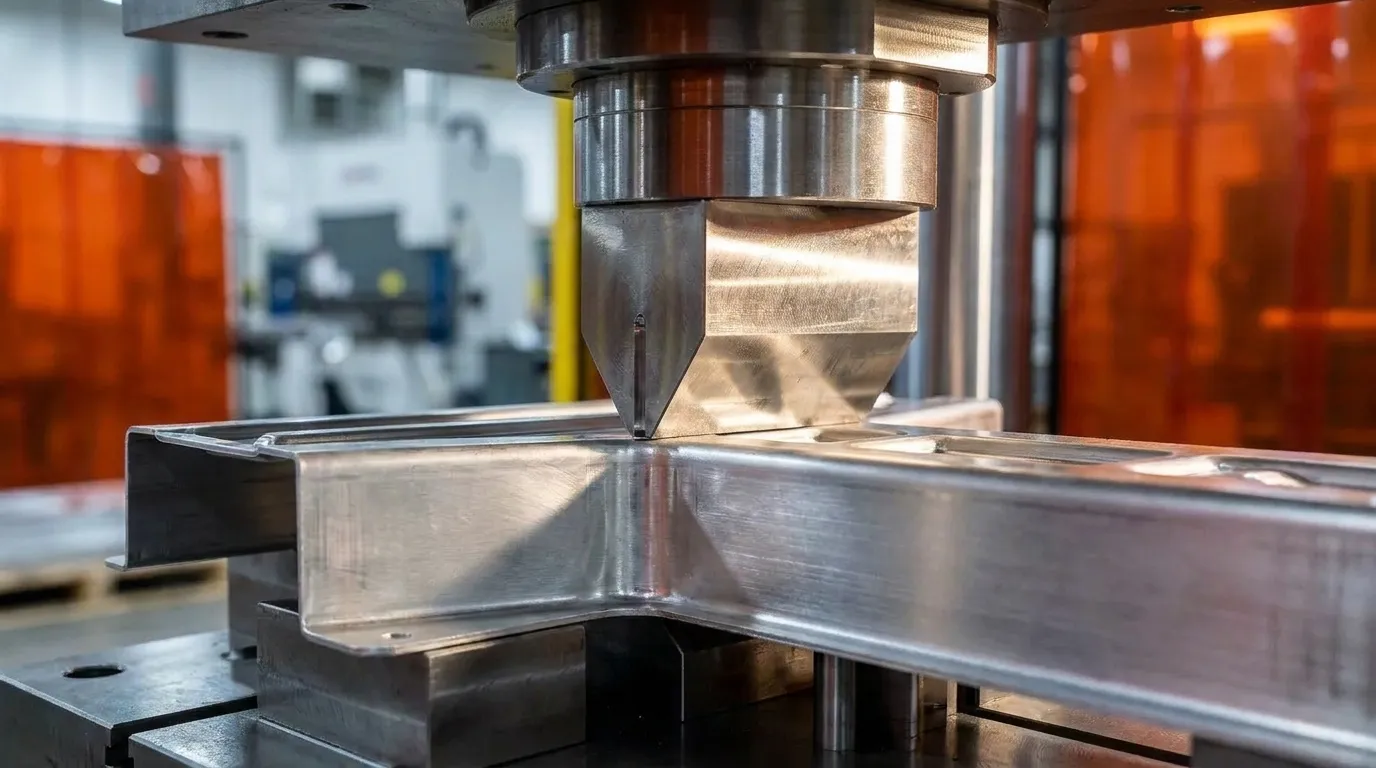
- Vertically integrated U.S. partners consolidate stamping, finishing and light electromechanical assembly under a single AS9100D and ITAR-registered quality system.
- Early DFM collaboration, fewer vendor handoffs and unified change control cut lead times, rework and compliance risk.
- Prototype-to-mid-volume flexibility without separate onboarding or minimum-order commitments supports evolving designs and mixed-SKU programs.
- Evaluate FABCON as a vertically integrated AS9100D and ITAR-registered U.S. fabrication partner for complex aerospace assemblies.
The Problem: Fragmented Sourcing for Complex U.S. Aerospace Stampings
The aerospace supply chain involves thousands of suppliers per program and an enormous number of parts per aircraft, which makes end-to-end visibility and coordination difficult at scale. A&D ramp readiness is primarily an end-to-end visibility, coordination, execution and resource allocation problem in which handoffs across multiple suppliers create coordination failures when visibility into part status, timing and capacity is poor.
Fragmentation produces excess inventory, missed ramp-ups and reactive firefighting instead of proactive planning. OEMs and integrators cannot see delays forming at Tier 2 and Tier 3 suppliers before those delays become production stoppages. The six recurring pain points that follow define where traditional sourcing structures break down.
Pain Point 1: Early DFM Alignment for Stamped Aerospace Assemblies
Design-to-manufacturing disconnects drive cost. Most manufacturing costs are determined by design decisions, so moving cost analysis upstream during concept and detail design allows changes at far lower cost than after tooling commitments. The same design change after production launch can cost many times more than one made during concept selection.
In metal stamping, features such as tight hole spacing, holes close to bends and sharp internal corners determine whether a progressive die, compound tool or single-station tool is selected. Those decisions must be made before tooling is quoted. Suppliers that engage engineering teams early and apply simultaneous engineering practices from the concept stage identify difficult-to-manufacture shapes and propose die simplifications that reduce prototype iterations.
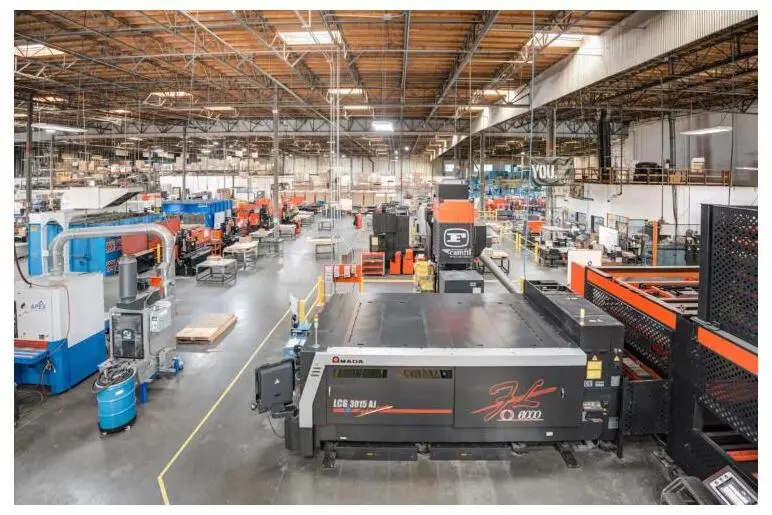
To confirm that a prospective partner can deliver this level of early engagement, buyers evaluating an AS9100 aerospace stamping partner for DFM capability should verify:
- In-house engineering and quoting teams that review drawings before production begins
- Documented DFM review process tied to drawing revision control
- Capability to model forming, burr direction and springback risks at the RFQ stage
- Evidence of prototype-to-production alignment without design re-lock
Pain Point 2: Cutting Vendor Handoffs Across Stamping, Finishing and Assembly
Each handoff between a stamper, a finisher and an assembler introduces scheduling risk, quality finger-pointing and administrative overhead. A multi-site vertically integrated manufacturing model removes handoffs and external lead times that slow response to component shortages or single-source risk. Direct engineering access between customer teams and in-house design, process and tooling engineers cuts response time and miscommunication when teams address supply chain issues.
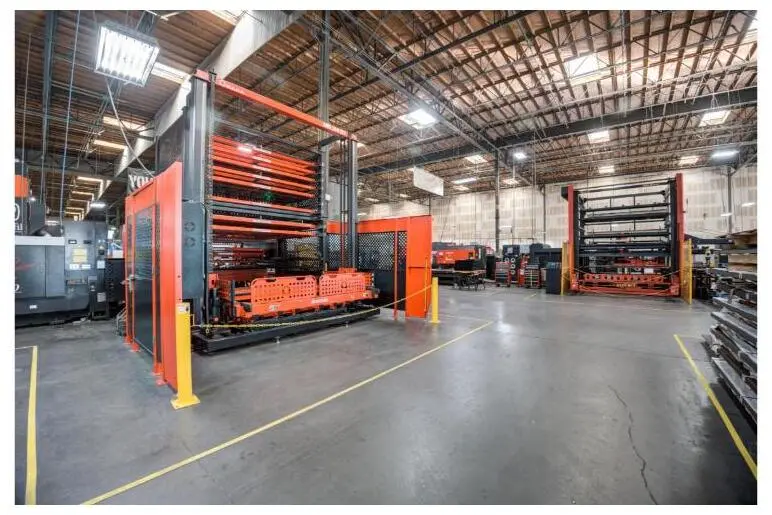
The clearest signal that a partner has removed external handoffs is the purchase order structure. A single purchase order covering fabrication, finishing and assembly indicates that all three stages are controlled internally. Buyers should verify that the partner maintains internal scheduling authority across all three stages without routing work to external subcontractors, so the coordination benefits above are realized.
Pain Point 3: Compliance and Traceability Across the Full Build
Flight hardware installed on aircraft or spacecraft typically requires full serial-level genealogy from raw material through final installed configuration on a specific aircraft or vehicle. For stamped components, AS9100 traceability must allow a defect to be traced back to raw material sources, production batches, process parameters, inspection records and handling and storage conditions.
AS9100 certification, developed by the International Aerospace Quality Group, builds on ISO 9001 with aerospace-specific requirements. Those requirements include risk management throughout the product lifecycle, supplier qualification and oversight, configuration management and change control and prevention of counterfeit or nonconforming parts. Suppliers must also perform First Article Inspections, apply Statistical Process Control and maintain detailed documentation to achieve the tight tolerances required for flight-critical applications.
ITAR requirements add another layer on top of AS9100 traceability expectations. For ITAR-controlled programs, the partner must be registered with the U.S. Department of State Directorate of Defense Trade Controls and maintain documented procedures for controlling access to technical data. Buyers should request audit-ready certification packages and verify that traceability spans the full build, not just the stamping stage.
Pain Point 4: Scaling from Prototype to Mid-Volume Production
Prototype-to-production scaling often stalls at the supplier level. Large global contract manufacturers typically require high minimum order volumes and long onboarding processes. Low-complexity job shops lack the infrastructure to scale. Neither model serves programs that evolve through design iterations before reaching stable mid-volume production. The end-to-end manufacturing model is gaining momentum in the United States because it delivers stronger performance, clearer accountability and greater supply-chain flexibility amid shifting tariffs and supply-chain pressures.
Vertically integrated partners using flexible manufacturing cells can adapt to changing volumes, mixed SKUs and evolving bills of materials without the overhead rigidity of top-tier global contract manufacturers. Working with a single vertically integrated partner from prototype to production mitigates risk and reduces unknowns while providing tighter control over production, timelines and budget.
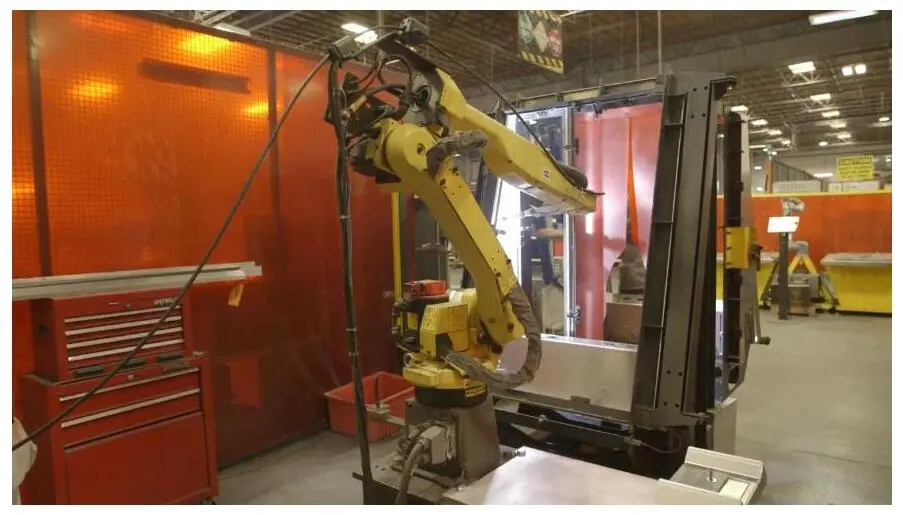
Buyers should verify that a partner can demonstrate production at prototype quantities and at mid-volume without requiring a separate onboarding process or minimum-order commitment at each stage.
Pain Point 5: Meeting Launch Timelines Under Schedule Pressure
Compressed launch timelines depend on fast quoting, rapid prototyping and removal of supplier bottlenecks. When fabrication, finishing and assembly are controlled internally, scheduling authority stays with one team. Vertically integrated suppliers can help achieve more predictable lead times by enabling faster identification and resolution of issues.
The prevailing supply chain playbook in aerospace and defense still leans on fast, low-capital de-risking tactics such as adding second sources and locking volume through long-term agreements, rather than capital-intensive structural moves like vertical integration. Programs that consolidate to an integrated partner gain internal scheduling coordination that multi-vendor arrangements cannot match.
Pain Point 6: Total Program Cost Versus Unit Price
Program cost depends on more than unit price. Unit price comparisons between a job shop and an integrated partner omit the cost of coordination, rework and delay. A vertically integrated approach gives customers complete control over quality, cost and delivery while reducing lead times, risk and supply-chain complexity. Those factors do not appear on a per-part quote from a fragmented vendor base.
Supplier engineers who evaluate material selection against actual machining and fabrication capabilities identify conflicts between design intent and manufacturing reality before geometry is frozen. That collaboration eliminates the most expensive engineering changes discovered after tooling commitment. A complete total-cost analysis then accounts for quoting cycles, inter-vendor shipping, inspection duplication and the administrative burden of managing multiple purchase orders for a single finished assembly.
The Solution: Vertically Integrated U.S. Precision-Fabrication Partners
A vertically integrated U.S. precision-fabrication partner combines stamping, CNC machining, finishing and light electromechanical assembly under one quality system, one facility and one accountable point of contact. Specialized Tier 2/3 manufacturing is attracting strong M&A interest as buyers prioritize assets that add scarce capacity or high-demand capabilities under one roof. That trend signals that the integrated-partner model is becoming a structural preference, not a niche option.
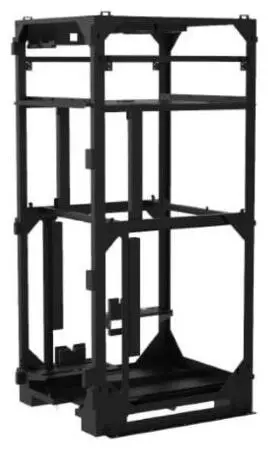
In a representative aerospace program, an integrated partner engages engineering at the RFQ stage to review drawings and tolerances. The partner then establishes a manufacturing router before production begins, executes stamping and finishing in sequence without inter-vendor shipping and delivers a complete traceability package with the finished assembly. That package includes material certifications, FAI records, inspection results and NCR linkage. Change control stays within one quality system, which eliminates the version-control failures that occur when drawings move between independent vendors.
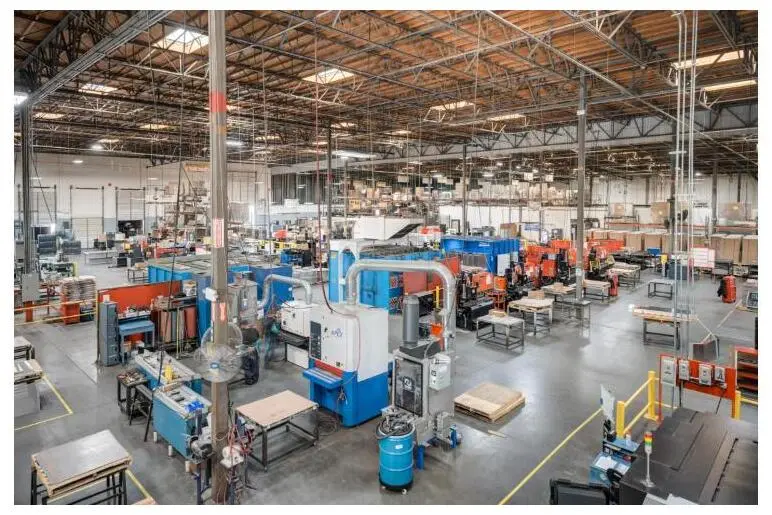
Domestic vertically integrated manufacturing operations also mitigate risks from geopolitical tensions, global shipping delays, freight-rate volatility, tariffs and currency fluctuations. Those operations provide greater control over quality, consistency, production schedules and intellectual property.
Get a quote and evaluate FABCON as an aerospace metal stamping partner for complex assemblies.
Comparative Overview of Aerospace Provider Types
Aerospace buyers often compare four supplier archetypes when sourcing stamped assemblies. Each model carries distinct tradeoffs in capability, scale and responsiveness. Clear understanding of these models helps align sourcing strategy with program requirements.
Low-complexity job shops are transactional, build-to-print vendors. They handle simple metal parts but lack the engineering depth for DFM and cannot manage complex system integrations such as wiring, electromechanical assembly or multi-stage finishing. Customers using job shops manage a fragmented supply chain across multiple purchase orders for a single finished product.
Mid-tier fabricators offer broader capability than job shops and may include some finishing or assembly services. Their scale and vertical integration depth vary, and buyers should verify whether finishing and assembly are performed in-house or subcontracted.
Large global contract manufacturers have scale but are structured for high-volume, stable programs. They typically require high minimum volumes, involve long onboarding processes and lack the agility to support evolving bills of materials and high-mix programs. Their quality systems are robust, but their responsiveness to program changes is constrained by organizational size.
Vertically integrated U.S. precision-fabrication partners occupy the middle ground. They provide the engineering depth, quality infrastructure and end-to-end capability of a large CM while maintaining the responsiveness and accountability that mid-volume, innovation-led programs require.
Due-Diligence Checklist for Aerospace Stamping Partners
Before selecting an aerospace metal stamping partner for complex assemblies in the United States, buyers should verify the following:
- AS9100D certification scope covers stamping, finishing and assembly, not stamping alone
- ITAR registration with documented procedures for technical data access control
- In-house DFM review process tied to drawing revision control and documented before tooling quotation
- Change-control procedures that span the full build, not individual process stages
- Traceability package scope matches the requirements outlined in Pain Point 3, covering material certs, FAI, inspection results and NCR linkage
- FAI process documented per AS9102 and tied to serial-level genealogy
- Flexible production cells that support prototype quantities and mid-volume without separate onboarding
- Sample-part evaluation process with cosmetic, dimensional and compliance checks before production release
- Site-audit readiness with accessible quality records, calibration logs and NCR documentation
- Single purchase order structure covering fabrication, finishing and assembly
Frequently Asked Questions
What traceability level is required for flight-critical stamped assemblies?
Flight-critical stamped assemblies generally require serial-level genealogy that spans the full build. This includes material heat and lot numbers with mill certifications, all special process certifications and parameters, tooling and fixture records affecting key characteristics, operator and equipment records for critical operations, First Article Inspection records per AS9102, inspection results for key characteristics, nonconformance reports linked to serial numbers and approved supplier status with lot and serial linkage. The specific traceability level is set by customer flowdowns, OEM or Tier 1 contracts, safety criticality classification and applicable regulatory program type. Parts classified as safety-critical flight hardware carry the most stringent requirements, while lower-criticality flight parts may allow some lot-level allowances at the assembly level.
How does vertical integration affect lead-time reliability in aerospace programs?
Vertical integration improves lead-time reliability by placing scheduling authority for fabrication, finishing and assembly within one organization. When these stages are performed by separate vendors, each handoff introduces a dependency on an external schedule, shipping transit and incoming inspection at the next vendor. A vertically integrated partner removes those external dependencies, which enables faster identification and resolution of issues before they become production stoppages. The benefit is strongest during program changes. When a design revision requires updated tooling, revised finishing specifications and updated assembly instructions at the same time, an integrated partner can coordinate those changes within one quality system rather than routing them through multiple vendor change-control processes.
Which certifications should buyers verify for AS9100 aerospace stamping partner selection?
Buyers should verify AS9100D certification with a scope that explicitly covers the processes being sourced, such as stamping, finishing and assembly, rather than a scope limited to one process stage. ISO 9001:2015 is the baseline quality management foundation. ITAR registration is required for defense-related components and programs subject to U.S. export control. Where special processes such as heat treatment, plating or non-destructive testing are performed in-house, NADCAP accreditation for those specific processes is the relevant verification. For defense programs with material origin requirements, DFARS compliance documentation should be requested. Buyers should also confirm that the partner’s quality system covers supplier qualification and oversight, configuration management and counterfeit-part prevention, which are AS9100D-specific requirements beyond ISO 9001.
When is an integrated U.S. partner most appropriate versus a large global CM?
An integrated U.S. partner is most appropriate for programs that require engineering collaboration during design, involve evolving bills of materials or mixed SKUs, operate at prototype-to-mid-volume quantities and demand full traceability across stamping, finishing and assembly under a single quality system. Programs with ITAR-controlled technical data benefit from the domestic manufacturing and access-control accountability that a U.S.-based integrated partner provides. Large global contract manufacturers are better suited to programs with stable, high-volume demand, frozen designs and sufficient scale to justify their minimum-order and onboarding requirements. Programs that are still iterating on design or scaling from prototype to mid-volume will encounter rigidity and overhead costs at large CMs that an integrated mid-tier partner avoids.
Conclusion: Matching Integrated U.S. Partners to Program Demands
Aerospace programs facing the challenges outlined above, including design iteration, mixed SKUs and multi-stage traceability, are poorly served by fragmented vendor bases or rigid global contract manufacturers. The vertically integrated U.S. precision-fabrication partner, combining stamping, finishing and light electromechanical assembly under AS9100D and ITAR registration, addresses the six pain points that drive cost, delay and compliance risk in traditional sourcing structures.
Buyers evaluating this category should apply the due-diligence criteria above, request sample-part evaluations and conduct site audits that verify quality system scope across all process stages. The goal is a single accountable partner that maintains engineering collaboration, change control and end-to-end traceability from prototype through mid-volume production.
FABCON is an AS9100D- and ITAR-registered vertically integrated precision fabrication and assembly partner operating from 220,000 square feet of U.S. manufacturing space. FABCON supports aerospace programs from prototype through production with in-house stamping, finishing and electromechanical assembly under one quality system.