
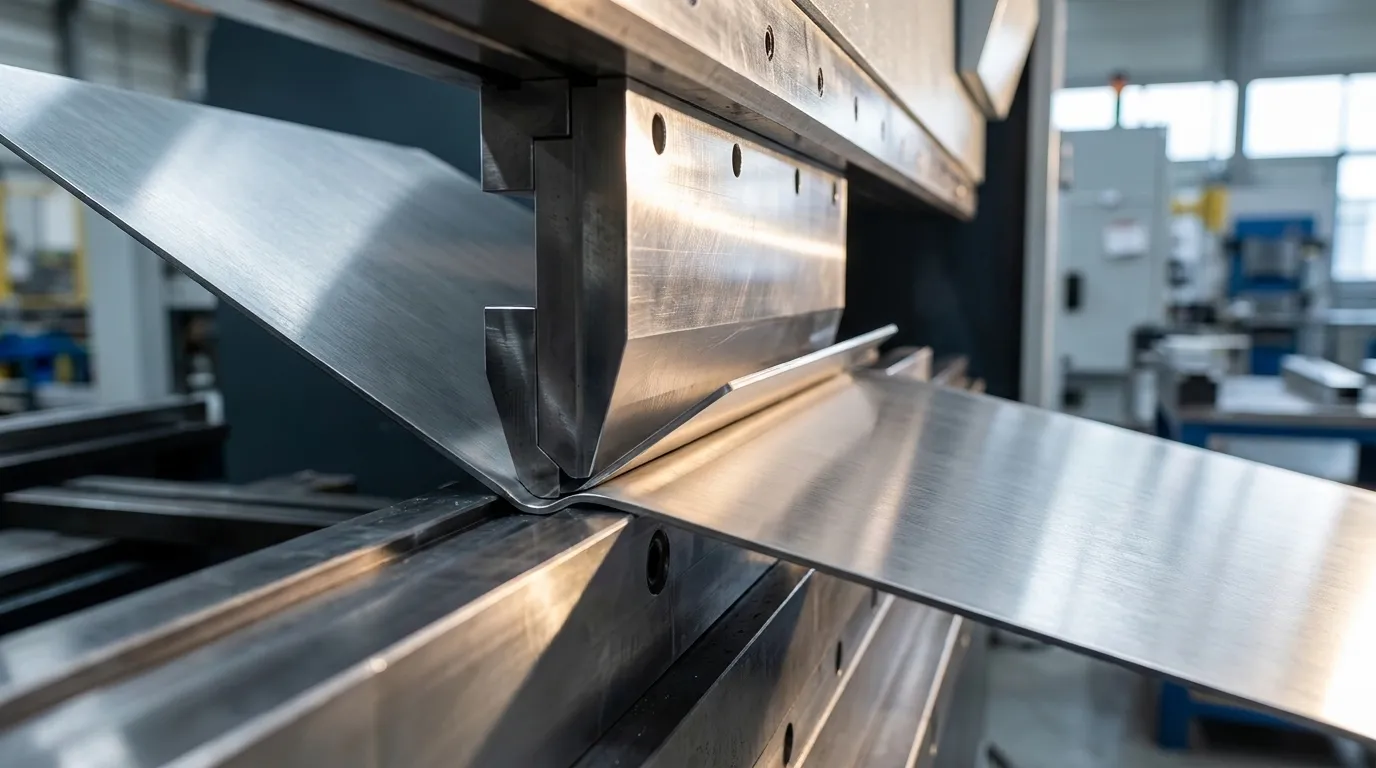
Key Takeaways for Complex Stamped Assemblies
- Reshoring and stricter certification requirements push OEMs toward vertically integrated U.S. partners that deliver finished stamped assemblies, not individual components.
- Buyers should evaluate stamping partners across five factors: technical capabilities, integration scope, quality and compliance, scalability and flexibility and supply-chain accountability.
- Integrated providers that combine precision stamping, finishing and light electromechanical assembly under one roof reduce vendor handoffs, improve traceability and lower total program risk.
- Early DFM collaboration, total-program-cost evaluation and single-source certification help avoid sourcing pitfalls that extend timelines and increase costs.
- For mid-volume, high-mix programs in data-center infrastructure, aerospace, energy storage and medical devices, start a DFM review with Fabcon’s engineering team to streamline the next assembly project.
Reshoring and Stamped Assemblies in 2026
Reshoring now sits at the center of U.S. manufacturing strategy. Manufacturing America’s 2026 analysis identifies tariffs on Chinese goods, supply-chain volatility and federal incentive programs such as the Inflation Reduction Act as primary drivers pulling production back to the U.S. Recent years have brought sustained reshoring activity across U.S. manufacturing sectors, and that trend continues into 2026.
The U.S. metal stampings market is projected to grow steadily, supported by tariff-driven localization of component supply chains. That growth concentrates in sectors with complex assemblies. OEMs in data-center infrastructure, energy storage, traffic safety, medical devices and aerospace and defense now consolidate vendor bases and demand finished assemblies, not stamped blanks, from single accountable partners.
Industry leaders describe 2026 supply chains as built for resilience, not only efficiency, with geopolitical uncertainty accelerating regional diversification as a permanent strategy. Buyers sourcing stamped assemblies respond by evaluating partners on integration depth and supply-chain accountability, not piece price alone.
Five-Factor Evaluation Framework for U.S. Stamping Partners
Buyers evaluating precision metal stamping companies for complex assemblies should assess partners across five factors: technical capabilities, integration scope, quality and compliance, scalability and flexibility and supply-chain and logistics advantages. Each factor aligns with a documented pain point in mid-volume, high-mix programs. The sections below examine each factor in detail.
Factor 1: Technical Capabilities for Complex Assemblies
A capable stamping partner owns its tooling and supports engineering early. The strongest stamping partners provide engineering input during part design, design and build tooling in-house, run progressive presses with scalable capacity and perform secondary operations from a single integrated U.S. facility.
Fabcon’s in-house capabilities span laser cutting, CNC punching, forming, welding, CNC machining and finishing. In-house CNC machining supports fabricated assemblies such as chassis, racks and enclosures that require hardware insertion or pressure testing. That approach avoids outside machine shops, improves dimensional accuracy and removes coordination delays.
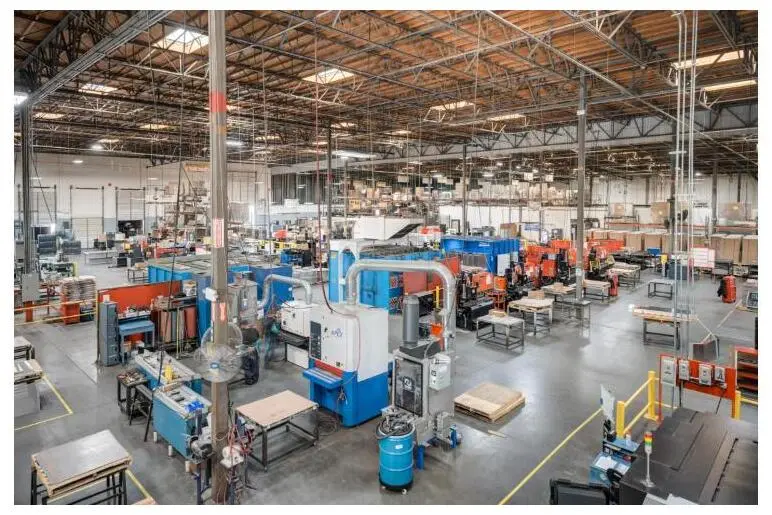
DFM collaboration begins before tooling. A formal DFM review requested before tooling makes cost, lead-time and sample risks visible early because changes after the die is cut require re-machining or rebuilding. Fabcon’s engineering and quoting teams review drawings, tolerances and materials with the customer’s technical team before production. That process reduces rework and aligns designs with what can be built at scale.
Factor 2: Integration Scope Across Fabrication, Finishing and Assembly
Integration scope directly affects schedule risk and quality accountability. Stamping-only providers require buyers to manage finishing, coating, wiring and assembly across separate vendors. Each handoff introduces schedule risk, quality ambiguity and coordination overhead.
An integrated stamping partner that performs DFM review, tooling, stamping, finishing and assembly in-house reduces handoffs between processes and suppliers compared with stamping-only providers. Integrating assembly operations within the same production flow produces finished mechanical components with tighter tolerances and fewer handoffs.
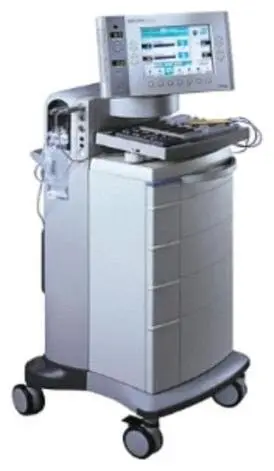
Fabcon combines precision sheet metal fabrication and CNC machining with a broad range of finishing and assembly services. This integration extends to powder coat, wet paint, CARC military-grade finishing, mil-spec coating, hardware insertion and light electromechanical assembly, including wiring and component integration, under one roof. That scope covers the full build for data-center enclosures, traffic-safety components, energy-storage cabinets, medical carts and aerospace assemblies, so one PO replaces a fragmented vendor chain.
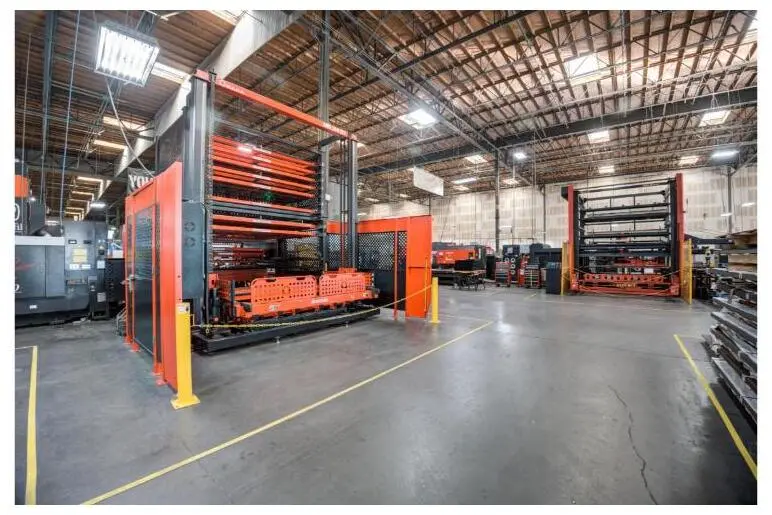
Schedule a facility tour to see the integrated production environment and understand how the full process flows.
Factor 3: Quality and Compliance for Regulated Programs
Quality and compliance standards define which partners can support regulated programs. Certification requirements vary by sector, but ISO 9001:2015 forms the baseline for complex assemblies that serve infrastructure and technology markets. Aerospace and defense programs require AS9100D. ITAR registration governs defense-related technical data. Medical and industrial programs increasingly require UL and CSA alignment.
Fabcon holds ISO 9001:2015 and AS9100D certifications and maintains ITAR registration. Its quality management system spans every stage of the build and provides full traceability for every part. For medical-device and aerospace and defense procurement teams, that traceability supports strict regulatory requirements and audit readiness without reconstruction of records across multiple vendors.
Factor 4: Scalability and Flexibility for Mid-Volume, High-Mix Work
Scalability and flexibility determine how well a partner supports changing demand. Large contract manufacturers impose high minimums, long onboarding cycles and rigid production lines that cannot adapt to evolving bills of materials. Job shops lack the infrastructure to scale beyond simple parts. These models do not align with mid-volume, high-mix programs where volumes shift and SKU configurations change.
Hybrid turnkey arrangements are forecast to grow at a meaningful CAGR through 2031 as OEMs seek co-design input that trims prototyping cycles and shifts tooling risk to manufacturing partners. That trend reflects a structural preference for partners that move from prototype to production without forcing buyers to re-qualify a new vendor at each stage.
Fabcon’s agile production cells adapt to changing volumes, mixed SKUs and evolving BOMs. The model supports programs from prototype through mid-volume production runs without the overhead rigidity of large contract manufacturers. High-growth companies in energy storage, data-center infrastructure and EV charging gain the ability to scale without renegotiating minimums or restarting onboarding.
Factor 5: Supply-Chain and Logistics Advantages
Supply-chain and logistics performance influence total program cost and delivery reliability. Consolidation programs typically deliver meaningful procurement cost reductions and improvements in supplier performance, with a U.S. Government Accountability Office report supporting a savings range from consolidated and strategically sourced supplier contracts.
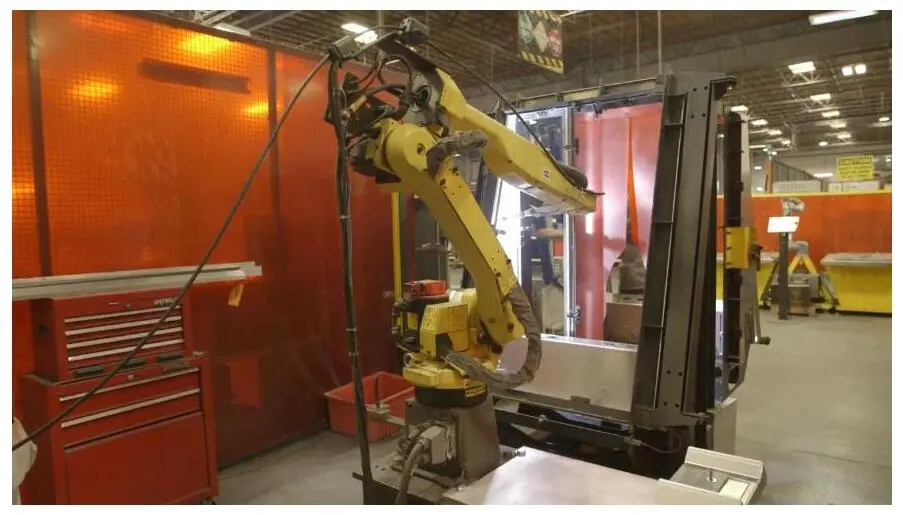
The single-PO model described earlier also delivers measurable supply-chain benefits beyond coordination efficiency. Single-PO accountability removes the need to manage separate vendors for metal, coatings, wiring and assembly. When fabrication, finishing and assembly run under one roof, production schedules avoid dependencies on third-party availability and inter-vendor shipping legs. That internal control supports lead-time reliability for programs where on-time delivery carries contractual weight.
Common Pitfalls When Sourcing Stamped Assemblies
Three recurring sourcing mistakes extend timelines and increase total program cost for complex stamped assemblies. Each mistake stems from treating the stamping partner as a transactional vendor instead of a collaborative engineering resource.
The first mistake involves engaging a stamping partner after design freeze. Early DFM collaboration should begin before tooling decisions because it reduces risk and exposes cost, lead-time and sample risks early. Buyers benefit when 3D models, assembly context, mating parts, performance requirements and environmental exposures enter the discussion at the start of the engagement, not after drawings are finalized.
The second mistake involves evaluating suppliers on piece price rather than total program cost. Buyers should compare suppliers on total program cost, including tooling amortization, secondary operations, finishing, inspection, packaging and freight, rather than piece price alone. A supplier with integrated finishing and assembly can reduce buyer overhead even when the unit price is higher.
The third mistake involves sourcing certifications and integration scope separately. Buyers that select a stamping vendor and then qualify separate finishing and assembly vendors inherit the certification gap between them. Full traceability requires a single quality system that governs every stage of the build. Fragmenting the supply chain fragments the audit trail.
Discuss how an integrated partner model addresses these sourcing pitfalls and supports future programs.
Frequently Asked Questions
Major Precision Metal Stamping Companies in the USA
The U.S. precision metal stamping market includes a wide range of providers, from high-volume automotive-focused stampers to integrated fabricators that serve infrastructure and technology sectors. Each operates with a distinct scope of services, volume focus and certification profile. Buyers sourcing finished assemblies, rather than stamped blanks, benefit from evaluating providers on integration depth, DFM capability and quality certifications in addition to press capacity. Fabcon operates as a vertically integrated U.S. fabricator that serves mid-volume, high-mix programs across data-center infrastructure, aerospace and defense, energy storage, traffic safety and medical devices, with ISO 9001:2015, AS9100D and ITAR registration.
Differences Between Job Shops, Integrated Fabricators and Large Contract Manufacturers
Job shops function as transactional, build-to-print vendors. They handle basic sheet metal work but typically lack engineering depth for DFM collaboration, in-house finishing or electromechanical assembly. Buyers that rely on job shops must manage separate vendors for coating, wiring and assembly, which introduces handoff delays and quality accountability gaps.
Large contract manufacturers offer scale and sophisticated infrastructure but impose high minimum order quantities, long onboarding processes and rigid production lines. They are optimized for high-volume, low-mix programs and do not align with programs that have evolving BOMs or mid-volume requirements.
Integrated fabricators occupy the middle ground. They combine precision stamping with in-house finishing, machining and light electromechanical assembly, supported by engineering teams capable of DFM collaboration. Fabcon follows this model and offers end-to-end capability similar to a large contract manufacturer with the responsiveness and flexibility that mid-volume programs require.
Impact of ISO 9001:2015 and AS9100D on Stamped Assemblies
ISO 9001:2015 serves as the internationally recognized baseline quality management system standard. It requires documented processes, consistent inspection protocols and corrective action systems across the full production workflow. For stamped assemblies, ISO 9001:2015 certification means every stage of the build, from raw material verification through final inspection, operates under a controlled, auditable quality system.
AS9100D extends ISO 9001:2015 with additional requirements specific to aerospace and defense manufacturing. It adds controls for configuration management, risk management, first article inspection and traceability of safety-critical components. For aerospace and defense buyers, AS9100D certification functions as a baseline qualification requirement. Fabcon holds both certifications and maintains ITAR registration, which supports programs that require defense-related technical data controls alongside full part traceability.
How Integrated Finishing and Assembly Affect Program Risk
Every vendor handoff in a supply chain creates a risk event. When stamped parts move from a fabricator to a separate finishing vendor and then to a separate assembly house, each transfer introduces schedule dependency, incoming inspection requirements and quality accountability gaps. If a defect appears at final assembly, identifying its origin across three vendors consumes time and often sparks disputes.
Integrated finishing and light electromechanical assembly under the same roof as stamping remove those handoffs. A single quality system governs the entire build, traceability remains continuous and schedule control rests with one accountable partner. For programs in medical devices, aerospace or energy storage, where traceability and on-time delivery carry regulatory or contractual weight, that integration directly reduces program risk. Fabcon’s model consolidates fabrication, finishing and assembly into a single production environment and replaces a fragmented vendor chain with one PO and one point of accountability.
Conclusion: Applying the Five-Factor Framework
The five-factor framework of technical capabilities, integration scope, quality and compliance, scalability and flexibility and supply-chain accountability gives engineering, procurement and operations leaders a structured basis for evaluating precision metal stamping partners. Applied consistently, this framework separates partners that deliver finished complex assemblies from vendors that produce stamped blanks and stop there.
Fabcon’s vertically integrated model addresses each factor directly. In-house tooling and DFM engineering support reduce design-to-manufacture risk. Integrated finishing and light electromechanical assembly remove vendor handoffs. Certifications and registrations provide a compliance foundation for regulated industries. Agile production cells support mid-volume, high-mix programs without the rigidity of large contract manufacturers. Single-PO accountability simplifies supply-chain management for programs where on-time delivery is nonnegotiable.
For mid-volume programs in data-center infrastructure, traffic safety, energy storage, medical devices or aerospace and defense, Fabcon operates as an integrated U.S. partner built to deliver from prototype through production.
Connect with Fabcon’s team to evaluate fit for upcoming programs and align on next steps.