
Key Takeaways for Mid-Volume Sheet Metal Programs
- Mid-volume, high-mix U.S. programs face a sourcing gap because basic job shops lack DFM and scale while large CMs remain rigid and volume driven.
- Vertically integrated partners close that gap by combining engineering collaboration, in-house fabrication, finishing and electromechanical assembly under one roof.
- Key evaluation criteria include ISO 9001:2015, AS9100D, ITAR registration, full material traceability and proven ability to scale from prototype to production.
- Integrated partners reduce total cost of ownership by removing multi-vendor handoffs, shortening lead times and applying quality checkpoints at every internal stage.
- Request a quote to evaluate fit for the next mid-volume precision sheet metal program.
How Vertically Integrated U.S. Fabrication Partners Fill the Sourcing Gap
Vertically integrated U.S. precision fabrication and assembly partners occupy the middle ground between job shops and large CMs. They combine engineering collaboration, broad in-house processes and certified quality systems under one roof, serving programs from prototype through production without the rigidity of large CMs or the limits of basic job shops.
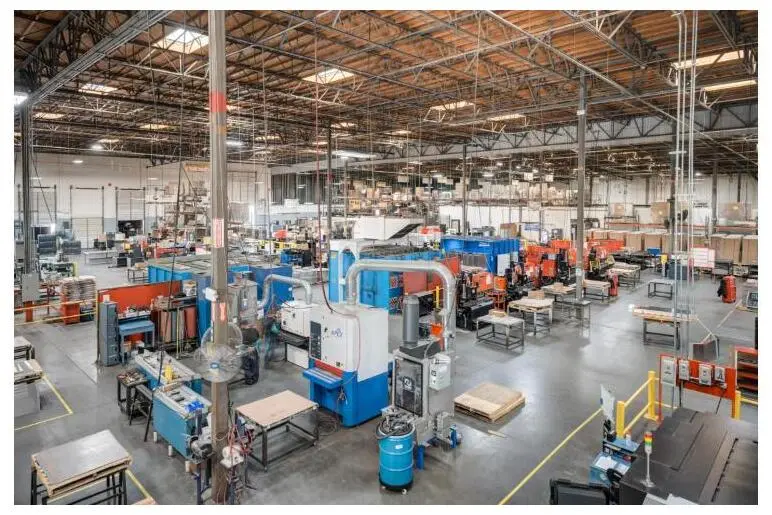
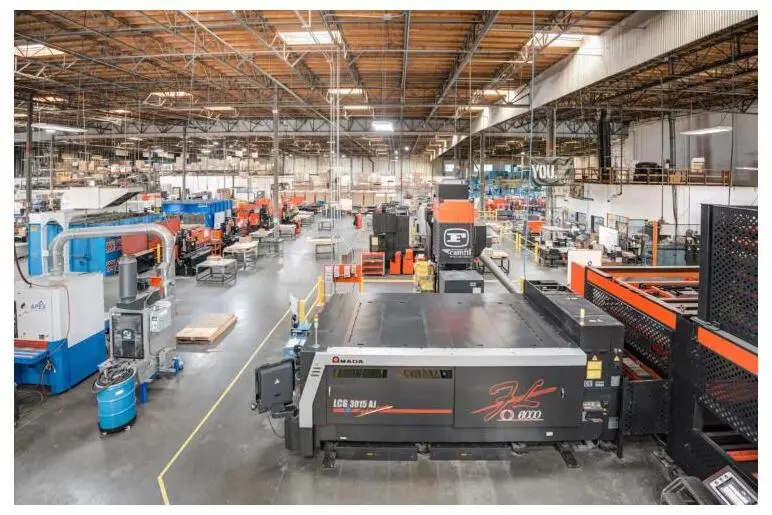
Fabcon represents this category. Founded in 1977 and operating across 220,000 square feet of manufacturing space in two Southern California facilities, Fabcon spans in-house design, engineering, fabrication, CNC machining, finishing, electromechanical assembly, fulfillment and logistics. One partner manages the build, one purchase order covers the scope and one team holds end-to-end accountability.
The operational model focuses on eliminating handoffs. Administrative and transport latency from multi-vendor handoffs frequently adds significant time to the schedule beyond active fabrication alone. Integrated partners remove that latency by coordinating scheduling across processes internally and aligning priorities inside a single organization.
Several proof points help evaluate this provider category:
- ISO 9001:2015 certification as the baseline quality management standard
- AS9100D certification for aerospace and defense programs requiring risk management, configuration management and first article inspection
- ITAR registration for programs involving export-controlled technical data
- Full material traceability with certificates of conformance and first article inspection reports
- Audit readiness across fabrication, finishing and assembly stages
Fabcon holds ISO 9001:2015, AS9100D and ITAR registration, with compliance extending to UL and CSA standards. For aerospace and defense programs, AS9100 and ISO 9001 represent the baseline quality certifications, and suppliers handling controlled technical data must maintain ITAR registration. These certifications matter because they align the partner’s systems with the specific risks mid-volume programs face.
How Integrated Partners Solve Common Mid-Volume Challenges
Design-for-manufacturability and engineering alignment
A strategic manufacturing partner provides proactive DFM reviews during the design phase to identify sourcing constraints and manufacturing bottlenecks. A transactional vendor simply executes drawings as submitted. Integrated partners engage engineering teams before production begins, review tolerances, materials and geometry, then adjust designs to reduce rework and improve cost efficiency at scale.
Vendor fragmentation versus integrated execution
Piecemeal sourcing adds time at each handoff as suppliers complete operations, prepare shipments and the next vendor performs incoming inspections and scheduling. Integrated partners consolidate fabrication, finishing and assembly under one roof, which reduces vendor count and simplifies coordination for procurement and supply chain teams.
Quality and compliance across the build
Quality management evaluation should require ISO 9001:2015 at minimum, plus industry certifications, statistical process control and material traceability with mill test reports and certificates of conformance provided by default. Integrated partners apply quality checkpoints across every internal stage, not just at final inspection, so defects surface earlier and scrap rates fall.
Scaling from prototype to production
Prototype-to-production failures often stem from assuming prototype processes are production ready without evaluation, from limited early engineering involvement or from suppliers without proven scaling capability. Integrated partners support the full transition from quick-turn prototypes through mid-volume production using agile production cells that adapt to changing volumes and evolving BOMs.
Lead-time reliability for complex builds
A sheet metal fabrication supplier that performs cutting, bending, welding and finishing in-house removes many handoff points where delays and quality gaps typically start. Internal scheduling coordination across processes shortens overall project timelines compared with multi-vendor workflows and improves schedule predictability.
Total cost of ownership versus unit price
Mid-size OEMs that shortlist partners primarily on unit price often filter out suppliers with deeper engineering depth and lifecycle support. That decision increases hidden costs in reactive firefighting and schedule compression. Evaluating total cost of ownership, including rework, coordination overhead and schedule risk, produces a more accurate comparison than unit price alone.
Comparing Job Shops, Integrated Partners and Large CMs
The three primary provider categories differ across every dimension that matters for mid-volume, high-mix programs.
Basic job shops
- Engineering support: Build-to-print execution with limited or no DFM collaboration
- Service scope: Sheet metal fabrication only, with finishing and assembly typically subcontracted or excluded
- Flexibility: High for one-off or low-volume work, limited for repeat production
- Volume fit: Low-volume, high-mix work, not structured for scaling
- Compliance maturity: ISO 9001 varies, AS9100D and ITAR uncommon
- Cost model: Low unit price, higher total cost from fragmentation and rework
Mid-tier vertically integrated partners
- Engineering support: Active DFM collaboration from prototype through production
- Service scope: Fabrication, CNC machining, finishing and electromechanical assembly under one roof
- Flexibility: Agile production cells support changing volumes, SKUs and evolving BOMs
- Volume fit: Mid-volume, high-mix programs with prototype-to-production continuity
- Compliance maturity: ISO 9001:2015, AS9100D, ITAR, UL and CSA
- Cost model: Competitive total cost of ownership through reduced vendor count and handoffs
Large contract manufacturers
- Engineering support: Limited for mid-volume customers, design changes move slowly
- Service scope: Broad but structured around high-volume, stable programs
- Flexibility: Rigid production lines, high minimum volumes and long onboarding
- Volume fit: High-volume, low-mix programs with stable BOMs
- Compliance maturity: Strong, built for regulated industries at scale
- Cost model: Favorable at high volumes, overhead and minimums disadvantage mid-volume programs
See how Fabcon’s integrated approach applies to a mid-volume program.
Realistic Constraints and a Practical Due-Diligence Checklist
Vertically integrated partners do not fit every program. Their capacity limits and onboarding requirements mean procurement teams must invest time upfront to establish the relationship. This single-partner dependence creates concentration risk that procurement teams should weigh against coordination benefits and quality gains.
Programs with extremely high volumes or highly commoditized parts may find large CMs more cost effective at scale. Those programs benefit more from automation and global sourcing than from close engineering collaboration.
The following checklist supports due diligence when evaluating integrated U.S. fabrication partners:
- Process maturity: Confirm which processes are performed in-house versus subcontracted. This question reveals supplier risk more effectively than most others.
- Certifications: Verify current ISO 9001:2015, AS9100D when applicable and ITAR registration with documentation, not marketing statements.
- Change control: Assess how engineering changes move across fabrication, finishing and assembly teams internally.
- Sample timelines: Request documented first article inspection reports, CMM reports and welding procedure specifications.
- On-time delivery: Ask partners for their own rate over the past 12 months.
- References: Request customer references from programs with similar volume, mix and compliance requirements.
- Site evaluation: Conduct an on-site audit to verify equipment, quality systems and production cell structure before awarding a program.
- Scaling capability: Confirm the partner can define how prototype processes transition to production equipment and volumes, and how quality stays consistent through that transition.
OEM buyers evaluating sheet metal fabrication partners for prototype-to-production scaling should assess process breadth, quality certifications, equipment and capacity investment, financial stability, geographic proximity, engineering support and supply chain services.
When Integrated U.S. Partners Fit Best
Integrated U.S. precision fabrication and assembly partners align best with programs that require close engineering support and controlled scaling. These programs benefit from a single accountable partner that manages fabrication, finishing and assembly.
- Mid-volume, high-mix production with evolving BOMs or variable SKU counts
- Engineering collaboration from prototype through production, including DFM support
- Fabrication, finishing and assembly under one roof to reduce vendor count and handoffs
- Certified quality systems such as ISO 9001:2015 and AS9100D with full traceability for regulated industries
- Domestic manufacturing accountability under 2026 reshoring and infrastructure growth pressures
Integrated partners fit less effectively when programs involve extremely high volumes with stable, unchanging designs where large CM automation delivers clear cost advantages. Highly commoditized parts with no assembly or finishing requirements also favor simpler sourcing models.
- Extremely high volumes with stable designs that favor automation
- Highly commoditized parts with no assembly or finishing needs
- Programs where geographic distance to the partner’s facilities creates logistics disadvantages
The evaluation framework remains straightforward. Teams can map program requirements against provider capabilities across engineering support, service scope, volume fit, compliance maturity and total cost of ownership. When mid-volume, high-mix and compliance requirements align, vertically integrated U.S. partners often represent the most structurally appropriate choice.
Fabcon serves data center, aerospace, energy storage, traffic safety and industrial OEM programs from its Southern California facilities. The company combines precision sheet metal fabrication, CNC machining, finishing and electromechanical assembly under one roof with ISO 9001:2015, AS9100D and ITAR credentials.
Start the evaluation process with a quote for a current program.
Frequently Asked Questions
What is the difference between a vertically integrated fabrication partner and a basic job shop?
A basic job shop executes build-to-print work and typically stops at sheet metal fabrication. It does not offer DFM collaboration, in-house finishing or electromechanical assembly. A vertically integrated partner such as Fabcon combines engineering support, fabrication, CNC machining, finishing and assembly under one roof. This structure reduces vendor count, removes handoff delays and provides a single point of accountability across the full build.
What certifications should a sheet metal fabrication partner hold for aerospace or data center programs?
ISO 9001:2015 serves as the baseline quality management certification for commercial and industrial fabrication work. Aerospace and defense programs additionally require AS9100D, which adds risk management, configuration management and first article inspection requirements to the ISO 9001 baseline. Programs involving export-controlled technical data require ITAR registration. Fabcon maintains the certifications outlined above, ISO 9001:2015, AS9100D and ITAR, along with UL and CSA compliance.
How does an integrated partner support the transition from prototype to production?
Integrated partners engage engineering teams before production begins to identify manufacturability risks, validate tolerances and confirm that prototype processes can scale to production equipment and volumes. Fabcon supports customers from quick-turn prototypes through mid-volume production using agile production cells that adapt to changing volumes and evolving BOMs. Early DFM collaboration reduces rework and prevents common prototype-to-production failures that occur when teams assume prototype processes are production ready without evaluation.
Is a vertically integrated partner appropriate for programs with changing volumes or SKU counts?
Vertically integrated partners with agile production cells are structured for mid-volume, high-mix programs where volumes shift and BOMs evolve. Large CMs require high minimums and stable designs. Basic job shops lack the systems for repeat production. Fabcon’s flexible production cells support changing volumes and mixed SKUs without the overhead rigidity of large CMs, which suits infrastructure and technology-driven programs that scale over time.
How does total cost of ownership differ from unit price when evaluating sheet metal partners?
Unit price reflects only the cost of individual parts. Total cost of ownership includes coordination overhead, rework from poor DFM, quality escapes, handoff delays and schedule compression from multi-vendor fragmentation. A lower unit price from a basic job shop or offshore supplier often produces a higher total program cost when these factors are included. Integrated partners reduce total cost by consolidating fabrication, finishing and assembly under one roof, shortening lead times and using the staged quality approach described earlier.