
Key Takeaways for NEMA-Rated Infrastructure Enclosures
- NEMA rated custom electronic enclosures are metal housings built to NEMA 250 standards that protect infrastructure electronics from dust, water, corrosion and ice through defined Type ratings.
- NEMA 4X enclosures are the dominant choice for outdoor infrastructure because they combine Type 4 protection with corrosion resistance validated through salt-spray testing.
- Custom cutouts for cable glands, filter fans and thermal accessories must be engineered and laser-cut to preserve the enclosure’s NEMA rating integrity.
- Thermal management solutions such as closed-loop heat exchangers or enclosure air conditioners must be selected during the design phase to handle heat trapped by sealed NEMA 4 and 4X enclosures.
- Contact Fabcon to access vertically integrated U.S. manufacturing, ISO 9001:2015 and AS9100D certifications and DFM collaboration for the next NEMA enclosure program.
NEMA 4X Ratings for Outdoor Infrastructure Electronics
NEMA Type 4X enclosures are the dominant specification for exposed outdoor infrastructure, adding corrosion resistance to the dust-tight, water-resistant protection of Type 4. That corrosion resistance is validated through salt spray testing, a requirement absent from lower-rated Types.
Matching NEMA ratings to real deployment environments prevents overspending on unnecessary protection or risking failures from under-specification. The following matrix maps the most common NEMA ratings to the infrastructure applications Fabcon serves and shows how environmental exposure drives rating selection.
NEMA Type 3R offers protection against rain, sleet, snow and external ice for sheltered rooftop telecom and solar disconnect enclosures. NEMA Type 4 adds protection against windblown dust, splashing water and hose-directed water for exposed inverter-control panels, outdoor BESS auxiliary cabinets and roadside traffic-safety hardware. NEMA Type 4X combines Type 4 protections with added corrosion resistance suitable for coastal and marine environments. NEMA Type 12 protects against circulating dust and dripping noncorrosive liquids for indoor energy-storage equipment rooms and industrial OEM support spaces.
NEMA 4X is selected for coastal solar farms, battery-storage sites near shorelines and installations exposed to salt, high humidity or industrial pollutants. For edge computing deployments functioning as distributed data centers, NEMA 4X is required where heavy dust or corrosion issues exist. UL Solutions evaluates electrical enclosures for Type ratings under UL 50, so specifications should request verifiable certification documentation rather than relying on a supplier self-declaration.
Custom Cutouts that Preserve NEMA Rating Integrity
Custom cutouts for NEMA enclosures accommodate HMI panels, cable glands, conduit hubs, filter fans, heat exchangers and air-conditioning units. Each opening must be engineered to preserve the enclosure rating and prevent new ingress paths. All cable glands, conduit fittings and field modifications must maintain NEMA 4 or 4X ratings, as nonrated components or post-manufacture sealing commonly cause watertight failures.
Precision laser cutting produces clean, repeatable openings without distorting adjacent flanges or gasket surfaces. Fabricators integrate precision laser-cut openings for filter fans, air-conditioning units and heat exchangers while maintaining NEMA and IP ratings. Gasket compression tolerances on critical flanges must be controlled through early DFM review to prevent seal failures in service.
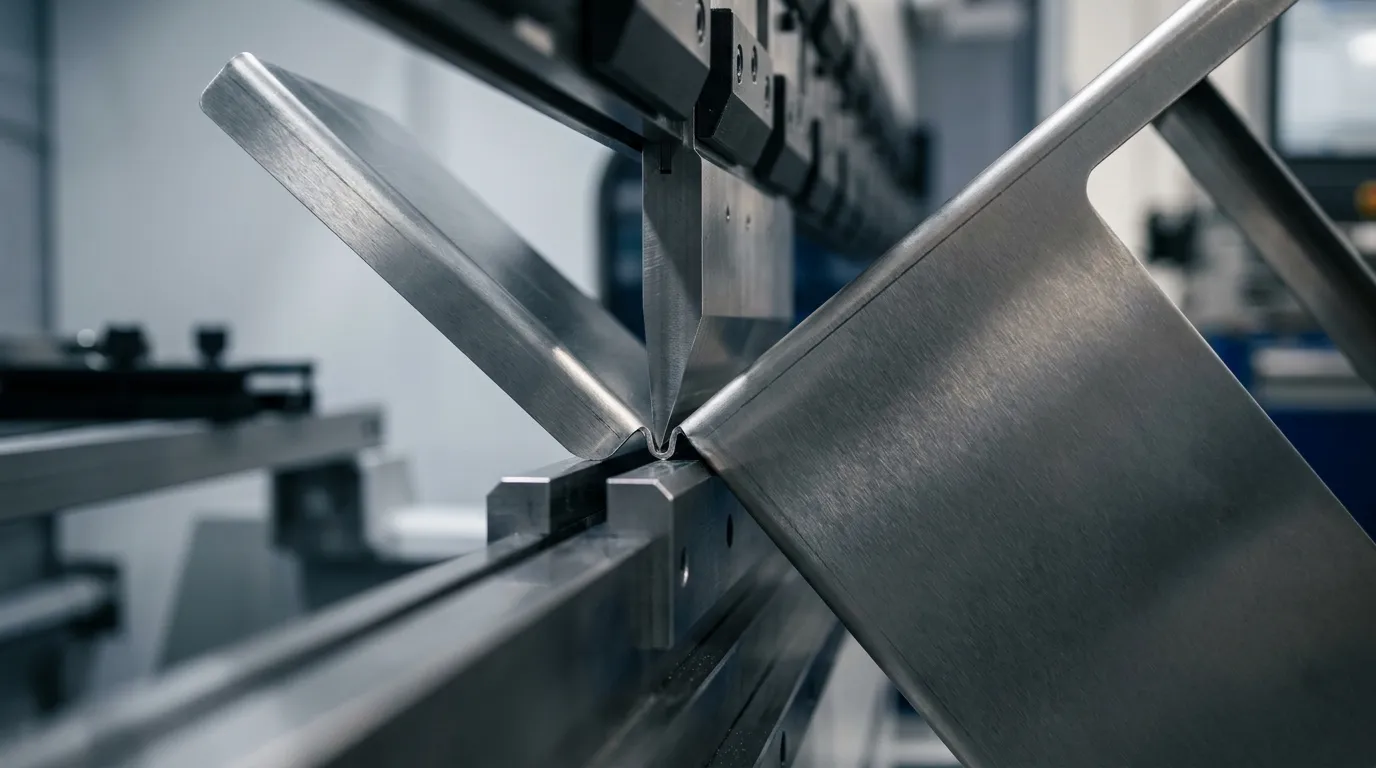
Common enclosure design issues that increase fabrication costs stem from insufficient clearance around formed features. Holes placed closer than two times material thickness to bend lines risk deformation during forming. Flanges shorter than three times material thickness lack the rigidity needed for reliable gasket compression. Missing bend reliefs create stress concentrations that can crack during forming or in service. Addressing these clearance and relief issues during DFM review eliminates rework and protects rating integrity.
Thermal Management Strategies for Sealed NEMA Enclosures
Many new enclosure orders in the U.S. now include preinstalled cooling, filtration or heat-exchange subsystems as thermal management integration has become a common specification. The thermal management strategy must be selected alongside the NEMA rating, not after fabrication is complete, so that cutouts, clearances and mounting structures support the chosen approach.
Common thermal management approaches for sealed NEMA 4 and 4X enclosures form a simple decision path. Closed-loop air-to-air heat exchangers suit moderate heat loads where ambient air is harsh or contaminated. Enclosure air conditioners support high heat loads in warm climates and mount through rated cutouts with sealed flanges. Filtered fan assemblies fit NEMA 12 or indoor NEMA 4 applications where ambient air quality permits direct airflow. Passive thermal design using internal baffles, heat spreaders and component placement reduces hotspots when loads are low or when active cooling adds unnecessary complexity.
ASHRAE Technical Committee 9.9 publishes thermal guidance for data-processing environments, including recommended and allowable operating envelopes for different equipment classes. That guidance should inform cabinet temperature limits and thermal accessory selection during the design phase.
Designing for the right NEMA rating, engineering compliant cutouts and selecting thermal management solutions only delivers value when fabrication and assembly protect those decisions. The next consideration is how the enclosure gets built and which partner controls each stage.
Vertically Integrated NEMA Enclosures with Assembly
Fragmented vendor handoffs between fabrication, finishing and assembly are a primary source of program delays and quality escapes for infrastructure OEMs. Fabcon eliminates those handoffs through a single-roof workflow that spans every stage of the build.
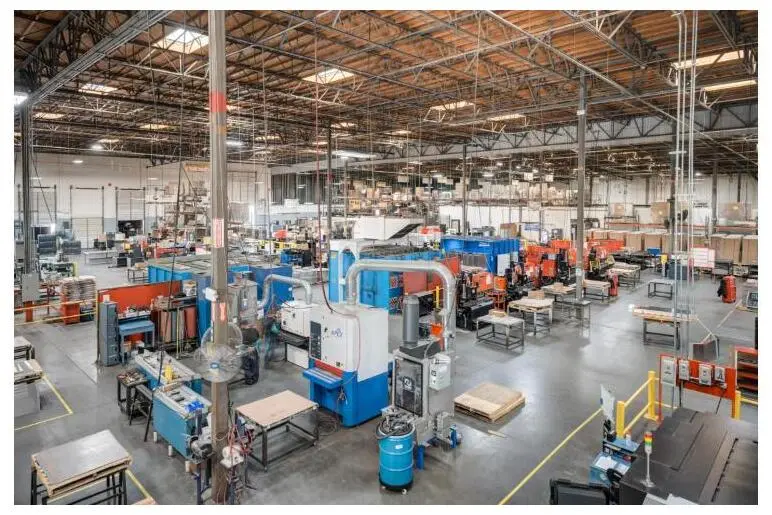
The Fabcon production sequence for NEMA enclosures with electromechanical assembly follows this path:
- Design review and DFM collaboration: Fabcon engineering and quoting teams review CAD files, drawings, tolerances and application requirements, including NEMA rating, thermal load and assembly content, before production begins.
- Precision fabrication: Laser cutting, CNC punching, forming and certified welding produce the enclosure shell and all custom cutouts to tight tolerances.
- Finishing: In-house powder coat, wet paint, silk screening and specialty coatings are applied internally, which removes inter-vendor shipping and scheduling risk.
- Light electromechanical assembly: Hardware insertion, wiring and component integration are completed before fulfillment, delivering a build-ready or field-ready unit.
- Fulfillment and logistics: JIT delivery and logistics support are managed internally, maintaining program visibility through every step.
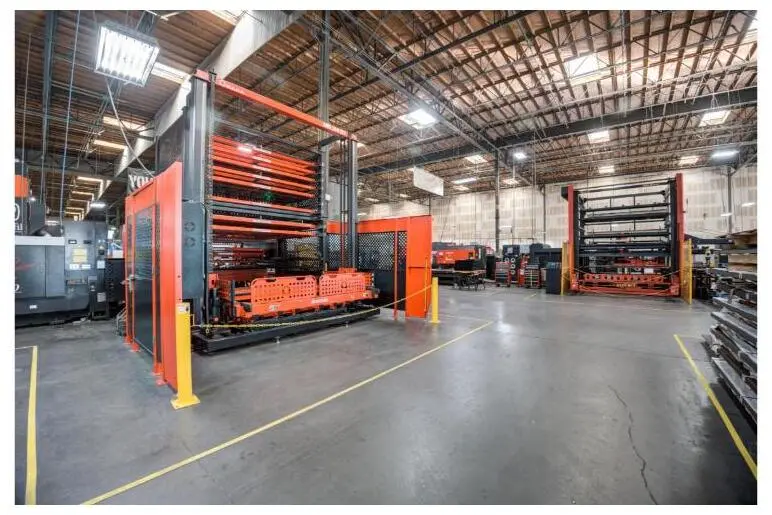
Get a quote and connect with Fabcon to review NEMA enclosure program requirements.
US-Made NEMA 4X Cabinets for Reshoring Programs
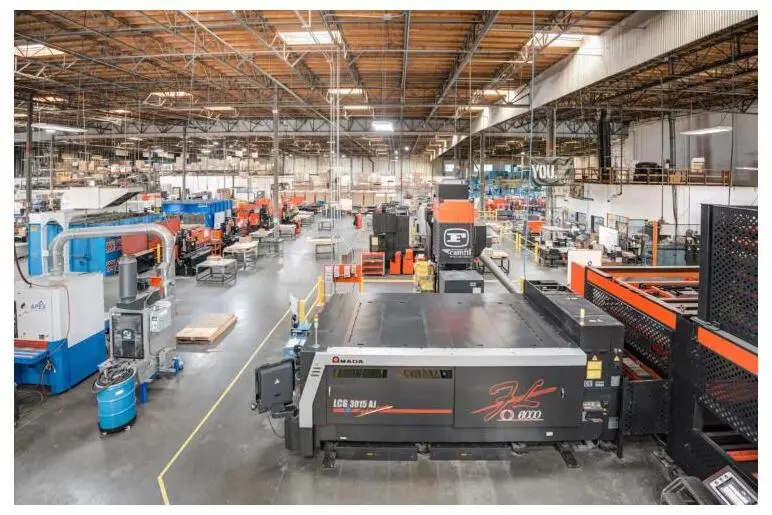
Fabcon manufactures NEMA-rated custom electronic enclosures from vertically integrated U.S. facility space. Every stage, including fabrication, finishing and assembly, is performed domestically, which supports supply-chain traceability and program accountability that offshore or multi-vendor models cannot match.
Fabcon holds ISO 9001:2015 and AS9100D certifications, with integrated quality systems that govern every build stage. Reshoring activity has concentrated in energy, semiconductor and battery manufacturing, industries increasingly tied to national security and supply chain resilience, and demand for U.S.-made NEMA 4X cabinets from accountable domestic partners has grown alongside that shift.
Fabcon mid-volume production serves programs that require more agility than large contract manufacturers provide and more integration than job shops deliver. Agile production cells scale from prototype through production without the high minimums or rigid onboarding timelines that characterize top-tier global CMs.
Agile production only delivers value when the design entering production supports efficient fabrication and assembly. The following checklist outlines the inputs and review steps that turn design intent into a buildable, cost-effective enclosure.
DFM Collaboration Checklist for NEMA Enclosure Programs
Early DFM collaboration reduces rework, protects NEMA rating integrity and compresses time to production. DFM review identifies targeted design changes such as increasing bend radius, moving hole positions or opening tolerances to improve manufacturability and prevent production issues before tooling begins.
The following inputs and review steps support effective DFM collaboration on NEMA enclosure programs. Foundational design data comes first, then application requirements and finally detailed checks on features and accessories.
- STEP or native CAD files and engineering drawings with GD&T callouts
- Intended material and finish, including corrosion-resistance requirements for NEMA 4X
- Target production volume and anticipated program ramp schedule
- Application requirements such as NEMA rating, thermal load and IP equivalency if required
- Cable entry locations, gland types and conduit hub specifications
- Assembly content, including hardware, wiring, components and subassemblies to be integrated
- Certification scope such as UL 50/50E listing requirements and third-party test obligations
- Gasket and seal design review for flange tolerances and long-term compression performance
- Bend radius, hole placement and flange depth review against material thickness
- Thermal management cutout placement and rated accessory compatibility
Supplier-Evaluation Scorecard for NEMA Enclosure Partners
Engineering and procurement teams evaluating providers of NEMA rated custom electronic enclosures benefit from objective criteria across certifications, capabilities, traceability and accountability. Purchasers should be cautious of manufacturers claiming NEMA-rated enclosures without third-party testing, as NEMA itself performs no verification of enclosure integrity.
Key evaluation criteria include:
- Certifications: ISO 9001:2015 quality management system, AS9100D for aerospace-grade traceability and UL 50/50E listing capability for third-party verified NEMA ratings
- In-house engineering: CAD/CAM capability and DFM review participation before tooling, not after
- Fabrication scope: Laser cutting, CNC forming, certified welding and custom cutouts performed in a single facility
- Finishing capability: In-house powder coat, wet paint, passivation and specialty coatings without outsourcing
- Assembly integration: Light electromechanical assembly, hardware insertion and wiring completed before fulfillment
- Material traceability: Certificates of conformance and mill test reports available on request, particularly for 316 stainless steel used in NEMA 4X applications
- Certification documentation: NRTL test reports referencing current ANSI/NEMA 250 and UL 50E editions, not self-certification marks
- Volume flexibility: Demonstrated ability to support prototype through mid-volume production without rigid minimums
- End-to-end accountability: Single point of contact across fabrication, finishing, assembly and fulfillment
Frequently Asked Questions
What is the difference between NEMA 4 and NEMA 4X for outdoor electronic enclosures?
NEMA 4 enclosures protect against windblown dust, rain, splashing water and hose-directed water. NEMA 4X adds corrosion resistance, validated through salt-fog testing, which makes it the appropriate specification for coastal, marine, chemical-processing and high-humidity environments. Both ratings require third-party verification through a Nationally Recognized Testing Laboratory such as UL to confirm compliance with NEMA 250.
Does Fabcon support programs from prototype through production?
Fabcon supports programs from initial prototype through scaled production runs. Agile production cells allow programs to ramp without the high minimums or lengthy onboarding processes associated with large contract manufacturers. DFM collaboration begins at the prototype stage so that design decisions made early carry forward cleanly into production tooling and assembly workflows.
How does Fabcon maintain NEMA rating integrity when adding custom cutouts or assembly content?
Fabcon engineering reviews all cutout locations, gland specifications and accessory selections during DFM to confirm that each modification is compatible with the target NEMA rating. Gasket and seal tolerances on critical flanges are controlled through the fabrication process. All cable glands, conduit fittings and integrated components must carry ratings consistent with the enclosure specification to prevent ingress failures in service.
What quality certifications does Fabcon hold?
Fabcon is ISO 9001:2015 and AS9100D certified, with integrated quality systems that span fabrication, finishing and assembly. Full material traceability is maintained across every build stage. Fabcon is also ITAR registered and operates in compliance with UL and CSA standards, supporting programs in data centers, energy storage, aerospace and traffic-safety infrastructure.
How does thermal management affect NEMA enclosure specification?
Sealed NEMA 4 and 4X enclosures trap heat generated by inverters, power conversion systems and control electronics. Thermal management must be selected alongside the NEMA rating during the design phase so that cutouts and accessories support the thermal plan. Common solutions include closed-loop air-to-air heat exchangers, enclosure air conditioners integrated through rated cutouts and passive thermal design using internal baffles and component placement. Fabcon DFM reviews address heat load calculations and thermal accessory compatibility before fabrication begins.
When Integrated U.S. Manufacturing Fits NEMA Programs
Single-accountable-partner sourcing fits programs that require NEMA-rated enclosures with custom cutouts, in-house finishing and light electromechanical assembly delivered on compressed timelines. Vertical integration allows companies to avoid relying on external agencies for exacting quality requirements and to ensure certainty of supply without dependence on external distribution channels.
Programs in data center infrastructure, energy storage and traffic-safety systems share common characteristics that favor this model, including multiyear production runs, evolving BOMs, mid-volume quantities and regulatory environments that demand full traceability. Data center construction spending in the U.S. has grown substantially year over year, and reshoring forces favor suppliers that can offer integrated domestic fabrication, assembly and finishing with fewer handoffs.
Fabcon occupies the position between low-complexity job shops and rigid large contract manufacturers, providing the engineering depth, vertical integration and mid-volume agility that infrastructure OEMs require without the constraints of either extreme.
Get a quote from Fabcon and start the DFM conversation for the next NEMA enclosure program.