
Key Takeaways for Mid-Volume OEM Sourcing
- Mid-volume OEM programs face sourcing pressure from tariff volatility, compressed timelines and high-mix complexity that strain traditional vendor strategies.
- Integrated US precision sheet metal contract manufacturers combine fabrication, finishing and assembly in one facility with engineering support and flexible volumes.
- Effective evaluation criteria include DFM alignment, end-to-end integration, quality certifications, scaling flexibility and total cost of ownership instead of unit price.
- Domestic vertical integration reduces supply chain risk, removes vendor handoffs and provides single-point accountability for regulated industries such as aerospace, medical devices and data centers.
- Evaluate Fabcon’s certified facility to see how a 220,000 sq ft US operation with ISO 9001:2015, AS9100D and ITAR registration supports precision sheet metal programs from prototype through mid-volume production.
The Sourcing Gap Facing Mid-Volume OEM Programs
Most mid-volume OEM programs sit between two inadequate sourcing options. Low-complexity job shops handle basic build-to-print work but lack the engineering depth for Design for Manufacturability and cannot manage finishing or electromechanical assembly. That structure forces procurement teams to manage multiple purchase orders, vendor relationships and quality handoffs for a single finished product.
Large contract manufacturers sit at the opposite extreme. They offer scale but impose high minimum volumes, long onboarding cycles and rigid production structures that cannot support evolving bills of materials or mixed-SKU programs. High-mix production environments require frequent changeovers, diverse material requirements and shorter production runs, and large CMs often struggle to absorb those conditions efficiently.
These constraints create predictable outcomes. Quality escapes occur at vendor handoff points, launches slip, suppliers trade blame and hidden costs accumulate outside a simple unit-price comparison.
Integrated US Precision Sheet Metal Partners as a Sourcing Alternative
An integrated US precision sheet metal contract manufacturer manages fabrication, finishing and light electromechanical assembly in one facility with in-house engineering support and documented quality systems. This model supports a smooth transition from prototype to mid-volume production without requalification.
Seventy-three percent of large European and US organizations expect friendshoring to become a key route forward, accounting for a rising share of sourcing and production capacity. Recent surveys show 47% of US businesses redirecting planned China investments, primarily to Southeast Asia, with lower or opposing figures in other reports. Domestic vertical integration responds to this pressure by shortening supply chains, reducing exposure to tariff volatility and providing single-point accountability.
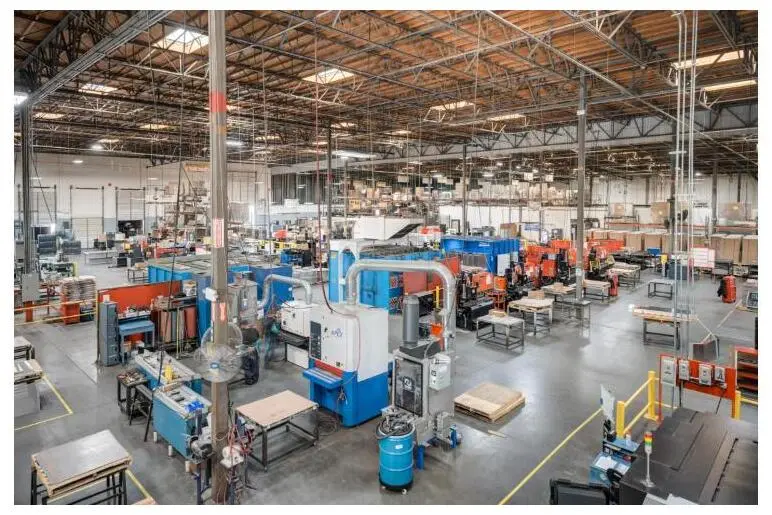
Fabcon operates in this middle ground. Founded in 1977 and operating across 220,000 square feet of US manufacturing space, Fabcon delivers fabrication, CNC machining, finishing and light electromechanical assembly in one location, supported by ISO 9001:2015, AS9100D and ITAR registration. Request a program review from Fabcon.
Design-to-Manufacturability Alignment and Early Engineering Support
A design-to-manufacturing disconnect often drives rework, quoting delays and cost overruns in precision sheet metal programs. When engineering teams submit drawings to a build-to-print shop, problems surface only after first-article production at maximum cost.
A reliable sheet metal fabrication supplier provides a free DFM review before quoting. That review flags issues with bend radii, hole placement, hardware sequencing and finishing tolerances before any material is cut. Buyers should confirm that DFM feedback comes from shop-floor-experienced personnel, not only a sales team, and that written recommendations accompany every quote.
Integrated partners such as Fabcon embed engineering and quoting teams in the same workflow. That structure delivers manufacturability feedback at the earliest practical stage of the program.
End-to-End Integration Instead of Multi-Vendor Coordination
Every vendor handoff introduces schedule risk, quality risk and administrative overhead. The primary advantage of an integrated contract manufacturer is the ability to handle both mechanical and electronic manufacturing processes in-house. That capability removes the need to manage multiple vendors and reduces miscommunication and blame-shifting.
To capture this advantage, buyers should verify that a prospective partner performs laser cutting, CNC punching, forming, welding, hardware insertion, finishing and assembly internally rather than subcontracting core processes. A key risk test is whether the facility can perform the full scope of work in-house, because outsourcing introduces quality and schedule risk.
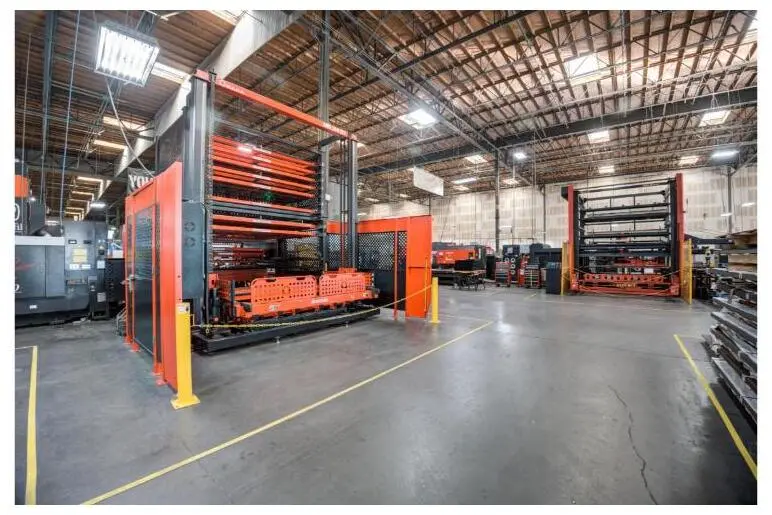
Consolidating cutting, bending, welding and finishing with a single in-house supplier typically shortens overall lead time by removing handoff points between vendors. One purchase order, one accountable partner and one quality record replace a fragmented vendor stack.
Quality Systems and Traceability for Regulated Programs
Aerospace, medical device and energy storage programs carry regulatory and liability requirements that demand documented, auditable quality systems. ISO 9001:2015 provides the baseline. AS9100D extends that framework to aerospace and defense, adding configuration control, risk management and product safety requirements. ITAR registration governs controlled technical data and defense-related manufacturing.
A complete traceability system must connect the received material heat number through production lots to finished parts using work orders, tagged remnants, traveler records or ERP lot tracking. A material test report alone does not provide adequate control without lot linkage.
Fabcon’s quality management system spans every stage of the build under ISO 9001:2015 and AS9100D, with full traceability and compliance with UL and CSA standards.
Scaling from Prototype to Mid-Volume Production
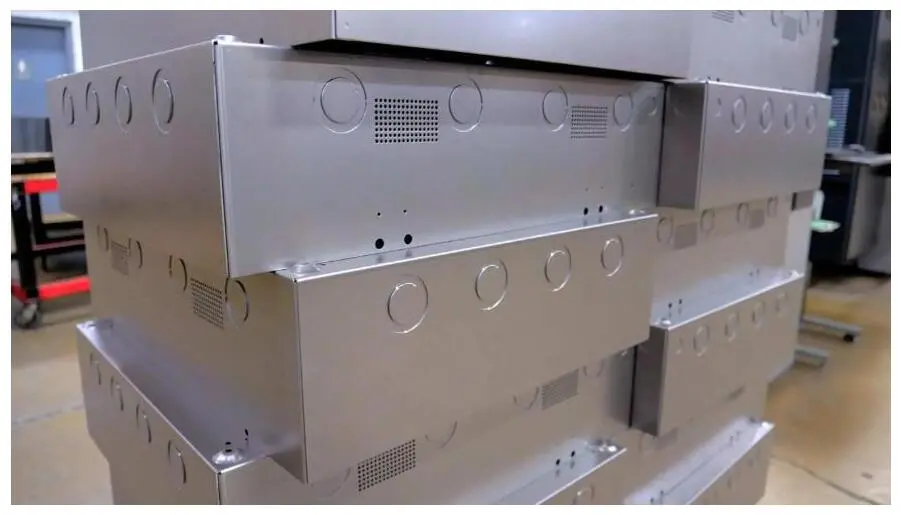
Programs that start as prototypes must transition to mid-volume production without requalification delays, tooling surprises or quality variation. Effective US-based precision sheet metal contract manufacturers build both prototypes and production parts on the same equipment. That continuity allows test results to predict volume outcomes and avoids variation from retooling.
Buyers should request evidence of how a facility manages capacity across concurrent programs and resolves scheduling conflicts during peak demand. Shops optimized for low-volume prototypes may lack the discipline for sustained mid-volume delivery.
Fabcon’s agile production cells adapt to changing volumes, mixed SKUs and evolving bills of materials without the high minimums or rigid onboarding timelines that characterize large CMs.
Lead-Time Reliability Under Launch Pressure
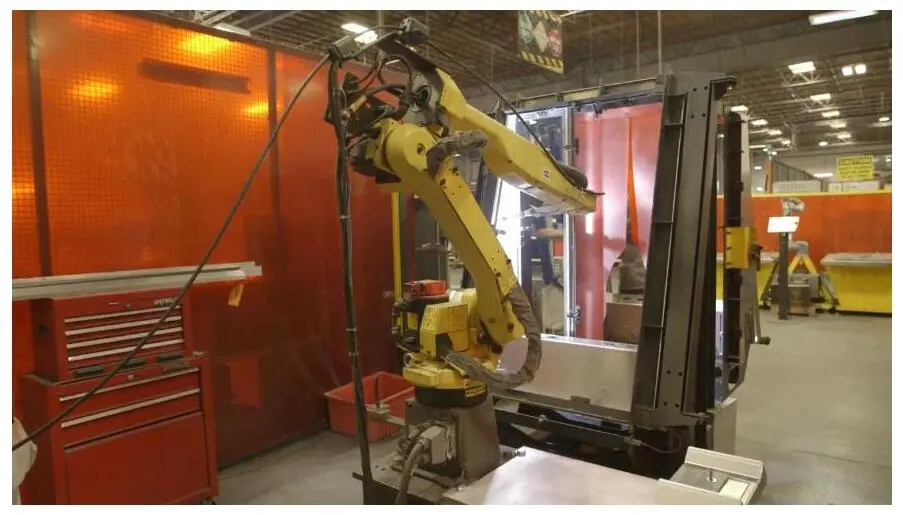
Compressed launch timelines define many NPI programs for operations leaders. Lead-time reliability depends on internal control. A partner that owns fabrication, finishing and assembly can sequence work without waiting on third-party schedules or inter-vendor freight.
Red flags include quotes that cannot itemize material, labor and tooling costs and heavy outsourcing of core processes such as welding or finishing. These patterns indicate that stated lead times depend on external variables outside supplier control.
Procurement teams should request actual on-time delivery data instead of relying on verbal commitments.
Total Cost of Ownership Instead of Unit Price
Unit price often misrepresents program cost. Total landed cost for sheet metal fabrication includes freight plus the hidden costs of rejects, rework, delays and ongoing supplier management. A slightly higher unit price from a reliable supplier often produces a lower overall cost than a cheaper quote that results in late or out-of-spec deliveries.
This reality explains why experienced procurement teams rank price fourth among evaluation criteria, behind quality systems, delivery reliability and engineering capability. Buyers who lead with price often pay more in downstream program costs because the lowest quote can signal gaps in process control or capacity management.
Vendor consolidation compounds these savings by reducing the administrative burden of managing multiple suppliers. Fewer purchase orders, fewer quality audits and fewer coordination touchpoints reduce overhead across the supply chain and strengthen accountability.
Domestic Vertical Integration and 2026 Supply-Chain Resilience
KPMG forecasts that ongoing tariffs and non-tariff protectionism will continue to alter landed costs rapidly in 2026. Sourcing teams must reassess materials, shipping routes and customer pricing on a recurring basis. Trade disruption has turned supply chain design into a recurring risk-management discipline instead of a one-time cost exercise.
More than 3,400 data centers were announced or under construction in the US as of early 2026, which accelerates demand for supporting manufacturing infrastructure. US construction spending reached a seasonally adjusted annual rate of approximately $2,169 billion in December 2025, reinforcing that trend.
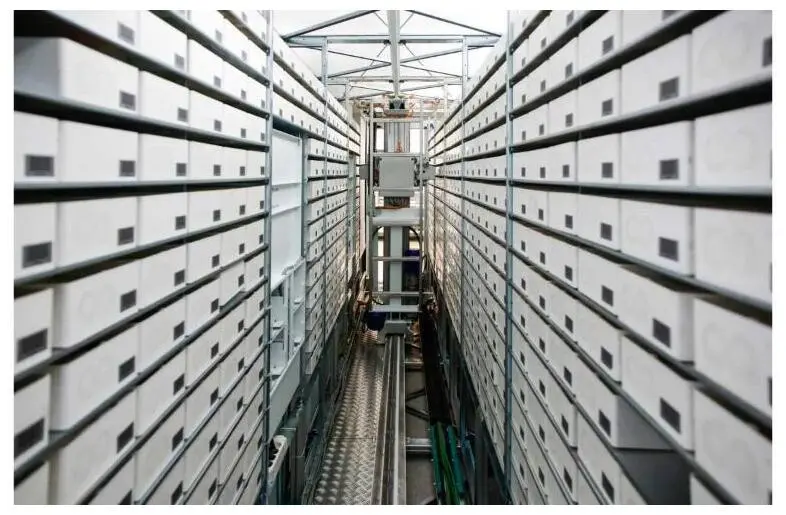
Forty-three percent of surveyed companies plan to shift supply chains toward the US over the next three years. A domestic integrated partner with broad in-house capabilities can absorb that shift without full requalification of new suppliers.
Fabcon’s US-based, vertically integrated model positions infrastructure and technology OEMs to respond to tariff changes, demand spikes and program pivots without rebuilding their supply chain from scratch. Explore how Fabcon’s domestic integration supports supply-chain resilience.
Due-Diligence Checklist for Integrated Sheet Metal Partners
This checklist translates the evaluation themes into practical verification steps for supplier qualification.
- ISO 9001:2015 certification is current and covers all services being procured, including finishing and assembly.
- AS9100D certification is active for aerospace and defense programs, with scope verified against the specific work being placed.
- ITAR registration is confirmed for any program involving controlled technical data or defense articles.
- Core processes such as laser cutting, forming, welding, finishing and assembly are performed in-house, not subcontracted.
- DFM review is included in the standard quoting process, with written recommendations provided before first-article production.
- First-article inspection reports, in-process inspection records and material traceability documentation are available on request.
- The facility can demonstrate prototype-to-production continuity using the same equipment and process documentation.
- Actual on-time delivery data is available, not only verbal commitments.
- A site visit or video tour is offered to confirm equipment condition, workflow organization and quality system implementation.
- Change-control processes are documented, with a clear protocol for managing BOM revisions and engineering changes.
Addressing Common Concerns About Integrated Partners
Cost perception: Integrated partners rarely present the lowest unit price. The relevant comparison is total program cost, including rework, delays, quality escapes and supplier management overhead, not line-item price. US-based contract manufacturers that offer blanket ordering and inventory management programs can reserve capacity, lock pricing and release finished stock against customer schedules, which shortens effective lead times during peak demand.
Scalability concerns: Mid-volume programs do not require a large CM’s infrastructure. Agile production cells built for high-mix, variable-volume work scale more efficiently for prototype-to-mid-volume programs than rigid high-volume lines that price small orders to discourage them.
Existing supplier relationships: Many metal fabrication shops stop at sheet metal. An integrated partner that adds finishing, wiring and light electromechanical assembly in one facility reduces vendor count, compresses timelines and provides system-level alignment that a basic fabrication shop cannot match. The transition cost often recovers within the first program cycle.
When an Integrated US Partner Fits the Program
Mid-volume OEMs managing fragmented vendor bases, quality handoff risks and compressed launch timelines in 2026 have a clear structural alternative. A domestic integrated precision sheet metal contract manufacturer combines fabrication, finishing and assembly in one facility with engineering collaboration, documented quality systems and volume flexibility.
The evaluation framework remains direct. Confirm in-house process breadth. Verify active certifications against the specific scope of work. Request actual delivery performance data. Conduct a site visit. Assess DFM capability and change-control discipline. Then compare total program cost, not unit price.
Fabcon has served infrastructure and technology OEMs from prototype through production for nearly five decades, maintaining the integrated approach and quality certifications described earlier. One partner, one purchase order and full accountability from raw material to finished assembly.
Start a program review with Fabcon’s engineering and quoting team.
Frequently Asked Questions
What defines a precision sheet metal contract manufacturer?
A precision sheet metal contract manufacturer manages the full production lifecycle, from engineering support and DFM review through fabrication, finishing and light electromechanical assembly, under documented quality systems with traceability at every stage. A job shop typically handles small-lot, build-to-print work with minimal program infrastructure, no engineering collaboration and limited finishing or assembly capability. For OEM programs, the practical difference is accountability, because a contract manufacturer owns the outcome across the entire build while a job shop delivers parts and leaves integration to the customer.
Why does vertical integration matter for mid-volume programs?
Vertical integration removes vendor handoffs that create schedule delays, quality escapes and coordination overhead. When fabrication, finishing and assembly occur in one facility under one quality management system, the manufacturer controls sequencing, inspection and change management without depending on third-party schedules or inter-vendor freight. For mid-volume programs with evolving bills of materials and compressed launch timelines, that internal control reduces program risk and total cost.
Which certifications support regulated-industry work?
ISO 9001:2015 provides the baseline for general OEM manufacturing, covering documented procedures, material traceability and independently audited quality management systems. AS9100D extends that framework for aerospace and defense programs, adding configuration control, risk management and product safety requirements. ITAR registration is required for any program involving controlled technical data or defense articles. For medical device programs, ISO 13485 is the relevant standard. Buyers should verify that each certificate is current and that its scope explicitly covers the services being procured, because a sheet metal fabrication certificate does not automatically extend to welding, finishing or assembly operations.
How can procurement teams assess scalability from prototype to production?
The most reliable indicator is whether the facility builds prototypes and production parts on the same equipment using the same process documentation. When tooling, fixturing and work instructions carry over from prototype to production, first-article results predict volume outcomes. Buyers should also request evidence of how the facility manages capacity across concurrent programs, ask for actual on-time delivery data across a range of order sizes and conduct a site visit to observe workflow organization and work-in-process volumes.
How does Fabcon support multiple industries from one facility?
Fabcon’s vertically integrated model spans in-house design and engineering, precision sheet metal fabrication, CNC machining, certified welding, powder coating, wet paint, military-grade finishing, hardware insertion, light electromechanical assembly and fulfillment logistics within US facilities totaling 220,000 square feet. That breadth allows Fabcon to support data center infrastructure programs that require modular enclosures and rack systems, aerospace and defense programs that require AS9100D and ITAR compliance, energy storage programs that require weatherproof electromechanical integration, medical device programs that require full traceability and traffic safety programs that require infrastructure-grade durability without routing work through external subcontractors.