
Key Takeaways
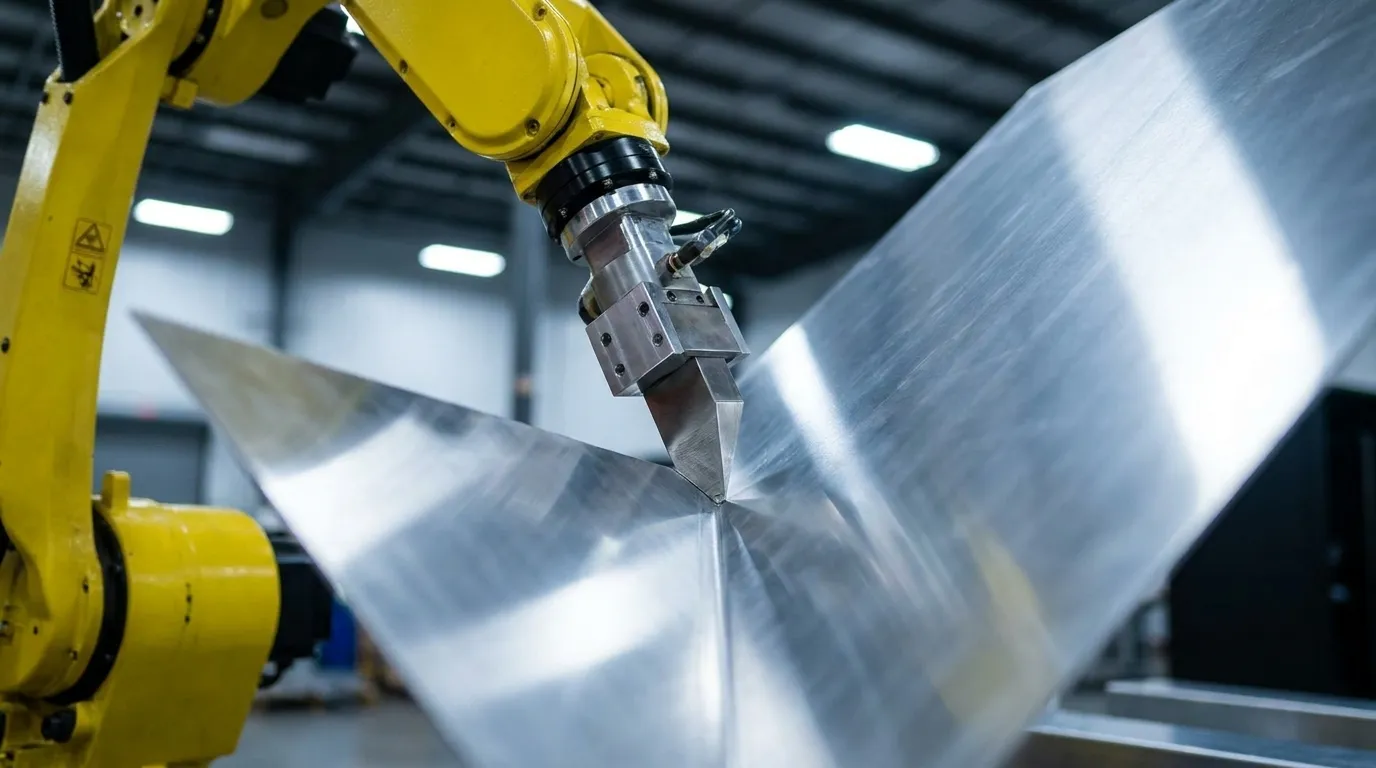
- Scalable metal fabrication for data center racks relies on integrated sheet metal fabrication, CNC machining, finishing and assembly that support growth from prototype to volume production with consistent quality.
- High-density AI workloads drive rack power to unprecedented levels, which increases demands on tolerances, cooling readiness and structural integrity.
- Material selection, laser cutting, CNC punching, robotic bending, certified welding and in-house finishing shape structural performance, thermal behavior and long-term reliability for every rack unit.
- Early DFM collaboration, agile production cells and vertically integrated capabilities reduce handoff delays, quality disputes and redesign cycles during scale-up.
- Fabcon provides 220,000 square feet of U.S. manufacturing, ISO 9001:2015 and AS9100D certification, ITAR registration and prototype-to-production alignment, forming a complete framework for scalable rack programs. Start a scalable rack program with Fabcon.
The Hidden Foundation Of Modern Data Center Rack Programs
Data center infrastructure evolves at a pace that places sustained pressure on fabrication partners. Average rack density rose from 16 kW in 2024 to 27 kW in 2025, the largest recorded year-over-year increase, driven by AI and GPU workloads. Modern AI racks can reach 100 kW or more, which exceeds the capabilities of legacy infrastructure.
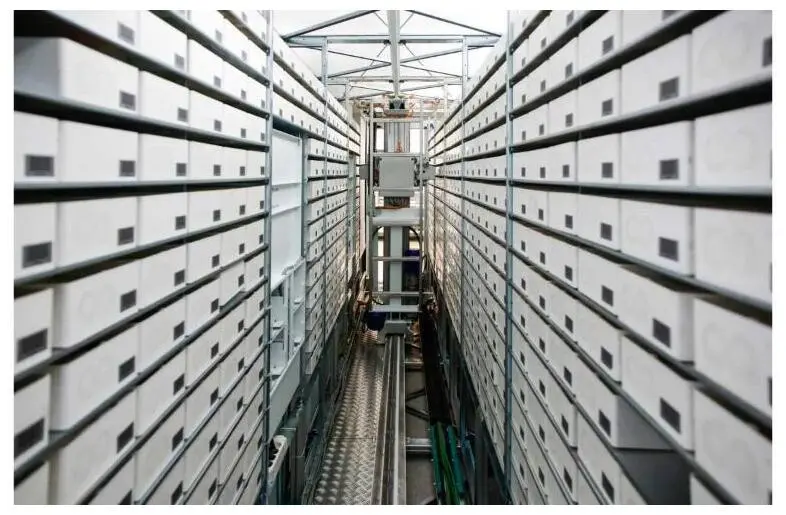
Higher rack densities demand tight tolerances, liquid-cooling readiness and structural integrity that basic job shops rarely support at scale. Scalable, precise and integrated rack fabrication supports deployment timelines and long-term reliability.
Several macro trends reinforce this shift. Reshoring of critical manufacturing, supply chain consolidation and growing certification and regulatory pressure push operators toward fewer, more capable partners. The market often splits between low-complexity job shops that lack engineering depth and large contract manufacturers that impose high minimums and rigid onboarding. Fabcon occupies a middle ground with the infrastructure and end-to-end capability of a large contract manufacturer and the responsiveness that fast-moving data center programs require.
Materials And Precision Processes For High-Performance Racks
Material selection sets the foundation for rack performance. Cold-rolled carbon steel serves as the standard baseline material for indoor powder-coated server rack cabinets, with heavier-gauge steel used for uprights, crossmembers, mounting rails and base reinforcement plates. Aluminum supports applications where weight reduction and corrosion resistance matter most. Structural requirements, thermal behavior and operating environment guide the final choice.
Precision fabrication processes translate those materials into predictable structures. Laser cutting produces clean edges and tight tolerances across complex profiles, while CNC punching handles repeated holes, louvers and knockouts. Forming and robotic bending then deliver consistent bend angles across every unit in a production run. Fit-up accuracy, fixture datums, joint access, heat-input management, weld-sequence planning and inspection protocols determine final frame squareness and mechanical performance. Weld quality for structural joints should comply with AWS D1.3 when contract documents invoke that standard.
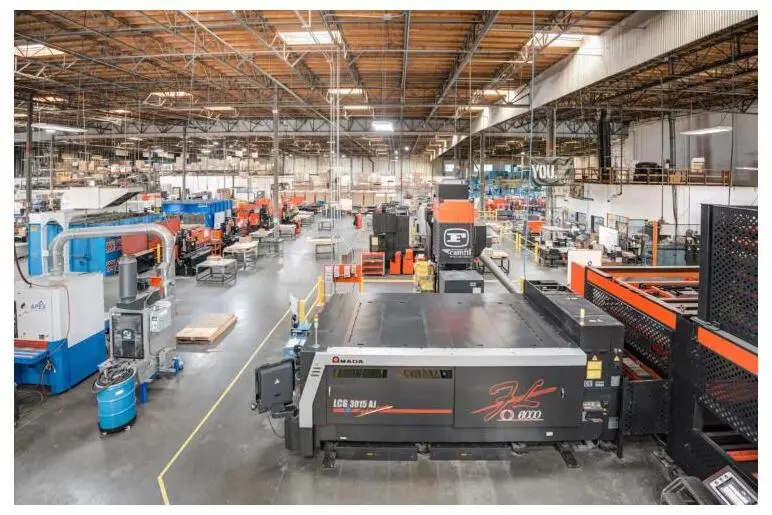
In-house CNC machining supports fabricated assemblies such as U- or L-shaped enclosures, racks and chassis that require hardware insertion or tight dimensional alignment. Producing machined components in the same environment as the fabricated structure improves fit, shortens lead times and removes the coordination burden of a separate machine shop.
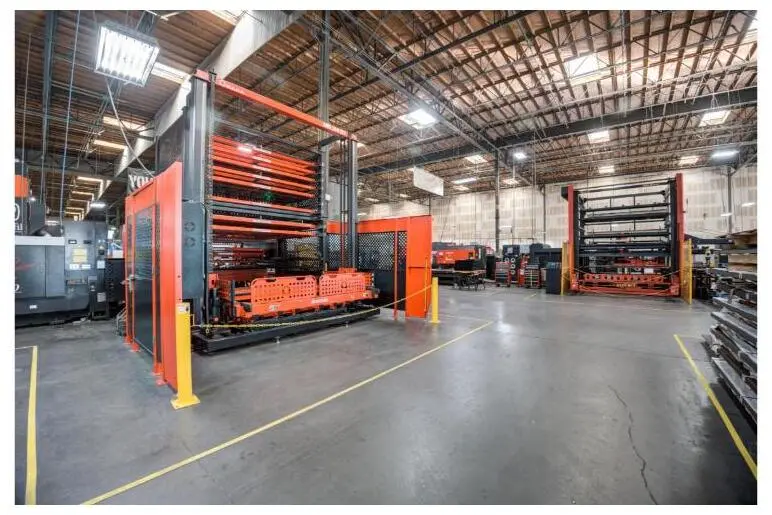
Finishing options for data center racks include powder coat, wet paint, screen printing and mil-spec coatings. Indoor powder-coating systems target a dry-film thickness in the 60–100 µm range, with pretreatment steps such as degreasing, phosphating, rinsing and drying driving coating adhesion. Threaded features, sliding surfaces and bonding contact points require masking before coating. Fabcon performs fabrication, finishing and assembly under one roof, which reduces handoffs and supports consistent quality from prototype through production.
Discuss a rack fabrication program with Fabcon’s team.
Design Priorities For Thermal, Cable And Structural Performance
Effective thermal management starts with controlled airflow. High-density racks running 10–30 kW often require door perforation of 70–80 percent open area to prevent thermal throttling. Perforation patterns, blanking panels and cable-entry sealing all influence airflow paths. ASHRAE TC 9.9 Thermal Guidelines recommend server inlet temperatures of 18–27 °C for Class A1 equipment. Above roughly 15 kW per rack, rear-door heat exchangers, in-row cooling or direct-to-chip liquid cooling often become necessary. Even liquid-cooled hardware rejects residual heat through air, so racks frequently require both liquid interfaces and conventional air-handling features.
Cable management depends on integrated pathways, mounting features and structural provisions that support installation and service. Cable-entry zones need clear opening dimensions after edge protection, minimum cable-bend radii, strain-relief features and maintainable routing paths around PDUs and fluid manifolds.
Structural integration covers seismic behavior, bracing and mounting interfaces. Data centers often fall under Risk Category IV essential facilities in IBC 2024, which triggers an importance factor of 1.5 and requires every anchored component to resist 50 percent more seismic force than equipment in a standard commercial building. Seismic anchorage requirements originate from the building code, and ASCE 7 Chapter 13 governs nonstructural components. Rack frame design must account for load distribution, center-of-gravity location and site-specific seismic parameters.
Early DFM collaboration between the rack designer and the fabricator reduces rework and supports scalable builds. Fabcon engineering and quoting teams review drawings, tolerances and materials before production, then create routers and work instructions that match production-floor realities.
Scalability From Prototype To Production
Scalability for data center rack programs means moving from prototype to pilot to volume production with the same vendor, the same part design and production minimums that match program needs. That definition carries direct operational consequences for engineering and procurement teams.
Agile production cells adapt to changing volumes, mixed SKUs and evolving bills of materials more effectively than rigid production lines. Scaling from prototype to production and supply chain fragmentation rank among the recurring manufacturing challenges for large-scale AI clusters. A single accountable partner with integrated capabilities directly addresses both issues.
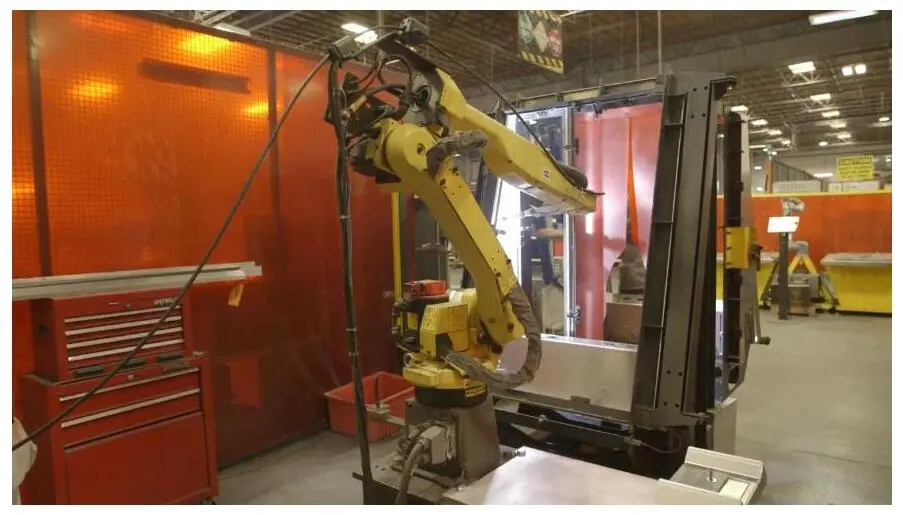
Fragmented vendor networks create handoff delays, inconsistent execution and design-to-manufacturing disconnects. When fabrication, finishing and assembly sit with multiple suppliers, quality finger-pointing becomes likely and lead times extend unpredictably. Fabcon’s prototype-to-production alignment, which includes quick-turn prototypes, in-house engineering and flexible production cells, keeps rack programs on schedule as volume requirements change.
Fabcon focuses on mid-volume programs. The agile production cell structure scales with program needs without the high minimums, long onboarding or overhead rigidity associated with large contract manufacturers.
Discuss a scalable rack program with Fabcon.
Vendor Evaluation Criteria For Rack Fabrication Partners
Engineers and procurement managers evaluating fabrication partners for scalable metal fabrication data center racks can use the following criteria.
- In-House Capabilities: Laser cutting, CNC punching, forming, certified welding, CNC machining, finishing and electromechanical assembly should operate under one roof.
- Engineering Support: DFM collaboration, integrated quoting and prototype-to-production alignment reduce rework and compress development timelines.
- Quality And Compliance: ISO 9001:2015 and AS9100D certification, ITAR registration and UL or CSA compliance where applicable provide traceability and process control for infrastructure-critical programs.
- Scalability: Agile production cells, high-mix capability and support for evolving BOMs without rigid minimums distinguish capable partners.
- Supply Chain And Logistics: One purchase order, one accountable partner, JIT delivery and fulfillment support reduce coordination effort and handoff delays.
- Total Value: Reliability, speed and fewer downstream surprises reduce total program cost even when unit price is not the lowest.
Fabcon aligns with these criteria. The company operates 220,000 square feet of vertically integrated U.S. manufacturing space, holds ISO 9001:2015 and AS9100D certification, maintains ITAR registration and has supported precision fabrication programs since 1977.
Common Pitfalls In Rack Programs And Practical Fixes
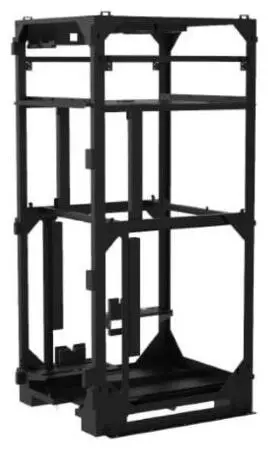
Fragmented vendor networks often cause rack program delays. When one supplier handles sheet metal, another handles finishing and a third handles assembly, accountability diffuses and handoff delays compound. A single vertically integrated partner addresses that risk at the source.
Limited DFM input early in the design process leads to rework that becomes expensive in production. Most of the manufacturing cost in a sheet metal part is decided before a supplier receives the RFQ, because material choice, bend geometry, hole placement, tolerance strategy and assembly design determine operations, setups, tools and inspections. Involving the fabricator before drawing release helps prevent downstream cost and schedule surprises.
Unclear specifications create misaligned expectations around lead time, quality and structural performance. A complete release package should define mechanical interfaces, thermal and airflow requirements, electrical bonding points, material grades, coating requirements and inspection criteria. Fabcon’s engineering team works from customer CAD data, flags manufacturability issues before they reach production and turns design revisions quickly, which directly addresses that risk.
Scaling challenges appear when a program outgrows a job shop’s capacity but does not match a large contract manufacturer’s minimum volume. Fabcon’s agile production cells scale with program needs and support the transition from prototype to mid-volume production without the rigidity or overhead of top-tier global contract manufacturers.
Conclusion: Building A Scalable Rack Fabrication Program
Selecting a fabrication partner for scalable metal fabrication data center racks requires evaluation of technical capabilities, integration scope, quality systems, scalability, supply chain structure and total value as a unified framework. Materials and precision processes set the structural foundation. Thermal and cable management requirements need resolution in design before fabrication begins. Scalability depends on agile production cells and prototype-to-production alignment alongside production capacity, and vendor selection shapes whether a program scales smoothly or accumulates risk at each transition.
Fabcon supports every part of that framework. The company operates 220,000 square feet of vertically integrated U.S. manufacturing space, holds ISO 9001:2015 and AS9100D certification, maintains ITAR registration, provides in-house engineering and DFM collaboration and runs agile production cells that scale from prototype to mid-volume production. This combination positions Fabcon as a strong partner for data center rack fabrication programs.
Recommended next steps include an internal needs assessment that documents rack specifications, load requirements, thermal and cable management needs and volume projections. A review of the current vendor structure can identify handoff risks and consolidation opportunities. A direct consultation with Fabcon’s engineering and quoting team then aligns DFM, materials and production planning with program goals.
Schedule a rack fabrication consultation with Fabcon.