
Key Takeaways
- Sheet metal fabrication in Southern California serves three buyer segments: precision OEM production, architectural and construction, and one-off prototype fabrication.
- Precision OEM programs rely on ISO 9001:2015, AS9100D and ITAR certifications, plus in-house laser cutting, forming, welding, finishing and assembly.
- Matching buyer needs to the right fabricator tier prevents vendor sprawl, quality issues and schedule slips.
- Vertically integrated partners shorten lead time and lower total program cost by keeping fabrication, finishing and assembly under one roof.
- For mid-volume precision OEM programs in Southern California, start with a single accountable partner.
The Three Buyer Segments In Southern California Sheet Metal Fabrication
Southern California fabrication activity clusters into three buyer segments. That structure shapes certification needs, program risk and the type of partner that fits.
Precision OEM Production Fabricators (Orange County, Los Angeles, San Diego)
Precision OEM fabricators support aerospace, medical device, data center, energy storage, EV infrastructure, telecommunications and industrial OEM programs. These programs demand tight tolerances, repeatable production, documented quality systems and engineering collaboration from prototype through production.
Certification requirements at this tier are specific. ISO 9001:2015 is the baseline quality management system and covers calibration, traceability, nonconforming product control and corrective action. AS9100D adds more than 100 aerospace requirements, including configuration management, counterfeit part prevention, foreign object debris control and OASIS database registration. ITAR registration, administered by the U.S. State Department Directorate of Defense Trade Controls, governs access to defense articles and controlled technical data. Each certification covers a different risk category: quality process, aerospace traceability and export control.
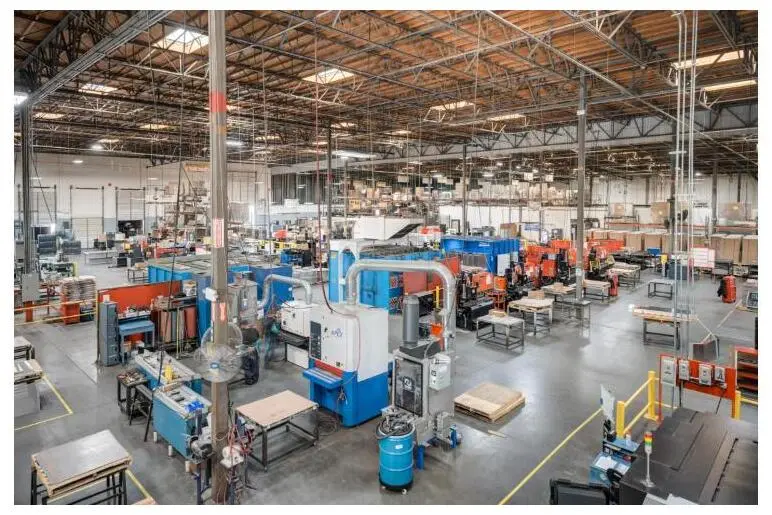
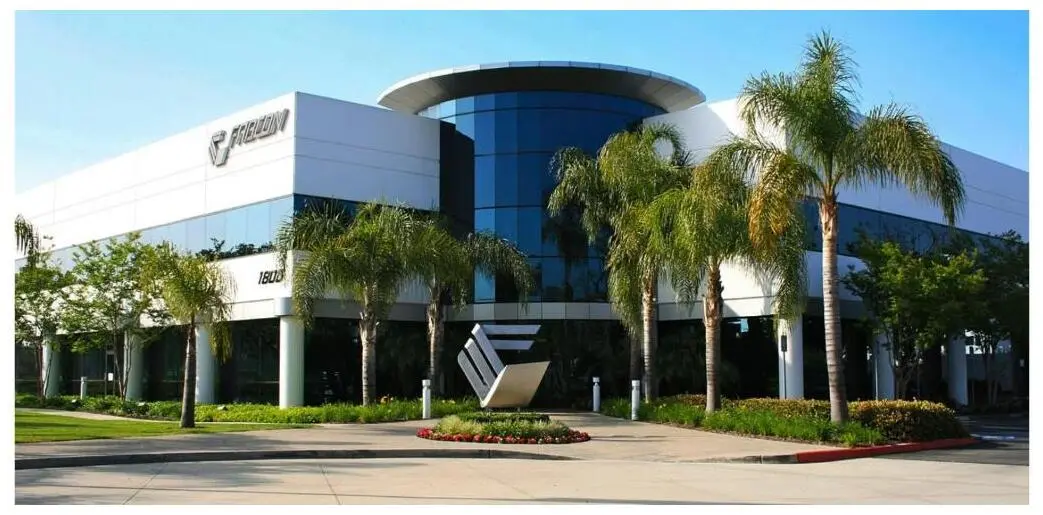
For mid-volume precision OEM programs in Southern California, Fabcon offers a strong fit. The company, founded in 1977, operates within a 220,000 sq. ft. manufacturing footprint across two U.S. locations, including a Santa Ana facility. Fabcon holds ISO 9001:2015 and AS9100D certification and is ITAR registered. In-house capabilities include engineering and DFM collaboration, laser cutting, CNC punching, forming, welding, CNC machining, powder coating, wet paint, screen printing, mil-spec finishing and light electromechanical assembly. That vertical integration keeps fabrication, finishing and assembly under one quality system and one PO.
Other precision OEM fabricators in the region serve aerospace and defense programs across Los Angeles and Orange County. Buyers should verify current AS9100D status for any supplier in the IAQG OASIS database before shortlisting.
Sheet Metal Fabricators In Los Angeles
Los Angeles supports fabricators across all three segments. Precision OEM shops in the greater LA area serve aerospace and defense primes, medical device manufacturers and industrial OEM programs. Architectural and ornamental shops cluster in the same geography and support commercial construction and interior projects. OEM sourcing teams benefit from filtering by certification tier before comparing capability.
Sheet Metal Fabricators In San Diego
San Diego’s fabrication market reflects its defense and aerospace concentration. Precision fabricators in the area often hold AS910D certification and ITAR registration to support defense primes and Tier 1 aerospace suppliers. Defense-related programs should always include an OASIS check and direct confirmation of ITAR registration with any San Diego fabricator under review.
Sheet Metal Fabricators In Orange County
Orange County contains a dense cluster of precision OEM fabricators, including Fabcon’s Santa Ana facility. The region’s proximity to aerospace, medical device and technology OEM customers makes it a hub for mid-volume contract fabrication. Fabcon’s Santa Ana location supports in-person DFM reviews, fast issue resolution and direct engineering collaboration for programs across Orange County and the broader Southern California region.
Architectural And Construction Fabricators
Architectural fabricators support building facades, structural trim, railings and ornamental metalwork. These shops focus on finish quality, code compliance and installation coordination. Tight-tolerance OEM production sits outside their core competency. Search results often mix these firms with precision OEM fabricators, which creates confusion for industrial and regulated programs.
Shops in this segment across Southern California include California Sheet Metal and similar firms that serve construction and architectural trades in Los Angeles and Orange County.
One-Off And Prototype Fabricators
Prototype and one-off fabricators support R&D programs, custom fixtures and low-volume builds where fast quoting and flexibility matter more than certification depth or production scale. These shops suit early-stage development work and quick-turn concepts. They lack the structure for repeatable mid-volume production, so mid-program transitions to a production fabricator introduce qualification risk and schedule disruption.
Shops such as Reliable Sheet Metal Works in Fullerton, which offers rapid design and prototyping services across Orange, Riverside and San Bernardino Counties, and Macias Sheet Metal serve this segment across Southern California.
Review Fabcon’s precision OEM capabilities
How To Choose A Sheet Metal Fabricator In Southern California
A practical evaluation framework covers six dimensions. Applying all six reduces sourcing risk and clarifies which partners fit each program.
- Technical Capabilities. Confirm that the fabricator performs laser cutting, CNC punching, press brake forming, welding and CNC machining in-house. When any of those processes is outsourced, the buyer absorbs the handoffs, schedule risk and quality gaps that follow.
- Integration Scope. Ask whether finishing such as powder coat, wet paint and mil-spec coating and assembly occur in-house or through subcontractors. A fabricator that sends parts to an outside coating shop introduces a handoff outside the buyer’s control. In-house finishing and light electromechanical assembly signal a full-service partner.
- Quality And Compliance. Verify certifications against actual program requirements. ISO 9001:2015 provides the baseline quality system. AS9100D, required for aerospace and defense programs, adds configuration management, counterfeit part prevention and OASIS registration on top of ISO 9001. ITAR registration applies when programs involve defense articles or controlled technical data. An AS9100D certificate covers ISO 9001 requirements automatically. Buyers should confirm AS9100D status in the IAQG OASIS database and ensure the certificate scope matches required processes.
- Scalability And Flexibility. A job shop builds to print in small lots with limited program infrastructure. A large global contract manufacturer offers scale but often requires high minimums and long onboarding. A vertically integrated mid-volume partner such as Fabcon occupies the middle ground and uses agile production cells that support prototype builds and production volumes without the rigidity of a large CM.
- Supply Chain And Logistics. Fewer vendors create fewer handoffs, fewer quality boundaries and clearer accountability. Consolidating cutting, bending, welding and finishing with a single vertically integrated supplier often cuts overall lead time because parts avoid queues and transit between facilities.
- Total Cost Versus Lowest Price. The least expensive quote rarely reflects the lowest total manufacturing cost once scrap, rework, expedited freight, missed deliveries and supplier changes enter the picture.
Key questions for a Southern California fabricator before awarding work include certification scope, in-house finishing, DFM collaboration, lead-time control for finished assemblies and shipment traceability.
DFM capability deserves specific attention. Early design-for-manufacturability collaboration reduces rework, improves cost efficiency and supports scalable production. A design that can be made once may still fail in repeatable production. Buyers benefit from asking how engineering and quoting teams collaborate before production and from reviewing examples of past DFM improvements.
Schedule a DFM review with Fabcon
What Sheet Metal Fabrication Costs In Southern California And What Drives The Price
Sheet metal fabrication cost in Southern California follows a clear set of variables. Responsible fabricators price work only after understanding each factor.
Material Type And Grade. Material often represents the largest single line item in a sheet metal quote. Stainless steel costs more than cold-rolled steel, and aluminum typically sits between those options. Exotic alloys add lead time and supplier qualification steps that increase cost beyond raw material price.
Gauge And Thickness. Heavier gauge increases cost beyond material weight because it raises bend tonnage requirements. Thick material can also shift a job to a larger press brake with a higher hourly rate and slower cycle time.
Part Complexity. Each additional bend requires a separate press brake setup, and each cutout adds laser time. Tight corner radii or compound angles increase scrap risk. Setup and programming represent fixed costs that amortize across production quantity, which explains the higher per-part cost of prototype runs.
Tolerance Requirements. Tightening a tolerance on a noncritical feature increases per-part cost through extended setup and inspection time. Tight tolerances work best when reserved for assembly-critical features.
Production Volume. Per-part cost falls as volume increases because fixed setup costs spread across more units. The cost curve flattens above a few hundred pieces.
Finishing Requirements. Powder coating, anodizing, wet paint and mil-spec coatings each add a discrete cost line. Finishing sequence also affects cost. A part that needs welding and powder coating must be welded, cleaned and then coated. In-house finishing removes scheduling dependence on an outside vendor.
Assembly Scope. Hardware insertion, wiring and electromechanical assembly add labor and handling time. When these steps occur in-house alongside fabrication, the coordination cost of managing separate vendors disappears.
Sourcing cutting, bending, welding and finishing from multiple vendors introduces coordination cost, shipping cost and quality risk at each handoff. Vertically integrated partners reduce total program cost by eliminating those handoffs.
Request a costed proposal from Fabcon
Is Sheet Metal Fabrication Cheaper Than Machining?
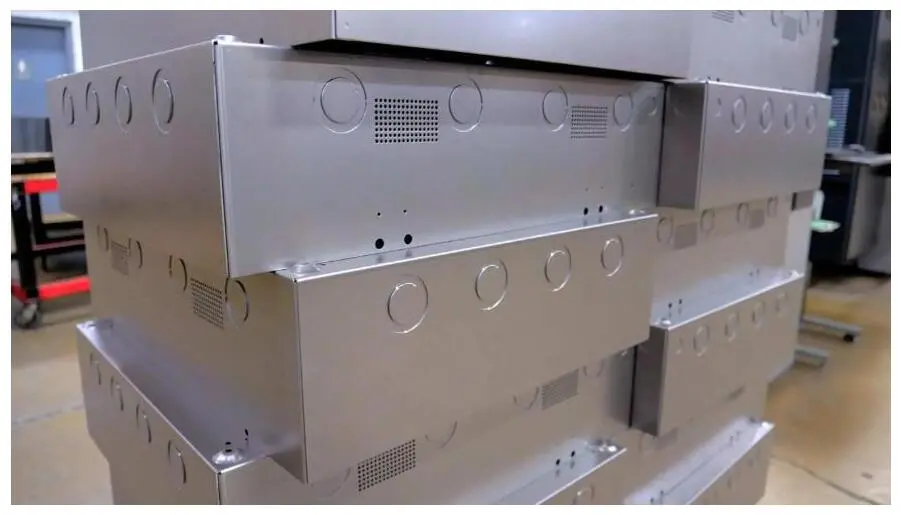
Cost drivers explain why sheet metal wins on some parts and loses on others. Thin-wall enclosures, brackets, chassis, panels and frame-type components with uniform walls can be made by either method. At higher volumes, sheet metal fabrication is generally more cost-effective than machining because it wastes less material and cycles faster. CNC machining remains more cost-effective for low volumes, thick or complex geometries and precision features.
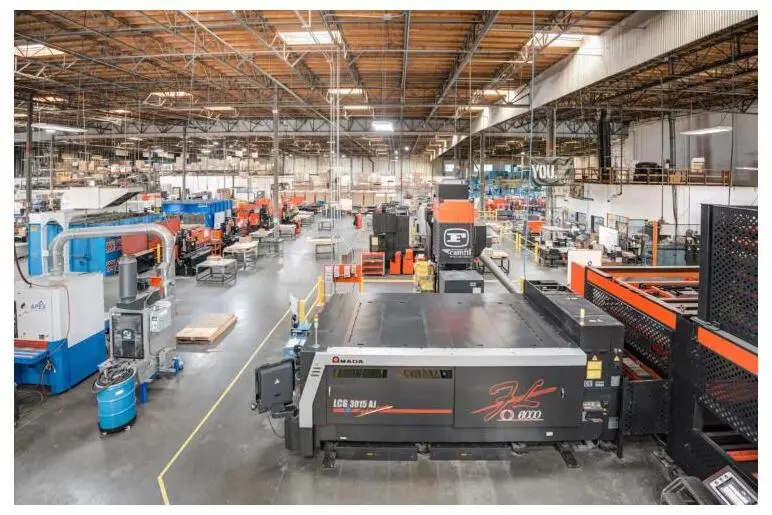
Many precision OEM programs combine both methods. An enclosure may use fabricated sheet metal while internal mounting features require machined tolerances. When fabrication and machining sit with separate vendors, dimensional fit becomes a coordination problem for the buyer. When both processes run in-house at Fabcon, one engineering team controls fit and alignment across the full assembly and the buyer manages a single PO.
Combine fabrication and machining with Fabcon
Job Shop Vs. Contract Manufacturer Vs. Vertically Integrated Partner
Provider structure shapes program risk, engineering support and the number of relationships a buyer manages.
Job shops operate as build-to-print vendors. They handle individual work orders with limited program continuity. Mission-critical OEM work often exceeds job-shop infrastructure, including DFM review, aerospace or defense certifications and a clear path from prototype to production within one relationship. The buyer becomes the integration layer and manages multiple POs, inspection handoffs and schedules.
Large And Global Contract Manufacturers provide scale and global reach. They typically require high minimum volumes, long onboarding and rigid production structures. These providers suit mature, high-volume programs with stable BOMs and predictable demand.
Vertically Integrated Mid-Volume Partners such as Fabcon support high-mix, evolving OEM programs. Engineering, fabrication, machining, finishing and electromechanical assembly run under one roof and one quality system. A vertically integrated contract manufacturer coordinates multiple processes inside one engineering and program-management chain. The buyer gains one PO, one accountable partner and internal resolution of quality issues.
The distinction between a job shop and a vertically integrated partner determines whether the buyer manages a supply chain or a single relationship. A job shop builds parts to print in small lots, while a contract manufacturer supports ongoing OEM production with quality systems, tooling management, scheduled releases and engineering support.
Engage Fabcon as a vertically integrated partner
When To Choose A Local Southern California Fabricator Vs. An Out-Of-State Partner
Provider structure also shapes how much geography matters. A local partner changes engineering access, freight exposure and response time.
A local Santa Ana or Orange County partner supports in-person DFM reviews, fast issue resolution and tight engineering collaboration throughout the program lifecycle. When a design change arrives mid-program, the engineering team can respond the same day. Site visits remain practical, and freight exposure and long-transit supply chain risk decrease.
Out-of-state or offshore options may offer lower unit pricing on simple, stable programs. The tradeoff appears in freight cost and risk, longer communication cycles, slower engineering response and exposure to transit disruptions. Transportation strategy now connects directly to tariff strategy, and many programs have absorbed higher total cost from freight volatility and supply chain disruption.
For mid-volume precision OEM programs in Southern California, short lead times, reduced freight exposure, in-person engineering collaboration and a single accountable partner often outweigh the unit-price advantage of a distant source. That advantage grows for programs with evolving BOMs, tight tolerances or certification requirements.
Partner locally with Fabcon’s Santa Ana facility
Frequently Asked Questions
How Do Southern California OEMs Reduce Vendor Count In Sheet Metal Programs?
OEMs reduce vendor count by consolidating fabrication, machining, finishing and light assembly with a vertically integrated partner. This structure replaces multiple POs and handoffs with one accountable relationship and one quality system.
How Do Certifications Affect Supplier Shortlisting?
Certifications filter the supplier pool before capability comparisons begin. ISO 9001:2015 covers baseline quality systems, AS9100D adds aerospace-specific controls and ITAR registration covers export-controlled work. Programs that require AS9100D or ITAR should exclude suppliers that lack those credentials.
How Can Buyers Validate A Fabricator’s Quality Claims?
Buyers validate claims by reviewing certificates, checking AS9100D status in the IAQG OASIS database, confirming certificate scope and conducting site visits. Discussions with quality and engineering teams reveal how procedures operate on the floor.
Which Programs Benefit Most From A Local Southern California Fabricator?
Programs with evolving designs, tight tolerances, complex assemblies or aerospace and defense certifications gain the most from a local partner. These programs depend on fast engineering feedback, controlled change management and reliable logistics.
Start with a single accountable partner
Conclusion: Matching Buyer Type To Fabricator Type
Buyer segment and fabricator tier align best when program needs, certification requirements and integration scope match. That alignment determines whether a program runs through one accountable partner or a network of vendors.
Fabcon’s Santa Ana facility brings in-house engineering, fabrication, CNC machining, finishing and light electromechanical assembly under one quality system. That structure reduces handoffs and the rework, delays and cost that follow them.
Recommended next steps include confirming the applicable buyer segment, building a shortlist by segment and certification tier, scheduling site visits or engineering calls and requesting a DFM review before committing to production.
Request a DFM-driven quote from Fabcon