

Key Takeaways
- ISO certification verifies a fabricator’s quality management system, not that individual parts meet drawings.
- Buyers verify certificate validity, scope coverage and accreditation status before issuing a PO.
- RFQ packages include CoC, MTRs, FAI reports and traceability records.
- ISO 9001:2015 is the baseline standard. AS9100D, ISO 13485, ISO 14001 and ISO 45001 apply by industry.
- Start a supplier qualification with an ISO certified sheet metal fabrication partner.
The Verification Gap in ISO Certified Sheet Metal Fabrication
Many supply chain and engineering teams stop verification at a website certificate logo. Real diligence goes further and reduces risk.
An ISO certificate on a website is a claim. Proof requires a verified certificate with a scope statement covering sheet metal fabrication, a current registrar database entry and a complete RFQ documentation package. This guide explains how buyers confirm that proof before a PO is issued.
Before Getting Started: Audience and Core Terms
This guide serves procurement managers, strategic sourcing managers, commodity managers, supply chain leaders, mechanical engineers, engineering managers and NPI program leads who evaluate ISO certified sheet metal fabrication suppliers.
Key terms used throughout:
- QMS (Quality Management System): The documented system of processes, procedures and records a fabricator maintains to control quality.
- Scope statement: The section of a certificate that defines which products, processes and sites are covered.
- Accreditation body: An independent body such as ANAB in the U.S. or UKAS in the U.K. that confirms a registrar is competent to issue certificates.
- Registrar: The third-party certification body that audits and issues the certificate.
- CoC (Certificate of Conformance): A supplier declaration that a shipped lot conforms to the purchase order and drawing.
- AS9102 FAI (First Article Inspection): A structured inspection package documenting every drawing characteristic on a first production part.
- MTR (Material Test Report): A mill-issued document certifying a material’s chemical composition, mechanical properties and heat number.
- Lot traceability: An unbroken documentation chain linking finished parts to raw material heat numbers and production records.
- ITAR registration: A legal registration with the Directorate of Defense Trade Controls required for manufacturers handling U.S. Munitions List items.
- AWS D1.1: The American Welding Society structural welding code. Welder certifications confirm operators meet its requirements.
- CAPA (Corrective and Preventive Action): A documented process for identifying root causes of nonconformances and preventing recurrence.
- Nonconformance: Any output that fails to meet a specified requirement.
The standard hierarchy for sheet metal fabrication is clear. ISO 9001:2015 is the baseline QMS standard for manufacturers. AS9100D adds aerospace and defense requirements on top of ISO 9001. ISO 13485 applies to medical device manufacturing. ISO 14001 covers environmental management and ISO 45001 covers occupational health and safety. Large OEMs often require the adjacent standards.
In the U.S., reshoring pressure and infrastructure-driven demand across data centers, energy storage, EV infrastructure, telecom, medical devices and traffic safety have made documented certification a baseline procurement requirement.
Discuss ISO certified sheet metal fabrication for upcoming programs.
Step 1: What ISO 9001:2015 Requires From a Sheet Metal Fabricator
ISO 9001:2015 certification means an accredited registrar audited the fabricator’s quality management system and confirmed it controls production in a disciplined, repeatable way. The standard certifies the system that makes parts, never the parts themselves.
For a sheet metal fabricator, the standard requires documented controls across core activities:
- Quoting and contract review, confirming drawing revision, tolerances and specifications before production begins
- Laser cutting, CNC punching and forming, with work instructions at the point of use
- Welding, with operator competence records and process controls
- In-process and final inspection, with calibrated instruments traceable to national standards
- Nonconforming output, with physical segregation, documented disposition and root-cause corrective action
- Material traceability that links finished parts to raw material heat numbers and supplier certificates
ISO 9001:2015 clause 8.5.1 requires controlled production conditions. That means work instructions at the point of use, correct tooling and defined acceptance criteria before product is released from each stage. On a fabrication floor, auditors sample real work. They check that print revisions on the floor match the order, calibration stickers are current on calipers and CMMs, job travelers accompany parts through forming and welding and a quarantine area is actively used with NCRs written and dispositioned.
These controls appear in daily operations as routers, work instructions, inspection plans, nonconformance reports and traceability records. A supplier that can walk through these documents during a plant visit operates a live QMS.
Step 2: How To Verify an ISO 9001 Certificate Is Valid and In Scope
Verification of the certificate prevents avoidable risk. Certification fraud monitoring organizations estimate that fake or misleading certificates represent a portion of certificates in international B2B transactions. The following checklist takes under 15 minutes.
- Confirm the accreditation body. The registrar named on the certificate must be accredited by a recognized national accreditation body such as ANAB in the U.S. or UKAS in the U.K.
- Read the scope statement. The scope must explicitly cover sheet metal fabrication, not only distribution, assembly or general manufacturing.
- Check the certificate number, issue date and expiry date. ISO 9001 certificates are valid for three years with annual surveillance audits.
- Look up the certificate in the registrar’s public database. Use IAF CertSearch or the registrar’s client directory to confirm active status and matching details.
- Verify the legal entity name and facility address. The certified site must match the facility that will run the parts.
- Confirm process coverage. Check whether the scope covers welding, finishing and assembly when those processes appear in the RFQ.
- Request the most recent surveillance audit summary. Ask whether any open corrective actions exist from the last audit.
- Re-verify before major program awards. For AS9100D, perform OASIS status checks before every new purchase order.
Use this checklist to qualify Fabcon as a certified fabrication partner.
Once the certificate is verified, the next question concerns which standard applies to the program. That answer depends on the industry segment.
Step 3: ISO Standards That Apply to Sheet Metal Fabrication
ISO 9001:2015 is the most widely used quality management standard worldwide and serves as the baseline for ISO certified sheet metal fabrication.
Beyond the baseline, the applicable standard depends on the industry segment:
- Aerospace and defense: AS9100D is required. It adds requirements beyond ISO 9001, covering counterfeit part prevention, configuration management, operational risk management and product safety. A supplier holding only ISO 9001 cannot satisfy AS9100D flowdown requirements on flight-critical programs. Verify AS9100D status through the IAQG OASIS database.
- Medical devices: ISO 13485 applies. It adds regulatory compliance, risk management, traceability and process validation requirements specific to the medical device lifecycle.
- Data centers, energy storage, EV infrastructure, telecom and industrial OEM: ISO 9001:2015 is the minimum. Large OEMs in these segments increasingly require ISO 14001 and ISO 45001.
- Traffic safety and transportation: ISO 9001:2015 governs quality. Structural and safety-critical programs often require documented material traceability and welding certifications.
ISO 9001 and AS9100D share the same process approach and clause structure. AS9100D adds depth in traceability, risk management and documentation, particularly First Article Inspection per AS9102, configuration management and counterfeit parts controls. Organizations can pursue AS9100D certification directly, since AS9100D incorporates all ISO 9001:2015 requirements and adds aerospace-specific requirements.
Step 4: ISO 9001 vs. ISO 14001 vs. ISO 45001 for Fabricators
ISO 9001, ISO 14001 and ISO 45001 address different management domains. A sheet metal fabricator may hold one, two or all three.
ISO 9001:2015 covers quality management, the processes that control how parts are made, inspected and delivered. Buyers verify this standard when qualifying an ISO certified sheet metal fabrication partner.
ISO 14001 covers environmental management, including how a fabricator measures and reduces environmental impact across production, finishing and waste handling. Large infrastructure OEMs and government-adjacent programs increasingly require it.
ISO 45001:2018 covers occupational health and safety management. It explains how a fabricator identifies hazards, manages legal compliance and protects workers. The standard replaced OHSAS 18001 and follows the same Plan-Do-Check-Act methodology as ISO 9001 and ISO 14001, which makes integrated management systems practical.
Buyers often encounter references to the “6 mandatory procedures for ISO 45001.” These are documented processes for hazard identification and risk assessment, legal and regulatory compliance, OH&S objectives and planning, communication and participation, operational controls and emergency preparedness and response. They shape the fabricator’s internal safety program and inform audit questions.
Program-level guidance is straightforward. Quality-critical programs require ISO 9001:2015 at minimum. Aerospace and defense require AS9100D. Medical device programs require ISO 13485. Large infrastructure and OEM buyers specify ISO 14001 and ISO 45001 when those standards are contractually relevant.
Step 5: ISO 9001:2026 and the Transition Timeline
ISO/TC 176/SC 2 has scheduled publication of the sixth edition of ISO 9001 for Sept. 16, 2026. The Final Draft International Standard has been approved with broad international support.
The transition period is expected to run three years, pointing to an approximate deadline of September 2029. ISO 9001:2015 certificates remain valid during that window when issued by an accredited registrar.
The changes are considered moderate. Key additions include strengthened leadership responsibility for quality culture, clearer separation of risk and opportunity management, reinforced change management requirements and integration of the 2024 climate change amendment.
For buyers, the 2026 revision acts as a diligence signal. A fabricator that can describe its transition plan, gap assessment, QMS documentation updates and timeline awareness is more likely to operate a live quality system. Questions about the revision belong in supplier qualification discussions.
Talk with Fabcon about ISO 9001:2026 transition planning.
Step 6: RFQ Documentation Checklist for Certified Sheet Metal Fabrication
RFQ packages for ISO certified sheet metal fabrication include specific documents. Certified suppliers provide them without delay.
- Certificate of Conformance (CoC): A supplier declaration that the shipped lot conforms to the purchase order and drawing. A CoC references the purchase order, drawing revision level and lot or batch number.
- AS9102 First Article Inspection (FAI) report: Required for many aerospace and defense programs. A complete AS9102 FAI package includes three forms covering part number accountability, product accountability and characteristic accountability.
- Material Test Reports (MTRs): Mill-issued documents certifying chemical composition, mechanical properties and heat number. Orders specify heat-number traceability when finished parts must link to the material heat and its MTR.
- Lot traceability records: Documentation that links finished parts to raw material heat numbers and production work orders. The fabricator should describe the actual traceability chain.
- ITAR registration letter: Required for programs involving U.S. Munitions List items. ITAR registration is a legal obligation for companies manufacturing or providing defense services for controlled items.
- AWS D1.1 welding certifications: Records that confirm welders are certified to the applicable structural welding code. Structural and safety-critical weldments depend on this proof.
- Secondary-process certifications: Certifications for powder coat, plating, anodizing and other finishing processes. Sub-tier finishing suppliers require explicit verification.
Step 7: How Certification Affects Cost and Lead Time
ISO certification adds overhead through documented processes, inspection, calibration and audit cycles. That overhead pays for itself by preventing rework, nonconformances and downstream quality failures.
The lowest non-certified quote often carries hidden costs such as rework from undocumented process changes, delays from undiscovered nonconformances and quality escapes that surface after delivery. For procurement and operations teams accountable for program outcomes, those downstream costs exceed the premium for a certified partner.
Certified fabricators maintain calibrated inspection equipment, documented work instructions and corrective action systems that catch problems before shipment. That infrastructure supports short lead times and fewer surprises downstream.
Common Challenges and Troubleshooting in Verification
Several recurring pitfalls appear during ISO certified sheet metal fabricator verification.
- Expired or suspended certificates: A certificate with a current-looking expiry date may have been suspended after a failed surveillance audit. Status checks in the registrar’s database prevent this issue.
- Scope statements that exclude sheet metal fabrication: Certificates scoped to “distribution” or “administrative services” do not cover fabrication. The scope line deserves early attention.
- Parent-entity certificates that exclude the production facility: A holding company’s certificate does not extend to a subsidiary’s building. Legal entity name and address must match the production site.
- Missing secondary-process certifications: A certified fabricator may use uncertified sub-tier suppliers for plating, powder coat or heat treatment. Each finishing process requires its own verification.
- Suppliers that cannot produce MTRs or FAIs on request: Slow or missing documentation indicates a weak traceability system. A functioning QMS generates these records as part of production.
These gaps often appear as missed ship dates, nonconformances at incoming inspection, audit findings and supplier escalations. The verification checklist in Step 2 and the RFQ documentation checklist in Step 6 catch most issues before a PO is issued.
How Fabcon Aligns With This Verification Framework
Fabcon holds ISO 9001:2015 and AS9100D certification, is ITAR registered and complies with UL and CSA standards. The quality management system spans fabrication, finishing and light electromechanical assembly, so the scope statement covers the full production process.
Fabcon operates from 220,000 square feet of vertically integrated manufacturing space in the U.S. and has supported precision fabrication programs since 1977. That footprint supports calibrated inspection equipment, documented work instructions, in-process and final inspection, nonconformance management and corrective action systems that function as daily operations.
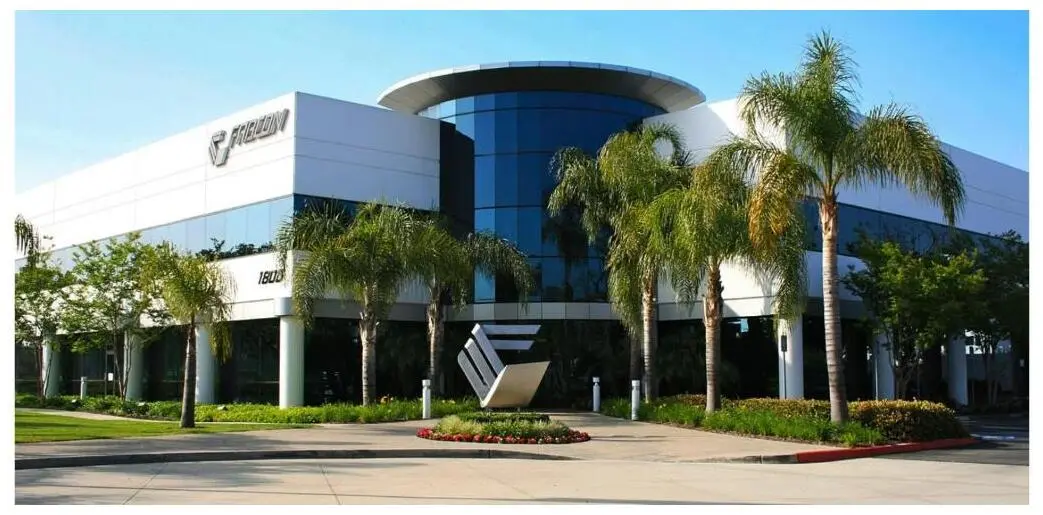
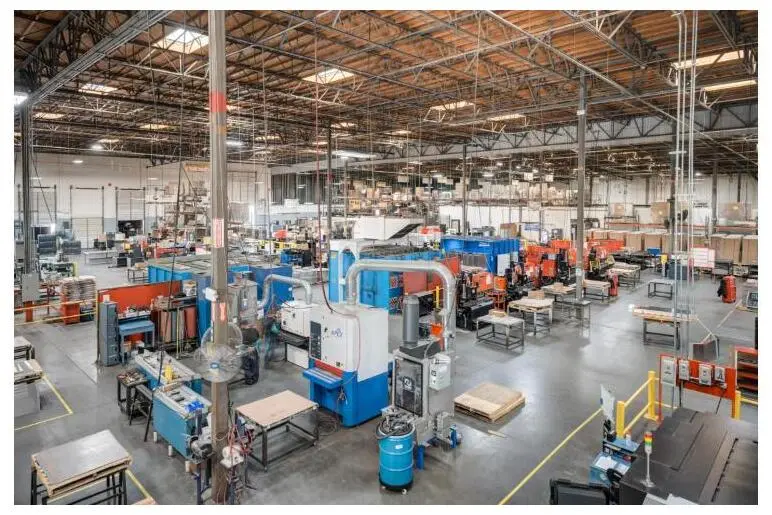
In-house engineering, finishing and light electromechanical assembly reduce vendor handoffs. Agile production cells support the documentation and traceability requirements buyers verify. One partner and one accountable quality system support programs from prototype through production.
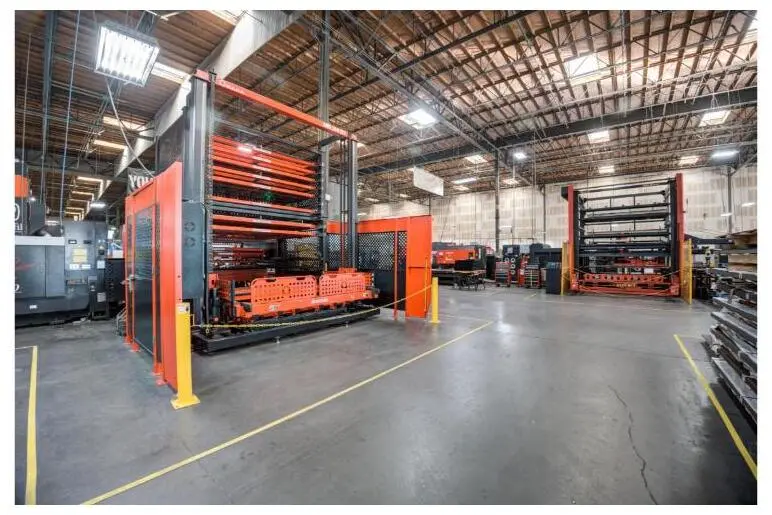
For aerospace and defense programs requiring AS9100D depth, Fabcon’s certification covers the additional requirements buyers verify through the IAQG OASIS database.
Schedule a plant-backed review of Fabcon’s certifications and QMS.
Measuring Success: Evidence That Verification Worked
The verification steps above produce measurable outcomes. These indicators confirm that the supplier’s QMS functions in production, not only on paper.
- Certificate verified as active in the registrar’s public database
- Scope statement confirmed to cover sheet metal fabrication and the specific processes in the RFQ
- Required documentation received before PO issuance
- First article inspection passing with all drawing characteristics measured and recorded
- On-time delivery performance consistent across production runs
- Reduced nonconformance rates over the supplier relationship
Early-stage indicators such as RFQ cycle time, FAI outcomes and documentation completeness signal QMS performance before production volume scales. Long-term indicators such as field reliability, lifecycle cost and supplier audit results confirm system strength under production conditions.
Simple tracking methods include supplier scorecards with documented quality metrics, periodic certificate re-verification at least annually and before major program awards and RFQ checklists retained for each supplier qualification cycle.
Advanced Considerations for Scaling Certified Suppliers
Certification requirements evolve as programs move from prototype to production. A fabricator qualified for prototype work may require re-verification of scope, traceability depth and secondary-process certifications before production volumes scale.
Readiness criteria for expanding a supplier relationship include process stability across multiple production runs, documentation consistency without buyer prompting and volume thresholds that the fabricator’s production cells can absorb without degrading quality performance.
Structured approaches to piloting and scaling include limited-scope trials on non-critical parts, phased rollouts that allow quality data to accumulate and periodic re-verification of certifications, particularly as the ISO 9001:2026 transition progresses.
Supplier integration and data-driven continuous improvement matter at scale. Fabricators with functioning corrective action systems and production KPI dashboards can share trend data that supports buyer-side quality reporting. High-mix production cell design, the ability to run varied SKUs and evolving BOMs without degrading traceability, provides a practical differentiator beyond certification.
Plan a phased production ramp with Fabcon’s certified team.
Frequently Asked Questions
What Does ISO Certified Sheet Metal Fabrication Guarantee?
ISO 9001:2015 certification means that a fabricator operates a documented quality management system covering quoting, contract review, production, inspection and corrective action. It does not guarantee that a specific part meets a drawing. Part-level proof lives in the documentation package, CoC, MTRs, FAI reports and inspection records that buyers request separately.
How Do Buyers Verify an ISO 9001 Certificate Is Valid?
Buyers request the certificate PDF and confirm it includes the legal entity name, physical address, scope statement, registrar name, certificate number, issue date and expiry date. They confirm the registrar is accredited by ANAB or an equivalent national accreditation body. They look up the certificate number in IAF CertSearch or the registrar’s client directory, verify the certified address matches the facility running the work and request the most recent surveillance audit summary.
Which ISO Standards Apply to Sheet Metal Fabrication?
ISO 9001:2015 is the baseline for ISO certified sheet metal fabrication. AS9100D applies to aerospace and defense programs. ISO 13485 applies to medical device manufacturing. ISO 14001 covers environmental management and ISO 45001 covers occupational health and safety, and large OEMs and infrastructure buyers increasingly require them as part of supplier qualification.
What Is the Difference Between ISO 9001 and AS9100D for Sheet Metal?
ISO 9001:2015 establishes baseline quality management system requirements for manufacturers. AS9100D builds on ISO 9001 and adds aerospace-specific requirements including First Article Inspection per AS9102, configuration management, counterfeit part prevention, operational risk management and product safety controls. Organizations can pursue AS9100D certification directly, since AS9100D incorporates all ISO 9001:2015 requirements and adds aerospace-specific requirements. For aerospace and defense programs, AS9100D is the required standard and its status is verified through the IAQG OASIS database.
Is ISO 9001 Changing in 2026?
ISO 9001:2026 is scheduled for publication in September 2026. The transition period is expected to run three years, with ISO 9001:2015 certificates remaining valid through approximately September 2029. The changes are moderate and retain the core structure, process approach and quality management principles. Key additions include strengthened leadership accountability for quality culture, clearer risk and opportunity management, reinforced change management requirements and integration of climate change considerations. Buyers reference Step 5 for more detail and ask suppliers about their transition plan during qualification.
What Documents Should Buyers Request in an RFQ?
Before issuing a PO, buyers request a Certificate of Conformance referencing the purchase order, drawing revision and lot number, AS9102 FAI reports for aerospace and defense programs, material test reports traceable to the heat number, lot traceability records linking finished parts to raw material, ITAR registration letters for controlled programs, AWS D1.1 welding certifications for structural weldments and secondary-process certifications for plating, powder coat and other finishing operations. RFQs specify these requirements so documents are generated as part of production.
What Does Certification Add to Cost and Lead Time?
Certification adds overhead through documented processes, inspection, calibration and audit cycles. That overhead reduces total cost by preventing rework, nonconformances and quality escapes that surface after delivery. Non-certified fabricators may quote lower initial prices but often carry hidden costs in delays, rework and downstream quality failures. For programs where nonconformances carry regulatory, safety or contractual consequences, the cost of certification overhead remains lower than the cost of a quality escape.
How Do Buyers Confirm That Certification Covers the Required Processes?
Buyers read the scope statement on the certificate. It must explicitly name the processes covered, such as sheet metal fabrication, welding, finishing and assembly, not only a generic description like “general manufacturing” or “distribution.” If the scope statement does not cover the specific processes in the RFQ, the certificate is insufficient for that program even when genuine. Buyers confirm scope coverage for each process in the RFQ, including subcontracted finishing or secondary operations.
Begin a detailed RFQ review with Fabcon’s certified team.