
Last updated: July 21, 2026
Key Takeaways for Complex Sheet Metal Programs
- Large-format sheet metal assemblies run best with forming, cutting, welding, finishing and light electromechanical assembly in one facility.
- Fragmented sourcing across multiple vendors increases scheduling gaps, quality risk and coordination work that an integrated U.S. partner removes.
- Buyers should confirm high-tonnage press brakes, large-bed lasers, overhead cranes, in-house finishing and sufficient facility scale before awarding work.
- Early DFM collaboration and end-to-end quality systems with ISO 9001, AS9100D and ITAR certifications reduce cost, rework and compliance risk.
- Fabcon delivers vertically integrated fabrication, finishing and assembly services that help infrastructure and technology companies scale mid-volume programs reliably, learn more at Fabcon.
How Fragmented Sourcing Holds Back Mid-Volume Infrastructure Programs
Separate vendors for fabrication, finishing and assembly create compounding risk. Each handoff adds a scheduling gap, a quality boundary and another point of failure. When tolerances drift or a finish is applied incorrectly, no single vendor owns the outcome.
Supply disruptions cut manufacturer revenue through lost production time, expediting fees and material substitutions. Data fragmentation in multi-vendor supply chains burns time as teams search for, configure or recreate component information. These costs are structural, not rare exceptions.
An integrated U.S. partner removes many of those handoffs by managing fabrication, finishing and assembly under one roof. One purchase order, one quality system and one production schedule replace the coordination overhead of a fragmented vendor base. For mid-volume programs with evolving bills of materials, that consolidation reduces delays and strengthens accountability.
Request pricing for complex large-format sheet metal assemblies.
Verifying Equipment and Facility Scale for Large Assemblies
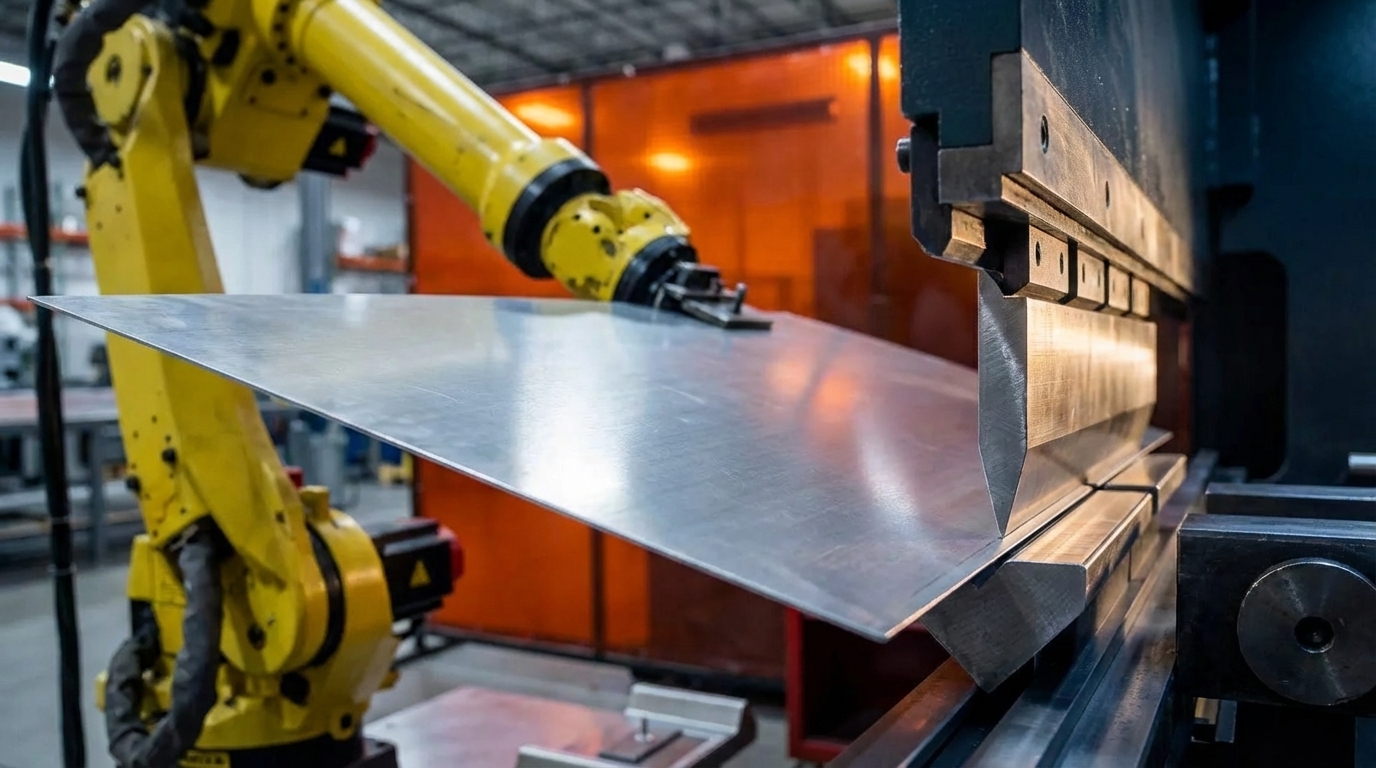
Large, heavy assemblies expose a common sourcing risk: the selected vendor lacks the physical capacity to handle the work. Press brakes with low tonnage, laser beds too small for the sheet size or facilities without overhead cranes force workarounds that hurt accuracy and extend lead times.
An integrated fabrication partner that supports complex assemblies at scale maintains specific capabilities that match program demands.
- High-tonnage press brakes for forming large structural components
- Large-bed fiber laser cutting systems for full-sheet processing
- Overhead crane capacity for moving heavy weldments and frames
- In-house CNC machining for tight-tolerance features on fabricated assemblies
- In-house finishing, including powder coat, wet paint and mil-spec coatings
- Light electromechanical assembly, including wiring and component integration
- Sufficient manufacturing footprint to support concurrent programs at mid-volume
These capabilities require significant facility scale to operate effectively. Fabcon operates across substantial manufacturing space in vertically integrated facilities in Southern California. That footprint supports concurrent programs in data centers, energy storage, aerospace and defense, traffic safety and medical devices without the scheduling conflicts that constrain smaller shops.
Confirm Fabcon’s equipment and facility capacity for upcoming builds.
DFM Collaboration Timing for Cost and Schedule Control
Design-to-manufacture disconnect ranks among the most expensive problems in complex assembly programs. When a fabrication partner receives drawings without a manufacturability review, teams face rework, quoting delays and designs that cannot scale without major changes.
A large share of total product cost is committed during the design phase, even though design represents a small share of the program budget. This front-loaded cost profile makes early DFM collaboration before production the strongest point for cost control and schedule reliability.
Published DFMA case studies support this timing advantage. They report total cost reductions when manufacturability is addressed at the design stage rather than after tooling and production begin. Late involvement locks in costs that early collaboration could have avoided.
Supply chain conditions in 2025–2026 increase the stakes. Raw material deliveries now average longer lead times than before the pandemic, which makes schedule padding and early planning essential. Structural steel lead times have climbed between 2024 and early 2026, driven by tariff uncertainty and tighter domestic mill capacity. Starting DFM late stacks internal delays on top of external constraints.
Fabcon engineering and quoting teams review drawings, tolerances and materials before production. That review produces manufacturing routers and work instructions tuned for the production floor, which cuts rework and improves cost efficiency from the first run.
Start a DFM review with Fabcon’s engineering team.
Integrated Welding, Finishing and Electromechanical Assembly Under One Roof
Most fabrication vendors stop at sheet metal. Finishing goes to one vendor, wiring to another and assembly coordination falls on the buyer. As discussed earlier, this fragmented model creates the scheduling and accountability gaps that integrated partners remove.
Integrated supply chains reduce risk for complex, multi-process products, frequent design changes and strict quality accountability requirements, especially at small-to-mid volumes where coordination overhead looms large relative to order size.
Fabcon delivers build-to-print plus light assembly in one operation. In-house capabilities include certified welding, powder coat, wet paint, screen printing, CARC military-grade finishing, mil-spec coating, hardware insertion and light electromechanical assembly with wiring and component integration. These capabilities support distinct needs across several industries.
- Data centers: Modular rack-mounted enclosures and structural systems that simplify cooling, cable management and integration for hyperscale and edge deployments
- Energy storage: Weatherproof, customizable enclosures with electromechanical integration for commercial and public deployments
- Traffic safety and transportation: Infrastructure-grade components engineered for compliance, consistency and reliability
- Aerospace and defense: Mission-critical assemblies built to AS9100D and ITAR standards with full traceability and integrated electromechanical assembly
- Medical devices: Fabricated assemblies and finished products with precision assembly and full traceability
Discuss integrated fabrication, finishing and assembly requirements with Fabcon.
Quality Certifications, Traceability and Audit Readiness
Inconsistent tolerances and audit gaps often appear in multi-vendor programs. When fabrication, finishing and assembly sit with separate organizations, each with its own quality system, traceability can break at every handoff.
Consolidating fabrication and assembly under a single domestic provider creates one quality owner and end-to-end statistical process control, which turns root-cause analysis into a faster corrective action process. For regulated industries such as aerospace, defense and medical devices, consolidation also simplifies quality audits by cutting the number of organizations that require review.
Under ISO 9001 Clause 8.5.2, fabrication shops must maintain material heat numbers, mill certifications and lot records throughout production so each piece in a fabricated assembly remains traceable to source documentation. Without AS9100 certification, a supplier cannot work with major aerospace OEMs, and without ITAR compliance, it cannot support products containing U.S.-origin technology.
Fabcon holds ISO 9001:2015 and AS9100D certifications and is ITAR registered. Integrated QA spans the entire build, which keeps quality and traceability intact from raw material receipt through final assembly and shipment. For regulated aerospace, defense and medical programs, that documentation level meets procurement and audit expectations.
Review Fabcon’s certifications and quality processes for specific program needs.
Mid-Volume Scaling: Bridging the Gap Between Job Shops and Large CMs
The fabrication market often forces a choice between two imperfect options. Low-complexity job shops handle simple parts but lack engineering depth for DFM, cannot manage electromechanical integration and push buyers toward fragmented vendor networks. Large and global contract manufacturers offer scale but require high minimum volumes, long onboarding and rigid structures that struggle with changing BOMs or mixed SKUs.
A growing share of U.S. manufacturing leaders plan to reshore production domestically, driven by low-to-medium volumes, shorter lead-time expectations and the need to keep sensitive designs closer to home. This trend reflects a structural shift. Low-to-medium volumes favor domestic manufacturing because offshore piece-price advantages shrink when orders do not fill a container and freight costs grow disproportionately.
Fabcon occupies the middle ground. Agile production cells adapt to changing volumes, mixed SKUs and evolving BOMs without the high minimums or rigid onboarding common at large CMs. Programs move from prototype to mid-volume production within the same facility and under the same quality system, which preserves continuity and reduces transition risk. Demand volatility and product customization now define many high-mix fabrication environments, and Fabcon’s cell-based model aligns with that reality.
Explore mid-volume scaling options with Fabcon’s production team.
RFQ Details That Support Faster, More Accurate Quotes
A complete RFQ supports faster quoting, more accurate pricing and earlier DFM feedback. The strongest RFQs include several specific elements.
- CAD files or detailed engineering drawings with revision levels noted
- Bill of materials with material specifications and hardware callouts
- Tolerance requirements and any critical-to-function dimensions
- Surface finish requirements, including coating type and mil-spec references if needed
- Assembly requirements, including wiring diagrams or electromechanical integration scope
- Estimated annual volume and prototype quantity
- Target delivery schedule and key program milestones
- Quality and certification requirements, including ISO, AS9100D, ITAR, UL or CSA
- Packaging and fulfillment requirements
- Any existing supplier constraints or preferred material sources
Structured Due Diligence Before Selecting a Partner
A structured evaluation process reduces risk before awarding a fabrication and assembly program. The following checks help confirm operational fit and long-term alignment.
- Facility visit confirms manufacturing footprint, equipment scale and in-house finishing and assembly capabilities
- Quality certifications, including ISO 9001:2015, AS9100D and ITAR, are current and match the full scope of work
- DFM process is defined and engineering involvement begins before production rather than after quoting
- Single-PO accountability covers fabrication, finishing and assembly without subcontracting core processes
- Traceability system documents material certifications, weld records, inspection results and nonconformance dispositions
- Production cells can support prototype quantities and scale to mid-volume without strict minimum order limits
- References from programs in comparable industries, such as data centers, aerospace, energy storage and medical, are available
Frequently Asked Questions
Is an integrated fabrication partner more expensive than separate vendors?
A job shop quote may show a lower price per part, but total program cost tells a different story. Coordination overhead, rework from quality handoff failures, expediting fees and delays from misaligned vendor schedules all add cost. An integrated partner reduces those downstream expenses by managing fabrication, finishing and assembly under one quality system, which supports more predictable economics across the full production lifecycle.
Can a mid-sized fabrication partner scale with a growing program?
Fabcon is built for mid-volume programs. Agile production cells adapt to changing volumes, mixed SKUs and evolving BOMs without the high minimums or rigid onboarding timelines common at large contract manufacturers. Programs move from prototype to production within the same facility and under the same quality system, which preserves continuity and lowers transition risk.
What if a company already works with a sheet metal supplier?
Most sheet metal shops focus on fabrication alone. They often lack in-house powder coating, mil-spec finishing, wiring or light electromechanical assembly. Buyers who manage those steps through separate vendors carry coordination risk, quality gaps and extended lead times on every program. Consolidating to a single partner that handles the full scope cuts vendor count, compresses timelines and supports system-level alignment beyond what a basic fabrication shop can provide.
How does Fabcon support traceability for regulated industries?
The certifications described earlier govern every stage of the build. Material certifications, weld records, dimensional inspection results and nonconformance dispositions remain linked throughout production. For aerospace, defense and medical device programs, that end-to-end documentation supports audits and regulatory compliance without requiring teams to reconstruct records across multiple vendor systems.
What industries does Fabcon serve?
Fabcon serves mid-sized to large enterprises in data center infrastructure, energy storage and power distribution, traffic safety and transportation, aerospace and defense, medical devices, electric vehicle infrastructure, telecommunications and industrial OEM manufacturing. Programs typically range from prototype quantities through mid-volume production runs.
Conclusion: Building Reliable Scale With an Integrated U.S. Partner
Fragmented sourcing across job shops and rigid large contract manufacturers creates recurring problems. Multiple purchase orders, handoff delays and quality finger-pointing become structural constraints that compound as programs grow.
An integrated U.S. partner that combines engineering, fabrication, finishing and light electromechanical assembly in one operation addresses those failure points directly. One quality system spans the full build. One production schedule removes handoff gaps. One accountable partner owns the outcome from raw material through final assembly.
Fabcon has operated as that partner since 1977. With 220,000 square feet of vertically integrated manufacturing space, ISO 9001:2015 and AS9100D certifications, ITAR registration and agile production cells designed for mid-volume flexibility, Fabcon supports programs from prototype through production across demanding infrastructure and technology sectors.
Connect with Fabcon about upcoming large-format sheet metal programs.