

Last updated: August 9, 2026
Key Takeaways for Supplier-Integrated DFM
- Generic DFM checklists fail without formal gates, issue tracking and contractual accountability, which creates costly late-stage nonconformances.
- A closed-loop six-step model embeds supplier DFM reviews inside APQP and PPAP workflows so teams catch issues while design changes remain inexpensive.
- Early supplier qualification, gate-tied reviews and formal issue logging reduce tolerance stack-up risks and improve first-pass yield.
- Supplier scorecards and contractual enforcement turn DFM findings into measurable performance signals that protect program margins.
- Work with a supplier that integrates DFM from day one. Find a partner for the next program.
DFM Foundations and Quality System Context
Program teams need a shared vocabulary and a baseline quality management system before this model delivers results.
Key terms used throughout this guide:
- DFM (Design for Manufacturability): The practice of shaping part geometry, tolerances and material selection so the design runs reliably and cost-effectively at target volume.
- APQP (Advanced Product Quality Planning): A five-phase gated framework with plan and define, product design and development, process design and development, product and process validation, and feedback and corrective action, each phase with defined entry and exit criteria, owners and target dates documented in the core tools.
- PPAP (Production Part Approval Process): A formal submission package of up to 18 elements plus a Part Submission Warrant that proves production-process capability before customer approval and volume launch.
- DFMEA/PFMEA: Design and Process Failure Mode and Effects Analyses that score failure modes by severity, occurrence and detection, with high-risk characteristics flowing directly onto the control plan.
- FAI (First Article Inspection): A dimensional and functional verification of the first production-representative part against the drawing and control plan.
- Tolerance stack-up: The cumulative effect of individual part tolerances on assembly fit and function.
- BOM (Bill of Materials): The structured list of components, subassemblies and raw materials required to build a product.
This model fits U.S. mid-to-large manufacturers running high-mix, mid-volume programs. Reshoring initiatives concentrate new awards in this segment, where generic job shops often lack the engineering depth needed for APQP-aligned development.

Six Steps to a Supplier-Integrated DFM Process
Step 1: Qualify Suppliers on DFM Capability and Quality Systems
Supplier selection must evaluate engineering depth and active quality system deployment, not just price, capacity and certification status. Procurement teams should review active use of APQP, PPAP, FMEA, control plans, MSA and SPC, along with recent internal audit findings, PPM levels and corrective action closure speed.
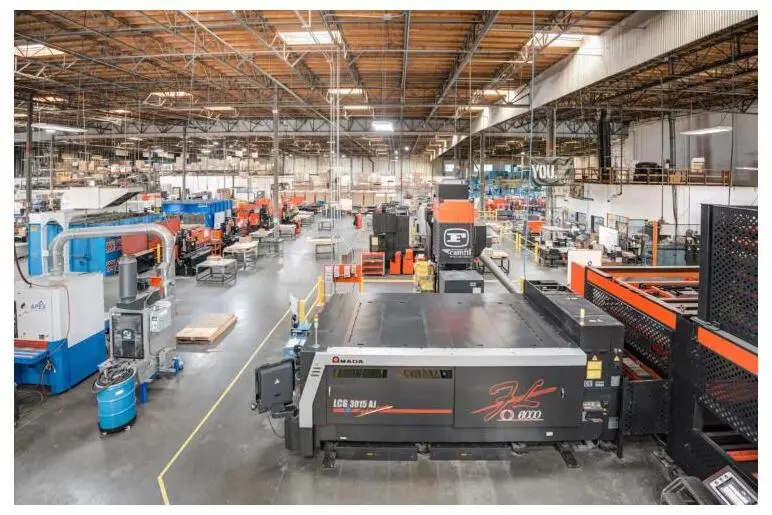
For sheet metal and electromechanical programs, teams confirm that the supplier can provide DFM feedback on bend radii, weld access, hardware insertion and wiring routing before drawings freeze. Suppliers that only build to print add limited value at this stage.
Step 2: Run Supplier DFM Reviews at APQP Gate 1 and Gate 2
DFMEA starts early in the APQP timing plan while design choices remain flexible so identified risks can influence geometry, material selection, tolerances and validation plans.
At Gate 1 (Plan and Define), the supplier reviews the concept drawing package and flags features that drive scrap, require nonstandard tooling or create tolerance stack-up risk. At Gate 2 (Product Design and Development), the supplier participates in a formal DFM review with documented findings logged in a shared issue tracker. Gate exit requires closure or accepted disposition of all critical items.
This closure discipline directly affects launch timing. Programs leaving design freeze with fewer open critical items launch on time more often than those carrying more open items.
Step 3: Turn APQP Outputs into Direct PPAP Inputs
APQP outputs such as DFMEA, PFMEA, process flow diagram and control plan become direct inputs to the PPAP submission package. This structure eliminates re-keying of data between planning and approval stages and anchors the closed-loop model.
A PPAP coordinator at the supplier owns the submission timeline and tracks element completion against the APQP schedule. For electromechanical assemblies, this role includes MSA studies on crimping and connector sealing operations, linking process control data directly to end-use performance risks such as electrical continuity, vibration and thermal stress.
Step 4: Log Issues Formally and Use Clear Escalation Triggers
Every DFM finding, nonconformance and engineering change enters a shared issue log with owner, due date and status. Verbal agreements do not close issues.
Teams define escalation triggers in advance to surface quality and schedule risks before they become program delays. PPM exceeding a set threshold for consecutive weeks requires immediate containment and a Supplier Corrective Action Request within a defined window. When delivery performance drops below a set percentage for a set period, the issue escalates to procurement to assess capacity or logistics constraints. An unapproved PPAP at production start halts release until the gate is cleared, which prevents unvalidated processes from entering volume production.
For engineering changes, suppliers notify the customer in writing within a defined window of intended changes to facilities, quality systems or sub-tier suppliers that may affect product conformity, and obtain written approval before proceeding.
Work with a team that tracks issues from DFM through delivery.
Step 5: Build Supplier Scorecards Aligned with APQP Gates
Scorecards translate issue log data into a structured performance signal that supports consistent decisions across programs. For high-risk parts, a composite score that weights PPM, on-time delivery and PPAP or audit status provides a RAG threshold with Green at a high level, Amber at a mid level and Red below a low level. This three-tier system helps teams focus intervention resources on suppliers showing early warning signs.
Teams review scorecards at each APQP gate, not only at program close. A supplier trending Amber at Gate 3 signals a process capability or capacity risk before it becomes a launch delay. These early warnings matter because they predict launch performance, and a Launch Readiness Score above a set threshold at the production gate correlates with first-pass yield in the 90s, while lower scores predict higher launch scrap.
Step 6: Back DFM Requirements with Contract Language
Scorecards and issue logs gain strength when contract terms reinforce them. Supplier quality requirements should mandate APQP deployment per AS9145 for all build-to-spec and build-to-print products, with PPAP deliverables submitted at agreed program milestones.
Contracts include clauses that require 24-hour notification of escaped nonconforming product so containment can begin before the issue spreads. They follow this with a requirement for written root cause and corrective action within 30 days to drive systemic fixes. Finally, they require customer approval before dispositioning nonconforming product affecting form, fit, function, safety or regulatory compliance, which prevents unilateral supplier decisions on critical characteristics. Contracts can also authorize a supplier-led performance improvement project driven by the supplier’s top management when performance expectations are not met and reserve the right to adjust supplier approval status or end the relationship based on assessment results.
How Core Tools and Examples Support DFM
The five AIAG core tools form one connected system required by IATF 16949. APQP produces the FMEA and control plan. PPAP packages them with MSA and dimensional results. The control plan references MSA-qualified gauges. SPC monitors special characteristics. 8D corrective actions feed back into the FMEA and control plan.
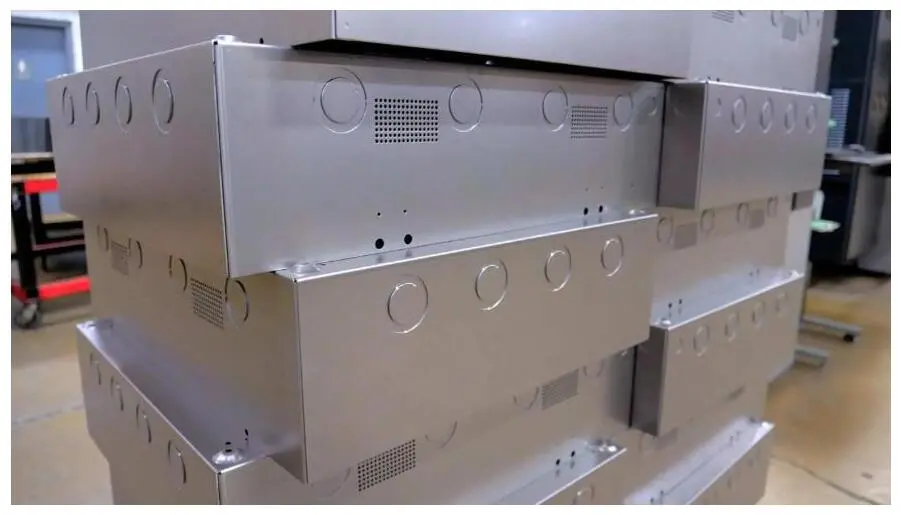
To see how this system works in practice, consider a hypothetical sheet metal enclosure program for an energy storage application. At Gate 1, the supplier flags that a specified internal corner radius falls below the minimum achievable with the available tooling, which creates a scrap risk. The finding enters the issue log, the design team adjusts the radius and the change is documented before the DFMEA is finalized. At Gate 3, the PFMEA identifies a weld distortion risk on a thin-gauge panel. The control plan adds a post-weld flatness check with defined acceptance limits. Both findings are resolved before PPAP submission, which eliminates the rework that would have appeared at FAI.
For electromechanical assemblies, the same logic applies to wiring harness routing, connector sealing and torque specifications. Engineering change management discipline is assessed through ECN workflow, approval hierarchy, sample revalidation triggers and customer communication processes, because weak change discipline often creates hidden supply chain risk in APQP and PPAP-aligned programs.
IATF 16949 requires SPC on special characteristics with Cpk at a high level at PPAP and Cpk at a lower level in production. This requirement provides a quantitative baseline for process capability that feeds directly into the scorecard.
Bring a supplier into the DFM process from concept.
Common DFM Pitfalls and How to Address Them
Several failure patterns appear consistently across supplier DFM programs:
- Incomplete drawings at Gate 1: Suppliers cannot provide meaningful DFM feedback without GD&T, material callouts and finish requirements. Symptom: DFM review produces no findings. Mitigation: Define a minimum drawing completeness checklist as a gate entry criterion.
- Late engineering changes: Weak configuration management after engineering changes is a leading cause of supplier quality escapes. Mitigation: Require ECN approval before any change enters production and track ECO cycle time as a program KPI.
- Underestimated validation scope: Programs that spend less than 1 percent of first-year program cost on prototype and pilot builds often see the shortfall appear later as field failures. Mitigation: Budget validation as a line item at Gate 2, not an afterthought.
- Unrealistic lead time assumptions: Cost overruns frequently result from inaccurate forecasting of supplier lead times and material costs. Mitigation: Require supplier capacity confirmation and material lead time data as a Gate 3 exit deliverable.
- Sub-tier supplier gaps: Incomplete oversight of sub-tier suppliers and special processors is a common escape vector. Mitigation: Contractually require flowdown of key and critical characteristics to all sub-tier suppliers.
Measuring DFM and Supplier Integration Success
Early-stage signals that the model works include a design review action item closure rate that meets the 95 percent threshold established at gate reviews, PPAP submission on schedule and zero open critical DFM findings at design freeze.
Long-term program health indicators include:
- First-pass yield at FAI and production launch
- PPM by supplier and part tier
- On-time delivery rate against committed dates
- ECO frequency in the first 90 days post-launch
- SCAR and 8D closure time
- Cost variance against program budget
Early supplier involvement reduces development costs and shortens time-to-market. Design changes made during the concept phase typically incur far lower costs than post-production changes, so front-loaded DFM investment delivers strong returns across the program timeline.
Teams track metrics on a shared dashboard reviewed at each APQP gate. Effective supplier performance measurement balances quality, cost, delivery and relationship metrics, with metric selection aligned to procurement strategy and business objectives.
Advanced DFM Enhancements and Iteration
Once the six-step model runs reliably across two or three programs, teams can layer in additional capabilities. Digital twin integration allows process simulation data to feed back into PFMEA updates before physical tooling is committed. Design automation tools can flag DFM violations at the CAD level, which reduces the volume of findings that reach formal gate reviews.
For high-mix programs, agile production cells that handle evolving BOMs need a lightweight change-review trigger. Any BOM revision above a defined threshold re-enters the issue log and requires a PFMEA impact assessment before production release.
Organizations define an escape taxonomy and segment suppliers by risk so flight-critical hardware, special processes and complex electronics receive deeper controls than low-risk commodities. This tiering allows quality resources to concentrate where escape consequences are highest.
Phased rollout works best. Teams implement Steps 1 through 3 on a single pilot program, validate scorecard thresholds against actual outcomes, then expand to the full supplier base. Attempting full deployment across all programs at once often produces inconsistent gate discipline and scorecard data that is too noisy to support decisions.
Frequently Asked Questions
How long does it take to implement a supplier-integrated DFM process?
The timeline depends on program complexity and the supplier’s existing quality system maturity. A supplier already operating under ISO 9001 or AS9100D with active APQP experience can integrate into a gated DFM model within one program cycle. Suppliers without formal PPAP experience need additional onboarding time to build the required documentation infrastructure. Starting with a pilot program on a single part family allows the team to calibrate gate criteria and scorecard thresholds before scaling.
What is the difference between a DFM checklist and a gated DFM operating model?
A DFM checklist is a static document that lists design rules. A gated DFM operating model ties those rules to APQP phase exits, requires documented supplier input at each gate, logs findings in a shared issue tracker and enforces closure before the program advances. The checklist serves as an input to the model, not a substitute for it. Without gate enforcement and issue logging, checklist findings lack a mechanism for accountability.
Which PPAP submission level fits precision sheet metal and electromechanical assemblies?
Submission level selection depends on the customer’s risk assessment and the part’s criticality. Level 3 is the most common baseline for new production parts and requires the full package to be submitted and retained at the supplier with samples sent to the customer. For safety-critical or regulated applications in aerospace, defense or medical devices, customers often specify Level 4 or Level 5 to require full package submission and review. The appropriate level appears in the supplier quality requirements document before APQP begins, not at PPAP submission.
How should engineering changes be managed after PPAP approval?
Any change affecting material, geometry, tolerances, interfaces or intended-use assumptions requires a formal engineering change notification, a DFMEA or PFMEA impact assessment and customer approval before the change enters production. The supplier notifies the customer in writing within a defined window, typically 15 calendar days, of any intended change. Changes that affect form, fit, function, safety or regulatory compliance require a partial or full PPAP resubmission depending on the scope of the change. Weak change discipline remains one of the most common sources of quality escapes in supplier-managed programs.
How does a vertically integrated supplier affect the DFM process?
A vertically integrated supplier that performs fabrication, finishing and electromechanical assembly under one roof compresses the DFM review cycle because a single engineering team can assess manufacturability across all production steps at once. There is no handoff between a metal fabricator, a coating vendor and an assembly house, which removes configuration management gaps that often produce escapes at sub-tier interfaces. The issue log, control plan and PPAP package cover the entire build rather than requiring coordination across multiple supplier submissions.
Build a closed-loop DFM process with a vertically integrated partner.