
Last updated: July 29, 2026
Key takeaways for integrated CNC machining buyers
- U.S. CNC machining costs depend on machine type, material, order volume and schedule, while integrated partners reduce logistics and quality-risk expenses.
- Fragmented supplier networks create compounding risk through extra coordination, version-control issues and quality misalignment across machining, finishing and assembly.
- Vertically integrated U.S. manufacturers remove multi-vendor lead-time stacks and redundant quality checks by running all operations under one production system.
- Buyers evaluating CNC machining partners assess technical fit, assembly complexity, finishing integration, certifications, DFM strength, scalability and logistics support.
- Infrastructure and technology programs that need traceable, precision fabricated assemblies with prototype-to-mid-volume scalability can contact Fabcon to consolidate the supply chain with one accountable partner.
Executive summary: Why CNC machining rarely stands alone
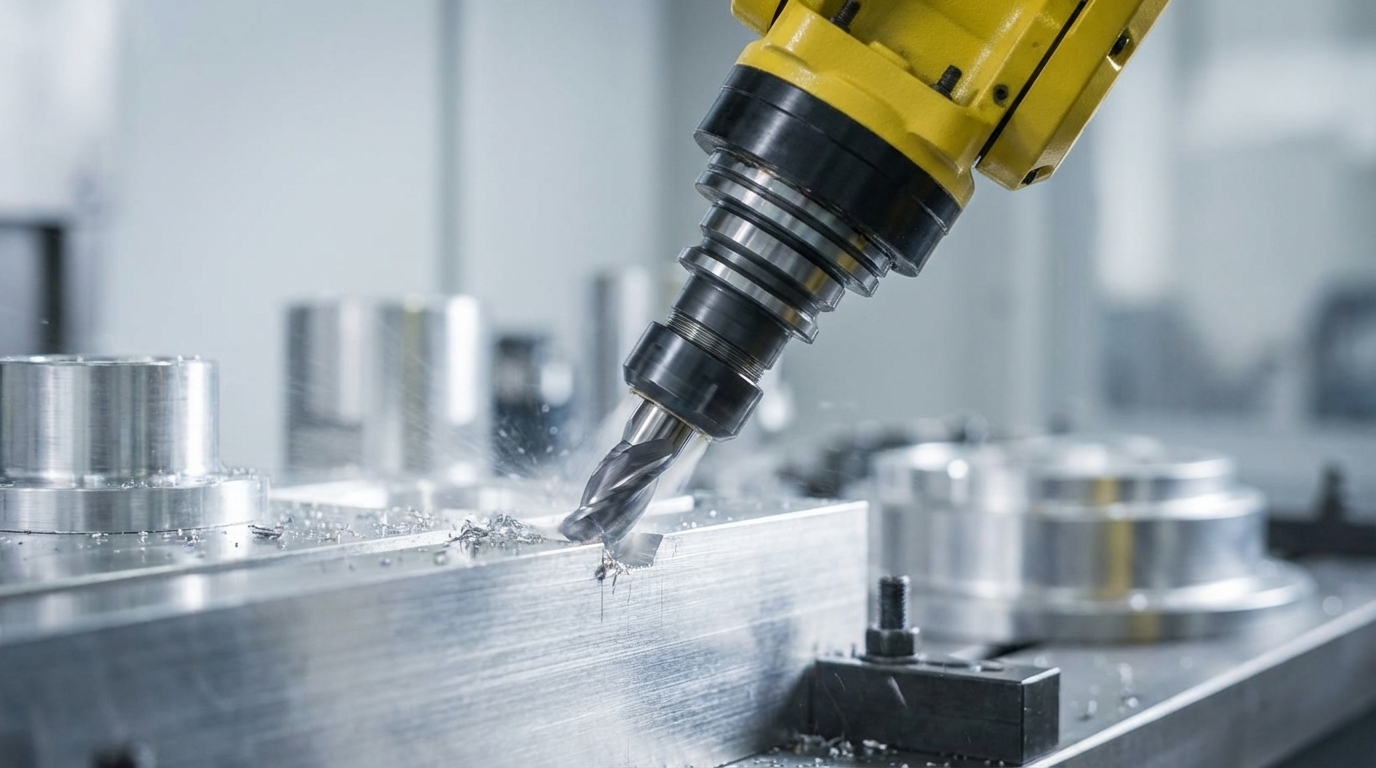
CNC machining is a subtractive manufacturing process that produces precision metal and plastic components from digital design files. In the U.S. industrial supply chain, it supports structural enclosures, chassis, tight-tolerance brackets and electromechanical housings.
In infrastructure and technology sectors such as data centers, energy storage, aerospace, medical devices and transportation, CNC machining rarely operates in isolation. A finished deliverable often requires sheet metal fabrication, surface finishing, hardware insertion and light assembly. When separate vendors handle those steps, the program absorbs compounding risk at every handoff.
Integrated U.S. partners that perform those steps internally create a different risk and lead-time profile than single-process job shops or global contract manufacturers. Their model aligns machining decisions with finishing and assembly, which supports predictable launches and consistent quality.
The problem: How fragmented CNC supply chains create risk
Each supplier handoff adds risk. Spreading machining, fabrication, finishing and assembly across several vendors increases coordination work, schedule uncertainty and quality issues. For engineering, procurement and operations teams managing mid-volume programs, that fragmentation creates three compounding problems.
First, engineering changes and drawing revisions must be communicated and implemented consistently across multiple separate organizations, which adds coordination layers and version-control risk. This communication burden intensifies when machining and finishing are separated. A part may be machined correctly but move out of tolerance after anodizing or coating because finishing requirements did not align with the original machining strategy.
When these misalignments force a supplier switch during scale-up, the buyer must repeat engineering revalidation. Repeating validation testing, assembly qualification and process verification consumes engineering resources and delays production readiness.
These pressures continue to intensify. CNC machined parts have shifted from a routine procurement category to a critical constraint that can limit production across automotive, aerospace, medical device and industrial equipment sectors. At the same time, reshoring trends driven by U.S. tariffs on imported steel and aluminum and geopolitical uncertainty have strengthened domestic order books for U.S. metal processors and fabricators.
Buyers are consolidating toward fewer, more capable domestic partners as a direct response. This shift toward integrated domestic manufacturing is where Fabcon’s model becomes relevant.
Fabcon CNC machining and integrated fabrication capabilities
Founded in 1977, Fabcon operates 220,000 square feet of vertically integrated manufacturing space across two Southern California facilities in Santa Ana and Valencia. In-house CNC machining sits inside a full-service production environment that spans design support, precision sheet metal fabrication, finishing, light electromechanical assembly, testing and fulfillment.
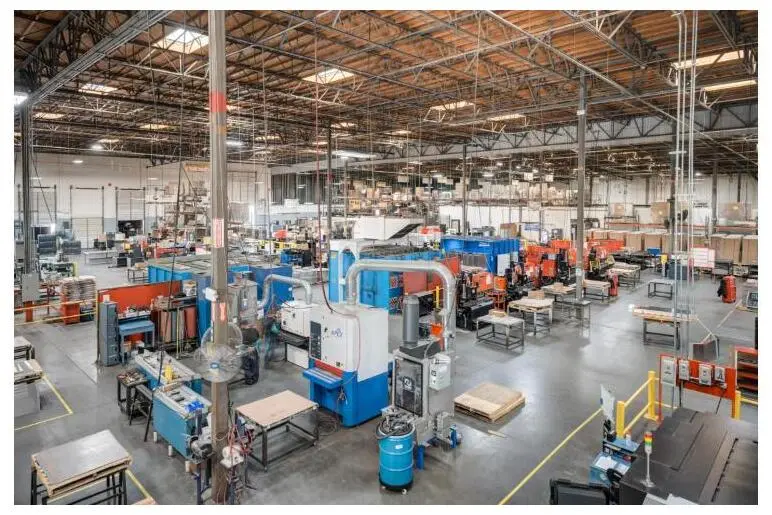
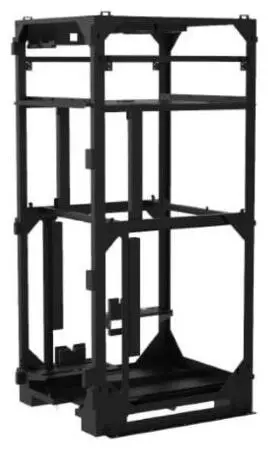
Fabcon in-house CNC machining produces precision components, including tight-tolerance structures, chassis, racks and enclosures, within the same facility where fabrication, finishing and assembly occur. That co-location removes transit exposure, scheduling gaps and accountability gaps that arise when machining runs through a separate shop.
Core capability areas include:
- CNC machining for tight-tolerance components that support fabricated assemblies
- Precision sheet metal fabrication including laser cutting, CNC punching, forming and welding
- In-house finishing such as powder coat, wet paint, screen printing, CARC and mil-spec coatings
- Light electromechanical assembly including wiring, hardware insertion and component integration
- Design-for-manufacturability collaboration and engineering support
- First-article inspection and AS9100D-governed quality management
- Fulfillment, JIT delivery and logistics management
Fabcon holds ISO 9001:2015 and AS9100D certifications and is ITAR registered, which supports the traceability and compliance requirements of aerospace, defense, medical and energy programs.
Request a capabilities review for a current program
How integrated workflows improve handoffs and lead times
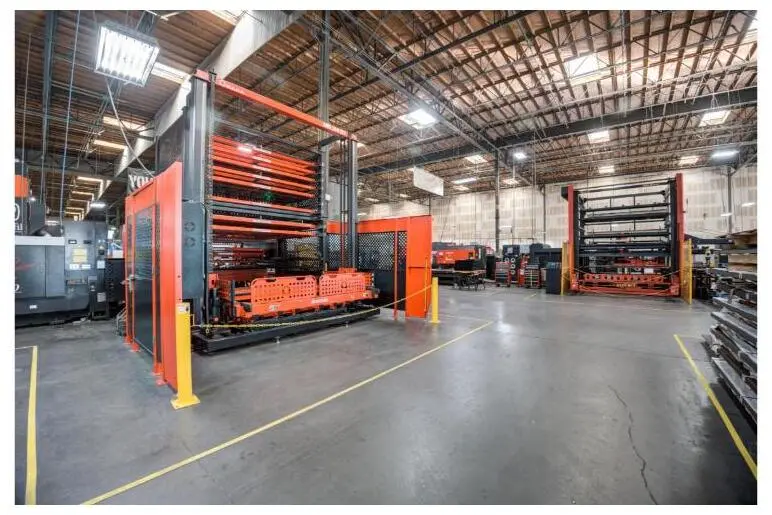
Vertically integrated manufacturers perform sheet metal fabrication, CNC machining, welding, powder coating and final mechanical and electrical assembly inside one facility. This co-location removes the multi-vendor lead-time stack. Without that stack, buyers avoid freight lags and redundant incoming quality control intervals at each vendor handoff.
Secondary operations such as anodizing, powder coating, hardware insertion and first article inspection can add lead time and coordination overhead when outsourced to third-party vendors. Performing those steps internally removes that overhead and keeps the production schedule under one team’s control.
Strategic manufacturing partners that conduct front-loaded DFM reviews during the design phase can modify part geometry to use standard in-stock tooling. They can also reduce complex machine setups and swap long-lead components for industry-standard alternatives. These adjustments lower upfront cost and compress throughput.
For operations teams, this integrated approach provides a single, transparent view of project status. The team no longer coordinates schedules across independent subcontractors.
Fabcon engagement flow from RFQ through delivery
A standard Fabcon engagement follows a defined sequence that maintains continuity from initial quote through production delivery. Each stage builds on the previous one.
- RFQ and technical review: Engineering and quoting teams review drawings, tolerances and materials together. DFM feedback before production begins informs tooling strategy and process planning for the next phase.
- Prototype and first article: Using the DFM-informed design, parts are produced in-house with first-article inspection. Tooling, setups and process documentation established here carry forward to production without requalification.
- Production ramp: Proven tooling and process documentation from prototyping support agile production cells that scale volume. These cells adjust to changing demand without the high minimums or rigid onboarding timelines common at large contract manufacturers.
- Change management: Engineering changes apply across fabrication, machining, finishing and assembly within one facility. This unified approach removes multi-vendor revision coordination and keeps revisions synchronized.
- Fulfillment and delivery: Finished assemblies ship directly from Fabcon facilities with full traceability documentation. The same team that manages production also manages outbound logistics.
Long-term manufacturing partnerships reduce onboarding latency and retain institutional knowledge of an OEM’s specifications, documentation standards and quality expectations. This continuity supports faster new product introductions compared with repeatedly qualifying new transactional vendors.
Who buys integrated CNC machining and fabrication
Fabcon serves mid-sized to large enterprises across infrastructure-intensive and technology-driven verticals, including data centers, energy storage and power distribution, aerospace and defense, medical devices, EV infrastructure and traffic safety.
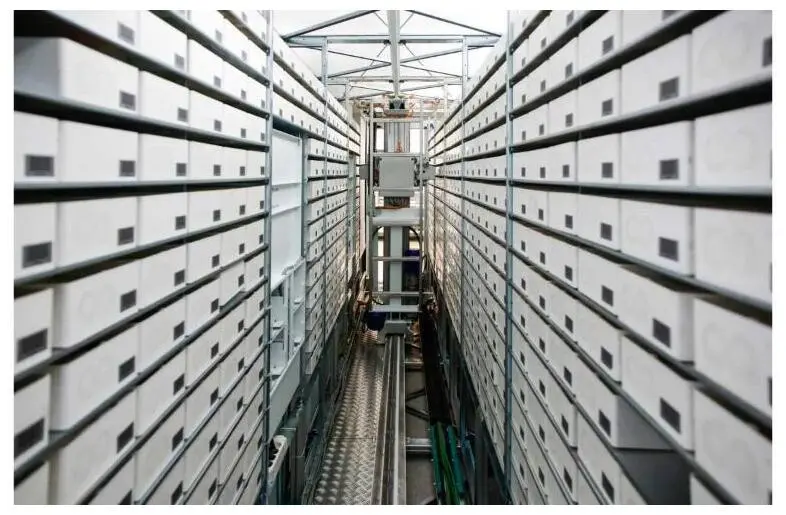
Three buyer groups drive sourcing decisions, and each group applies distinct evaluation priorities.
Engineering and technical decision-makers such as directors of engineering, senior mechanical engineers and NPI leads evaluate DFM capability, tolerance consistency, prototype-to-production alignment and the quality of early engineering collaboration. Their primary risk is a design-to-manufacturing disconnect that causes rework or delays at launch.
Supply chain and procurement teams such as strategic sourcing managers, commodity managers and procurement directors evaluate vendor consolidation potential, on-time delivery performance, traceability documentation and total cost of ownership. Their primary risk is a fragmented supplier base that creates delays and unclear accountability.
Operations and program execution leaders such as VPs of operations, program managers and operations managers evaluate execution consistency, scalability and coordination simplicity. Their primary risk is vendor handoff delays that compress launch timelines.
Comparing CNC and fabrication provider types
The U.S. contract manufacturing market includes three broad provider categories, and each category fits different program profiles.
Low-complexity job shops handle build-to-print sheet metal and basic machining. They offer low overhead and fast quoting for simple parts but lack DFM engineering depth, finishing capability and assembly integration. Buyers managing complex programs must source finishing, wiring and assembly separately, which reintroduces the handoff and accountability risks described earlier.
Mid-tier fabricators add some finishing and assembly capability. They serve a broader range of programs but vary in scale, certification depth and vertical integration. Buyers should confirm whether a mid-tier provider performs secondary operations in-house or subcontracts them. Subcontracted finishing reintroduces lead-time and quality-alignment risk.
Large and global contract manufacturers offer broad infrastructure and high-volume capacity. They fit programs with stable, high-volume bills of material and long onboarding timelines. For mid-volume, high-mix or evolving programs, their minimum volume requirements, rigid production lines and lengthy qualification processes create friction that slows launches and limits flexibility.
Fabcon occupies the space between mid-tier fabricators and large contract manufacturers. The engineering depth, certification portfolio and vertical integration of a large CM combine with responsiveness and flexibility suited to prototype-through-mid-volume programs.
Compare Fabcon to a current supplier
Objective proof points procurement teams review
When evaluating a CNC machining and fabrication partner, procurement and engineering teams typically verify several categories of evidence.
- Years in business and program history: Fabcon has operated since 1977, with decades of experience across infrastructure and technology programs.
- Facility footprint: The 220,000 square feet mentioned above, split between Santa Ana and Valencia locations.
- Certifications: The ISO 9001, AS9100D and ITAR credentials described earlier, plus AS9100D aerospace-specific controls such as configuration management, risk management, special process control, product safety and enhanced traceability for airworthiness.
- Compliance standards: UL and CSA compliance for applicable programs.
- Industries served: The verticals listed above, plus industrial OEM manufacturing programs.
- Production scale: Prototype through mid-volume production runs, with agile cells that adapt to changing volumes and mixed SKUs.
Checklist for evaluating integrated CNC providers
Buyers assessing integrated CNC machining partners can apply the following checklist before committing to a program.
- Technical fit: The provider machines the materials, tolerances and geometries the program requires.
- Assembly complexity: The provider handles light electromechanical assembly, wiring and hardware insertion in-house.
- Finishing integration: Finishing operations such as powder coat, paint and mil-spec coatings are performed internally rather than subcontracted.
- Compliance and traceability: The provider holds the certifications the program requires, including ISO 9001, AS9100D, ITAR and UL or CSA where applicable.
- DFM capability: The provider offers front-loaded engineering review before production begins.
- Scalability: The provider can move from prototype to mid-volume production without new onboarding or requalification.
- Logistics and fulfillment: The provider manages fulfillment and JIT delivery instead of pushing outbound logistics back to the buyer.
- Internal constraints: The provider can support ITAR handling, specific documentation formats and regulated industry traceability when required.
Frequently asked questions about Fabcon and integrated CNC machining
What is the difference between a CNC job shop and a vertically integrated contract manufacturer?
A CNC job shop typically performs machining only and returns raw machined parts to the buyer. A vertically integrated contract manufacturer performs machining alongside sheet metal fabrication, finishing, assembly and testing under one roof. The integrated model reduces supplier handoffs, aligns machining decisions with downstream finishing requirements and gives buyers a single accountable partner for the complete build.
How does Fabcon support programs from prototype through production?
Fabcon engineering and quoting teams review drawings and tolerances before production begins and provide DFM feedback that reduces rework. Tooling, setups and process documentation established during prototyping carry forward to production without requalification. Agile production cells allow volume to scale without the high minimums or rigid onboarding timelines associated with large contract manufacturers.
What quality certifications does Fabcon hold, and why do they matter?
Fabcon holds ISO 9001:2015 and AS9100D certifications and is ITAR registered. ISO 9001 covers process control, corrective action and continuous improvement. AS9100D adds aerospace-specific requirements including configuration management, risk analysis, first article inspection and enhanced traceability. ITAR registration is required for programs involving defense-related technical data. Together, these certifications satisfy the compliance requirements of aerospace, defense, medical and energy procurement teams.
How does vertical integration affect lead times for mid-volume programs?
When machining, finishing and assembly occur in-house, one team controls the production schedule. There are no third-party finishing queues, no freight windows between vendors and no redundant incoming quality control holds. Engineering changes are implemented across all processes at the same time. The result is a more predictable production timeline than programs routed across multiple independent suppliers.
What industries and program types fit Fabcon best?
Fabcon serves mid-sized to large enterprises in data centers, energy storage and power distribution, aerospace and defense, medical devices, EV infrastructure, traffic safety and industrial OEM manufacturing. Programs that benefit most require precision fabricated assemblies with integrated finishing and light electromechanical assembly, particularly where traceability, compliance and prototype-to-mid-volume scalability are priorities.
Conclusion: Why integrated CNC machining changes program risk
Fragmented vendor networks create compounding risk for infrastructure and technology programs. Each handoff between a machining shop, a finishing vendor and an assembly house adds schedule uncertainty, quality-alignment gaps and administrative overhead that inflate total cost of ownership and threaten launch timelines.
Vertically integrated U.S. partners address that structural problem by combining CNC machining, sheet metal fabrication, finishing and light electromechanical assembly under one production control system. For engineering, procurement and operations teams managing prototype-to-mid-volume programs with traceability requirements and launch timing pressure, the integrated model reduces supplier complexity, improves execution consistency and keeps institutional knowledge intact across the product lifecycle.
Fabcon has delivered that model since 1977, AS9100D certified, ITAR registered and operating across 220,000 square feet of U.S. manufacturing space.