
Last updated: August 21, 2026
Key Takeaways
- A 42U server rack enclosure provides 42 rack units of standardized 19-inch mounting space for servers, networking gear and infrastructure in data centers and telecom facilities.
- Depth selection is critical. Cabinets in the 1,000–1,200 mm range support modern 2U–4U servers, while AI and GPU deployments often need 48–54 inch depths.
- Load ratings matter. Static capacities range from 2,000–3,000 lbs, while dynamic rolling loads are typically 25–50% lower. AI racks may require ratings up to 5,000 lbs.
- Door airflow performance directly affects server longevity. Perforated doors with at least 65% open area support high-density environments and help prevent premature fan failures.
- When standard enclosures fall short, Fabcon provides custom 42U manufacturing with integrated fabrication, finishing and assembly.
Why 42U Rack Height Became the Data Center Standard
The 42U form factor follows ANSI/EIA-310-D, the North American standard for interchangeable 19-inch rack-mount equipment. That standard fixes the internal mounting width at 19 inches between mounting strips, which creates a universal interface that equipment manufacturers follow.
Key dimensional facts for standard 42U floor-standing cabinets:
- Usable internal height: 73.5 inches, based on 42 rack units at 1.75 inches per unit
- Internal mounting width: 19 inches (17.75 inches between inner strip edges)
- External width options: 600 mm or 700 mm, with 700 mm supporting vertical cable managers
- External height without casters: about 2,000 mm for 800 mm and 1,000 mm depth models, and about 2,055 mm for 1,200 mm depth models
- 42U height remains the most widely deployed option for enterprise data centers
Depth Choices That Fit Modern Servers and AI Hardware
Common depth options for 42U cabinets are 600 mm, 800 mm, 1,000 mm and 1,200 mm. Depth selection drives equipment fit, cable routing and airflow performance more than any other dimension.
Guidance by depth range:
- 600 mm: Reduces usable mounting depth to about 450 mm with doors closed, which suits only wall-mount network or telecom patch applications, not full-size rackmount servers built after 2015.
- 800 mm: This step up suits network switches, patch panels and shallow 1U servers, but becomes insufficient when vertical cable managers sit beside deeper chassis.
- 1,000–1,200 mm: Modern 2U–4U servers, deep storage arrays and GPU deployments require this range. A usable mounting depth of at least 89 cm supports deep servers with rear PDUs and cable managers without choking airflow.
- Extended depth (48–54 inches): High-performance AI servers such as NVIDIA HGX and GB200 platforms push beyond standard depths to preserve cable bend radius, airflow paths and PDU clearance that 1,200 mm cabinets cannot provide.
Perforated front and rear doors with at least 64% open area support cold-air intake and hot-air exhaust in hot and cold aisle containment without creating back pressure on server fans. High-density environments often specify 800 mm wide cabinets because the extra width keeps cable bundles from blocking airflow paths and raising server inlet temperatures.
Load Capacity Ratings for 42U Server Racks
Load ratings divide into two categories: static, or stationary, and dynamic, or rolling. The gap between them has real impact on deployment planning.
- Most 42U server racks support a static load capacity of 2,000 to 3,000 pounds
- Rolling load on casters is typically 25–50% of the static rating, so a rack rated for 2,500 lbs static may handle only 800–1,250 lbs while moving
- Some models exceed this range. The APC NetShelter SX AR3340 42U enclosure, for example, carries a static load rating of about 3,750 lbs and a dynamic rating of about 2,250 lbs
- AI rack configurations with liquid cooling distribution units need purpose-built enclosures rated up to 5,000 lbs and floor load capacities of 800 kg/m² or more
Steel gauge of frame posts, joint welding quality and base construction all influence structural ratings. UL 2416 is the prevailing North American safety standard for IT enclosures and covers structural testing, fire-escape compliance and grounding. In seismic zones, Telcordia GR-63-CORE requires survival of 0.8 G acceleration without tipping or ejecting hardware. Procurement teams benefit from UL 2416 and GR-63-CORE test reports instead of relying only on static load marketing claims.
Door Designs That Protect Airflow and Hardware Life
Door selection directly affects thermal performance and fan life. Three configurations appear most often in enterprise deployments.
- Perforated steel doors: Open area of 65% or greater supports passive cooling when dedicated CRAC units are absent and works well with hot and cold aisle containment.
- Glass or acrylic doors: Provide visibility into equipment without opening the cabinet. Airflow routes through vented side panels or top exhaust, which suits low-density or display environments more than high-density compute rows.
- Hybrid mesh-and-frame doors: Combine structural rigidity with high open area and support high-density rows where airflow and physical security both matter.
Blocked airflow causes a significant share of premature server fan failures. Door open-area percentage therefore affects hardware longevity as much as thermal comfort.
Realistic Server Counts in a 42U Rack
A 42U rack rarely holds 42 servers because space must be reserved for patch panels, cable managers, switches and PDUs.
Realistic populations for mixed enterprise configurations:
- About 30–36 devices in mixed 1U, 2U and 4U configurations after infrastructure overhead
- Usable capacity often drops to roughly 25–35U once PDUs, cable managers, patch panels, switches and thermal spacing are installed
High-density GPU and AI configurations follow different limits.
- About 4–8 compute nodes per rack when using 4U–8U GPU servers, plus supporting infrastructure
- A single AI server with eight high-power GPUs can consume nearly 10 kW, so ten such servers approach 100 kW per rack
- AFCOM’s 2026 State of the Data Center Report places average rack power density at 27 kW per rack, with AI training clusters operating at 40–132 kW
- Air cooling becomes physically inadequate above about 30–40 kW per rack, which makes liquid cooling a structural requirement for AI workloads
2026 Pricing Ranges and What Drives Cost
A 42U enclosed cabinet with perforated doors and 800 mm depth starts at about €1,200.
Price tier breakdown by configuration:
- Entry-level (600 mm depth, basic features): About $400–$800
- Mid-tier (800 mm depth, fans, casters): Typically about $1,500–$2,500
- Premium (deep cabinet, UL/ETL listing): Often priced about $1,700–$7,700
- Open-frame 42U racks (lab or staging use): Typically range from about $150 to $1,350
Steel gauge, perforation level, fan count, locking casters, cable managers, UL or ETL listing, seismic bracing, integrated PDUs and IP-rated components all drive cost. Liquid-ready racks often carry a premium over air-only frames.
Custom 42U Enclosure Manufacturing with Fabcon
Off-the-shelf 42U enclosures cover a wide range of standard deployments. When requirements exceed catalog limits, such as non-standard depth, integrated wiring, specialized finishes, seismic ratings or mid-volume production schedules, custom manufacturing becomes the practical path.
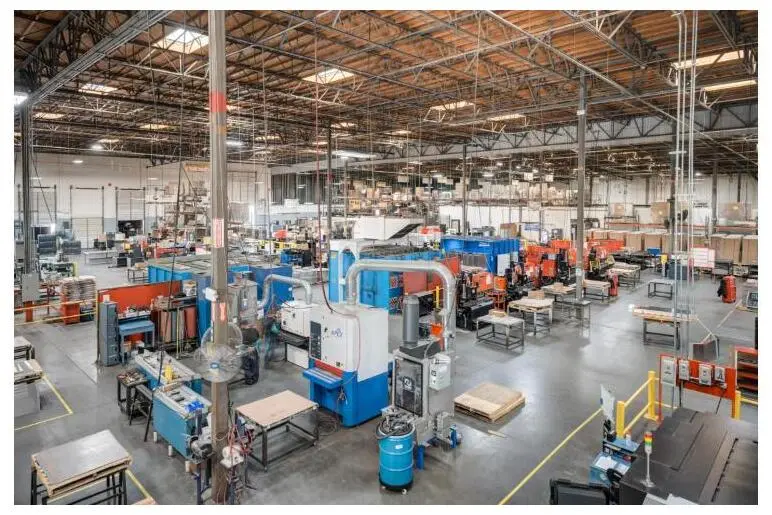
The most common failure point in custom enclosure programs is a disconnect between design and manufacturing. Engineering teams often finalize drawings, hand them to a fabricator and then face late-stage rework when tolerances, material choices or assembly sequences prove difficult to produce at scale. Early Design-for-Manufacturability collaboration closes that gap. Fabcon engineering and quoting teams review drawings, tolerances and materials before production and create manufacturing routers and work instructions tuned for the floor.
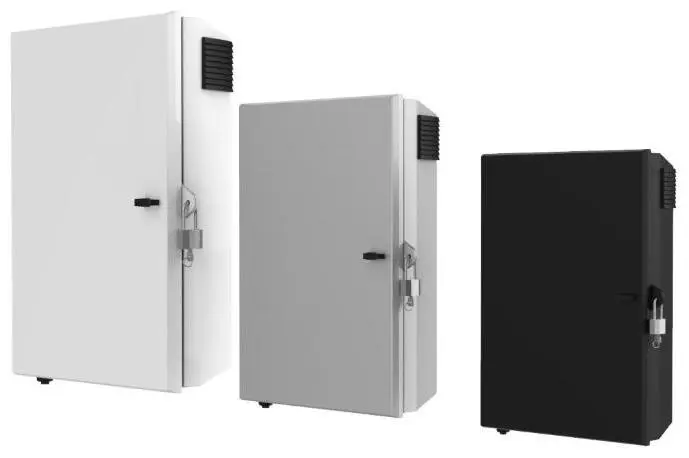
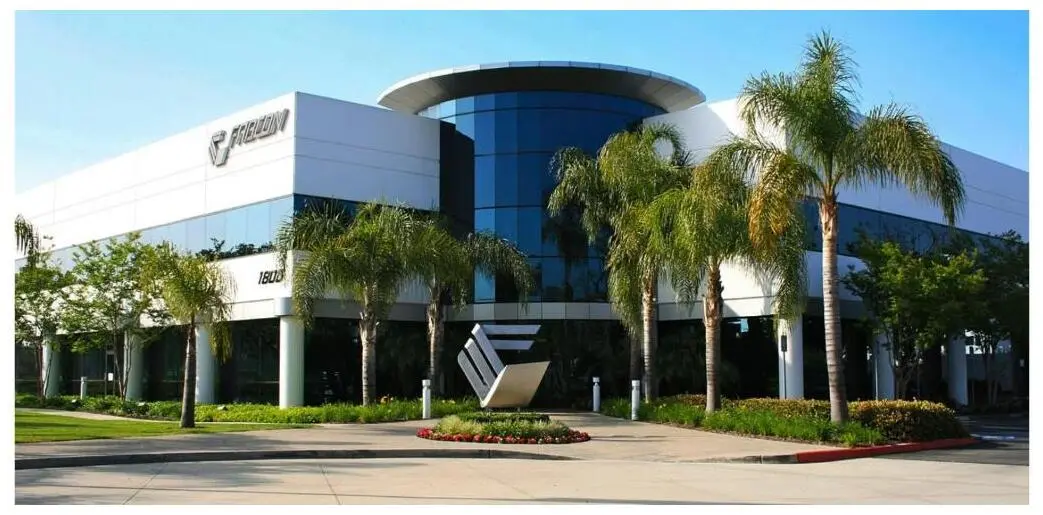
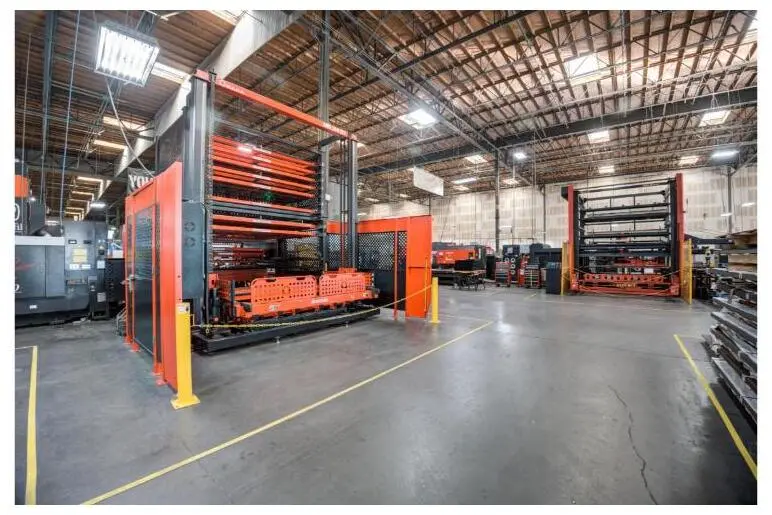
Fabcon operates as a vertically integrated U.S. fabrication partner across 220,000 square feet of manufacturing space. Precision sheet metal fabrication, CNC machining, in-house finishing and light electromechanical assembly all operate under one roof. That integration removes vendor handoffs that drive delays and quality disputes when fabrication, coating and assembly sit with separate suppliers.
For data center, telecom and infrastructure programs, Fabcon capabilities include:
- Custom rack enclosures and chassis built to program-specific depth, width, load and airflow requirements
- In-house finishing including powder coat, wet paint and mil-spec coatings for consistent cosmetic and protective standards
- Light electromechanical assembly including wiring and component integration, delivered as a finished build rather than a bare enclosure
- Agile production cells that scale from prototype through mid-volume without high minimums or rigid onboarding timelines
- ISO 9001:2015 and AS9100D certified quality systems with full traceability at every production stage
Procurement teams managing fragmented vendor bases can consolidate fabrication, finishing and assembly into a single purchase order with one accountable partner. Engineering teams gain a DFM feedback loop that reduces rework and compresses development timelines. Operations teams gain end-to-end visibility without coordinating across multiple supplier schedules.
Start a DFM review for a custom 42U enclosure with Fabcon.
Next Steps for 42U Rack Projects
Standard 42U enclosures serve well-defined use cases. When depth, load, integration or production requirements move beyond catalog options, a vertically integrated U.S. fabrication partner delivers purpose-built enclosures without the complexity of managing multiple vendors.
Fabcon supports programs from initial DFM review through mid-volume production and combines fabrication, finishing and assembly under one roof.
Request a DFM review or pricing for a custom 42U server rack enclosure.
Frequently Asked Questions
What is the difference between static and dynamic load ratings for a 42U server rack?
Static load rating refers to the maximum weight a rack can support when it is stationary and anchored to the floor. Dynamic load rating refers to the weight it can safely carry while moving on casters. The dynamic rating is substantially lower than the static rating, often less than half, because rolling introduces lateral forces and vibration that the frame must absorb. For permanent production deployments, static load is the governing specification. For seismic zones, procurement teams benefit from test reports that confirm compliance with standards such as UL 2416 and Telcordia GR-63-CORE, which test structural performance under acceleration loads rather than simple static weight.
When does a standard 42U enclosure fall short and custom manufacturing become necessary?
Standard catalog enclosures cover most conventional enterprise deployments. Custom manufacturing becomes necessary when equipment depth, load requirements or integration needs exceed what off-the-shelf models provide. Common triggers include AI or GPU server chassis that require extended depth beyond standard 1,200 mm options, liquid cooling integration that needs custom manifold cutouts or reinforced structural members, specialized finishes or coatings for harsh or regulated environments and programs that need light electromechanical assembly delivered as a finished unit rather than a bare enclosure. Early DFM collaboration with a vertically integrated fabricator identifies these requirements before tooling, which reduces rework and accelerates time to production.
How does working with a vertically integrated fabricator reduce total program cost?
Splitting fabrication, finishing and assembly across multiple vendors introduces coordination overhead, shipping time between suppliers and quality disputes when defects arise at handoff points. A vertically integrated partner manages all of those steps under one roof, which compresses lead times, reduces the number of purchase orders a procurement team must manage and creates a single point of accountability for quality. While the per-unit price from a vertically integrated partner may not match the lowest-cost job shop, the reduction in rework, expediting and vendor management often lowers total program cost. The quality systems mentioned earlier provide full traceability at every production stage, which supports infrastructure programs where field failures carry significant downstream costs.
What certifications should a custom 42U enclosure manufacturer hold?
For North American data center and infrastructure programs, the most relevant quality and safety certifications are ISO 9001:2015 for quality management systems, AS9100D for programs with aerospace or defense adjacency and UL 2416 compliance for structural integrity and grounding of IT enclosures. Seismic zone deployments may also require Telcordia GR-63-CORE compliance. Fabcon holds the ISO and AS9100D certifications noted above and operates quality systems that support UL and CSA compliance requirements. Buyers benefit from documentation for each applicable standard, particularly for load ratings and structural performance.
Can a mid-volume custom enclosure program scale without switching to a large contract manufacturer?
Large contract manufacturers offer scale but often require high minimum order quantities, long onboarding processes and rigid production structures that do not accommodate evolving bills of materials or mixed-SKU programs. Job shops offer flexibility but often lack the engineering depth for DFM collaboration and cannot manage integrated finishing or assembly. Fabcon agile production cells support mid-volume programs that need to scale without those constraints. Production cells adapt to changing volumes and configurations and support programs from prototype through mid-volume production while maintaining responsiveness that large contract manufacturers cannot match.