
Last updated: August 22, 2026
Key Takeaways
- Data center rack enclosure services cover design, fabrication, finishing, assembly and delivery for standard 19-inch EIA-310 cabinets and custom liquid-cooling-ready enclosures for AI and HPC workloads.
- Partner selection depends on technical capabilities, vertical integration, quality certifications, mid-volume scalability and U.S.-based supply chain reliability that reduce risk and coordination effort.
- Enclosure options include fully enclosed cabinets, colocation racks, open-frame, OCP-compliant and acoustic designs, each aligned to specific security, airflow and deployment conditions.
- Thermal management, power distribution and cable management now shape enclosure design, with liquid cooling, high-voltage architectures and structured cable routing driving structural and layout changes.
- Request a quote from Fabcon to evaluate vertically integrated enclosure services for active or planned data center programs.
Evaluating a Data Center Rack Enclosure Partner
Selecting the right fabrication partner shapes outcomes from prototype through production. A structured evaluation framework keeps that decision grounded in measurable factors.
Technical capabilities: Confirm the partner performs laser cutting, CNC forming, certified welding, hardware insertion and finishing under one roof. That breadth determines whether the team can spot cross-process issues during design review. Confirm that the team reviews drawings for manufacturability before quoting.
Integration scope: A partner limited to sheet metal forces separate vendor relationships for finishing, wiring and assembly. Vertical integration reduces handoffs, shortens lead times and limits quality disputes across the build.
Quality and compliance: EIA-310-D defines the vertical hole pattern and rack unit spacing that colocation and hyperscale facilities require. Partners should hold ISO 9001:2015 certification at minimum and maintain full traceability across every build stage.
Scalability and flexibility: Large contract manufacturers focus on high-volume, stable programs with high minimums and long onboarding cycles. Job shops lack the infrastructure to scale beyond basic builds. A mid-volume partner with flexible production cells supports evolving bills of materials without either constraint.
Supply chain and logistics: U.S.-based fabrication avoids overseas transit delays and supports faster response when specifications change. Confirm that the partner manages fulfillment and just-in-time delivery internally.
Total value versus cost: Evaluating full landed cost including freight, rework, inventory carrying costs and delay risk rather than quoted piece price alone produces a more accurate comparison between domestic and offshore options.
Core Data Center Enclosure Types and Use Cases
Data center rack enclosures fall into several distinct categories, each aligned to specific deployment environments and operational priorities.
Standard enclosed cabinets are fully enclosed steel or aluminum frames with front and rear doors, side panels and integrated cable management. Operators select them when airflow control and physical security sit at the top of requirements.
Colocation racks support shared data center environments where multiple tenants occupy the same floor space. They conform to standard EIA-310-D dimensions and support locking mechanisms, metered PDUs and cable routing that satisfy colocation facility requirements.
Open-frame racks remove side panels and doors to maximize airflow and simplify access during dense cabling or frequent hardware changes. They appear most often in controlled-access machine rooms where physical security is managed at the room level.
Open Compute Project (OCP) racks follow specifications from the Open Compute Project for hyperscale deployments with standardized power bus bars, rear-cabled designs and high-efficiency power delivery. Fabricating OCP-compliant enclosures requires tight dimensional control and compatibility with OCP-qualified components.
Acoustic and soundproof racks use foam-lined panels and sealed door gaskets to reduce operational noise in office-adjacent or edge deployments. They require additional structural consideration to maintain thermal performance while attenuating sound.
Thermal Management Requirements in Modern Racks
All enclosure types must address thermal requirements that have changed rapidly with AI and HPC growth. Liquid cooling is no longer optional for high-density data center environments. It is the primary path to managing rack power loads that air cooling cannot address. Rack densities in AI and HPC workloads have risen from a previous norm of 3 to 10 kW per rack under air cooling to over 100 kW per rack today.
Many manufacturers now release liquid-ready hardware, including GPUs and CPUs with built-in cold plates and servers with direct liquid cooling loops. Rack enclosures must accommodate coolant distribution manifolds, quick-connect couplings and structural reinforcement to carry the added weight of fluid systems.
The major liquid cooling approaches for 2026 data centers are direct-to-chip, immersion cooling and hybrid air-plus-liquid architectures. Elevated rack weights from coolant manifolds are driving redesigns of structural frames, seismic anchoring and thicker-gauge steel in enclosure fabrication.
Enclosure fabricators need to design for these requirements from the first drawing review. DFM collaboration that addresses manifold routing, drain access and structural load early prevents costly rework during integration.
Power Distribution Design Inside the Rack
Thermal management requirements directly influence power architecture and layout inside each enclosure. As operators place more GPUs closer together, power delivery hardware and liquid-cooling components compete with compute hardware for limited rack space. PDU placement, busbar routing and cable tray positioning must be resolved at the enclosure design stage.
Higher-voltage architectures are emerging as a response to rack-level space constraints, enabling smaller conductors and relocation of power conversion equipment outside the rack. Sidecar designs that move power conversion adjacent to the compute rack provide a near-term path for many programs.
Enclosure fabricators that support power-dense programs need to accommodate grounding and bonding requirements, masking for powder-coated contact surfaces and structural provisions for rear-mounted or top-entry busbar systems.
Cable Management for High-Density Deployments
Cable management in high-density rack enclosures extends beyond basic horizontal and vertical troughs. Structured cable routing reduces airflow restriction, simplifies maintenance and supports strain relief for dense fiber and copper runs.
Fabricated cable management components, including troughs, D-rings, blanking panels and brush-strip pass-throughs, stay most consistent when produced under the same quality system as the enclosure. Sourcing them separately introduces tolerance variation and finish mismatches that complicate installation.
Producing cable management trays and mounting hardware alongside rack enclosures under a single quality system eliminates fit issues across large multi-unit programs. That alignment keeps installation predictable across phases.
Rack-and-Stack Services for Preconfigured Racks
The cable management components described above reach full value when installed during rack-and-stack. Rack-and-stack services extend fabrication into pre-installation work such as mounting hardware, routing cables, installing PDUs and blanking panels, labeling and testing before the enclosure ships to the data center floor. Turnkey delivery reduces on-site labor and compresses deployment timelines.
A fabrication partner that performs rack-and-stack in the same facility where the enclosure was built maintains continuity of quality oversight. Hardware insertion, wiring and functional checks occur in a controlled environment rather than on a live data center floor.
For multi-phase rollouts, preconfigured rack assemblies can ship on a release schedule aligned to construction milestones. That approach reduces staging space requirements at the site and keeps deployment sequences organized.
Fabcon Service Model: Fabrication Through Logistics
Fabcon uses a vertically integrated model that consolidates the full production sequence under one accountable partner. The service structure covers four primary areas that align with enclosure program needs.
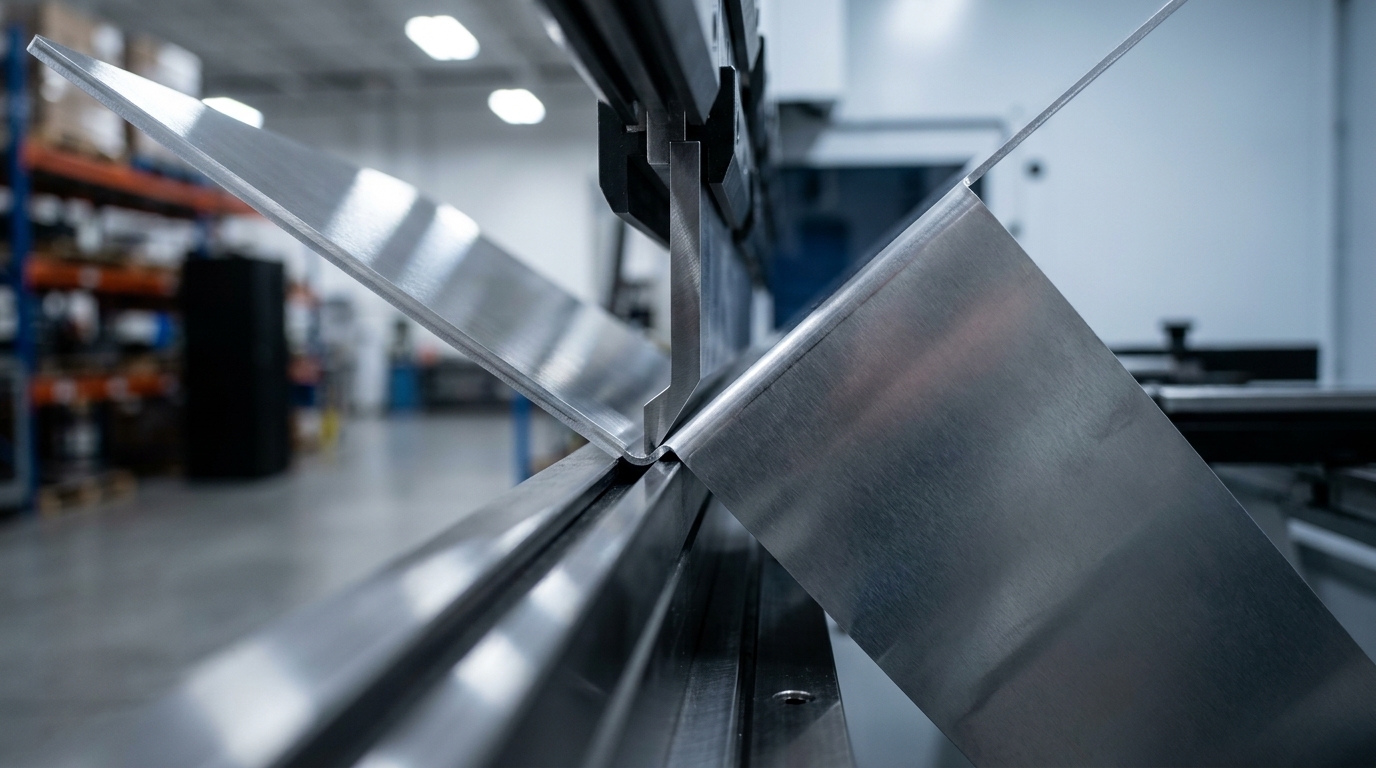
Custom fabrication includes laser cutting, CNC punching, forming and certified welding to produce enclosure frames, chassis, brackets and structural components to print.
Finishing includes powder coating, wet paint, screen printing and mil-spec coatings applied in-house. Integrated finishing removes the scheduling risk of routing parts to an outside coating vendor between fabrication and assembly.
Light electromechanical assembly covers hardware insertion, wiring, component integration and functional verification. Integrated U.S. manufacturing partners that combine fabrication, machining, finishing and assembly under one system reduce fragmentation and improve consistency across the production process.
Fulfillment and logistics includes JIT delivery, palletized packaging and release scheduling aligned to customer deployment phases. One purchase order can cover the complete build from raw material through shipment.
Mid-Volume Agility for Evolving Enclosure Programs
Mid-volume infrastructure programs need agility that large contract manufacturers and basic job shops struggle to provide. Large contract manufacturers are built for high-volume, stable programs, and their production lines, onboarding processes and minimum order requirements reflect that focus. Mid-volume programs with evolving BOMs, mixed SKUs and phased rollouts do not align with that structure.
Job shops at the other end of the market handle basic sheet metal but lack the engineering depth and integration scope to manage complete enclosure programs. That limitation forces customers to manage separate vendors for coating, assembly and logistics, which multiplies coordination risk.
Fabcon configures flexible production cells for mid-volume, high-mix programs. Production scales with program needs without the overhead rigidity of large contract manufacturers or the capability gaps of basic fabricators. Evolving BOMs and changing release volumes receive support without constant renegotiation of program terms.
Design-for-Manufacturability Collaboration on Enclosures
DFM collaboration identifies manufacturability issues before production begins and keeps enclosure programs on schedule. Working directly from customer CAD data, flagging manufacturability issues early and turning design revisions around quickly supports evolving rack configurations and airflow requirements.
Common DFM findings on enclosure programs include tolerance stack-up in tall assemblies, grounding and bonding masking requirements for powder-coated surfaces and structural provisions for liquid-cooling manifold loads. These issues appear often because tall, power-dense racks combine tight dimensional requirements with heavy components and coated surfaces. Resolving them at the drawing stage prevents rework during production and fit issues during installation.
Fabcon engineering and quoting teams review drawings together from the first engagement. That alignment between engineering input and production routing accelerates prototype-to-production transitions and reduces surprises when volumes increase.
Engineering and procurement teams with active enclosure programs can request a DFM review as a first step before committing to a production quote.
U.S. Manufacturing Advantages for Infrastructure-Critical Programs
Shorter domestic supply chains reduce exposure to international disruptions and support more reliable schedule commitments for programs requiring precise material control and traceability. Those advantages build on the schedule and responsiveness benefits already noted for U.S.-based fabrication.
Fabcon holds ISO 9001:2015 and AS9100D certifications and is ITAR registered. Full traceability across fabrication, finishing and assembly satisfies documentation requirements for infrastructure-critical programs in data centers, energy storage and related verticals.
Domestic fabrication supports strong quality control through direct oversight, easier facility visits and clear accountability compared to overseas production. Supply chain leads managing risk assessments for active programs can use Fabcon’s U.S. manufacturing footprint as a consolidation point for enclosure, finishing and assembly sourcing.
Buyer Selection Checklist for Enclosure Partners
Procurement and engineering teams can use the following checklist to confirm alignment before engaging a fabrication partner for a data center rack enclosure program.
- Does the partner perform fabrication, finishing and assembly under one roof on one purchase order
- Does the partner hold ISO 9001:2015 certification with full traceability across all build stages
- Does the partner offer DFM review before production quoting begins
- Can the partner support mid-volume, high-mix programs without high minimums or long onboarding
- Does the partner have experience with EIA-310-compliant enclosures and liquid-cooling-ready structural designs
- Does the partner manage fulfillment and release scheduling internally
- Is the partner U.S.-based with domestic supply chain traceability for compliance-sensitive programs
Frequently Asked Questions
What drives the cost of custom data center rack enclosures
Cost depends on enclosure complexity, material selection, finish requirements, assembly scope and volume. Taller enclosures with liquid-cooling provisions, integrated cable management and electromechanical assembly carry higher per-unit costs than basic open-frame racks. Fragmented vendor chains add coordination costs that do not appear on individual line items but accumulate across a program. A vertically integrated partner that consolidates fabrication, finishing and assembly reduces those hidden costs by removing inter-vendor handoffs and redundant quality checks.
Who builds the racks for data centers
Data center racks come from a range of manufacturers, from large global contract manufacturers and branded enclosure OEMs to mid-sized precision sheet metal fabricators and local job shops. Large OEMs serve hyperscale operators with standardized product lines. Job shops handle basic build-to-print work but typically lack DFM capability and integration scope. Mid-sized vertically integrated fabricators such as Fabcon serve infrastructure firms that need custom enclosures with engineering collaboration, finishing and assembly managed under one accountable partner.
What certifications should a data center rack enclosure fabricator hold
ISO 9001:2015 provides the baseline quality management certification for enclosure fabricators. AS9100D adds aerospace-grade traceability and process control relevant to infrastructure-critical programs. ITAR registration is required for programs involving controlled technical data. EIA-310-D compliance defines the dimensional standard for 19-inch rack-mount compatibility in colocation and hyperscale environments. Fabricators supporting federally funded infrastructure projects should also maintain documentation that supports Build America, Buy America compliance.
How does a vertically integrated fabricator differ from a job shop for enclosure programs
A job shop typically performs one or two fabrication processes, such as cutting and forming, and returns parts to the customer for finishing, assembly and logistics coordination. A vertically integrated fabricator manages the complete production sequence internally, including fabrication, finishing, light electromechanical assembly and fulfillment. That integration reduces the number of vendors a procurement team manages, shortens the total production cycle and provides a single point of accountability for quality across the entire build.
How are 2026 liquid-cooling requirements changing enclosure fabrication
The liquid-cooling requirements discussed earlier in this article are reshaping enclosure structural design. Coolant manifolds, quick-connect couplings and rear-door heat exchangers add weight and require reinforced frames, seismic anchoring provisions and leak-proof penetrations. Taller rack configurations are becoming more common to accommodate AI compute density. Fabricators must address these requirements at the DFM stage by reviewing structural load, manifold routing and drain access before production begins to avoid costly rework during integration.
Conclusion and Next Steps
Data center rack enclosure programs perform best when fabrication, finishing, assembly and logistics operate under one accountable partner. Fragmented vendor chains introduce handoff delays, quality disputes and coordination overhead that compound across multi-phase rollouts.
Fabcon vertically integrated U.S. facilities support mid-volume enclosure programs from prototype through production with DFM collaboration, ISO 9001:2015 and AS9100D certified quality systems and flexible production cells that scale without high minimums or rigid onboarding requirements.
Engineering, procurement and operations teams with active or upcoming data center rack enclosure programs can engage Fabcon as a first step toward vendor consolidation and stronger program execution.