

Last updated: August 30, 2026
Key Takeaways for AS9100 Network Rack Programs
- AS9100D certification must be confirmed in the IAQG OASIS database to verify active status and scope coverage.
- ITAR registration and DD2345 authorization are mandatory for any fabricator that handles defense-controlled technical data or hardware.
- Vertical integration under one roof removes vendor handoff risks that create documentation gaps and counterfeit-part exposure.
- Counterfeit-part prevention aligned to AS5553, AS6081 and DFARS 252.246-7007 preserves traceability back to original manufacturers.
- Fabcon meets all five qualification criteria with active AS9100D certification, ITAR registration and vertically integrated U.S. facilities; request a qualification review to advance a network rack program.
Definition of an AS9100 Network Rack Fabricator
An AS9100 network rack fabricator is a precision sheet metal manufacturer with active AS9100D certification that designs, fabricates, finishes and assembles EIA-310-compliant rack enclosures for aerospace and defense applications. The quality management system covers product safety, counterfeit-part prevention, configuration management and full supply chain traceability.
Five Critical Evaluation Factors for AS9100D Network Rack Fabricators
Procurement teams need a clear framework when evaluating AS9100D network rack fabricators. These five factors distinguish qualified partners from vendors that increase program risk.
- Active AS9100D certification verified in the IAQG OASIS database, because a certificate alone does not confirm current scope or surveillance status.
- ITAR registration and DD2345 militarily critical technical data authorization, required for any fabricator that handles defense-controlled technical data or hardware.
- End-to-end in-house process control, where fabrication, finishing and electromechanical assembly under one roof remove multi-vendor handoff risk.
- Documented counterfeit-part prevention aligned to AS5553 and AS6081, including supplier approval lists, incoming inspection criteria and GIDEP alert screening.
- EIA-310 and MIL-STD fabrication capability with IPC-A-610 Class 3 assembly controls, which supports rack structures that must meet dimensional, structural and electrical performance standards in harsh environments.
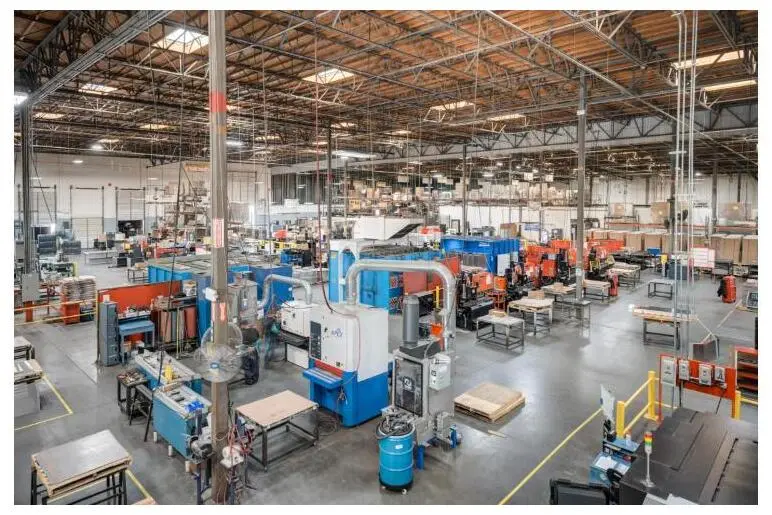
Fabcon maintains active AS9100D certification and ITAR registration across two vertically integrated U.S. facilities totaling 220,000 square feet. A single quality system governs counterfeit-prevention and traceability controls across every program. Contact Fabcon to verify certification scope and facility capabilities.
Verifying AS9100D Certification in the IAQG OASIS Database
A printed certificate does not prove current certification status. The IAQG OASIS database serves as the authoritative source for confirming that a fabricator’s AS9100D registration is active, that the scope covers relevant processes and that no suspensions or withdrawals appear.
Verification steps for procurement teams include searching the fabricator’s legal entity name in OASIS, confirming the certification body is IAQG-recognized, reviewing the scope statement for sheet metal fabrication and electromechanical assembly and checking the next surveillance audit date. A scope that excludes finishing or assembly places those processes outside the certified quality system, which creates a critical gap for network rack programs.
The full AS9100 certification cycle frequently spans many months. Fabricators that claim recent certification without an OASIS record may still be in preparation. Procurement teams should require OASIS confirmation before advancing any fabricator to the shortlist.
ITAR Registration and DD2345 Requirements for Defense Racks
Defense network racks often carry, route or protect controlled technical data. A fabricator without active ITAR registration under the International Traffic in Arms Regulations cannot legally receive defense-controlled drawings or specifications.
DD2345, the militarily critical technical data agreement, is required for fabricators that access export-controlled technical data under Department of Defense contracts. Procurement teams must confirm both registrations are current and that the fabricator’s quality system includes ITAR-compliant document control that restricts access to controlled data to authorized personnel.
Fabcon maintains active ITAR registration and document control procedures that restrict access to controlled technical data, which supports defense programs from prototype through production.
Why AS9100D Matters More Than ISO 9001 for Rack Programs
AS9100D adopts the Annex SL high-level structure of ISO 9001:2015 and adds aerospace-specific requirements that ISO 9001 does not address. For network rack programs, these differences affect daily operations.
AS9100D adds formal product safety requirements that cover design, manufacturing, maintenance and support. It requires explicit counterfeit-part prevention processes with traceability back to original or authorized manufacturers. It mandates configuration management that links baselines, changes and delivered product with demonstrable records. It also integrates project management concepts into operational planning and control for complex programs.
An ISO 9001-certified fabricator lacks these controls by definition. Sourcing a defense network rack from an ISO 9001-only shop creates documentation gaps that surface during program audits, first-article inspections or operational deployment. These documentation gaps become even more severe when fabrication is split across multiple vendors, which AS9100D traceability requirements are designed to prevent.
Reducing Vendor Handoff Risk in Electromechanical Rack Assembly
A typical aerospace structural component passes through multiple organizations before final assembly. Each handoff creates an opportunity for a defect, documentation gap or counterfeit component to enter undetected. Network rack programs that split fabrication, finishing and electromechanical assembly across separate vendors repeat this risk pattern.
In the aerospace and defense industry, supply chain risk management remains a persistent challenge. Vertical integration removes the handoff points where visibility breaks down.
Fabcon performs fabrication, finishing including CARC military-grade and mil-spec coatings and electromechanical assembly across its U.S. facilities. One purchase order, one quality system and one accountable partner support each program. That structure removes documentation gaps and quality disputes that multi-vendor programs generate.
Meeting EIA-310 and MIL-STD Requirements with In-House Processes
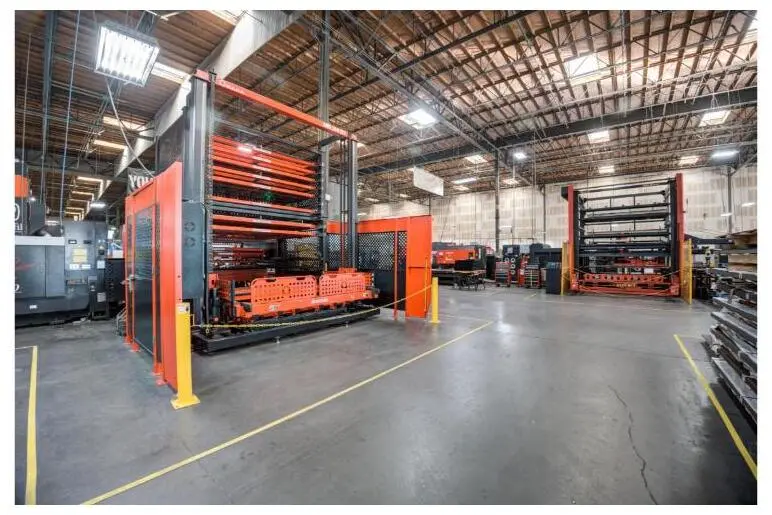
EIA-310 defines mechanical interface standards for rack-mounted equipment, including unit height, mounting hole patterns and structural requirements. Defense programs add MIL-STD environmental and EMI requirements that govern rack performance under operational stress.
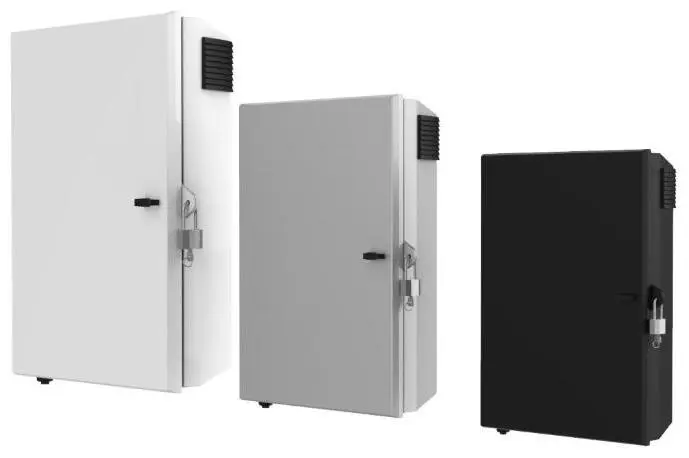
Meeting both standards requires tight dimensional control across fabrication and assembly. Electromechanical assembly in rack enclosures requires control of alignment, torque, clearances, grounding, cable routing, thermal interfaces, connector retention and system-level testing. When fabrication and assembly occur at separate facilities, dimensional variation introduced during transit or handling can compromise compliance before assembly begins.
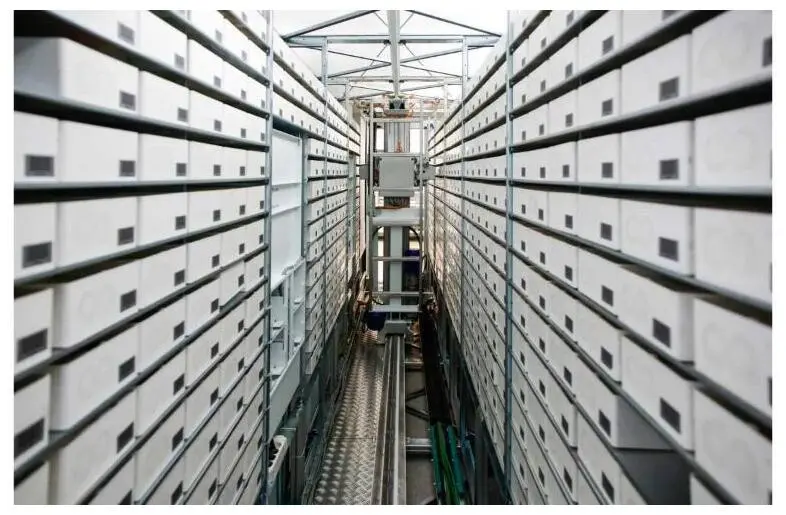
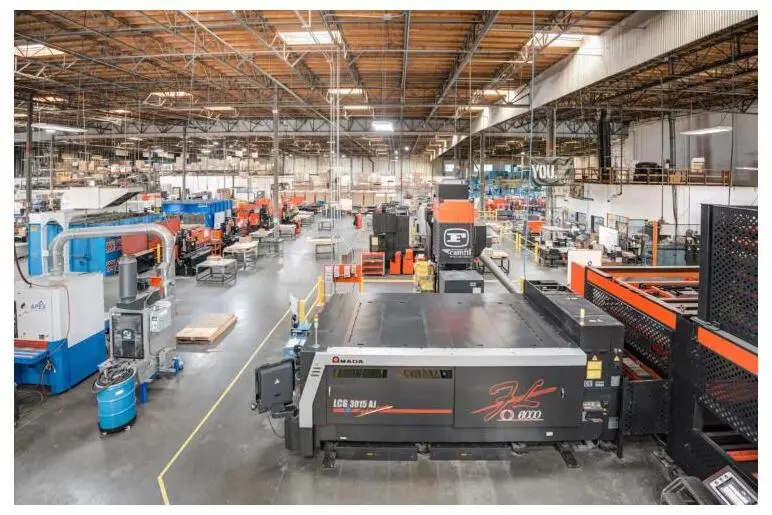
Fabcon’s in-house CNC machining, laser cutting, CNC forming, welding and assembly capabilities maintain dimensional integrity from raw material through finished rack. Engineering and quality teams share the same floor, which enables real-time feedback that prevents nonconformances instead of discovering them at receiving inspection.
In-House Traceability and Counterfeit-Part Prevention
AS9100 Clause 8.1.4 requires aerospace suppliers to establish processes for personnel training on counterfeit risks, detection methods, traceability, reporting and control of obsolete parts. DFARS 252.246-7007 adds requirements for contractors subject to Cost Accounting Standards on Department of Defense contracts.
A working traceability chain preserves original-manufacturer traceability, lot traceability, mill-certification traceability and serialization for high-consequence parts. Defense contractors must maintain a complete chain of custody for every sourced item, verifying movement from the original manufacturer to the final supplier.
When fabrication and assembly are split across vendors, traceability records must transfer between organizations at every handoff. Each transfer becomes a point where records can be lost, altered or never generated. In-house control places one quality system in charge of the complete traceability record from raw material receipt through shipment.
Fabcon’s AS9100D-certified quality system governs every stage of the build and maintains traceability records that satisfy program audit requirements and support rapid isolation of any suspect material. Request Fabcon’s counterfeit-prevention documentation for quality review.
Defensible Shortlisting: AS9100 Network Rack Verification Checklist
Procurement teams can apply the following checklist to evaluate and document fabricator qualification for AS9100 network rack programs.
- Search the fabricator’s legal entity name in the IAQG OASIS database and confirm active status, scope coverage and certification body accreditation.
- Request current ITAR registration documentation and confirm DD2345 authorization for programs that involve militarily critical technical data.
- Review the AS9100D certificate scope statement to confirm coverage for fabrication, finishing and electromechanical assembly, not fabrication alone.
- Request the counterfeit-part prevention procedure and confirm references to AS5553, AS6081 and DFARS 252.246-7007, including supplier approval lists, incoming inspection criteria and GIDEP alert screening.
- Confirm that EIA-310 fabrication and IPC-A-610 Class 3 assembly controls occur in-house, not through subcontractors.
- Request evidence of configuration management procedures that link design baselines, change records and delivered product.
- Confirm that finishing capabilities, including military-grade coatings, are in-house and covered by the AS9100D scope.
- Request references from active aerospace or defense programs with similar rack complexity and volume profiles.
People Also Ask: AS9100 Network Rack Fabricator Details
How to confirm an AS9100D certificate is current
The IAQG OASIS database serves as the authoritative source for confirming active AS9100D certification status. A printed certificate does not reflect suspensions, scope changes or withdrawals that may occur after issuance. Procurement teams should search the fabricator’s legal entity name in OASIS, confirm the certification body is IAQG-recognized, verify that the scope statement covers all relevant processes and note the next scheduled surveillance audit date. Any fabricator that does not appear in OASIS or whose scope excludes finishing or assembly should be removed from consideration for network rack programs.
Documentation that proves ITAR and DD2345 compliance
The U.S. Department of State Directorate of Defense Trade Controls maintains ITAR registration. Fabricators should provide current DDTC registration confirmation that lists the registration number and expiration date. The Defense Logistics Agency issues DD2345, the militarily critical technical data agreement that authorizes access to export-controlled technical data. Procurement teams should request copies of both documents and verify that document control procedures restrict access to controlled data to authorized personnel. Both registrations must remain current at contract award and throughout program execution.
Why splitting fabrication and assembly increases counterfeit risk
Each vendor handoff in a multi-supplier network rack program creates a point where traceability records must transfer between separate quality systems. When records are not generated, transferred completely or verified at receiving inspection, counterfeit or nonconforming material can enter the assembly without detection. AS9100D requires traceability back to the original or authorized manufacturer for every part, and that requirement only holds when every link in the chain maintains control. A fabricator that sources material from an approved vendor list and assembles the rack in the same facility under one quality system maintains an unbroken traceability record. A program that splits those functions across multiple vendors introduces several points where that chain can fail.
Required in-house capabilities for EIA-310 compliant racks
EIA-310 compliance for defense network racks requires in-house capabilities that span the full build sequence. Fabrication capabilities must include laser cutting, CNC forming, welding and CNC machining to maintain dimensional tolerances for rack unit height, mounting hole patterns and structural integrity. Finishing capabilities must include military-grade coatings where specified, applied under controlled conditions with documented process parameters. Electromechanical assembly must include hardware installation, cable routing and management, connector installation, grounding and system-level testing, all performed under IPC-A-610 Class 3 controls for aerospace and defense applications. When any of these capabilities are subcontracted, the prime fabricator loses direct control over process parameters and traceability records that EIA-310 and program quality requirements demand.
Conclusion: Applying the Five-Factor Framework
The five-factor evaluation framework of OASIS-verified AS9100D certification, ITAR and DD2345 registration, end-to-end in-house process control, documented counterfeit-part prevention and EIA-310 and MIL-STD fabrication capability gives procurement and engineering teams a defensible basis for shortlist decisions on mission-critical network rack programs.
A prime contractor can maintain an exemplary quality system on its own factory floor yet still ship a nonconforming product if the failure originated upstream in a supplier never directly audited. Vertical integration addresses that risk at the structural level. Fabcon maintains AS9100D certification and ITAR registration, performs fabrication, finishing and electromechanical assembly across its U.S. facilities and applies counterfeit-prevention and traceability controls that satisfy AS9100 Clause 8.1.4, AS5553, AS6081 and DFARS 252.246-7007 requirements.
Next Step: Advance Network Rack Supplier Qualification
Procurement teams can bring the verification checklist to the next supplier review and confirm that every fabricator on the shortlist meets all five criteria. Fabcon’s program team is prepared to provide AS9100D certification documentation, ITAR registration confirmation and a detailed scope review for network rack programs. Submit program requirements to begin the qualification process.
Frequently Asked Questions About Fabcon’s Capabilities
Difference between AS9100D and ISO 9001:2015 for network rack fabrication
ISO 9001:2015 establishes a general quality management framework that applies across industries. AS9100D builds on that foundation with aerospace-specific requirements that ISO 9001 does not include, such as formal product safety processes, explicit counterfeit-part prevention and detection procedures, configuration management that links design baselines to delivered product and project management controls for complex multi-supplier programs. For defense network rack programs, these additions align with the controls that program auditors, prime contractors and Department of Defense customers verify. A fabricator certified only to ISO 9001 lacks the documented systems that support those requirements, regardless of shop floor capability.
How Fabcon maintains traceability across fabrication, finishing and assembly
Fabcon’s AS9100D-certified quality management system governs every stage of the build within a single facility structure. Raw material arrives against an approved supplier list, passes documented incoming inspection and receives traceability records that follow the part through fabrication, finishing and electromechanical assembly. Because all three processes occur under one roof and one quality system, traceability records are generated and maintained without the transfer gaps that appear when work moves between separate vendors. Configuration management procedures link design baselines and change records to delivered product, which provides the documented evidence that program audits and first-article inspections require.
Fabcon finishing capabilities for defense network rack programs
Fabcon performs finishing in-house, including powder coat, wet paint, screen printing, CARC military-grade finishing and mil-spec coatings. All finishing processes fall under Fabcon’s AS9100D certification scope, so process parameters, personnel qualifications and inspection records remain within the same quality system that governs fabrication and assembly. In-house finishing removes transit handling, documentation transfer and schedule dependency that arise when racks ship to an external coating supplier between fabrication and assembly.
Fabcon support for prototype and production volumes
Fabcon supports programs from prototype through production with flexible manufacturing cells that adapt to changing volumes and evolving bills of materials. This structure allows programs to begin at prototype scale and transition to production without changing partners, quality systems or traceability records. That continuity matters for AS9100D programs, where requalification of a new supplier mid-program introduces schedule risk and documentation burden.