
Last updated: August 25, 2026
Key Takeaways
- Electronic enclosure material selection directly affects system survival by balancing ingress protection, EMI shielding, thermal management and structural durability for mission-critical infrastructure.
- Metal enclosures outperform plastic alternatives outdoors, with 316L stainless steel and finished aluminum providing decades of UV and corrosion resistance compared with polycarbonate’s 3- to 5-year degradation window.
- Metal provides inherent, consistent EMI shielding that plastic enclosures cannot match without conductive coatings that add cost, variability and supply chain complexity.
- Aluminum 6061-T6 delivers thermal conductivity about 750 times higher than plastics, which can reduce internal operating temperatures by 15 to 30°C in high-power electronics.
- Infrastructure programs that require integrated EMI, thermal and grounding performance benefit from partnering with a vertically integrated U.S. fabricator like Fabcon for DFM collaboration, consistent quality and simplified supply chains.
Core Requirements for Electronic Enclosure Materials
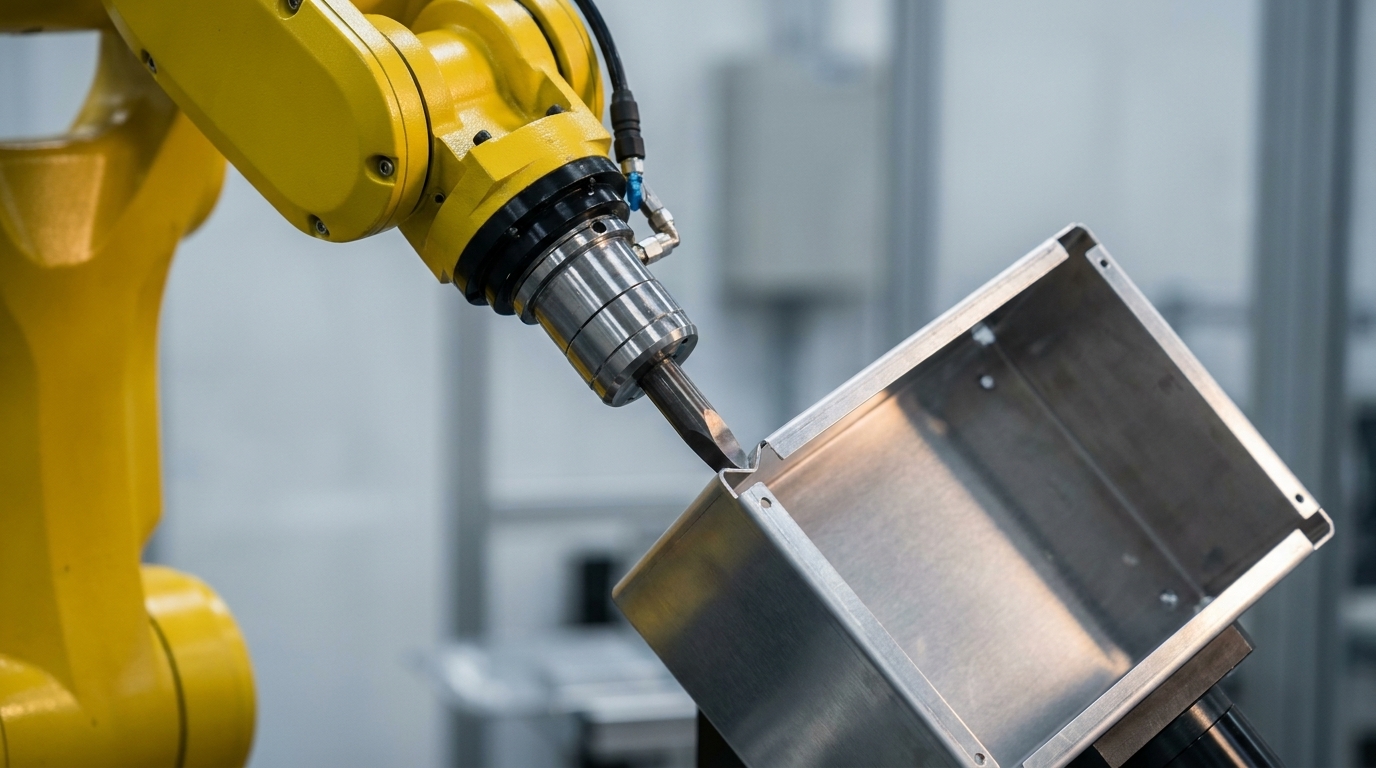
An effective enclosure material manages heat, controls electromagnetic emissions, resists corrosion and mechanical stress, and provides a reliable conductive path for grounding. These functions support long service life for infrastructure systems. Data centers, energy storage systems, EV charging infrastructure and traffic control equipment all depend on this level of performance. Material selection must satisfy every requirement at the same time, not favor one while compromising the rest.
Outdoor Enclosures and Environmental Exposure
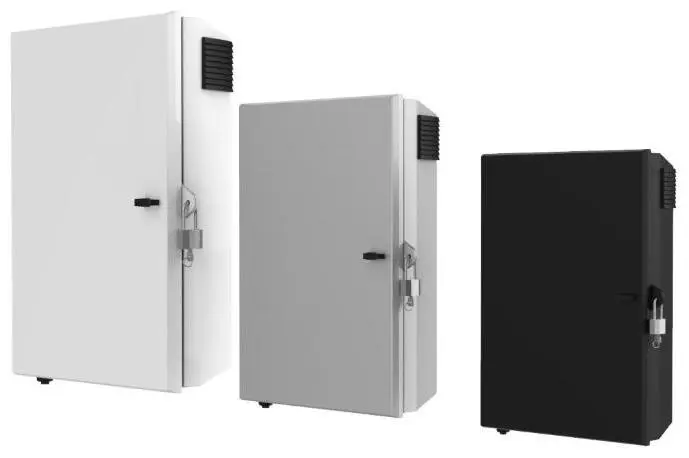
Outdoor deployments expose enclosures to UV radiation, salt spray, condensation, freeze-thaw cycling and windblown particulate. NEMA enclosure ratings, defined in NEMA 250, classify protection against corrosion, ice formation, oil, coolant and indoor or outdoor suitability, while IP ratings under IEC 60529 address only solid object and water ingress. The distinction affects material choice. An IP66 rating confirms dust-tight protection and resistance to powerful water jets but does not prove corrosion resistance, so an IP66 enclosure cannot substitute for NEMA 4X without separate corrosion documentation.
NEMA 4X enclosures add explicit corrosion resistance to the water and dust protection of NEMA 4, which makes them the baseline for coastal, marine, wastewater and chemical processing environments. Within that rating, material still drives long-term performance. 316 stainless steel is preferred over 304 stainless steel in severe coastal or chloride-rich environments because molybdenum improves resistance to pitting and crevice corrosion. Stainless steel 316L is inherently UV resistant due to its reflective metallic surface, which removes the coating-degradation risk that affects painted steel and plastic.
Aluminum with powder coat or anodized finish performs well in most outdoor environments. Powder-coated or anodized aluminum provides good UV resistance dependent on coating quality, with AAMA 2605 representing the highest standard for color and gloss retention over decades of outdoor use. Plastic enclosures present a different risk profile. NEMA 4X and IP66 certifications address water, dust and corrosion via salt spray testing but exclude UV stability testing, which means a plastic enclosure can hold both ratings while remaining vulnerable to UV-driven embrittlement and microcracking. Unprotected standard polycarbonate can suffer structural degradation in 3 to 5 years under intense direct sunlight, whereas the inherently UV-resistant metals discussed above can exceed two decades of outdoor service life with appropriate maintenance.
For infrastructure programs where replacement costs and downtime carry high impact, metal enclosures provide the most defensible outdoor choice.
EMI Shielding Performance by Material
Metal enclosures provide inherent electromagnetic shielding that plastic enclosures lack without secondary treatment. Plastic enclosures are effectively transparent to electromagnetic energy, allowing emissions from internal components such as clocks, switching supplies and high-speed buses to radiate outward and external interference to enter. Conductive coatings on plastic can improve performance, but results vary. Conductive spray coatings can deliver shielding effectiveness depending on formulation, film thickness, frequency and application, which requires verification for each program.
Metal enclosures deliver consistent, measurable shielding. A solid aluminum enclosure with proper sealing can achieve high shielding effectiveness across a wide frequency range, and galvanized sheet steel also provides effective shielding. Commercial EMC compliance under CISPR 32 and military MIL-STD-461G applications both typically require 40 to 80 dB cable shielding effectiveness. Metal enclosures provide margin for most infrastructure electronics.
Shielding performance depends on the enclosure’s weakest path. Apertures, seams that act as slot antennas and cable penetrations where pigtail grounding reduces shielding effectiveness compared with 360-degree bonding create primary failure modes. Continuous conductive gaskets, honeycomb vents and fastener pitch sized to vendor load-deflection curves are recommended controls for seam integrity. These details reach the best outcome when resolved during DFM review before fabrication begins.
A common target for sheet-metal enclosures measured in a semi-anechoic chamber is substantial attenuation across the frequency band of interest, which provides practical compliance margin for commercial and industrial applications. Metal enclosures reach that target by default, avoiding the coating complexity discussed earlier. Beyond shielding performance, metal enclosures also provide the grounding infrastructure that completes the EMI control strategy.
Grounding Strategy for Metal Electrical Boxes
Grounding functions as a structural design decision. Metal enclosures naturally provide electromagnetic shielding, and proper grounding improves shielding effectiveness while EMI gaskets reduce leakage around enclosure joints and removable panels. Grounding the PCB to the enclosure at strategic points is a core practice in integrated mechanical-electrical design. Electrical and mechanical teams must coordinate those decisions from the earliest design stage.
For enclosures requiring EMI or grounding performance, maintaining conductive finishes by masking paint on gasket lands or applying chemical film or plating to preserve conductivity at mating surfaces is essential. Paint over a grounding contact point breaks the conductive path and degrades shielding effectiveness. This failure mode appears most often when fabrication and finishing occur at separate vendors without coordinated work instructions.
Wireless pass-through in metal enclosures requires deliberate planning. Metal enclosure parts can block RF signals and degrade wireless range unless antenna zones are coordinated between mechanical and electronics teams early in the process. Antenna placement requires reserving a keep-out zone from metal surfaces and using RF-transparent plastic windows in metal enclosures to maintain wireless performance. When scaling from prototype to production, these keep-out zones and window specifications must appear in the manufacturing router so they remain consistent across every build.
Grounding and feedthrough architecture must be designed as an integral part of the enclosure to preserve shielding integrity and prevent leakage through connectors, cables and feedthroughs. A vertically integrated fabrication partner that manages both metalwork and light electromechanical assembly under one roof can enforce these requirements consistently across production runs.
Heat Dissipation and Thermal Performance
Thermal management highlights the largest performance gap between metal and plastic enclosures. Aluminum 6061-T6 has significantly higher thermal conductivity at room temperature than stainless steel and polycarbonate. That difference reflects a structural property, not a small improvement. Aluminum alloy has approximately 750 times higher thermal conductivity than ABS or polycarbonate plastics, which provides a major heat-dissipation advantage for high-power electronics.
Operating temperature ranges follow the same hierarchy established by thermal conductivity. Plastic enclosures have more limited operating temperature ranges than aluminum, which can operate across wider temperature extremes depending on the alloy. This limitation becomes critical for infrastructure electronics such as power conversion systems, battery management units and EV charging controllers, which generate internal heat loads that push plastic enclosures toward their thermal limits without active cooling.
Aluminum enclosures can reduce internal operating temperatures by 15 to 30°C compared with lower-conductivity alternatives such as plastic or stainless steel. That reduction directly affects component reliability and service life. Aluminum-housed fixtures can maintain lower junction temperatures than equivalent plastic-housed units under identical operating conditions, which supports longer expected service life.
Stainless steel occupies a middle position. Stainless steel 304 and 316L have a thermal conductivity of 16 to 24 W/(m·K), which makes them poor conductors relative to aluminum but stronger conductors than plastics. For applications where corrosion resistance outweighs heat dissipation, such as marine environments, chemical processing and food-grade washdown, stainless steel remains the correct choice. For high-power electronics in controlled or semi-controlled environments, aluminum provides the preferred thermal solution.
When Custom Metal Fabrication Delivers the Most Value
Custom metal fabrication becomes the right path when environmental exposure, EMI requirements, thermal loads, grounding integrity or service-life expectations exceed what off-the-shelf or plastic enclosures can deliver. That description covers most infrastructure and technology applications in data centers, energy storage, EV infrastructure, traffic safety and industrial OEM manufacturing.
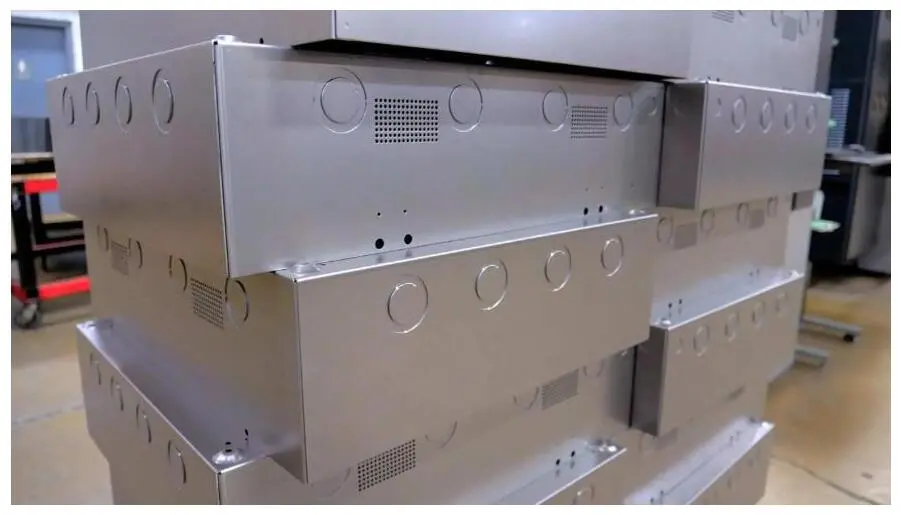
The supply-chain case for a single vertically integrated partner is practical. Industry data indicates that material and labor for fabrication and assembly represent a substantial portion of enclosure unit cost, which means assembly integration costs are comparable to raw material costs in the final price. Fragmenting those functions across multiple vendors does not reduce cost. It redistributes risk while adding coordination overhead, quality handoff gaps and schedule exposure.
Early DFM collaboration provides the strongest lever for reducing total program cost. DFM optimization performed during the design phase rather than after tooling can reduce production costs by 25 to 40 percent at the component level through reductions in part count and fastener variety. Fabcon’s engineering and quoting teams deliver this optimization by engaging with customer technical teams before production begins, reviewing drawings, tolerances and materials to build manufacturing routers tuned for the production floor. That front-end work prevents rework, compresses lead times and supports designs that scale without redesign.
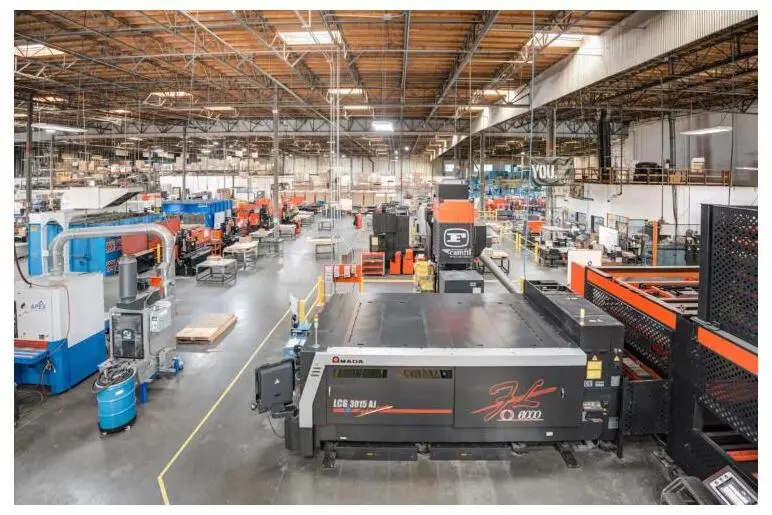
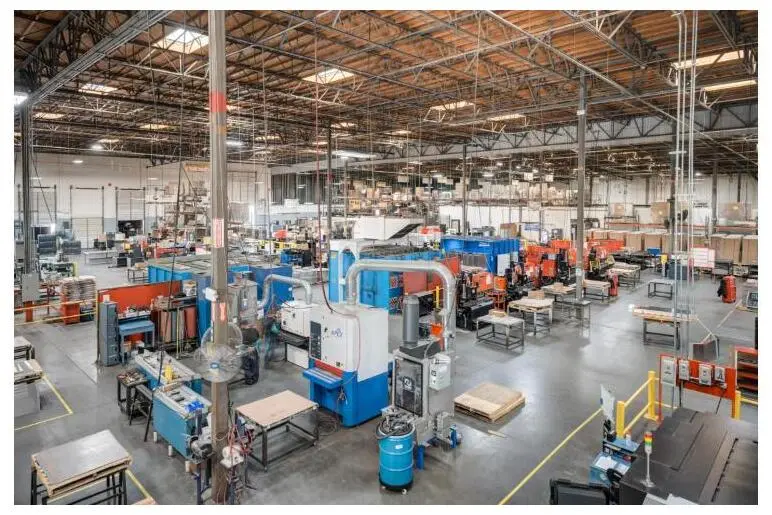
Fabcon’s agile production cells support programs from prototype through mid-volume production without the high minimums or rigid onboarding requirements of large contract manufacturers. ISO 9001:2015 and AS9100D certification governs every stage of the build and provides full traceability for parts and assemblies in regulated industries. Fabrication and finishing, including powder coat, wet paint and mil-spec coatings, along with light electromechanical assembly, occur under one roof, which removes vendor handoffs that cause schedule delays and quality disputes.
Frequently Asked Questions
How does total cost of ownership compare between custom metal and plastic enclosures at mid-volume?
Per-unit material cost for plastic enclosures appears lower at first glance, but total cost of ownership for mid-volume infrastructure programs tells a different story. Plastic injection molding requires significant upfront tooling investment that must be amortized across production volume, and tooling lead times add weeks to first-article delivery. Custom metal enclosures through sheet metal fabrication scale more predictably across mid-volume ranges without tooling lock-in and remove the secondary processing costs, such as conductive coatings, UV stabilization and thermal accessories, that plastic enclosures require to reach infrastructure-grade performance. When assembly integration, finishing and quality management are consolidated under one partner, coordination costs that inflate total program cost drop out of the equation.
Can plastic enclosures meet infrastructure EMI and durability requirements?
Plastic enclosures can receive conductive coatings or vacuum metalizing to achieve measurable EMI shielding, but those treatments add process steps, cost and variability. Shielding effectiveness depends on coating formulation, film thickness, application consistency and frequency band, which all require verification for each program. Durability in outdoor or harsh environments requires UV stabilization compounded into the resin, not surface coatings, and even stabilized plastics have shorter service lives than metal under sustained UV and thermal cycling. For infrastructure applications where replacement costs and downtime carry significant impact, the added process complexity of plastic enclosures rarely justifies the upfront material cost savings.
What grounding and wireless considerations apply when scaling metal enclosures?
Grounding must be designed into the enclosure from the start, not added during integration. PCB-to-enclosure grounding points, gasket land conductivity and cable feedthrough bonding all affect shielding effectiveness and must appear in manufacturing documentation so they remain consistent across every production run. Wireless pass-through requires antenna keep-out zones from metal surfaces and RF-transparent windows designed into the enclosure geometry before fabrication begins. When scaling from prototype to production, these specifications must be locked into the manufacturing router and verified at first article. A vertically integrated partner that manages fabrication, finishing and electromechanical assembly under one roof can maintain these requirements consistently without vendor handoff gaps.
How does early DFM collaboration affect enclosure performance and lead times?
DFM collaboration before production begins catches manufacturability issues that would otherwise surface as rework, tolerance failures or redesigns after tooling is committed. For metal enclosures, DFM review addresses bend radii, hole-to-bend distances, gasket land geometry, fastener selection and finish masking requirements, which all affect performance and production efficiency. Engaging the fabrication partner’s engineering team at the design stage, rather than submitting a completed drawing for a build-to-print quote, compresses the overall program timeline by reducing iteration cycles. It also ensures that EMI, grounding, thermal and ingress requirements appear in the design rather than through secondary operations later.
Conclusion
Material selection for electronic enclosures functions as a systems decision. As established at the outset, these performance requirements cannot be traded off against each other, and metal, with aluminum for thermal-critical applications and stainless steel for corrosion-critical environments, addresses all of them without the secondary processing that plastic alternatives require. For infrastructure and technology programs operating at mid-volume, the supply-chain case for a single vertically integrated U.S. fabrication partner remains strong. One partner for DFM collaboration, fabrication, finishing and light electromechanical assembly reduces vendor fragmentation, coordination overhead and risk while supporting the traceability that regulated industries require.
Fabcon has supported infrastructure and technology programs from prototype through production since 1977, operating across 220,000 square feet of vertically integrated manufacturing space with ISO 9001:2015 and AS9100D certification. Fabcon stands ready to simplify enclosure programs with a single accountable U.S. partner. Get a quote.