

Last updated: August 24, 2026
Key Takeaways for Aerospace Enclosure Programs
- Aerospace custom electronic enclosures must meet RTCA DO-160, MIL-STD-810, MIL-STD-461 and MIL-STD-464D while satisfying SWaP limits for size, weight and power.
- Vertical integration reduces supply-chain risk by consolidating fabrication, finishing and assembly under one U.S. partner, which removes vendor handoffs and documentation gaps.
- Material selection, surface finishes and thermal management must be built into the enclosure architecture from the start to achieve compliance and SWaP targets.
- AS9100D certification and ITAR registration support traceability, configuration management and compliance in mission-critical aerospace programs.
- Partner with Fabcon to consolidate aerospace enclosure sourcing with a single, vertically integrated U.S. manufacturer.
Design and Performance Standards for Aerospace Electronic Enclosures
Standards for aerospace electronic enclosures span environmental simulation, electromagnetic compatibility and platform-level integration. Because each standard addresses a distinct aspect of performance, no single document covers every requirement, so design teams must synthesize requirements across multiple specifications.
RTCA DO-160 applies to commercial airborne equipment and bundles environmental, power-input and EMC requirements into one document. Sections 4, 5, 6, 7, 8, 10 and 14 drive thermal paths, sealing and ruggedized construction by addressing temperature and altitude, temperature variation, humidity, shock, vibration, waterproofness and salt fog. Sections 15 through 25 impose EMI and EMC design constraints on input filters, shielding, bonding and transient suppression.
MIL-STD-461H establishes EMI requirements at the subsystem and equipment level with test families covering conducted emissions, conducted susceptibility, radiated emissions and radiated susceptibility. MIL-STD-464D addresses electromagnetic environmental effects at the integrated platform level, so enclosure design must consider the broader system. Enclosure geometry must account for antenna coupling, cable routing, structural currents, lightning attachment and HIRF at the platform level.
MIL-STD-810H serves as the primary environmental test framework for defense programs, covering shock, vibration, temperature, humidity and altitude. It drives decisions on wall thickness, structural reinforcement, fastening strategy, sealing, finish durability and thermal management. DO-160 Section 26 addresses flammability and requires that enclosure materials not contribute to fire propagation, which directly influences polymer selection, coatings and internal insulation.
The following framework maps each standard to the enclosure features it governs.
- MIL-STD-810H: Wall thickness, sealing, structural reinforcement, thermal management, finish durability and ruggedization for shock and vibration
- DO-160 (Sections 4-14): Thermal paths, environmental sealing, corrosion resistance, waterproofness and salt fog resistance
- MIL-STD-461H: EMI and RFI shielding, bonding, grounding, input filtering and transient suppression
- MIL-STD-464D: Platform-level electromagnetic integration, lightning, HIRF, EMP, ESD and HERO/HERP/HERF
- DO-160 Section 26: Flammability of materials, coatings and internal insulation
Airborne Enclosure Requirements
Airborne enclosures must address CS117 lightning indirect effects on cables under MIL-STD-461H, which maps to DO-160 Section 22. DO-160 Section 26 flammability requirements apply to all nonmetallic components in the assembly. Salt fog resistance per DO-160 Section 14 is critical for coastal and marine aircraft. Enclosures installed near navigation suites must also satisfy RE101 low-frequency magnetic field radiated emissions testing.
Ground-Based Enclosure Requirements
Ground-based enclosures face broader temperature ranges, dust ingress and vehicle-induced shock and vibration. MIL-STD-810H test conditions must match the actual deployment profile, so test method selection must reflect real use conditions. Platform-level EMC per MIL-STD-464D applies to ground vehicles and ground stations.
Spaceborne Enclosure Requirements
Spaceborne enclosures require balance across size, weight, power, thermal capacity, structural integrity, electromagnetic compatibility and manufacturability. Every gram and cubic centimeter affects mission viability and launch costs. Passive conductive heat transfer using integrated heatsinking and thermal gap pads serves as the standard approach for dissipating heat from high-power components in zero-gravity orbital conditions.
SWaP and Thermal Management in Aerospace Enclosures
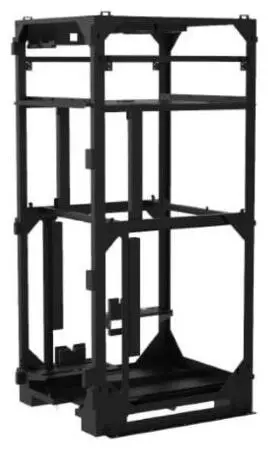
In aerospace and defense electronics, every gram of shielding weight matters because thick metal can break SWaP budgets. Effective SWaP management embeds shielding, thermal dissipation and environmental sealing functions directly into the enclosure architecture instead of treating them as add-ons.
Flight computer enclosures integrate multiple functions into a single assembly, including CNC-machined aluminum housings, form-in-place EMI gaskets, conductive plating, environmental coatings and thermal interface materials. This integration supports SWaP goals while surviving high-G launch environments and wide temperature swings.
Integrated CNC-machined cooling fins dissipate heat from power-dense avionics modules while respecting weight budgets. Most EMI leakage occurs at seams, slots, ventilation openings, connector transitions and mating surfaces rather than through bulk material, so geometry and surface quality often matter more than material thickness. Shielding must pair with a coherent grounding strategy, since grounding errors can create unintended current loops that bypass the shield.
Material and Process Selection for MIL-STD Compliance
Aluminum alloys are commonly selected for defense electronics enclosures because they combine strength-to-weight performance with electromagnetic shielding that supports SWaP limits in weight-sensitive aerospace and UAV platforms. 7075-T6 aluminum is a dominant material for avionics housings because its yield strength and density enable thinner walls that reduce mass while withstanding high shock loads.
Surface finishes and coatings must satisfy environmental and electromagnetic requirements. Anodizing per MIL-A-8625 and chemical film per MIL-DTL-5541 are standard for aluminum enclosures in defense programs. CARC military-grade finishing provides corrosion and chemical resistance for ground-based and airborne platforms. Conductive coatings on composite housings require strong adhesion and long-term conductivity at contact interfaces, since flaking or wear creates inconsistent shielding performance under operational stress. These coating requirements demand both technical capability and integrated quality control.
Fabcon performs powder coat, wet paint, screen printing, CARC and mil-spec coatings in-house under the same quality system that governs fabrication and assembly, which preserves traceability across the full build.
Quality Systems and Traceability Requirements
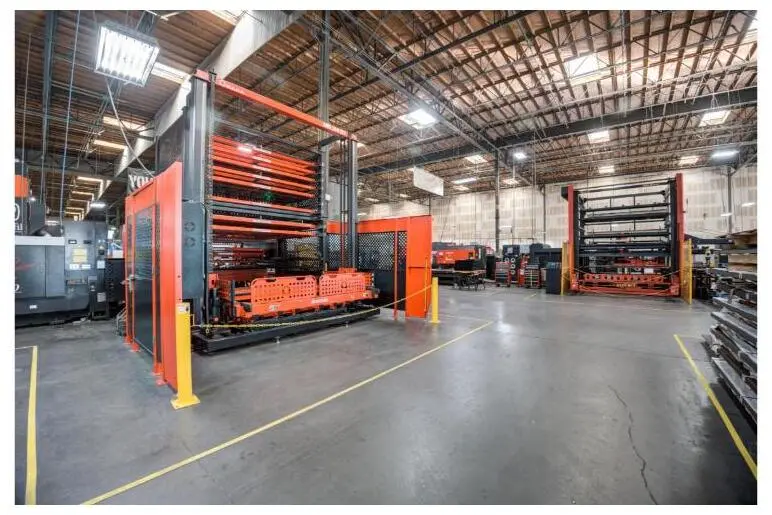
AS9100D requires documented configuration management in which every change to a part, bill of materials or process is versioned, authorized and traceable. Formal CAPA workflows with assigned owners and deadlines and supplier traceability via Approved Vendor List qualifications form mandatory elements of the standard.
AS9100D Clause 8.5.2 requires identification and traceability appropriate to the product, including material certifications, special process records and production sequence documentation. Aerospace programs require bidirectional traceability at the individual serial-number level, with each part carrying a unique identifier through manufacturing, inspection, installation, maintenance and scrapping.
ITAR registration restricts access to controlled technical data to U.S. persons and requires an immutable audit log of all access to ITAR-controlled BOMs, drawings and specifications. Defense EMC test data and reports on ITAR-controlled equipment are subject to U.S. Munitions List Category XI, which requires U.S.-person lab personnel and restricts report distribution without an export license or exemption.
Fabcon holds AS9100D certification and ITAR registration with integrated quality assurance spanning fabrication, finishing and assembly. Every stage of the build follows the same quality system, which enables full traceability and audit-ready records for mission-critical programs.
End-to-End Assembly Workflow and Supply-Chain Simplification
Coordinating five or more separate suppliers for components, structural fabrication, electrical work, painting and final assembly creates complexity that consumes program management capacity and introduces handoff risk at every transition. Consolidation of manufacturing under one partner reduces handoffs, streamlines communication and frees program teams to focus on design innovation rather than vendor orchestration.
McKinsey research found that companies lose an average of 45% of one year's EBITDA over a decade due to supply chain disruptions. A fragmented supplier base also creates compliance risks. Tracking material documentation, certifications and quality records across multiple vendors increases engineering and quality hours while raising the probability of gaps.
Domestic manufacturing and vertically integrated operations help mitigate the risk of disruptions caused by geopolitical tensions and global shipping delays. These structures provide greater control over quality consistency, production schedules and intellectual property.
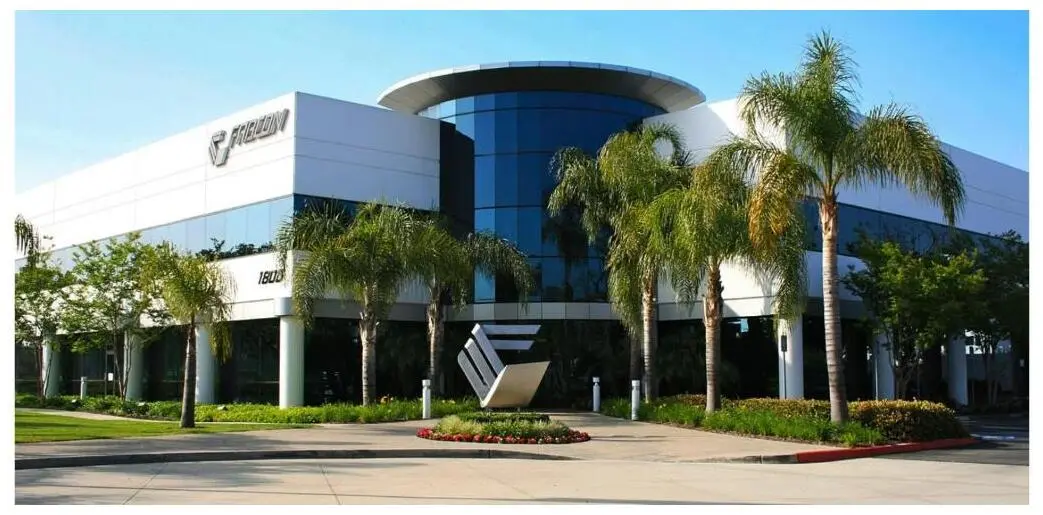
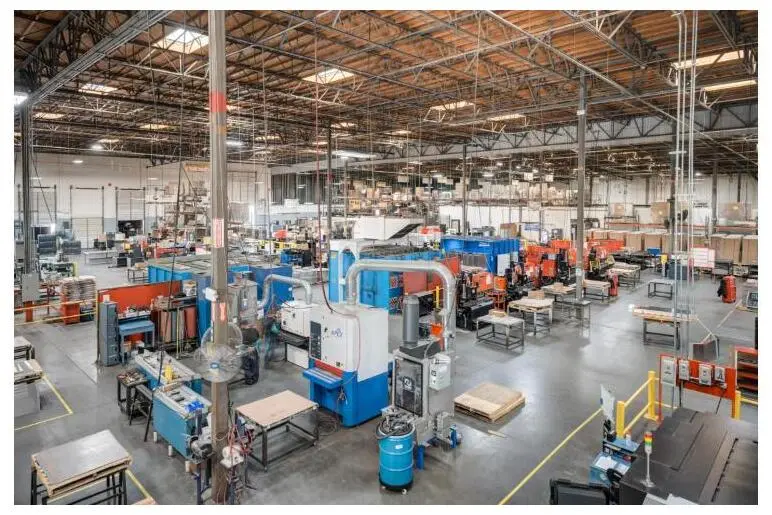
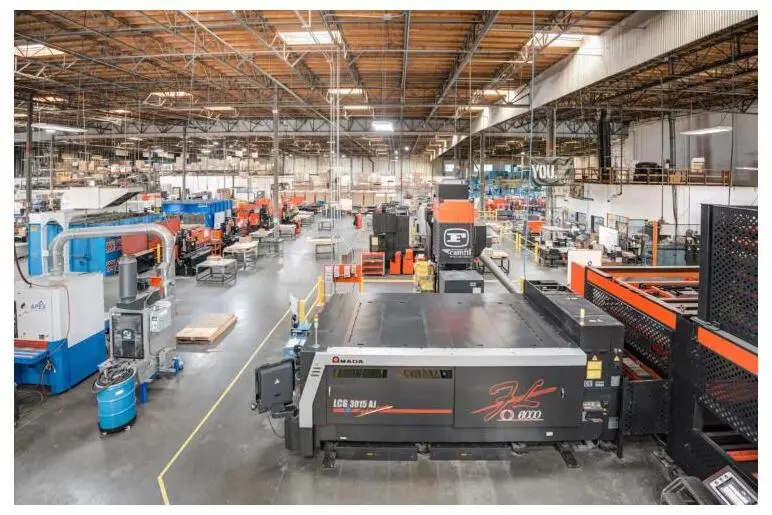
Fabcon performs fabrication, finishing and light electromechanical assembly, including wiring and component integration, under one roof in its Southern California facilities. One purchase order, one accountable partner and one quality system govern the entire build from raw material to finished assembly.
Get a quote and consolidate the aerospace enclosure supply chain with Fabcon.
Scaling from Prototype to Mid-Volume Production
Aerospace and defense programs often require specialized electronics in low to mid volumes, so production flexibility becomes a strategic requirement. Mid-volume programs favor suppliers that preserve manufacturing capability, tooling, documentation and supply chain relationships over extended lifecycles.
Large contract manufacturers typically require high minimum order quantities, long onboarding processes and rigid production line configurations. These constraints create friction for programs with evolving BOMs, configuration changes or unpredictable procurement cycles driven by defense budget timelines. High-mix low-volume manufacturing requires controlled processes for setup, changeover, BOM management, work instructions, inspection and testing. Without this discipline, flexibility can increase risk instead of reducing it.
Fabcon's agile production cells adapt to changing volumes, mixed SKUs and evolving BOMs without the overhead and rigidity of large contract manufacturers. Early DFM collaboration with Fabcon's engineering and quoting teams reduces rework, improves cost efficiency and confirms that designs can be built at scale before production begins.
Supplier Evaluation Checklist for Aerospace Programs
Evaluating suppliers for aerospace custom electronic enclosure programs requires assessment across six dimensions: technical capabilities, integration scope, quality and compliance, scalability and flexibility, supply-chain and logistics and total value.
Technical capabilities cover precision sheet metal fabrication, CNC machining, certified welding and the ability to hold tight tolerances on critical mating surfaces. Suppliers must demonstrate experience with aerospace-grade materials and finishes, including mil-spec coatings and anodizing.
Integration scope determines how many handoffs a program requires. A supplier that performs fabrication, finishing and light electromechanical assembly under one roof eliminates inter-facility transfers, documentation gaps and quality finger-pointing between vendors.
Quality and compliance require AS9100D certification, ITAR registration and a quality management system that spans the full build. Full bidirectional traceability at the serial-number level, audit-ready records and a formal CAPA process support mission-critical programs.
Scalability and flexibility separate suppliers that support prototype through mid-volume production from those locked into rigid production models. Agile production cells, DFM collaboration and the ability to accommodate BOM changes without high minimums or long onboarding serve as key indicators.
Supply-chain and logistics considerations include domestic manufacturing location, chain-of-custody documentation for ITAR-controlled programs and the ability to manage finishing and assembly internally rather than routing parts to third-party vendors.
Total value accounts for the full program cost. Tier-1 aerospace and defense companies face multi-year re-verification timelines when switching suppliers, so the cost of a poor initial selection can be significant.
Frequently Asked Questions
What does AS9100D certification mean for an aerospace enclosure program?
AS9100D is the international quality management standard for aviation, space and defense manufacturing. It requires documented configuration management, bidirectional traceability at the serial-number level, formal corrective action processes and supplier qualification through an Approved Vendor List. For enclosure programs, AS9100D means every change to a part, BOM or process is versioned and authorized, and every finished assembly can be traced back to its raw material batch, operators and inspection records. Fabcon holds AS9100D certification with integrated quality assurance across fabrication, finishing and assembly.
What is ITAR registration and why does it matter for custom electronic enclosures?
ITAR, the International Traffic in Arms Regulations, governs the export and transfer of defense-related articles and technical data listed on the U.S. Munitions List. For aerospace electronic enclosures used in defense programs, ITAR registration means the manufacturer restricts access to controlled drawings, BOMs and specifications to U.S. persons only, maintains an immutable audit log of all access to controlled data and screens all customers, suppliers and end users against denied-parties lists. Non-compliant suppliers create compliance gaps that can delay or disqualify programs regardless of manufacturing capability. Fabcon is ITAR registered and operates from U.S.-based facilities.
How does vertical integration reduce risk for mid-volume aerospace enclosure programs?
Vertical integration means fabrication, finishing and assembly occur under one roof with one accountable partner. This structure removes vendor handoffs, the transitions between suppliers where documentation gaps, quality escapes and scheduling delays most often occur. When design revisions happen mid-production, an integrated partner can coordinate changes in real time, which prevents waste from outdated parts and maintains program momentum. A single quality system governs the entire build, so traceability remains continuous instead of reconstructed across multiple vendors' records.
Can a mid-volume aerospace program avoid the rigidity of large contract manufacturers?
Large contract manufacturers typically impose high minimum order quantities, long onboarding timelines and rigid production line configurations that do not accommodate evolving BOMs or mixed-configuration programs. Fabcon's agile production cells support mid-volume programs from prototype through production without requiring commitments to volumes that exceed program needs. DFM collaboration begins before production starts, which reduces rework and confirms that designs scale without surprises.
What finishing and coating options satisfy MIL-STD requirements for aerospace enclosures?
Aerospace enclosures typically require surface treatments that address corrosion resistance, electromagnetic compatibility and environmental durability. Anodizing per MIL-A-8625 and chemical film per MIL-DTL-5541 are standard for aluminum enclosures in defense programs. CARC military-grade finishing provides corrosion and chemical resistance for platforms exposed to harsh field environments. Fabcon performs powder coat, wet paint, screen printing, CARC and mil-spec coatings in-house under the same AS9100D quality system that governs fabrication and assembly, which preserves chain of custody and traceability throughout.
Conclusion: Selecting the Right Partner for Aerospace Custom Electronic Enclosures
Aerospace custom electronic enclosures require alignment across standards compliance, material selection, SWaP management, quality systems and supply-chain structure. Programs that fragment these responsibilities across multiple vendors encounter handoff delays, quality gaps and compliance risk at every transition.
The six-criteria evaluation framework provides a structured basis for supplier selection. The right partner holds AS9100D certification and ITAR registration, performs fabrication, finishing and assembly under one roof, supports prototype through mid-volume production without rigid minimums and maintains full bidirectional traceability across the entire build.
Fabcon meets these criteria with 220,000 square feet of vertically integrated manufacturing across two Southern California facilities. The combination of certification, domestic location and end-to-end capability addresses the six evaluation dimensions simultaneously.
The recommended next step is an internal needs assessment that documents current vendor count, handoff points, traceability gaps and program volume profile. That assessment can then guide a direct consultation with Fabcon's engineering and quoting teams.
Start a supplier evaluation with Fabcon's aerospace enclosure team today.