
Last updated: August 16, 2026
Key Takeaways for Aerospace Sheet Metal Sourcing
- Aerospace sheet metal fabrication uses cutting, forming and joining processes that meet strict tolerances, material specs and traceability standards beyond general industrial work.
- Material choices such as aluminum 6061, 7075, titanium and nickel alloys must balance strength-to-weight, corrosion resistance and process compatibility for flight hardware.
- AS9100D and ITAR compliance are essential. Buyers should verify certification scope, traceability infrastructure and counterfeit-part controls before awarding programs.
- Early DFM collaboration and vertical integration reduce rework, compress timelines and remove inter-vendor handoffs that create schedule and quality risk.
- Request a quote for your aerospace program from a certified U.S. aerospace fabricator offering vertically integrated fabrication, finishing and assembly under one roof.
Cutting Processes That Set Up Accurate Aerospace Blanks
Cutting establishes the blank geometry that drives forming accuracy, assembly alignment and inspection outcomes. Precise blanks reduce downstream rework and fit issues.
Common cutting processes in aerospace sheet metal fabrication include:
- CNC fiber laser cutting, which produces precise flat blanks from aluminum, titanium and high-temperature alloys with repeatable edge quality suited to defense electronics enclosures and structural brackets
- Waterjet cutting, which removes heat from the cutting zone and preserves material properties in heat-sensitive alloys and thick-section titanium
- Wire EDM, which delivers fine-feature accuracy for tooling components and complex contoured blanks where edge integrity is critical
CNC fiber laser cutting is a standard blank-development method for defense electronics enclosures, where edge consistency supports press brake forming accuracy and final assembly conformance.
Forming Methods for Aerospace Brackets, Skins and Frames
Forming shapes cut blanks into three-dimensional aerospace structures. Material behavior, including springback, grain direction and temper, guides process selection and tooling design.
Primary forming processes in aerospace fabrication include:
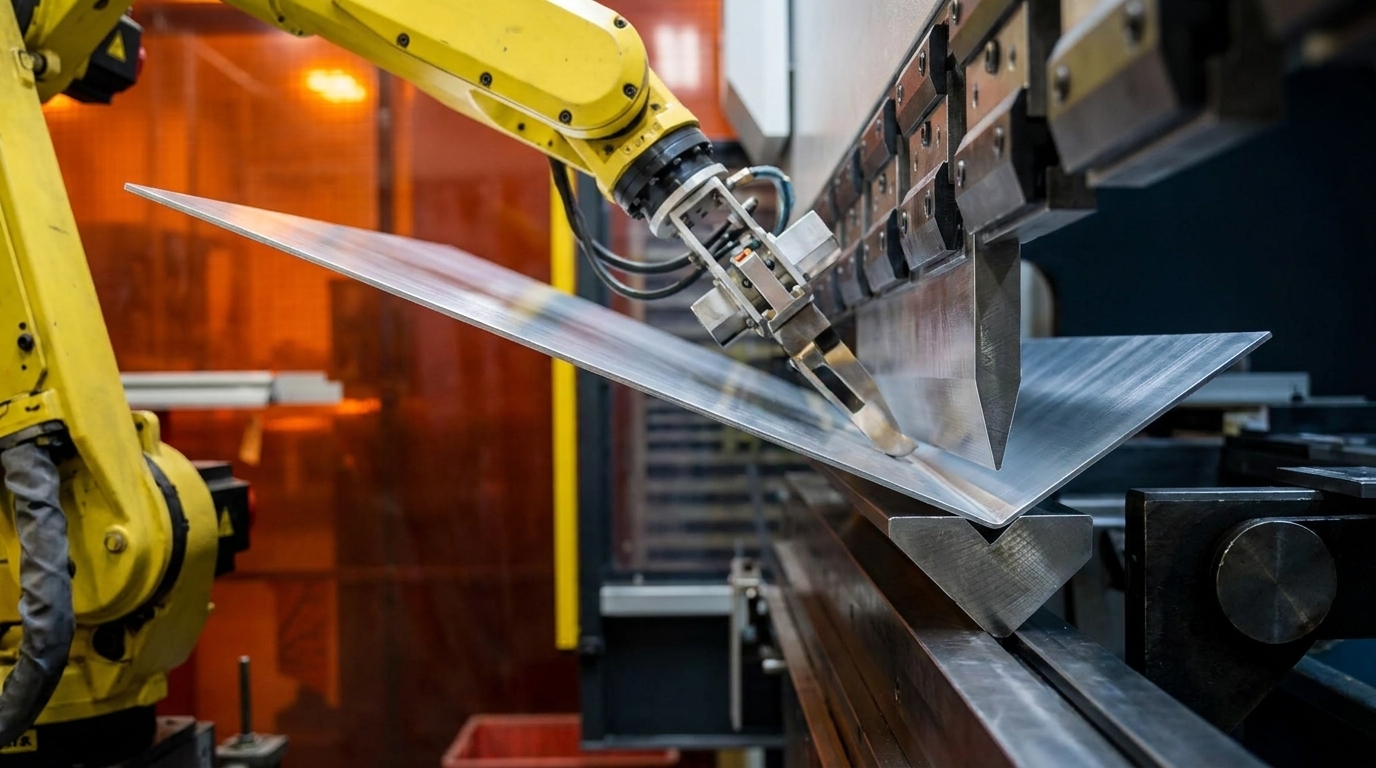
- Press brake forming, the most common method for brackets, enclosures, frames and flanged structures. Bend radius selection must match material temper and grain orientation to prevent cracking.
- Hydroforming, which uses fluid pressure to form complex contoured shapes with minimal thinning, suited to curved structural skins and ducting components.
- Stretch forming, which applies tension while forming to reduce springback in large curved panels such as fuselage skins and wing leading edges.
High-strength alloys such as titanium and stainless steel present springback challenges that must be compensated for during tooling design. Early DFM collaboration between engineering and fabrication teams reduces the rework cycles that springback-related errors create.
Joining Techniques for Flight-Qualified Assemblies
Joining permanently connects formed components into assemblies. Aerospace joining relies on certified processes, documented weld procedures and full traceability of filler materials and operator qualifications.
Standard aerospace joining methods include:
- TIG welding, the preferred fusion process for aluminum and titanium aerospace assemblies. Certified TIG welders document each joint per AS9100 and ITAR program quality requirements.
- Mechanical fastening, where rivets, PEM hardware and structural fasteners join dissimilar materials or assemblies when welding is not viable.
- Friction stir welding, a solid-state process used for aluminum structural panels when conventional arc welding would degrade heat-affected zone properties.
What two metals cannot be welded together? Aluminum and copper present significant fusion welding incompatibility. Their different melting points, thermal expansion rates and intermetallic compound formation cause brittle joints and cracking. In aerospace assemblies where aluminum structures must connect to copper electrical components, mechanical fastening or specialized transition inserts provide the standard engineering solution. 7075 aluminum is itself non-weldable by conventional arc welding methods due to hot cracking and strength loss in the heat-affected zone. Aerospace assemblies using 7075 rely on mechanical fastening or friction stir welding.
Common Aerospace Sheet Metal Materials and Use Cases
Material selection in aerospace fabrication balances structural performance, weight, corrosion resistance and process compatibility. The most common sheet metal materials in aerospace programs include:
- Aluminum 6061, an Al-Mg-Si alloy offering good strength-to-weight ratio, high corrosion resistance and strong weldability. It serves as the standard choice for enclosures, brackets and secondary structures where manufacturability and long service life are priorities.
- Aluminum 7075, a zinc-series alloy that delivers one of the highest strength-to-weight ratios among commercial aluminum alloys. Programs use it for fuselage frames, wing spars and bulkheads. The T73 temper improves stress corrosion cracking resistance for harsh environments, with a moderate reduction in tensile strength.
- Titanium, selected for high strength-to-weight ratio in applications where aluminum alloys cannot meet structural or temperature requirements. Titanium requires specialized tooling and cutting parameters due to its work-hardening behavior.
- Nickel-based alloys (for example, Inconel), used in high-temperature zones such as engine nacelles and exhaust structures where aluminum and titanium lose mechanical properties. Full traceability and mill certifications are required for all aerospace-grade nickel alloys.
AS9100D and ITAR Compliance for Aerospace Fabricators
AS9100D, published by SAE International and the IAQG, incorporates all ISO 9001:2015 clauses plus approximately 100 aerospace-specific requirements. These requirements cover configuration management, counterfeit part prevention, product safety, human factors and First Article Inspection per AS9102.
AS9100D traceability requires both forward traceability from material receipt to shipment and backward traceability from a shipped unit back to its source materials, process history and acceptance records. In practice, this means reliable linkage across purchase orders, receiving certifications, material lot records, work travelers, calibration evidence, nonconformance records and final acceptance documentation.
Procurement leaders evaluating suppliers should ask:
- What is the certification scope on the AS9100D certificate, and does it cover fabrication, finishing and assembly or only one process
- How the supplier maintains configuration control across engineering change orders
- What documentation is provided at shipment, including FAI reports, certified material test reports and in-process inspection records
- Whether ITAR registration is current and covers the specific controlled technical data involved in the program
- How the supplier handles nonconformances, including corrective action and containment processes
In 2024, RTX agreed to pay a $200 million fine tied to export-control violations involving the Arms Export Control Act and ITAR. Compliance verification functions as a core program risk control.
Fabcon holds AS9100D certification and ITAR registration, with integrated quality systems spanning fabrication, finishing and assembly under one roof. Verify the certification scope and request a quote for an upcoming program.
DFM Collaboration That Protects Aerospace Schedules and Budgets
DFM collaboration between engineering and fabrication teams before production release reduces rework, compresses prototype-to-production timelines and prevents cost drivers from locking into the design.
Common sheet metal DFM pitfalls include holes and PEM hardware placed too close to bends, unnecessary welds, unclear cosmetic face callouts and unspecified finish masking requirements. Each issue generates rework cycles that compress program schedules and increase unit costs.
Effective DFM review covers:
- CAD and drawing consistency before release to the floor
- Bend radius and relief geometry relative to material and temper
- Hardware specifications, including insert type, installation side, clearance from bends and finish sequence
- Datum selection that inspection equipment can use
- Tolerance allocation, with tight tolerances applied only to functional mating interfaces, not every dimension
Applying tight tolerances to non-critical features increases fabrication cost significantly because fabricators must slow process speeds and perform continuous dimensional checks. Early DFM input prevents that cost from reaching production.
Advantages of Vertically Integrated Aerospace Sheet Metal Suppliers
Nearly 60% of aerospace and defense companies are considering or pursuing localization strategies that include reshoring and onshoring, with supply chain visibility, compliance traceability and engineering change control cited as primary drivers, not location alone.
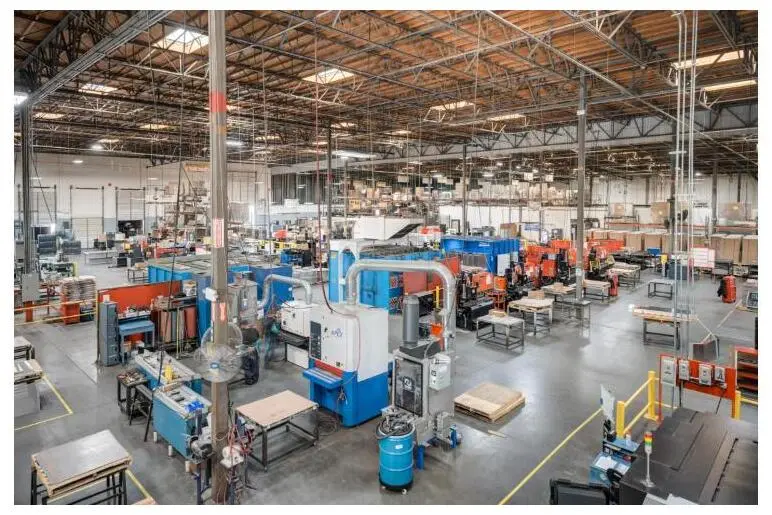
A vertically integrated supplier that performs fabrication, finishing and light electromechanical assembly under one roof removes handoff delays and quality finger-pointing that fragmented supply chains create. Decades of consolidation and single-sourcing in the U.S. aerospace supply base have created high switching costs and limited visibility below the first tier, which increases the strategic value of qualified suppliers that can absorb broader scope.
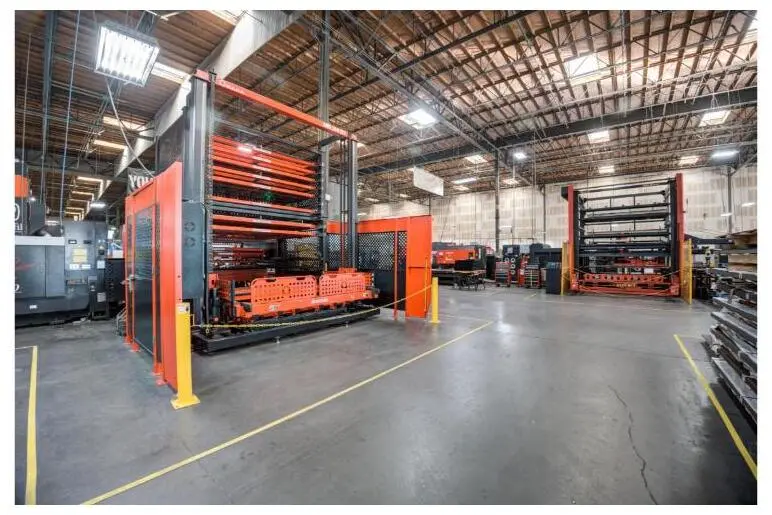
One-roof integration delivers:
- Single point of accountability for fabrication, finishing and assembly quality
- Unbroken traceability chain across all build stages without inter-vendor documentation gaps
- Faster engineering change implementation, with one supplier to notify and one traveler to update
- Reduced logistics exposure because parts are not shipped between vendors for intermediate operations
- Program visibility across the full build, not just the metal shell
Aerospace Sheet Metal Supplier Qualification Checklist
These criteria form a complete framework for evaluating aerospace sheet metal fabrication suppliers.
- Certification scope, confirming the AS9100D certificate covers all relevant processes and ITAR registration is current and program-applicable, which establishes the baseline quality framework.
- In-house process breadth, confirming the supplier performs laser cutting, forming, certified welding, finishing and assembly without outsourcing critical steps, which supports the traceability requirements in the next criterion.
- Traceability infrastructure, ensuring documented linkage from raw material receipt through final shipment, including MTRs, FAI reports and nonconformance records, building on the integrated process capability identified above.
- DFM capability, confirming an engineering team is available for pre-release design review, which moves the relationship beyond build-to-print work.
- Change management procedures, verifying a defined ECO process with configuration control and customer notification protocols that connect directly to AS9100D requirements.
- Counterfeit part controls, confirming AS9100D-compliant purchasing controls with approved supplier lists and receiving inspection that protect the traceability chain.
- Scalability, assessing whether production cells support prototype through mid-volume without high minimum order constraints, which supports program growth.
- Logistics and fulfillment, confirming domestic U.S. manufacturing with JIT delivery capability and program visibility that align with schedule and inventory goals.
Frequently Asked Questions
What are the three types of metal fabrication
The three primary types of metal fabrication are cutting, forming and joining. Cutting establishes blank geometry from flat sheet stock using processes such as laser cutting, waterjet cutting and wire EDM. Forming shapes those blanks into three-dimensional structures through press brake bending, hydroforming or stretch forming. Joining permanently connects formed components into assemblies using TIG welding, mechanical fastening or friction stir welding. In aerospace applications, all three process families rely on certified operators, documented procedures and full traceability of materials and inspection records.
What two metals cannot be welded together
Aluminum and copper are among the most problematic metal combinations for fusion welding. Their differences in melting point, thermal expansion and metallurgical compatibility cause intermetallic compound formation that produces brittle, unreliable joints. In aerospace assemblies where aluminum structures interface with copper electrical components, engineers use mechanical fastening, transition inserts or specialized bonding methods instead of fusion welding. The same hot-cracking limitation applies to 7075 aluminum, as discussed in the joining section.
What certifications should an aerospace sheet metal fabricator hold
AS9100D is the baseline quality management certification for aerospace fabricators, building on ISO 9001:2015 with aerospace-specific controls detailed in the compliance section above. ITAR registration is required for suppliers handling defense-related components or controlled technical data. For special processes such as chemical conversion coating, anodizing or painting to military specifications, NADCAP accreditation may be required by the prime contractor. Buyers should verify that the certification scope on the AS9100D certificate explicitly covers fabrication, finishing and assembly, not just one process area.
How does vertical integration reduce aerospace program risk
Vertical integration reduces program risk by eliminating inter-vendor handoffs, which often cause schedule delays, quality disputes and traceability gaps. When fabrication, finishing and assembly occur under one roof, the quality management system governs every build stage without documentation breaks between suppliers. Engineering changes reach the floor faster because only one supplier must be notified and one set of work instructions updated. Logistics exposure decreases because parts are not shipped between facilities for intermediate operations. The result is a shorter, more visible and more accountable supply chain for flight-qualified hardware.
What is DFM collaboration and why does it matter for aerospace programs
Design for manufacturability collaboration is a structured review process in which fabrication engineers analyze part designs before production release to identify features that will cause rework, increase cost or create inspection challenges. In aerospace programs, DFM review catches issues such as bend radii incompatible with material temper, hardware placed too close to bend lines, tolerance callouts applied to non-functional surfaces and finish masking requirements left unspecified. Resolving these issues before the first piece of material is cut prevents rework cycles that compress schedules and increase program costs. For prototype-to-production transitions, early DFM input also confirms that the design can be built repeatably at higher volumes without retooling or process changes.
Next Steps: Partner with a Responsive U.S. Fabricator
Aerospace and defense programs benefit from a fabrication partner that combines AS9100D and ITAR compliance, early DFM collaboration and vertically integrated fabrication, finishing and assembly without the minimum-volume constraints of large contract manufacturers or the limited scope of basic job shops.
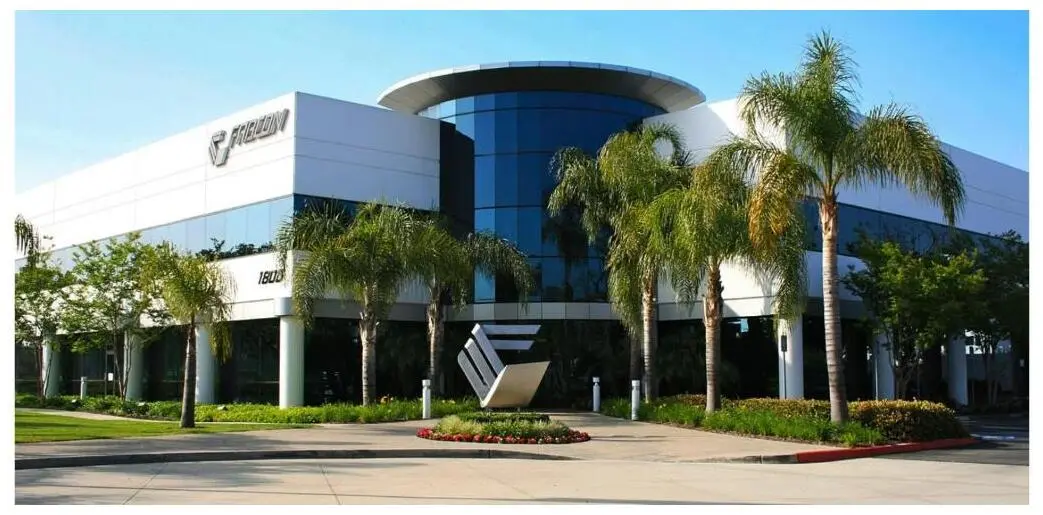
Fabcon has operated as a U.S. precision fabrication and assembly partner since 1977, with 220,000 square feet of vertically integrated manufacturing space across two Southern California facilities. Fabrication, finishing and light electromechanical assembly occur under one roof, with AS9100D and ITAR compliance governing every build stage.
Mid-volume, high-mix aerospace programs gain from a partner that can support evolving bills of materials, absorb engineering changes without program disruption and deliver full traceability from raw material to shipment.
Connect with Fabcon’s aerospace team to discuss program requirements.