
Last updated: August 16, 2026
Key Takeaways for Data Center Enclosure Sourcing
- U.S. data center capital investment reached $44.7 billion in Q1 2026, which drives intense demand for custom racks, cabinets and NEMA-rated enclosures that strains traditional fabrication supply chains.
- Fragmented sourcing across multiple vendors adds hidden costs, schedule delays and quality risks, while integrated U.S. precision-fabrication partners cut those risks by combining engineering, fabrication, finishing and assembly in one facility.
- Buyers that require ISO 9001:2015, AS9100D and third-party-verified traceability before awarding programs gain stronger compliance and audit readiness at every production stage.
- Early DFM collaboration, volume flexibility without high minimums and predictable lead times lower total cost of ownership and speed prototype-to-mid-volume transitions for complex, high-mix data center programs.
- Engineering, procurement and operations teams can connect with Fabcon to evaluate a single-source U.S. partner for custom enclosure fabrication data center programs.
The Problem: Rising Complexity in Custom Enclosure Sourcing
Year-to-date U.S. data center construction spending through June 2026 reached $81.5 billion, already exceeding the full-year 2025 total. Moody’s projects hyperscaler capex to reach $785 billion in 2026 and approach $1 trillion in 2027. This pace places structural pressure on every part of the supply chain, including custom enclosures.
The sourcing challenge extends beyond volume. A single missing component can delay an entire rack system or cooling module for manufacturers working under aggressive schedules. Finishing processes often create a hidden bottleneck, where fabrication stays on schedule while coating delays stretch shipment timelines. Reshoring mandates, high-mix program requirements and infrastructure-reliability standards compound the difficulty for Directors of Engineering, Strategic Sourcing Managers and Program Managers who must deliver on compressed timelines while maintaining compliance.
The Solution: Vertically Integrated U.S. Precision-Fabrication Partners
Vertically integrated U.S. precision-fabrication partners fill the gap between low-complexity job shops and large global contract manufacturers. These partners combine in-house engineering support, sheet metal fabrication, CNC machining, finishing and light electromechanical assembly in one facility, with a single quality system governing every stage.
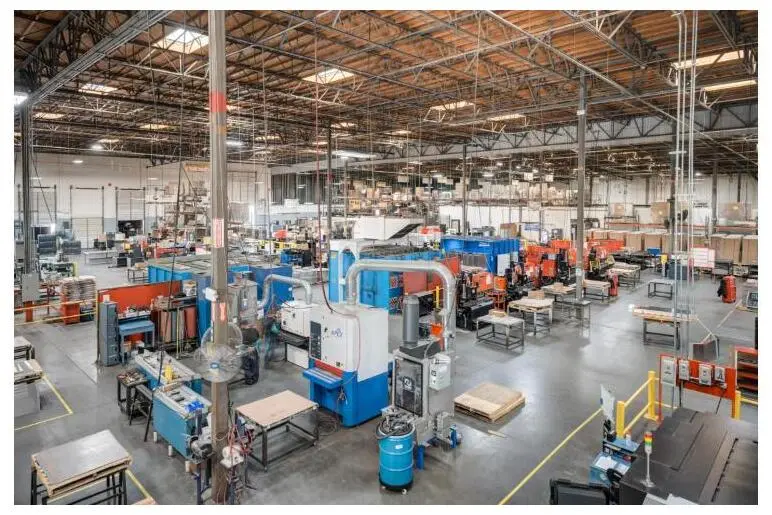
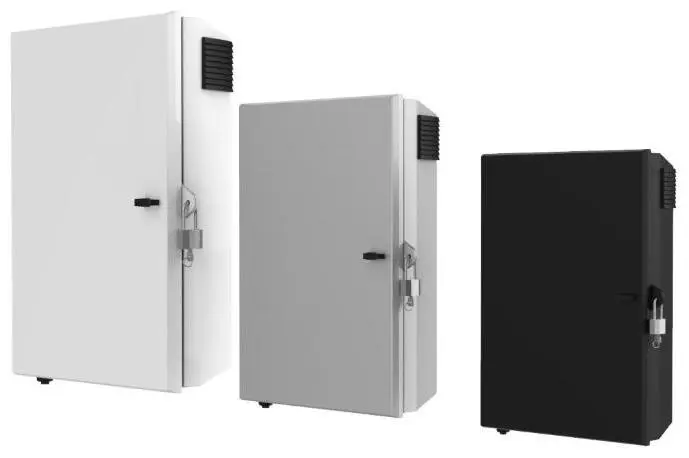
Consider a hypothetical program. A data center infrastructure company needs a custom NEMA-rated enclosure for an edge deployment. An integrated partner engages at the design stage and runs design-for-manufacturability review before a single part is cut. One purchase order then covers fabrication, powder coating, hardware insertion and wiring integration. Production scales from prototype to mid-volume without transferring the program to a different facility or vendor. That model eliminates the inter-facility freight, repeated inspections and schedule coordination that piecemeal sourcing accumulates at every handoff.
Request a quote to see how consolidated execution accelerates program timelines.
Validation Signals for Selecting a Fabrication Partner
Procurement teams gain stronger outcomes when they confirm that a fabrication partner holds documented, third-party-verified quality credentials before awarding a program. ISO 9001:2015 certification establishes a baseline quality management system. AS9100D adds aerospace-grade rigor, including configuration management and risk-based thinking that align with high-stakes infrastructure programs. Traceability scope should link material input through processing, inspection and shipment, since a material certificate alone does not satisfy audited environments.
UL and CSA readiness matters for enclosures entering power distribution or edge deployments. Because ANSI/NEMA 250-2020 is self-declared by manufacturers, independent verification through a Nationally Recognized Testing Laboratory provides the third-party validation that buyers need. Beyond certifications, documented on-time delivery performance and change-control procedures complete the audit-ready quality profile that data center operators expect.
Aligning DFM Collaboration with Early Engineering Support
Small changes in tolerance, geometry or surface finish can materially change manufacturability, cost and delivery dates for custom parts. When engineering and manufacturing sit with separate vendors, design-to-manufacturability disconnects create rework, quoting delays and designs that cannot scale. An integrated partner embeds DFM review into the quoting process and aligns engineering and manufacturing before production begins.
This early collaboration reduces rework and supports more predictable costs. It also ensures that designs can move from prototype into volume production without structural redesigns or unplanned delays.
Reducing Vendor Fragmentation with Integrated Execution
Piecemeal sourcing divides production across multiple suppliers for cutting, bending, welding and finishing, which adds costs from inter-facility freight, repeated inspections, quality disputes and schedule coordination. Hidden costs such as vendor management time, rework, safety stock and expedited freight often consume a significant share of the total manufacturing budget over a product lifecycle. The consolidated model described earlier redirects that overhead toward value-adding activities.
When one partner manages fabrication, finishing and assembly, program teams gain a single point of accountability. Communication becomes simpler, and quality expectations remain consistent from raw material through final assembly.
Strengthening Quality, Compliance and Traceability
Quality issues in data center components can trigger warranty claims, field failures and reputation damage for OEMs. Only 23% of manufacturers report fully integrated Manufacturing Execution Systems, which leaves many vulnerable at transition points. An integrated partner with ISO 9001:2015 and AS9100D certification applies one quality system across fabrication, finishing and assembly.
Traceability links material heat numbers through processing steps and inspection records to the shipped lot. This structure supports compliance audits and enables effective root-cause analysis when issues arise.
Scaling from Prototype to Mid-Volume with Flexible Cells
Ninety-four percent of manufacturing companies report barriers to new product innovation. Large contract manufacturers often require high minimum order quantities and long onboarding processes that do not fit high-mix, evolving-BOM programs. Agile production cells at an integrated mid-tier partner adapt to changing volumes, mixed SKUs and revised bills of materials without the rigidity of top-tier global contract manufacturers.
This flexibility supports iterative design and staged rollouts. Programs can ramp at the pace that demand and engineering maturity allow.
Improving Lead-Time Reliability and Total Cost of Ownership
Finishing capacity constraints can create coating delays that exceed fabrication lead times, which makes finishing the shipment-limiting factor. When one partner controls both processes, scheduling occurs inside a single production plan rather than across separate vendor queues. The consolidated model removes domestic freight transit windows and redundant quality hold intervals that multi-vendor sourcing introduces.
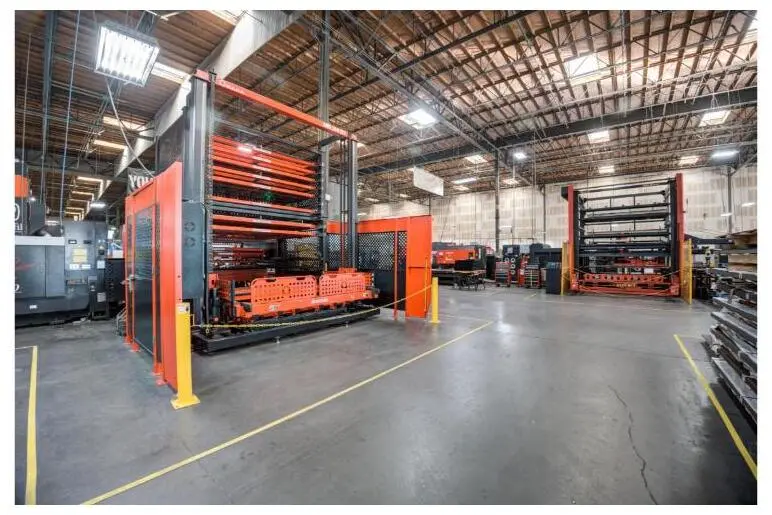
Total cost of ownership improves because the hidden costs of fragmented sourcing, including expediting, rework and administrative overhead, decrease. Program teams gain clearer visibility into both schedule and spend.
Explore how Fabcon’s integrated model reduces hidden costs in data center programs.
Comparing Job Shops, Integrated Fabricators and Global CMs
Three provider types serve the custom data center metal fabrication market, and each presents distinct trade-offs.
Low-complexity job shops operate as transactional, build-to-print vendors. They handle simple sheet metal parts but lack engineering depth for DFM and cannot manage wiring, electromechanical assembly or complex finishing. Buyers that rely on a job shop must coordinate separate vendors for each downstream process, which multiplies handoffs and quality disputes.
Mid-tier vertically integrated fabricators combine engineering support, fabrication, finishing and light assembly in one facility. They support prototype-to-production transitions without transferring programs, maintain certified quality systems and operate with the agility that high-mix programs require. Geographic proximity to U.S. customers supports responsive communication and shorter logistics windows.
Large and global contract manufacturers provide scale but impose high minimum order quantities, long onboarding timelines and rigid production structures. They align well with stable, high-volume commodity programs but create friction for programs with evolving bills of material, frequent engineering changes or mid-volume production targets.
Realistic Constraints and a Practical Due-Diligence Checklist
Integrated mid-tier fabricators carry real constraints that buyers should evaluate directly. Capacity remains finite. Onboarding a new partner requires investment in drawing review, DFM alignment and quality system integration. Regional concentration in a single geography introduces some supply chain concentration risk. Single-partner dependence, while reducing coordination overhead, requires confidence in the partner’s financial stability and capacity planning.
A practical due-diligence checklist covers the following areas.
- Process maturity: laser cutting, forming, welding, CNC machining, finishing and assembly all in-house
- Certifications: ISO 9001:2015, AS9100D, ITAR registration, UL/CSA readiness
- Traceability: documented linkage from material heat number through inspection to shipment
- Change control: formal ECO process with revision-level tracking across all suppliers
- Sample timelines: prototype turnaround and first-production delivery expectations
- References: verifiable data center or infrastructure program experience
- Site evaluation: facility tour to confirm equipment, capacity and quality system implementation
When Vertically Integrated Fabrication Fits Data Center Programs
Vertically integrated U.S. precision fabrication delivers the strongest value for programs with complex, multi-process enclosures that require tight tolerances, frequent engineering revisions, electromechanical integration and strict compliance requirements. Data center racks, NEMA-rated edge computing enclosures and custom containment systems with liquid-cooling provisions align well with this model. Programs that move from prototype to mid-volume production, while design changes remain active, benefit from a partner with embedded DFM capability.
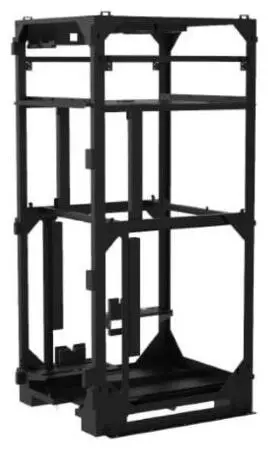
This model fits less effectively for simple, single-process commodity parts with stable designs and high volumes that justify a large contract manufacturer’s minimum order requirements. It also fits less effectively for programs where the buyer already manages a well-structured multi-vendor network with low freight and handoff costs and no near-term scaling requirements.
Evaluation Framework for Prospective Partners
Procurement and engineering teams can apply a structured evaluation by scoring prospective partners across five dimensions.
- Engineering depth: DFM review, in-house engineering and prototype-to-production alignment
- Service scope: fabrication, finishing and light electromechanical assembly available in one facility with a single purchase order
- Volume flexibility: support for prototype quantities and scaling to mid-volume without high minimums or program transfers
- Compliance maturity: documented and third-party-verified ISO 9001:2015, AS9100D and traceability practices
- Delivery performance: documented on-time delivery data and a formal change-control process
Partners that score well across these dimensions reduce total cost of ownership by removing the hidden costs of fragmented sourcing while maintaining the agility that data center infrastructure programs require.
Frequently Asked Questions
Is a vertically integrated fabricator a good fit for high-mix data center enclosure programs?
High-mix programs, which include multiple SKUs, evolving bills of material or frequent engineering changes, align closely with integrated fabricators. Agile production cells adapt to changing configurations without the rigidity of large contract manufacturers. A single quality system governs all variants and reduces the risk of revision-level mismatches that fragmented sourcing creates. DFM collaboration at the start of each new configuration prevents the rework that appears when design and manufacturing remain separated.
Can custom data center enclosures support liquid-cooling integration?
Custom enclosures for data center applications can be engineered to accommodate liquid-cooling provisions. Designs can include structural reinforcement for the added weight of rear-door heat exchangers or in-row cooling systems, cable and hose routing cutouts and mounting provisions for cooling accessories. Early engagement with the fabrication partner allows structural, thermal and integration requirements to be addressed before production begins. An integrated partner with in-house engineering can review cooling load requirements and translate them into manufacturable enclosure specifications.
What weight-capacity and structural requirements should buyers specify for custom data center enclosures?
Buyers should specify both static and dynamic load requirements. Static load ratings address the weight of installed equipment, PDUs and cabling under normal conditions. Dynamic load ratings apply in seismic deployments, where cabinets must maintain structural integrity under acceleration loads. NEMA ratings should match the deployment environment, including NEMA 1 for climate-controlled server rooms, NEMA 12 for dusty industrial sites and NEMA 4 or 4X for outdoor or edge deployments with exposure to water or corrosive environments. Specifying these requirements at the RFQ stage allows the fabrication partner to design structural members, hardware and finishes that meet the application from the first prototype.
How complex is the transition from an existing job shop or contract manufacturer to an integrated fabrication partner?
Transitioning to an integrated partner requires upfront investment in drawing transfer, DFM review and quality system alignment. The onboarding effort is real and should appear in the program schedule. The return on that investment comes through reduced vendor count, elimination of inter-facility freight and repeated inspections and a single accountable partner for fabrication, finishing and assembly. Programs with active engineering changes gain the most benefit when they transition early, before design locks, so the DFM process can influence the final configuration.
How does an integrated fabricator differ from a job shop or large contract manufacturer for data center enclosure programs?
Job shops handle basic sheet metal fabrication and stop at build-to-print. They lack engineering depth for DFM, cannot manage finishing or electromechanical assembly and require buyers to coordinate multiple vendors for a finished product. Large contract manufacturers provide scale but impose high minimum order quantities, long onboarding timelines and rigid production structures that do not accommodate high-mix or evolving-BOM programs. An integrated mid-tier fabricator combines the engineering support and end-to-end service scope of a large contract manufacturer with the responsiveness and volume flexibility that data center infrastructure programs require, without the same structural rigidity or minimum order constraints.
Conclusion: Matching Data Center Programs with the Right Fabrication Partner
The data center construction boom accelerates demand for custom enclosures, racks and containment systems at a pace that fragmented job-shop sourcing and rigid large contract manufacturers struggle to serve. Goldman Sachs projects U.S. data center capacity additions to accelerate through 2027, with supply chain issues and build-time constraints already limiting on-time activation rates. The integrated U.S. precision-fabrication model delivers the strongest value when programs are complex, multi-process, compliance-sensitive and moving from prototype to mid-volume production.
Fabcon operates as a vertically integrated precision metal fabrication and electromechanical assembly partner, with ISO 9001:2015 and AS9100D certified quality systems, in-house finishing and agile production cells across 220,000 square feet of U.S. manufacturing space. Engineering, procurement and operations teams that need a single accountable partner for custom data center enclosure programs can engage Fabcon from the first DFM review through production delivery.
Start a conversation with Fabcon’s engineering team about upcoming enclosure programs.