
Last updated: August 27, 2026
Key Takeaways for AI Enclosure Programs
- Custom data center enclosures are engineered metal housings that support unique hardware, cooling and compliance needs that standard products cannot meet.
- High-density AI workloads require heavier structural ratings, extended depths and integrated manifolds for liquid cooling.
- Selecting a manufacturing partner depends on five criteria: technical capability, integration scope, quality systems, scalability and domestic accountability.
- Early DFM collaboration, single-partner accountability and agile production cells reduce rework, shorten timelines and support evolving AI enclosure programs.
- Fabcon provides vertically integrated fabrication, finishing and electromechanical assembly backed by ISO 9001:2015, AS9100D and ITAR credentials.
Cabinets vs Racks in High-Density AI Data Centers
A rack is an open or semi-open mounting frame that holds equipment on standardized rails. A cabinet is a fully enclosed housing with doors, side panels and integrated cable and airflow management. The distinction matters most when selecting a manufacturing partner because cabinets require more fabrication complexity, including formed panels, door hardware, sealing provisions and finishing on all visible surfaces.
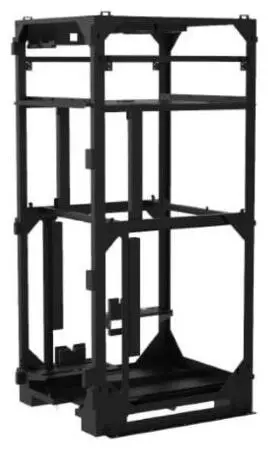
For high-density AI programs, the enclosure type also determines integration scope. ASHRAE guidance on AI workloads notes that fully loaded liquid-cooled racks impose structural demands that require custom enclosures with reinforced load paths, minimum depth clearances for cooling manifolds and PDUs, and hybrid airflow provisions for residual heat. A partner that fabricates only the shell and hands off finishing and assembly to other vendors introduces tolerance risk at every seam. Integration scope, with fabrication, finishing and light assembly under one roof, separates a capable partner from a transactional one.
The following criteria provide a practical framework for evaluating custom enclosure manufacturers against these requirements.
Best Custom Data Center Enclosures for High-Density AI Workloads
Criterion 1: Technical Capability and DFM Collaboration
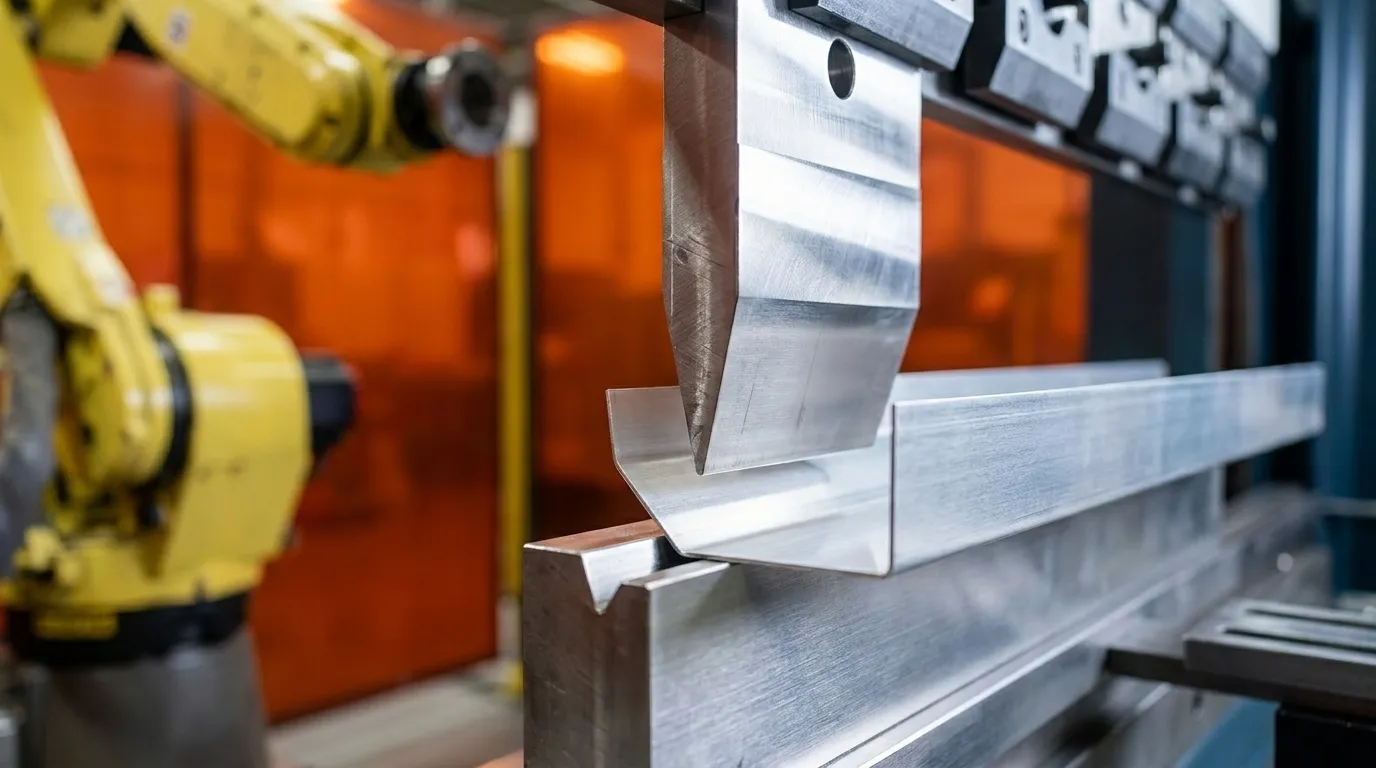
Tight-tolerance fabrication is a baseline requirement for AI enclosures. The differentiator is early engagement from a partner’s engineering team before production begins. DFMA research shows that most manufacturing cost is set at the design stage, and a change during concept costs a fraction of the same change after tooling. For enclosures that integrate liquid-cooling manifolds, hardware insertion and customer-supplied components, that cost difference compounds across every revision.
Common DFM failure points, such as bend radii tighter than material thickness, holes placed too close to bend lines, missing bend reliefs and improper PEM hardware placement, cause cracking, distortion or assembly failures that multiply across production volumes. Low-complexity job shops typically build to print without flagging these issues. Large global contract manufacturers may catch them, but long onboarding cycles and rigid change-order processes slow resolution and delay deployment.
These DFM risks explain why Fabcon engineering and quoting teams review drawings, tolerances and materials before production begins. That early review catches issues like improper bend placement and hardware conflicts during the design phase rather than after tooling. The intervention reduces rework, improves cost efficiency and allows designs to scale from prototype through mid-volume production without repeated engineering cycles.
Get a quote to start a DFM review with Fabcon’s engineering team.
U.S. Manufacturers That Handle Electromechanical Integration
Criterion 2: Integration Scope Under One Roof
Data center enclosure programs require more than a formed metal shell. Most programs need powder coating or liquid finishing, hardware insertion, wiring and light electromechanical assembly before a unit reaches deployment. When separate vendors handle each step, every handoff adds scheduling risk, quality disputes and coordination work for the program team.
Coating bottlenecks alone can add weeks when finishing is outsourced. A single purchase order that covers fabrication, finishing and assembly removes that exposure and centralizes responsibility. One accountable partner manages dimensional accuracy, cosmetic standards and hardware installation instead of three vendors each focused on a narrow portion of the build.
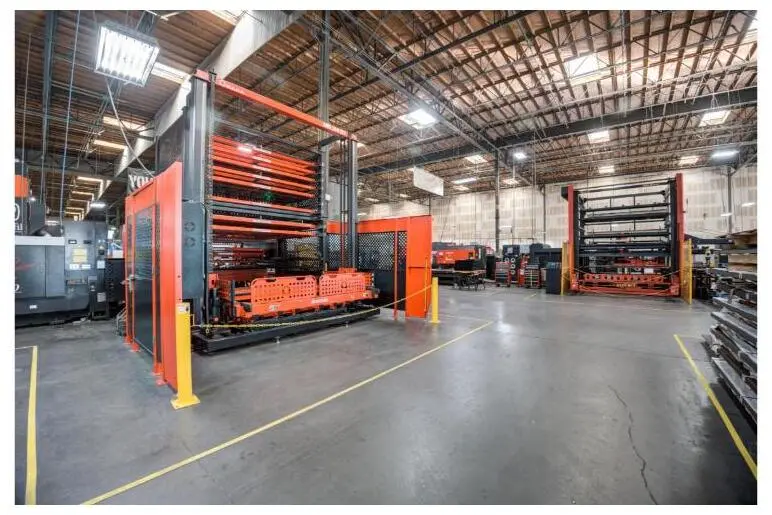
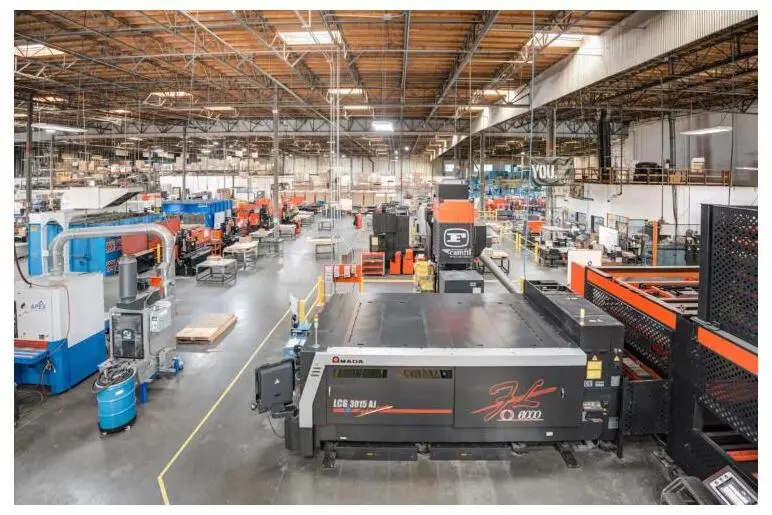
Fabcon delivers fabrication, in-house finishing (powder coat, wet paint, CARC and mil-spec coatings), hardware insertion and light electromechanical assembly from one facility. That integrated approach creates one point of contact and one accountable partner for the complete build.
Quality and Compliance Requirements for AI Infrastructure Enclosures
Criterion 3: Quality Systems and Regulatory Alignment
Data center enclosures for AI infrastructure intersect with several compliance frameworks. U.S. data center projects expect electrical assemblies to align with relevant UL categories because the North American market treats low-voltage equipment as category driven with distinct design, inspection and maintenance expectations. Nonconforming enclosures can be rejected during inspection or insurance review.
Programs that support defense-adjacent or federal AI infrastructure carry additional documentation and security requirements. Custom enclosure vendors in those programs may need to support controls tied to NIST SP 800-171 for protecting Controlled Unclassified Information in nonfederal systems. ITAR registration is a prerequisite for any program that touches controlled defense technology.
Fabcon holds ISO 9001:2015 and AS9100D certifications and is ITAR registered. Its quality system spans the entire build, from fabrication through finishing and assembly, and provides full traceability documentation, first-article inspection reports and in-process dimensional checks. This integrated QA structure closes documentation gaps that appear when quality systems stop at the fabrication step.
Scaling Mid-Volume AI Enclosure Programs
Criterion 4: Agile Production Without Rigid Minimums
AI enclosure programs change frequently as GPU platforms, cooling architectures and deployment schedules evolve. These shifts require a manufacturing partner that can absorb revision cycles without long onboarding processes or high-minimum restarts. Large global contract manufacturers offer scale but often impose rigid minimums and fixed BOM expectations that conflict with mid-volume, high-mix programs.
DFM and modular fabrication practices applied from the start shorten engineering phases and move rework discovery into the factory instead of the field. That front-loaded process alignment supports smoother releases and more predictable qualification cycles. The approach depends on production cells that flex with program needs rather than a fixed line tuned for one configuration at one volume.
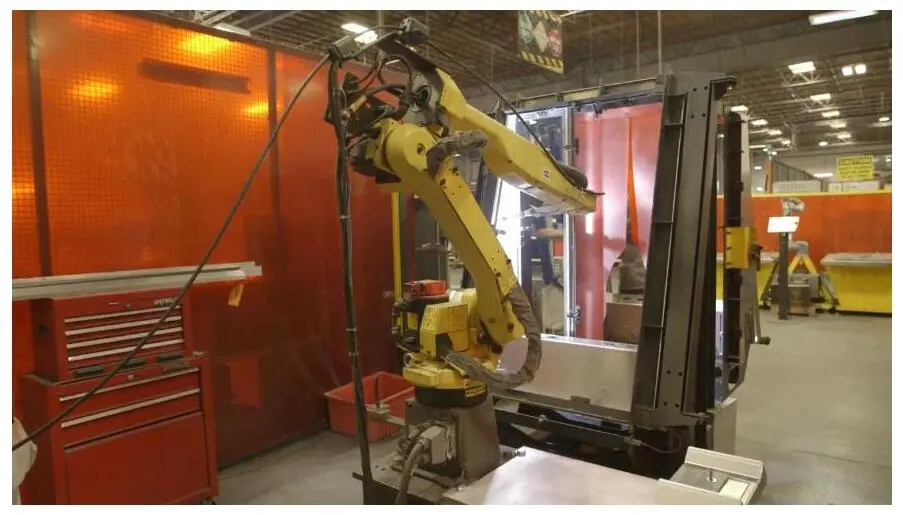
Fabcon’s agile production cells support programs from prototype through mid-volume production. Changing volumes, mixed SKUs and evolving BOMs are handled without high minimums or extended onboarding cycles common at large contract manufacturers. That flexibility sits at the core of the operating model instead of serving as a rare exception.
Get a quote to discuss production cell options for an evolving AI enclosure program.
U.S. Supply Chain Accountability and Risk Reduction
Criterion 5: Domestic Accountability as a Program Risk Variable
Domestic manufacturing accountability reduces exposure to international logistics delays, tariff shifts and time zone communication gaps. For infrastructure-critical programs, the ability to visit a facility, review production in progress and resolve issues in real time functions as a core risk control.
Fabcon operates from a U.S. facility and has supported precision fabrication and assembly programs since 1977. That domestic footprint supports site visits, DFM reviews and direct engineering collaboration without the coordination overhead of global supply chains.
These five criteria, taken together, form a practical checklist for selecting a custom data center enclosure partner that can support AI infrastructure programs from design through deployment.
Frequently Asked Questions
Value of Switching from a Current Metal Fab Supplier
Most metal fabrication shops build to print and stop at the sheet metal shell. They do not provide in-house finishing, hardware insertion, wiring or light electromechanical assembly. That structure forces the customer to manage multiple vendors, multiple purchase orders and multiple quality systems for a single finished enclosure. Fabcon consolidates fabrication, finishing and assembly in one facility. The result is fewer handoffs, faster turnarounds and a single accountable partner for the complete build, not just the metal portion.
Scaling Without the Rigidity of Large Contract Manufacturers
Large contract manufacturers focus on high-volume, stable programs. They often require high minimum order quantities, long onboarding processes and fixed BOMs. AI enclosure programs rarely match that profile. Fabcon uses flexible production cells that adapt to changing volumes, mixed SKUs and evolving bills of materials. Programs move from prototype to mid-volume production without restarting onboarding or hitting volume thresholds that conflict with deployment schedules.
Compliance Documentation for Infrastructure Programs
Fabcon’s quality system is certified to ISO 9001:2015 and AS9100D, and the company is ITAR registered. Every build includes full traceability documentation, first-article inspection reports and in-process dimensional checks. For programs with UL or CSA compliance requirements, Fabcon’s quality framework supports those standards. Defense-adjacent programs that require ITAR-controlled manufacturing documentation use Fabcon’s existing registration and traceability infrastructure.
Impact of Early DFM Collaboration on Timelines and Rework
DFM review at the drawing stage identifies issues such as bend radii, hole placement, hardware insertion provisions and material yield before they reach the shop floor. Early detection prevents rework that would otherwise compound across production volumes. Programs that integrate DFM from the start also gain shorter qualification cycles and stronger first-article pass rates. When fabrication, DFM review and production occur in the same facility, process knowledge carries across the program instead of being lost at vendor handoffs.
Next Steps: Start a DFM-Focused Partner Evaluation
Selecting a custom data center enclosure partner for high-density AI infrastructure depends on five criteria. Technical capability and DFM collaboration, integration scope, quality and compliance, scalability and flexibility, and domestic supply chain accountability each address a specific program risk. Together, they define the difference between a transactional vendor and a single accountable partner.
Fabcon brings vertically integrated fabrication, finishing and electromechanical assembly to mid-volume AI enclosure programs, backed by ISO 9001:2015, AS9100D and ITAR credentials, and supported by in-house engineering that engages at the design stage. This structure creates a shorter path from drawing to deployment-ready enclosure with fewer handoffs and one point of accountability throughout the program.
Get a quote or request a site visit to begin a DFM review with Fabcon’s engineering team.