
Last updated: August 25, 2026
Key Takeaways
- Integrated U.S.-based fabrication partners fill the gap between job shops and large contract manufacturers for 50–500 unit custom enclosure programs.
- Consolidating fabrication, finishing and assembly under one partner reduces hidden coordination, lead-time and rework costs.
- Early DFM collaboration prevents expensive downstream issues by addressing manufacturability before tooling is committed.
- Quality certifications, traceability documentation and in-house finishing capabilities support compliance-heavy infrastructure and technology programs.
- Engineering and procurement teams can lower total program cost by evaluating integrated partners like Fabcon for DFM support and scalable U.S. production.
The Sourcing Problem for Custom Enclosure Programs
Custom enclosure sourcing often begins with tradeoffs between modification and full customization. Engineering teams compare the cost of modifying an off-the-shelf unit against building a fully custom design. Procurement teams compare a single purchase order with one vendor against splitting work across specialists. Both perspectives highlight the same issue: fragmentation adds cost that never appears on a unit-price line item.
Off-the-shelf modifications support simple geometry changes. They fail once thermal management, mounting configurations or compliance ratings require structural redesign. At that point the modify-versus-custom calculation shifts. The real cost of a fragmented approach becomes visible. Late changes, incomplete engineering packages and outsourced finishing introduce delays that escalate expediting and program-management costs in ways that unit price never captures.
Programs in data centers, energy storage, EV infrastructure, medical devices and aerospace face even higher stakes. These programs carry compliance obligations, traceability requirements and scaling pressure that a transactional job shop cannot support and a large contract manufacturer will not prioritize at mid-volume quantities. These requirements point to a specific solution category that aligns cost, control and scalability.
Integrated U.S. Fabrication and Assembly as the Solution
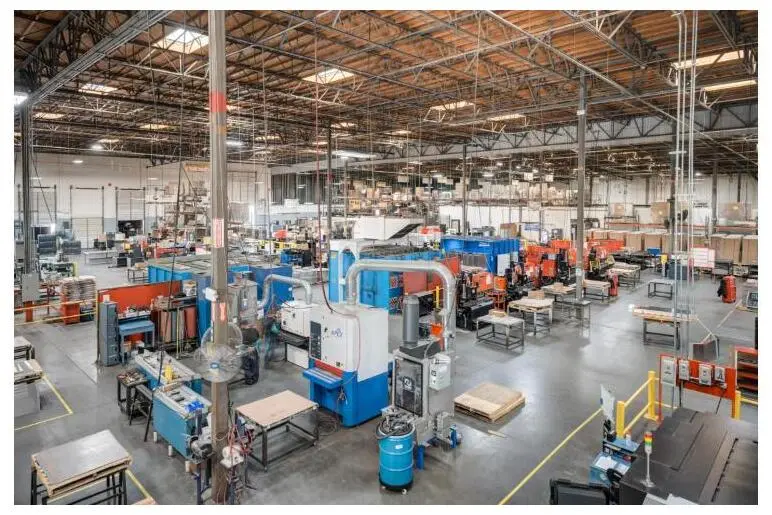
Integrated U.S.-based precision fabrication and assembly partners occupy the middle ground between low-complexity job shops and large global contract manufacturers. These partners combine DFM collaboration, precision sheet metal fabrication, in-house finishing and light electromechanical assembly under one roof. Quality systems support compliance traceability from prototype through production ramp.
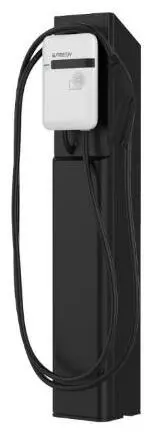
Consider a hypothetical program. A senior mechanical engineer at an EV infrastructure firm needs a weatherproof enclosure with integrated wiring for a 150-unit initial run, with a path to 400 units within 18 months. A job shop produces the metal shell but cannot handle powder coating or wiring integration. The engineer manages three separate vendors, three lead-time dependencies and three quality handoffs. An integrated partner reviews the design for manufacturability before the first part is cut, flags a bend-radius issue that would have caused rework, applies powder coating in-house and delivers a wired assembly ready for field installation. All of this runs under one purchase order with a single accountable partner.
Challenge 1: Closing DFM and Manufacturability Gaps
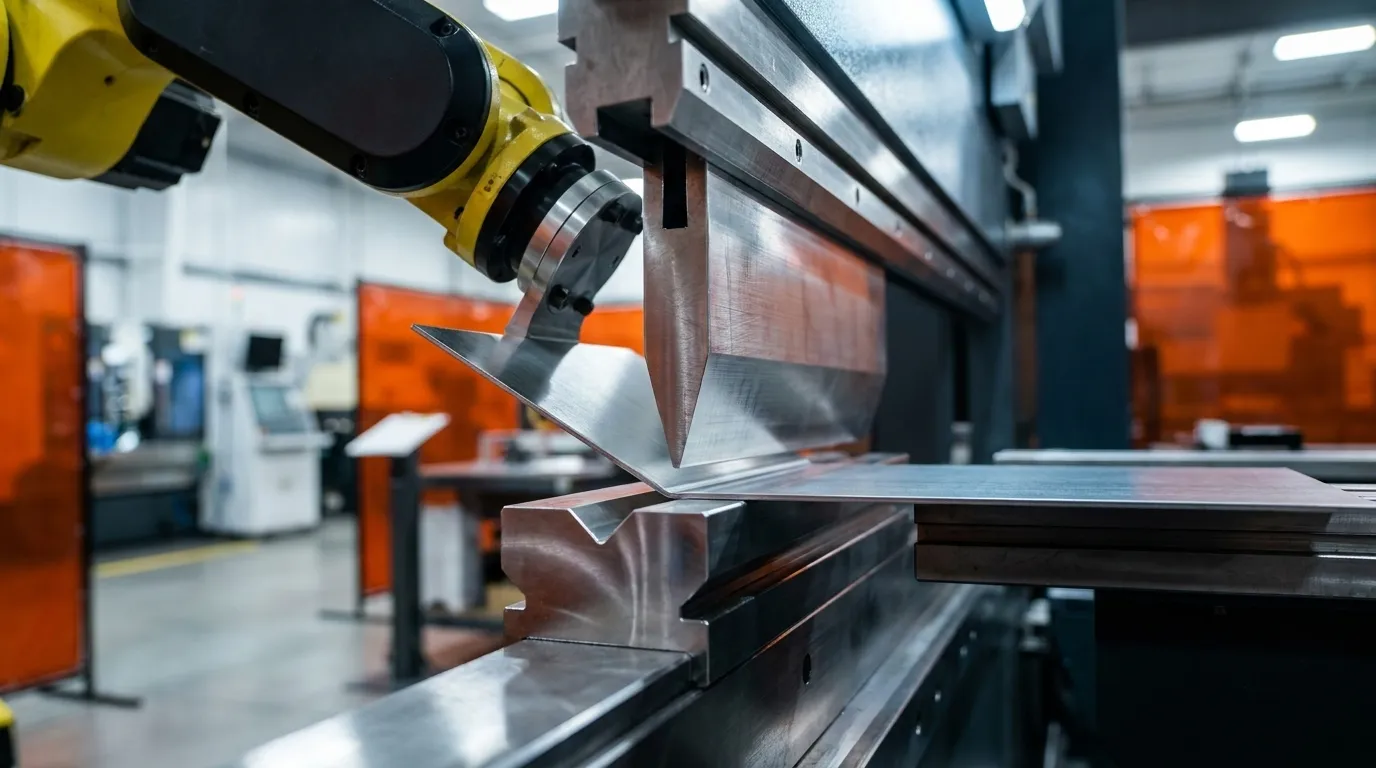
Design-to-manufacturing disconnects create some of the most expensive problems in custom enclosure programs. Simple DFM adjustments to geometry, tolerances and setups can reduce manufacturing cost without affecting strength or function. Savings come from reducing setups, standardizing bend radii and limiting tight tolerances to functional features.
A focused DFM review with an enclosure manufacturer can prevent downstream rework costs that exceed the time invested. The review addresses thermal management, weld joints and tolerances before tooling is committed. When DFM collaboration happens late or not at all, those costs appear as rework, scrap and schedule slippage.
Buyers evaluating partners should confirm whether DFM review forms part of the quoting process or sits as a separate engagement. Direct access between the engineering team and the production floor also matters. Partners where quoting and engineering teams collaborate before production begins stand in a stronger position to catch manufacturability issues early.
Challenge 2: Balancing Vendor Consolidation and Fragmentation
The one-PO-versus-multiple-vendors decision has a measurable answer when total program cost is the metric. Consolidating operations with one fabricator reduces handoff costs and rework. The partner aligns material, process route, hardware, finish, assembly, inspection, packaging and delivery scope in a single quote package.
Fragmented supply chains introduce coordination overhead at every handoff point. A fabricator ships to a coater, the coater ships to an assembler and the assembler ships to the customer. Each transfer creates a lead-time dependency, a quality inspection gap and a risk of disputes when issues arise. An integrated design and manufacturing partner reduces back-and-forth rework cycles and late-stage cost revisions by addressing DFM analysis, NPI planning and production quoting together under one roof.
The trade-off centers on capability fit. Integrated partners must match the program’s finishing and assembly requirements with in-house resources. Buyers should confirm that powder coating, hardware insertion and wiring integration occur on-site, not through subcontractors.
Challenge 3: Meeting Quality, Traceability and Compliance Requirements
Infrastructure and technology programs in aerospace, medical devices and energy storage carry compliance obligations that require part-level or lot-level traceability. Safety-critical or regulated products in low-volume production often need part-level serialization and material certification capture. Commercial assemblies may use lot-level traceability tied to work orders.
OEM enclosure manufacturers can provide material traceability through certificates of conformance and mill test reports when requested. These records support compliance requirements such as NEMA 250-2020, UL 50/50E and ASTM B117 salt spray testing. Partners holding ISO 9001:2015 and AS9100D certifications operate quality systems that span the entire build. Traceability documentation becomes a standard output rather than a special request.
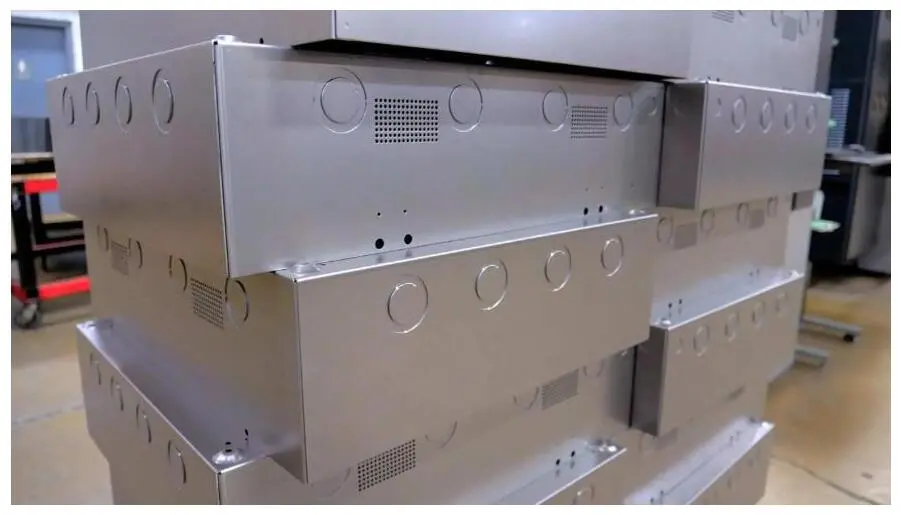
Buyers should verify that a partner’s quality certifications are current, that the change-control process is documented and that nonconformance records are accessible. A partner that cannot produce first-article inspection reports on request creates compliance risk for regulated programs.
Challenge 4: Scaling from Prototype to Mid-Volume Production
Scaling from prototype to mid-volume production presents a structural challenge. Job shops lack the infrastructure to move across that range without new vendors or process gaps. Large contract manufacturers impose high minimums and long onboarding cycles that hinder prototype collaboration. Ordering high volumes too early creates inventory carrying costs, obsolescence risk and cash-flow burdens that can outweigh per-part savings when annual demand stays under 500 units.
Integrated partners with flexible production cells can adapt to changing volumes, mixed SKUs and evolving bills of materials without requiring a new vendor relationship at each milestone. The same engineering team that reviewed the prototype design supports the production ramp. That continuity preserves institutional knowledge and reduces the risk of specification drift between development and production.
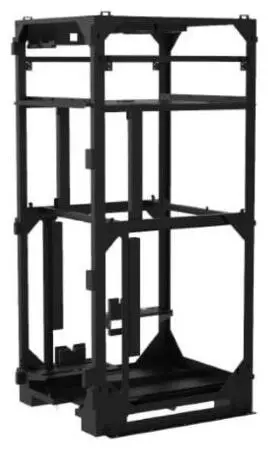
Buyers should ask how a partner handles BOM changes mid-program and what minimum order quantities apply to repeat production runs. Partners built for mid-volume programs will have clear answers. Partners optimized for high-volume production often will not.
Challenge 5: Managing Lead-Time Risk and Coordination Effort
Lead-time for custom sheet metal enclosures depends on drawing completeness, material and hardware availability, process capacity, outside finishing steps, sample approval and revision control. Each driver that sits outside the fabricator’s direct control introduces schedule risk.
Integrated vendors reduce delay risk by collapsing dependency points such as material procurement, finishing and approval into one workflow. When fabrication, coating and assembly share a facility and a production schedule, the program manager gains a single contact for status updates and a clear escalation path when priorities shift.
Hidden coordination costs accumulate in fragmented programs through expediting fees, re-inspection after transit and engineering time spent on vendor communications instead of design progress. These costs remain real yet rarely appear in a vendor comparison based on unit price alone.
Challenge 6: Calculating Total Cost of Ownership
Surface finishing operations such as powder coating, anodizing or plating add to the total part cost for custom sheet metal components. Unit price fails to capture these costs when finishing is sourced separately.
Low-volume manufacturing operations benefit from separating nonrecurring engineering costs from recurring unit pricing. Programming, fixture design, first-article inspection and documentation all fall into the nonrecurring category. Clear separation prevents underestimation of total program cost on prototypes and pilot runs. A quantity-based framework helps structure this evaluation:
- 1–10 units: Setup and programming costs dominate per-unit economics. Prototype unit costs for sheet metal parts often run several times higher than production pricing because setup and programming are not amortized. Off-the-shelf modification or 3D-printed prototypes may fit best at this stage.
- 10–100 units: The cost curve begins to flatten as setup costs spread across more units. DFM investment at this stage carries forward into the next volume tier. Integrated partners that support prototype-to-production alignment without a vendor change present a lower-risk path.
- 50–500 units: This range often delivers the clearest total cost of ownership advantage for integrated U.S.-based fabrication and assembly partners. Moving from lower to higher quantities within this range can reduce per-unit enclosure pricing. Vendor consolidation, in-house finishing and traceability documentation all contribute to lower total program cost.
Deliberate DFM decisions in sheet metal parts can cut a meaningful percentage from a part’s price without affecting function. Total cost of ownership analysis should include NRE, finishing, assembly labor, coordination overhead, compliance documentation and rework risk, not unit price alone.
Get a quote and review total program cost with Fabcon’s engineering team.
Checklist for Evaluating Integrated Enclosure Partners
The following criteria support a structured evaluation of integrated U.S.-based precision fabrication and assembly partners for custom enclosure programs:
- Certifications: Confirm current ISO 9001:2015 and, for aerospace or defense programs, AS9100D certification. Verify ITAR registration if the program involves controlled technology. Request certificates instead of relying on self-attestation.
- Change-control process: Ask how engineering changes are documented, communicated to the production floor and reflected in revision-controlled drawings. Partners with formal ECO processes reduce specification drift risk.
- DFM collaboration: Confirm that DFM review forms part of the quoting process and that the engineering team has direct access to production. Request an example of a DFM recommendation that changed a customer’s design.
- In-house capabilities: Verify that finishing such as powder coating, painting and mil-spec coatings and assembly such as hardware insertion and wiring integration occur on-site. Subcontracted finishing reintroduces the handoff risk that consolidation aims to remove.
- Sample lead time and first-article inspection: Request a realistic sample lead time for a new program and confirm that first-article inspection reports come as standard deliverables, not optional add-ons.
- Scaling flexibility: Ask how the partner handles volume changes, BOM revisions and mixed-SKU programs. Confirm minimum order quantities for repeat production runs.
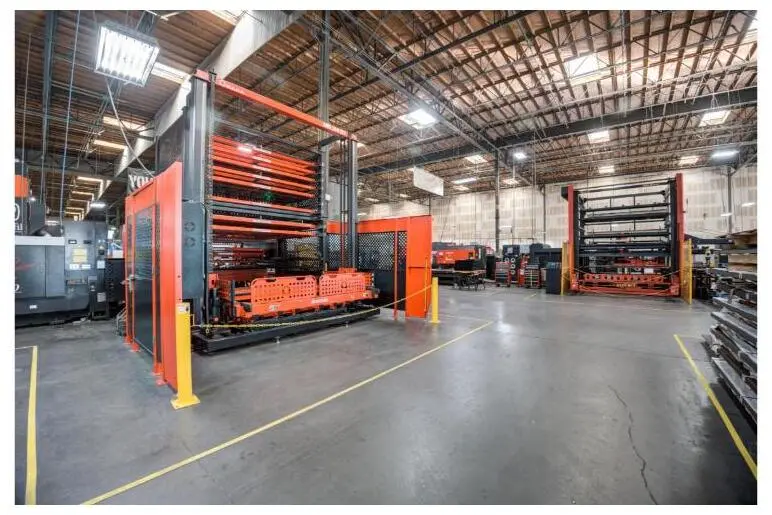
- Site evaluation: Visit the facility. A 220,000-square-foot vertically integrated operation looks and operates differently from a job shop. Observe whether fabrication, finishing and assembly share a production floor and a quality system.
- Traceability documentation: Request a sample certificate of conformance and ask how material certifications are stored and retrieved. For regulated programs, confirm that lot-level or part-level traceability is standard practice.
Conclusion: Where Integrated U.S. Partners Deliver the Most Value
Integrated U.S.-based precision fabrication and assembly partners provide a lower-risk, lower-total-cost route for specific custom enclosure programs. These programs require engineering collaboration before production begins. They also need coordinated finishing and assembly with fabrication, compliance traceability as a procurement requirement and mid-volume production where fragmented supply chains impose high coordination overhead relative to program size.
Tariffs, supply-chain volatility and state and federal incentive programs are pulling production back to the United States in 2026. Reshoring increasingly concentrates in capital-intensive, technology-driven industries. These sectors depend on cost effective custom enclosures with U.S.-based accountability. The cost calculus of offshore sourcing has shifted. Domestic integrated partners stand positioned to absorb that demand without the rigidity of large global contract manufacturers.
Engineering and procurement teams evaluating partners should apply the due-diligence checklist above, request a DFM review as part of the quoting process and evaluate the total program cost framework outlined earlier rather than comparing unit prices in isolation. The partner that asks detailed questions before quoting often delivers stronger performance on cost, schedule and quality through production ramp.
Frequently Asked Questions
What is the difference between modifying an off-the-shelf enclosure and ordering a fully custom sheet metal enclosure?
Off-the-shelf modification works when required changes remain cosmetic or minor, such as adding a cutout, changing a finish or adjusting a mounting pattern. This approach fails once the program requires specific thermal management, structural geometry, compliance ratings or integrated assembly that a standard enclosure cannot support. At that point a fully custom sheet metal enclosure built to the program’s exact specifications becomes the more reliable path. The upfront investment in custom tooling and DFM review is offset by reduced rework, better fit to the application and a cleaner path to production scaling. For mid-volume programs in infrastructure and technology sectors, the total cost of ownership for a fully custom approach often compares favorably to the ongoing cost of adapting an off-the-shelf product that was never designed for the application.
How does vendor consolidation reduce total program cost for custom enclosure programs?
Fragmented supply chains introduce cost at every handoff point. When fabrication, finishing and assembly are split across multiple vendors, each transfer adds lead-time dependency, inspection overhead and coordination labor. Quality issues become harder to resolve because responsibility is distributed. Engineering changes must be communicated to multiple parties, which increases the risk of specification drift. Consolidating these operations under one integrated partner removes those handoff costs, compresses the production timeline and creates clear accountability for quality and delivery. For programs in the 50–500 unit range, the coordination overhead of a fragmented approach can represent a meaningful share of total program cost that never appears on any individual vendor invoice yet accumulates across the program lifecycle.
What certifications should a custom enclosure fabrication partner hold for regulated infrastructure programs?
ISO 9001:2015 provides the baseline quality management certification for custom enclosure fabrication. It establishes documented processes for drawing control, nonconformance management and corrective action. For aerospace and defense programs, AS9100D adds requirements specific to aviation, space and defense quality systems, including configuration management and risk-based thinking applied to production. ITAR registration is required for partners handling controlled defense technology. For programs with specific compliance obligations such as NEMA ratings, UL listing or CSA certification, buyers should confirm that the partner’s quality system supports the documentation and testing required by those standards. Certifications should be verified directly, not assumed from marketing materials, and buyers should ask how the partner maintains traceability documentation across the full build from raw material through finished assembly.
When does it make sense to invest in DFM collaboration before committing to production tooling?
DFM collaboration delivers the greatest value before any tooling is committed and before the design is frozen. Once production tooling is cut and drawings are released, the cost of design changes increases substantially. A DFM review conducted during the quoting process, before the first part is manufactured, can identify bend-radius issues, over-toleranced features, material over-specification and assembly integration problems that would otherwise appear as rework or scrap during production. For mid-volume programs where tooling and setup costs spread across a limited number of units, catching a single avoidable design issue early can recover more than the cost of the review. Partners where engineering and quoting teams collaborate directly with the production floor stand best positioned to deliver actionable DFM feedback rather than generic design guidelines.
How should engineering and procurement teams evaluate a fabrication partner’s ability to scale from prototype to mid-volume production?
Key indicators include production cell flexibility, BOM change management and continuity of the engineering relationship across program phases. Partners optimized for high-volume production often rely on rigid production lines that do not adapt well to evolving designs or mixed-SKU programs. Partners optimized for low-volume job work often lack the infrastructure to support consistent quality and traceability at mid-volume quantities. The right partner for a 50–500 unit program uses flexible manufacturing cells that accommodate volume changes and BOM revisions without requiring a new vendor relationship or a new onboarding process. Buyers should request examples of programs the partner has supported from prototype through production ramp and confirm that the same engineering team remains engaged across all phases rather than handing off to a separate production team after prototype approval.