
Last updated: August 31, 2026
Key Takeaways
- A 42U cabinet is the enterprise standard and provides 42 rack units (73.5 inches) of mounting space for most deployments.
- AI-driven projects are pushing rack densities toward 27 kW per rack in 2026, so manufacturer selection now shapes long-term strategy.
- Standard catalog cabinets from major brands allow limited changes, while custom fabrication supports precise cooling, cable routing and dimensions.
- Key evaluation criteria include cabinet dimensions, static and rolling load capacity, airflow performance and seismic ratings for earthquake regions.
- For custom 42U cabinets built to exact specifications with vertically integrated U.S. fabrication, contact Fabcon to simplify sourcing and speed deployment.
Major 42U Cabinet Manufacturers and How They Differ
The 42U cabinet market includes global catalog brands, niche enclosure specialists and vertically integrated U.S. fabricators. Each group serves different deployment needs and levels of customization.
Chatsworth Products (CPI) offers systems such as ZetaFrame and GT-Series GlobalFrame with high static load capacities and strong thermal and cable management options. CPI fits standardized deployments where catalog products align with project requirements.
Vertiv and Schneider Electric (APC) lead the enterprise segment with lines such as the NetShelter SX, which provides TAA compliance and high static load capacity. These cabinets support conventional enterprise environments with moderate rack power density, while customization remains limited to catalog choices.
Eaton (Tripp Lite) supplies heavy-duty enclosures with strong static load ratings and extra-wide internal space for dense cable routing. Eaton products work well for mainstream data centers that need robust, standardized enclosures.
Legrand manufactures tubular steel, aluminum and sheet metal enclosures with broad dimensional flexibility and high load capacity. Legrand offers more size range than many catalog competitors, which helps when layouts require nonstandard footprints.
Rittal is a global enclosure leader known for precise engineering and modular systems. Rittal supports standardized, high-volume deployments where consistent cabinets across regions matter more than deep customization.
AMCO Enclosures manufactures in the United States and offers products such as the Titan DT, which carries an industry-leading static load rating and 77% door perforation for high-density airflow. AMCO also supports custom sizes, cutouts and airflow solutions for specialized layouts.
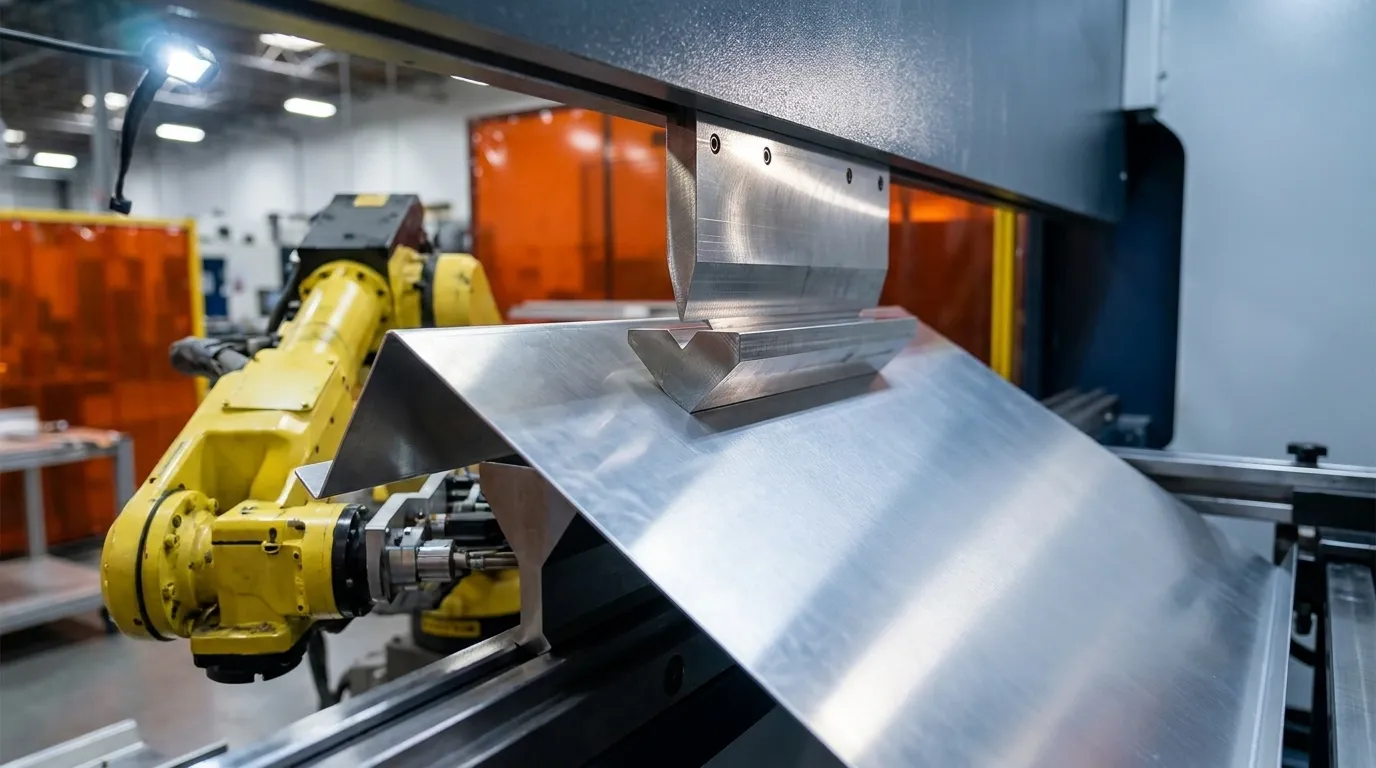
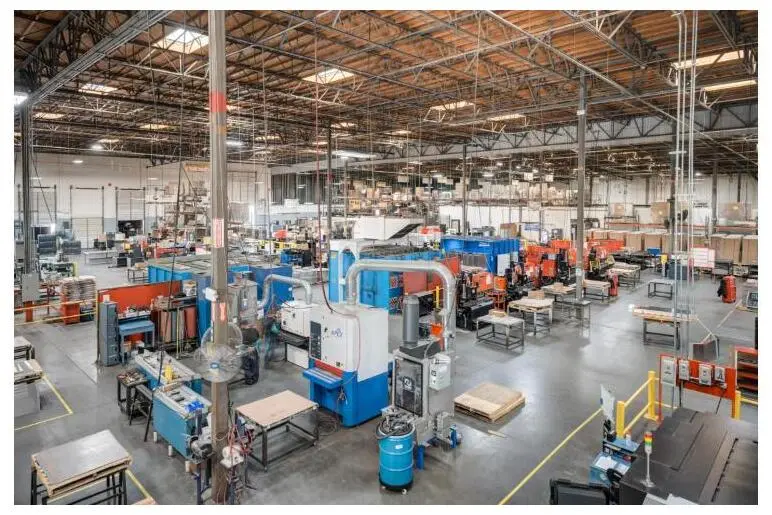
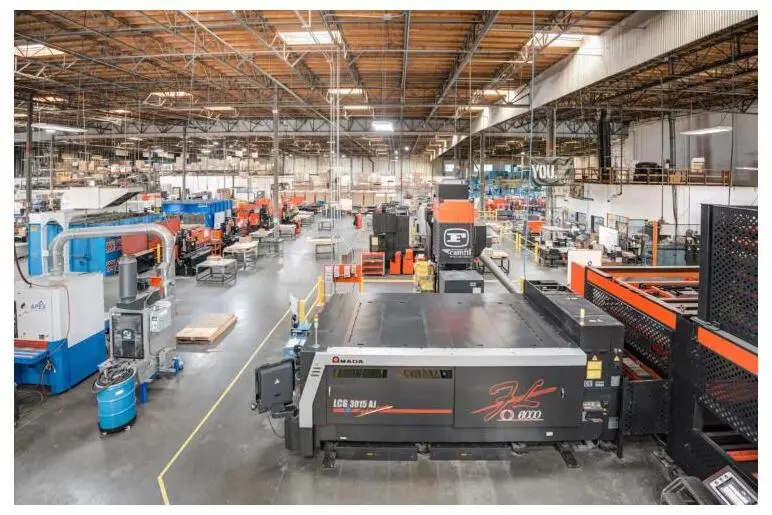
Fabcon focuses on custom, build-to-print 42U cabinet fabrication with vertically integrated capabilities. In-house engineering and DFM collaboration, laser cutting, CNC punching, forming, welding, finishing and light electromechanical assembly all sit under one roof. Data center teams that need cabinets aligned with specific cooling architectures, cable management schemes or dimensional limits gain full customization without a fragmented supply chain.
Contact Fabcon for a custom quote on 42U cabinets built to exact specifications.
Custom and Standard 42U Cabinets in Practice
The choice between off-the-shelf and custom-fabricated 42U cabinets affects total cost of ownership, deployment speed and long-term operations.
Standard cabinets provide lower upfront cost and short lead times. Catalog products from major manufacturers are well documented, widely deployed and supported by broad accessory ecosystems. For predictable enterprise workloads, standard cabinets often meet functional needs.
Standard cabinets also introduce limits on cooling layouts, cable pathways and depth. A standard 600 mm depth cabinet reduces usable mounting depth after door clearances, which is too shallow for many full-size rackmount servers built after 2015. Deployments that require nonstandard depths, directed airflow or integrated electromechanical features often face compromises with catalog products.
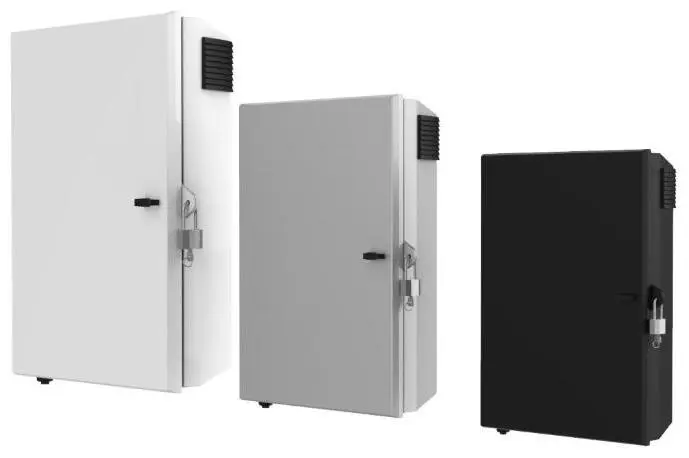
Custom cabinets match exact specifications and integrate cleanly with existing infrastructure. Tailored airflow supports high-density deployments, and precise dimensions reduce wasted space. This precision shortens installation time, cuts labor inefficiencies and protects equipment from mounting stress, which lowers total cost of ownership.
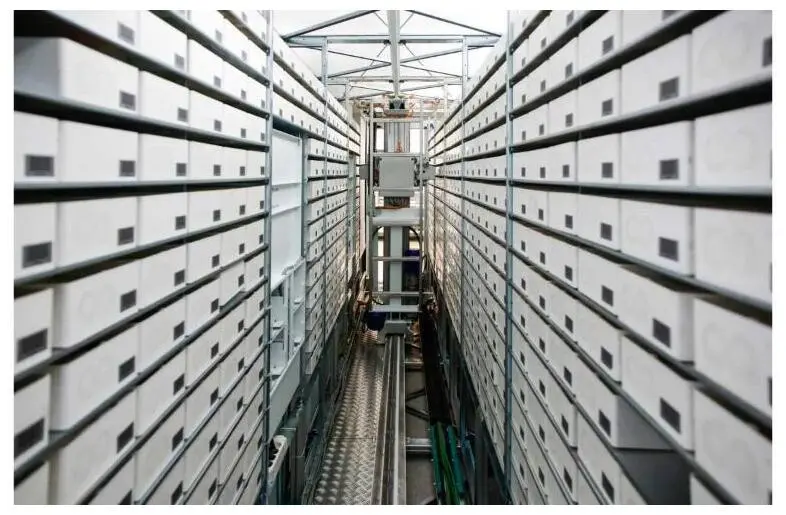
The key requirement is a manufacturer with strong engineering support and fabrication depth. Fabcon’s vertical integration delivers custom 42U cabinets with cost-effectiveness and lead time reliability that rival catalog availability. These cabinets avoid the compromises common with off-the-shelf products.
Key Specifications for 42U Cabinet Selection
Four specification categories guide effective comparison of 42U cabinet manufacturers and models.
Dimensions. Typical 42U cabinets measure 600 mm or 700 mm in width, with depths from 600 mm to 1200 mm and external heights near 78.7 inches without casters. Depth often determines server compatibility because modern equipment needs 1000 mm or more when allowing for rear cable management and PDU clearance. For example, a Dell PowerEdge R750 at 770 mm deep rules out 800 mm cabinets when vertical cable managers are required.
Load capacity. Static load ratings for 42U cabinets typically range from 2,000 to 3,000 pounds, while heavy-duty models reach higher values. Rolling load capacity often equals only a fraction of the static rating, so a cabinet may support less weight while moving on casters than when anchored. This distinction matters for AI and GPU deployments where individual nodes weigh more than standard servers. Purpose-built AI enclosures now offer static ratings up to 5,000 pounds for GPU racks.
Cooling. Perforated doors with more than 64 percent open area align with ASHRAE guidance for proper airflow to server intake fans. Solid or glass doors with lower open area increase fan workload and energy use. Beyond door design, ASHRAE’s 2023 guidance recommends 3U spacing between high-power servers to limit thermal hotspots in GPU deployments above 10 kW per rack.
Seismic ratings. For data centers in earthquake regions, Telcordia GR-63-CORE specifies that cabinets in seismic Zone 4 must survive 0.8G acceleration with a 2,500 pound payload without tipping or ejecting hardware. Buyers should request GR-63-CORE test reports during RFQ evaluation and confirm that ratings match site conditions.
Fabcon engineers cabinets to meet specific load, cooling and seismic requirements so project teams can align designs with real-world conditions instead of fixed catalog specifications.
42U Rack Pricing: Ranges and Cost Drivers
Several factors shape cabinet pricing. Materials such as steel gauge, frame construction and corrosion protection set the base cost. Customization for nonstandard dimensions, cutouts or airflow patterns adds engineering and fabrication work. Finishing choices such as powder coat, wet paint, screen printing or specialty coatings affect durability and appearance. Assembly ranges from basic hardware insertion to full electromechanical integration with wiring and mounted components. Production volume then influences unit pricing.
Custom cabinets from U.S. manufacturers can cost more upfront than imported catalog products but often reduce lifetime cost. Better quality, fewer delays and a single accountable partner cut soft costs tied to multi-vendor coordination. When one purchase order covers engineering, fabrication, finishing and assembly, project management becomes simpler and faster.
The U.S. Manufacturing Advantage for 42U Cabinets
Domestic 42U cabinet manufacturing offers structural benefits that reach beyond shorter shipping routes.
Shorter lead times. U.S. production avoids ocean freight and customs delays. Compressed buildout schedules benefit from predictable transit and faster response to design changes.
Easier communication. Direct access to engineering teams, shared time zones and real-time issue resolution improve collaboration. Domestic manufacturing reduces uncertainty and quality variation that often appear with overseas rack suppliers.
Compliance with domestic standards. U.S. manufacturers work closely with TAA, UL and other domestic standards that guide government and enterprise procurement.
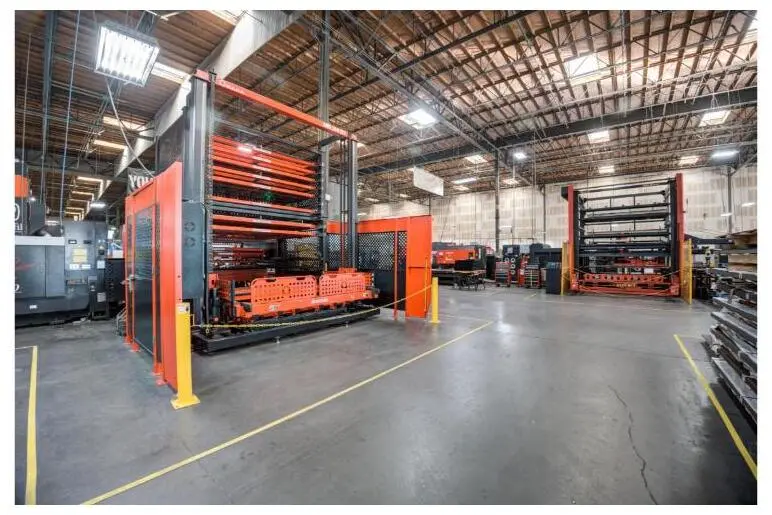
Supply chain consolidation. Fabcon’s vertical integration concentrates laser cutting, CNC punching, forming, welding, finishing, including powder coat, wet paint and screen printing, and light electromechanical assembly in one operation. One purchase order and one accountable partner replace multiple vendors. Fabcon’s ISO 9001:2015 and AS9100D certifications, supported by 220,000 square feet of U.S. manufacturing space, provide consistent quality assurance.
How to Choose a 42U Cabinet Manufacturer: RFQ Checklist
This seven-point checklist supports structured evaluation of 42U cabinet manufacturers before issuing an RFQ.
- Engineering support (DFM). Confirm that the manufacturer offers design-for-manufacturability collaboration before production. Fabcon’s in-house engineering and quoting teams review drawings, tolerances and materials to align designs with scalable production.
- Customization capabilities. Determine whether the manufacturer builds to exact specifications or restricts projects to catalog options. Fabcon focuses on custom, build-to-print fabrication without catalog limits.
- In-house finishing and assembly. Check whether coating, hardware insertion and electromechanical assembly occur in-house or through subcontractors. Fabcon’s integrated finishing and assembly remove vendor handoffs and reduce quality disputes.
- Certifications. Verify ISO 9001:2015, AS9100D or other relevant quality certifications. Fabcon’s certifications support strong quality management and traceability.
- Lead time reliability. Assess whether the manufacturer depends on third-party schedules. Fabcon’s vertical integration shortens quoting and production cycles by limiting external dependencies.
- Scalability. Ensure that the manufacturer can move from prototype to production without rigid minimums or long onboarding. Fabcon’s agile production cells support changing volumes and evolving BOMs.
- U.S. manufacturing presence. Confirm that the manufacturer operates domestic facilities that reduce shipping times and support direct communication. Fabcon’s 220,000 square feet of U.S. manufacturing space provide clear accountability.
Get a quote from Fabcon to compare custom U.S. fabrication with current cabinet sourcing.
Frequently Asked Questions
What are the typical dimensions of a 42U data cabinet?
A 42U cabinet provides 73.5 inches of internal mounting height based on the EIA-310 standard, where 1U equals 1.75 inches. External heights often reach about 78.7 inches without casters. Common widths are 600 mm or 700 mm, with depths from 600 mm to 1200 mm. Depths of 1000 to 1200 mm support modern servers and rear cable clearance. A 600 mm depth cabinet generally fits network or telecom patch equipment rather than full-size servers.
What is the difference between static and dynamic load capacity?
Static load capacity describes the maximum weight a cabinet supports when stationary and properly anchored. Dynamic, or rolling, load capacity applies when the cabinet moves on casters and usually equals a fraction of the static rating. A cabinet rated for a high static load may support less weight while rolling. Teams should verify both ratings before moving loaded cabinets and request documentation for each figure during RFQ evaluation.
Do data centers in seismic regions need a seismic-rated 42U cabinet?
Data centers in earthquake-prone regions require seismic-rated cabinets. Telcordia GR-63-CORE defines performance expectations for seismic Zone 4 cabinets under significant acceleration with substantial payloads. Buyers should request GR-63-CORE test reports during RFQ evaluation to confirm compliance. Facilities in active seismic zones, industrial sites or vibration-prone environments also benefit from reinforced bracing and seismic-rated hardware that protect equipment alignment and extend service life.
How are AI and high-density deployments changing 42U cabinet requirements?
AI and GPU-accelerated workloads are raising rack densities beyond the levels many catalog cabinets support. These projects require higher static load ratings, extended depths, enhanced airflow and support for liquid cooling distribution units. Standard catalog cabinets often fall short of these needs, so custom fabrication is becoming more common. For AI GPU servers that occupy multiple rack units per node and require extra PDU and cooling hardware, a 42U rack may hold fewer compute nodes than a mixed deployment, which makes dimensional precision and load engineering critical.
Why select a vertically integrated U.S. fabricator instead of a catalog manufacturer or offshore supplier?
Catalog manufacturers support standardized deployments but limit flexibility for advanced cooling, nonstandard dimensions or integrated electromechanical assembly. Offshore suppliers may lower unit prices while adding lead time risk, customs complexity and communication barriers. A vertically integrated U.S. fabricator such as Fabcon combines engineering collaboration, precision fabrication, finishing and light electromechanical assembly in one operation. This structure delivers custom cabinets with one purchase order, one accountable partner and no vendor handoffs, which reduces risk and speeds deployment.
Conclusion: Building a Long-Term 42U Cabinet Partnership
The selection of a 42U cabinet manufacturer shapes performance, cost and supply chain reliability for many years. Major catalog manufacturers such as CPI, Vertiv, Eaton, Legrand and Rittal provide strong standardized products for conventional deployments. Projects that require customization, simplified supply chains or support for AI-driven density benefit from a different type of partner.
Fabcon delivers vertically integrated U.S. fabrication that combines engineering collaboration, precision manufacturing, finishing and light electromechanical assembly under one roof. One purchase order and one accountable partner support cabinets built to exact specifications instead of adapted catalog frames.
Start a conversation with Fabcon to see how custom U.S. fabrication can reduce complexity and accelerate data center deployment.