
Last updated: August 26, 2026
Key Takeaways for Custom Sheet Metal Enclosure Programs
- Multiple vendors for fabrication, finishing and assembly increase risk through missed design changes, finishing delays and late-stage quality issues.
- A vertically integrated U.S. manufacturer that covers DFM through light electromechanical assembly removes handoffs and creates clear accountability for mid-sized infrastructure and technology companies.
- Early DFM collaboration prevents expensive problems by combining features, reducing part count and limiting secondary operations before production starts.
- Keeping fabrication, finishing and assembly in one operation shortens lead times, reduces quality disputes and simplifies supply-chain management for high-mix programs.
- Partner with Fabcon for prototype through mid-volume production in a single U.S. facility.
Information Buyers Should Provide for an Accurate Quote
A complete RFQ package speeds quoting and limits follow-up questions. Release packages for sheet metal enclosure production should include the following details.
- Revision-controlled 2D drawings and STEP/STP assembly files with matching geometry and revision
- Material grade, thickness and any acceptable alternatives
- Quantity bands and target schedule
- Critical datums, cosmetic faces and prohibited weld or tool-mark zones
- Hardware schedule and weld notes
- Required IP, NEMA or UL targets with a defined validation plan and responsible party
- Thermal, EMI and grounding inputs supplied by the buyer
- Finishing requirements including coating type, masking zones and color
- Light assembly or electromechanical integration scope
- Applicable certifications such as AS9100D, ITAR or UL/CSA
Submit drawings and specifications to Fabcon for RFQ review.
The Current U.S. Manufacturing Landscape for Custom Enclosures
The U.S. market for custom sheet metal electronic enclosures sits between two options that each fall short for mid-volume, high-mix programs.
Low-complexity job shops handle basic fabrication but lack engineering depth for DFM, finishing and electromechanical assembly. Customers often manage separate vendors for metal, coatings, wiring and final assembly, which creates a fragmented supply chain with handoff delays and quality disputes.
Large contract manufacturers provide scale but impose high minimum order quantities, long onboarding cycles and rigid production lines that struggle with evolving bills of materials or changing SKU configurations.
The gap between these two models is where most mid-sized infrastructure and technology programs operate. Reshoring trends increase pressure for domestic sourcing. High-tech sectors including computers and electronics account for a substantial share of announced reshoring and FDI jobs, driven by three converging forces. Tariff exposure on China-origin goods raises landed costs. Freight volatility from Red Sea and Panama Canal disruptions undermines delivery predictability. Customer mandates for regional sourcing remove offshore options for many programs. Together, these pressures accelerate reshoring momentum across electronics and fabricated metal programs.
A vertically integrated U.S. manufacturer occupies this middle ground. It combines the engineering depth and integration scope of a large contract manufacturer with the responsiveness and flexibility that high-mix programs require.
Technical Capabilities and DFM Collaboration for Enclosures
Early DFM collaboration prevents the most expensive problems. Starting DFM early shapes the design around production methods, combines features into single components, reduces part count and limits welding operations that need secondary grinding and finishing.
A useful enclosure drawing coordinates mechanical structure, electronics interfaces, assembly, finishing and product validation rather than listing outside dimensions alone. Buyers benefit from separating fixed requirements from dimensions or features open to supplier DFM input. Teams should avoid claiming IP, NEMA or UL ratings until the full assembly has been tested.
For data-center rack enclosures, DFM review covers cable routing, connector window placement, PCB standoff alignment and service panel access. For aerospace components, it addresses tight-tolerance interfaces, weld distortion risk and traceability requirements.
Fabcon engineering and quoting teams review drawings, tolerances and materials before production begins. They create manufacturing routers and work instructions tailored to the shop floor. With more than 45 years of fabrication experience, Fabcon engineers catch manufacturability issues at the design stage, not after first article.
Integrated Fabrication Through Light Electromechanical Assembly
Keeping fabrication, finishing and assembly in one operation removes the handoffs that cause delays and quality disputes. When a single partner manages laser cutting, CNC punching, forming, welding, powder coating, hardware insertion and light electromechanical assembly, the program moves faster and accountability stays clear.
For energy-storage cabinets, this structure means the enclosure shell, weatherproof finishing, internal racking and wiring integration run in sequence without shipping parts between vendors. For medical carts and lab equipment, it means fabricated assemblies, cosmetic finishing and hardware installation sit under one quality system with full traceability.
Fabcon operates vertically integrated manufacturing space across two Southern California facilities. In-house capabilities cover precision sheet metal fabrication, CNC machining, certified welding, powder coat and wet paint finishing, CARC military-grade and mil-spec coatings, screen printing, hardware insertion and light electromechanical assembly including wiring and component integration. One purchase order can cover the full build.
See how Fabcon’s integrated capabilities align with current and upcoming enclosure programs.
Quality and Compliance Frameworks for Enclosure Programs
Compliance requirements vary by sector and deployment environment. Selecting the correct enclosure rating depends on what each standard covers.
IP ratings under IEC 60529 address ingress protection against solids and water using a two-digit code. NEMA enclosure types defined by ANSI/NEMA 250-2020 start from the same ingress protection baseline but extend coverage to corrosion resistance, ice formation, oil and coolant exposure and hazardous-location considerations.
A NEMA 4X enclosure meets or exceeds IP66 for ingress protection and adds corrosion resistance testing, including extended salt spray exposure, that IP66 alone does not require. An IP66-rated enclosure does not automatically satisfy NEMA 4X standards. For coastal data-center cooling controls, NEMA 4X plus IP66 provides an appropriate specification.
For outdoor energy-storage and telecom installations exposed to rain and temperature swings, NEMA 3R enclosures meet North American requirements. IP55 enclosures meet international IEC requirements, with NEMA 3/IP55 serving as the closest cross-referenced equivalents.
For BESS enclosures in data-center and energy-storage applications, NFPA 855 installation standards and UL 9540/UL 9540A system listings serve as primary standards for structural safety and fire containment. These standards are often supplemented by applicable building codes. Beyond the rating label, buyers should verify enclosure material, gasket compression, cable gland ratings and thermal management to prevent heat or condensation failures.
Fabcon holds ISO 9001:2015 and AS9100D certifications and is ITAR registered. Integrated quality systems with full traceability govern every stage of the build. UL and CSA compliance standards are supported across programs. For aerospace and defense procurement teams, AS9100D and ITAR registration satisfy strict regulatory requirements without separate supplier qualification.
Scalability and Flexibility for Changing Volumes or SKUs
Production volume requirements shift as market demand changes. These shifts often align with new SKU additions for different customer segments, while BOMs evolve as programs mature and components change.
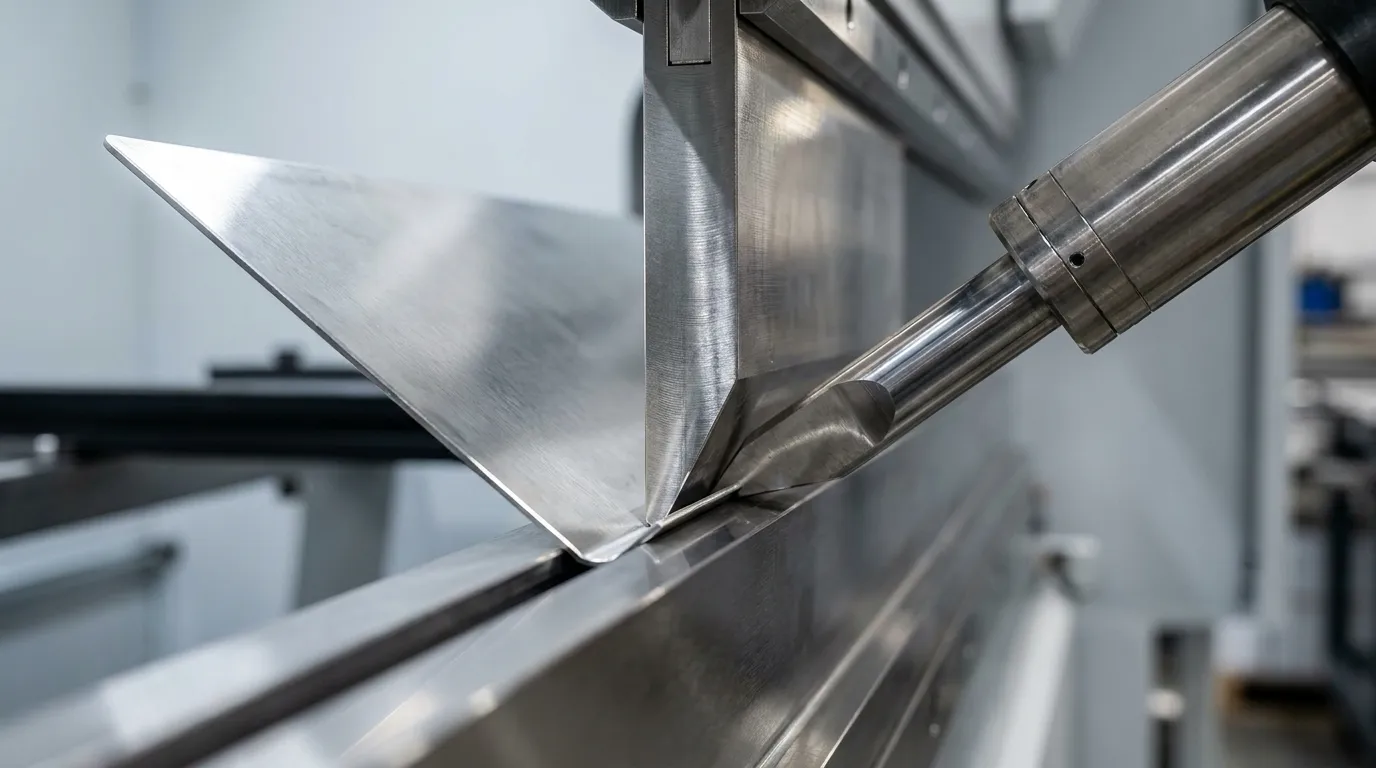
A manufacturing partner built on rigid production lines struggles to adapt without long lead times or minimum-order penalties. Laser cutting and CNC bending support economical production from prototype quantities through low-to-mid volume runs with low upfront tooling and strong design flexibility.
This process range fits the high-mix programs common in traffic-safety infrastructure, EV charging equipment and industrial OEM manufacturing. Configurations vary by deployment site and volumes ramp in stages.
Fabcon uses flexible manufacturing cells rather than rigid production lines. These cells adapt to changing volumes, mixed SKUs and evolving BOMs without the high minimums or extended onboarding that large contract manufacturers often require. Programs can scale from prototype through mid-volume production while maintaining the responsiveness that fast-moving programs demand.
Supply-Chain Simplicity and Lead-Time Reliability
Vendor count directly affects lead time. Every handoff between suppliers adds scheduling dependencies, shipping time and potential quality disputes.
When fabrication, finishing and assembly run internally, the program owner gains stronger schedule control instead of coordinating across multiple vendor queues. A single accountable U.S. partner means one purchase order, one point of contact and one quality system for the full build.
Internal control of fabrication, coatings and assembly shortens quoting and production cycles. Programs avoid third-party schedules and do not ship parts between vendors.
For procurement and operations teams that manage high-mix programs, vendor consolidation also reduces administrative work. Fewer supplier qualifications, fewer purchase orders and fewer logistics touchpoints support smoother execution per finished unit.
Frequently Asked Questions
How a Vertically Integrated Manufacturer Differs from a Standard Job Shop
A standard job shop typically handles fabrication only, cutting, bending and welding sheet metal to print. A vertically integrated manufacturer adds in-house finishing such as powder coating and mil-spec coatings, CNC machining for precision interfaces, hardware insertion and light electromechanical assembly including wiring and component integration.
This broader scope produces a finished or near-finished assembly from a single partner instead of a raw fabricated shell that needs additional vendors. Fabcon covers this full scope in one operation, which reduces vendor count, removes handoff delays and keeps quality accountability in one place.
How DFM Collaboration Works for Custom Enclosure Programs
Fabcon engineering and quoting teams review submitted drawings, tolerances and materials to identify features that increase cost or risk without improving function. Common review areas include bend radius relative to material thickness, hole placement near bends, weld locations and distortion risk, hardware accessibility and coating buildup on critical clearances.
The output includes a manufacturing router and work instructions tuned for the floor, along with recommended design changes documented for the customer engineering team. Accepted changes are recorded in updated 2D and 3D files before production begins.
Certifications for Aerospace, Defense and Energy-Storage Enclosures
ISO 9001:2015 establishes a baseline quality management system for traceability, process control and corrective action. AS9100D extends those requirements for aerospace and defense, including configuration management, first-article inspection and supplier control.
ITAR registration applies to programs that involve defense-related technical data or hardware. For energy-storage enclosures, UL and CSA compliance support AHJ approval, and NFPA 855 governs stationary battery storage installations above defined thresholds. These certifications are detailed in the Quality and Compliance Frameworks section above.
Choosing Between NEMA and IP Ratings for Outdoor Enclosures
Deployment geography and environmental exposure drive the choice between NEMA and IP ratings. NEMA ratings serve as the standard framework for North American industrial and commercial compliance with OSHA and NEC requirements.
IP ratings under IEC 60529 function as the default in Europe, Asia and most international markets. For outdoor energy-storage and telecom installations in North America, NEMA 3R provides rain-tight and corrosion-resistant protection suitable for most outdoor deployments.
NEMA 4X adds corrosion resistance beyond what IP66 requires, which makes it suitable for coastal sites, chemical environments or roadside cabinets exposed to de-icing chemicals. Buyers that specify enclosures for both North American and international markets benefit from dual NEMA and IP ratings on datasheets to streamline procurement and installation compliance.
Fabcon Support for Programs from Prototype to Mid-Volume
Fabcon flexible manufacturing cells support programs that start at prototype quantities and scale to mid-volume production. Prototype quantities use laser cutting and CNC bending with no dedicated hard tooling, which allows design changes without tooling penalties.
As programs mature and volumes increase, production processes are refined for batch economics through improved nesting, repeatable fixtures and detailed work instructions. All stages run in the same facility and quality system. This continuity carries manufacturing knowledge from prototyping into production, which reduces ramp risk and maintains dimensional consistency across the program lifecycle.
Next Steps with Fabcon for Custom Enclosures
Fragmented supply chains, design-to-manufacture disconnects and inflexible volume requirements can be addressed with the right partner. Fabcon (founded 1977) has produced custom sheet-metal electronic enclosures for data-center, energy-storage and medical-device programs from prototype through mid-volume production with one accountable partner.
Teams can submit drawings and program requirements to start the quoting process. Fabcon engineering and quoting teams review packages and respond with DFM input alongside pricing.