
Key Takeaways for Mid-Volume OEM Programs
- Sheet metal contract manufacturing lets OEMs outsource precision fabrication, finishing and light assembly to a single specialized partner.
- Selecting the right partner requires evaluating technical capabilities, integration scope, quality and compliance, scalability and total program value.
- Vertically integrated U.S. fabricators cut vendor handoffs, shorten lead times and simplify program management for mid-volume production.
- ISO 9001:2015, AS9100D and ITAR credentials signal operational discipline that lowers risk for regulated industries.
- Partner with Fabcon to access in-house DFM collaboration, flexible production cells and full traceability from prototype through mid-volume runs.
When Contract Manufacturing Creates the Most Value
Contract manufacturing creates value when internal capacity, certification depth or integration scope cannot support a program’s requirements. A structured evaluation across five criteria keeps that decision grounded in facts. Those criteria are technical capabilities, integration scope, quality and compliance, scalability and flexibility, and total program value. Each one filters out partners that cannot close every gap a mid-volume program demands.
U.S. manufacturing reshoring and FDI announced 244,000 jobs in 2024, with a strong outlook for 2025 that depends on clear industrial policy. That momentum rewards OEMs that lock in domestic, vertically integrated partners now instead of managing offshore risk later.
Technical Capabilities: Matching Process Range to Program Demands
Process range determines whether a partner can own an entire program or only a narrow slice of it. The three main fabricator tiers create different vendor management burdens and risk profiles for OEMs.
Low-complexity job shops:
- Handle basic laser cutting, punching and forming
- Offer limited or no in-house finishing
- Provide no electromechanical assembly
- Lack engineering depth for DFM collaboration
- Force OEMs to manage multiple downstream vendors
Large and global contract manufacturers:
- Carry broad process ranges and deep automation
- Require high minimum order volumes
- Involve long onboarding cycles
- Run rigid production lines that resist high-mix programs
- Fit stable, high-volume programs with frozen BOMs
Mid-tier vertically integrated fabricators like Fabcon:
- Run in-house laser cutting, CNC punching, forming, welding, CNC machining and finishing
- Support prototype through mid-volume production without tooling restarts
- Offer light electromechanical assembly alongside fabrication
- Maintain engineering teams that collaborate on DFM before production begins
OEMs across electronics and semiconductor sectors outsource enclosures, racks and heat-sink fabrication to specialist contract fabricators in North America to meet demand without building internal capacity. The partner’s process range determines how much of that scope stays under one roof and how many vendors procurement must coordinate.
Integration Scope: Consolidating Fabrication, Finishing and Assembly
Broad integration scope reduces handoff delays, quality disputes and coordination overhead that inflate total program cost. When fabrication, finishing and assembly sit with different vendors, every transition introduces risk, extra freight and schedule uncertainty.
Fabcon’s Build-to-Print + Light Assembly model removes those transitions by design. One purchase order covers fabrication, powder coat or wet paint, hardware insertion, wiring and component integration. Program managers gain a single accountable contact instead of coordinating across three or more suppliers for one finished product.
Integrating fabrication and electromechanical assembly under one roof reduces lead times, cuts costs and simplifies project management for OEMs in data center and electrical infrastructure sectors. The same integrated approach supports energy storage, traffic safety, aerospace and defense and EV infrastructure programs.
Quality and Compliance: Certifications That Protect Programs
Certifications define how a manufacturer controls materials, processes and documentation across every build. They function as operational commitments, not marketing badges.
Fabcon holds ISO 9001:2015 and AS9100D certifications and maintains ITAR registration. Those credentials carry specific operational meaning that affects daily production.
ISO 9001:2015 requires manufacturers to define and document key processes including material handling, machine setup, inspection points and corrective actions, enabling repeatable results across multiple production runs.
Industry-specific certifications valued by contract manufacturers serving regulated sectors include AS9100 for aerospace and ITAR registration for defense-related work.
Fabcon’s integrated QA system spans the entire build, from incoming material through final assembly, with full traceability and compliance with UL and CSA standards. Procurement teams in medical, aerospace and energy programs can satisfy regulatory requirements without sourcing traceability data from multiple vendors.
Scalability and Flexibility: Supporting Evolving Mid-Volume Programs
Most OEMs face a binary choice between job shops that cannot scale and large CMs that will not flex. That gap leaves mid-volume programs with evolving BOMs, mixed SKUs or compressed launch timelines without a natural home.
Fabcon’s agile production cells address that gap directly. Flexible cells adapt to changing volumes and product configurations without new onboarding cycles or minimum order commitments that price out mid-volume programs.
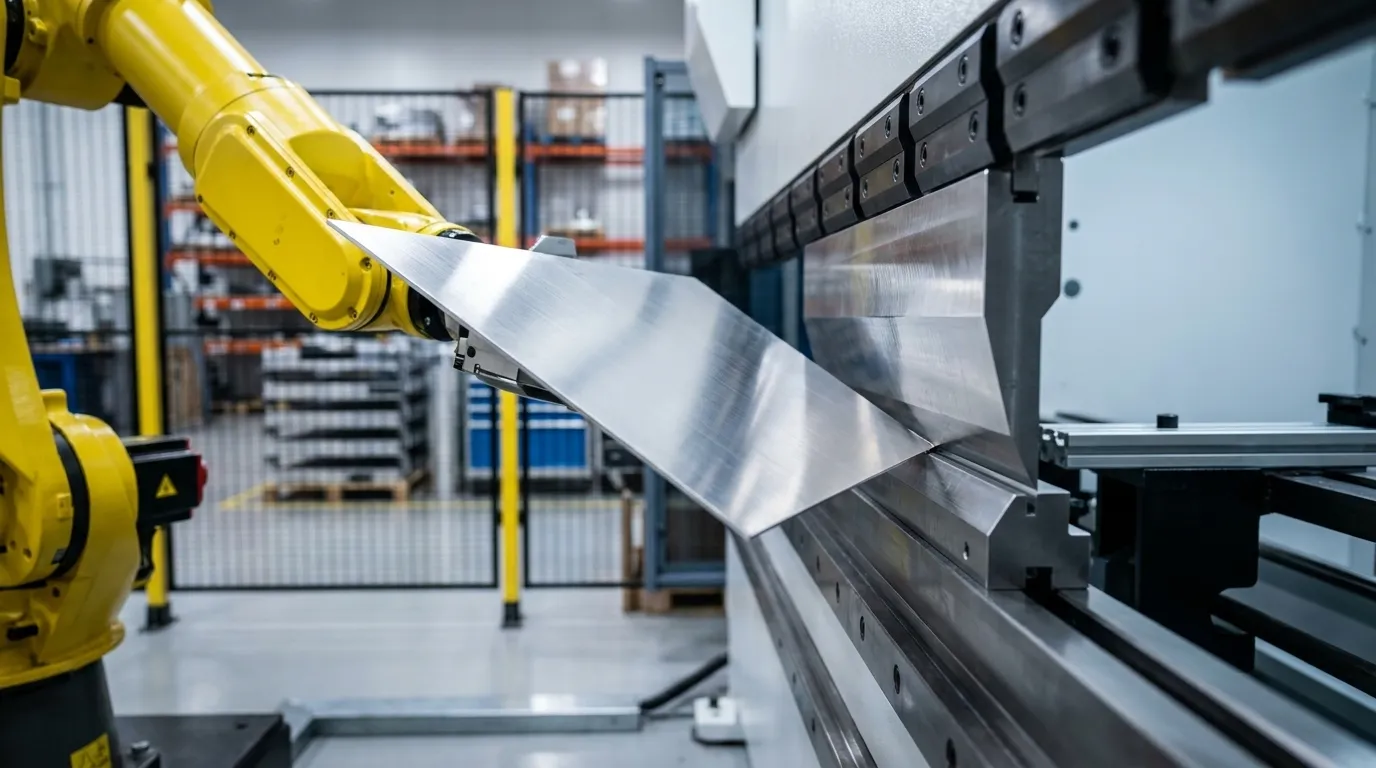
Sheet metal fabrication remains cost-effective across a wide volume range without tooling investment, allowing design changes at zero switching cost, while automated bending cells reduce per-part cost as volumes grow. A mid-tier partner with agile cells captures both advantages, combining design flexibility at lower volumes with cost efficiency as programs scale.
Fabcon supports programs from prototype through mid-volume production without the long onboarding or high minimums that characterize large CMs. Engineering and quoting teams engage before production begins, so programs move faster from first article to production release.
Total Program Value: Looking Beyond Unit Price
Total program value reflects every cost that a supplier relationship introduces, not just unit price. Rework, expedite fees, coordination overhead, delayed launches and quality escapes that reach the field all affect real program economics. A low-cost vendor that introduces those variables often costs more than a higher-priced integrated partner.
Supply chain consolidation reduces that exposure. The Reshoring Initiative’s Import Substitution Program projects that consistent domestic sourcing can increase domestic manufacturing output. OEMs that consolidate to a single U.S. partner reduce logistics risk, shorten communication cycles and gain program visibility that offshore or fragmented supply chains cannot provide.
That consolidation compresses timelines by reducing quoting lag and keeping engineering, fabrication, finishing and assembly on the same floor. Faster launches and fewer disruptions translate directly to lower total program cost.
Get a quote and see how Fabcon’s integrated model reduces total program cost.
Common Pitfalls in Sheet Metal Programs and How to Avoid Them
Four failure modes account for most program delays and cost overruns in sheet metal contract manufacturing, and they often compound each other.
Fragmented vendor bases create the foundation for downstream problems. Splitting fabrication, finishing and assembly across vendors creates handoff delays and diffuses accountability. Mitigation: consolidate to a partner that owns all three stages.
That fragmentation makes the second pitfall worse, which is inadequate DFM collaboration. Designs that reach the floor without manufacturability review generate rework, quoting delays and tolerance failures. Best practice is to get CAD models to a precision sheet metal shop as early as possible, submitting both solid 3D models and 2D drawings with tolerances, finish specs and special instructions. Mitigation: engage a partner whose engineering team reviews drawings before quoting begins.
Unclear specifications introduce another layer of risk. Improper hardware hole sizing is the most common issue precision sheet metal shops must correct before fabrication. Mitigation: validate hardware specifications, tolerance callouts and material compatibility before submitting for quote.
Handoff delays amplify every earlier issue. Every vendor transition adds time and risk. Change management in sheet metal fabrication involves including self-locating tabs, slots and snap-fit joints, minimizing fastener count and using standard fastener types to simplify assembly and reduce part count. Mitigation: design for assembly from the start and select a partner that executes assembly in-house.
Readiness Checklist for U.S. Sheet Metal Partners
These criteria provide a practical checklist for evaluating any U.S. sheet metal contract manufacturing partner before committing to a program.
- In-house process range covers laser cutting, CNC punching, forming, welding, machining and finishing
- Electromechanical assembly capability is available under the same roof as fabrication
- ISO 9001:2015 certification is current and audit results are available on request
- AS9100D and ITAR registration are in place for aerospace, defense or sensitive programs
- DFM collaboration is part of the quoting process, not an afterthought
- Production capacity supports prototype through mid-volume without high minimums
- Capacity utilization sits at a level that maintains buffer for schedule disruptions and expedite requests
- Engineering and quoting teams are accessible and responsive before production begins
- Full traceability documentation is available for every part and assembly
Frequently Asked Questions
What certifications should a U.S. sheet metal contract manufacturer hold for regulated industries?
ISO 9001:2015 is the baseline for quality management and applies across all industries. Programs in aerospace and defense require AS9100D certification and ITAR registration. Medical device programs benefit from documented traceability and process control systems. Energy and transportation programs often require UL and CSA compliance. Fabcon holds ISO 9001:2015, AS9100D and ITAR registration, with full UL and CSA compliance built into its quality system.
Is contract manufacturing suitable for mid-volume programs or only for high-volume production?
Contract manufacturing fits mid-volume programs when the partner uses agile production cells rather than rigid production lines. High-volume CMs impose minimum order requirements and long onboarding cycles that exclude many mid-volume OEMs. Fabcon is purpose-built for mid-volume programs, supporting prototype through production without the constraints of large CMs. Agile cells adapt to changing volumes, mixed SKUs and evolving BOMs without requiring program restarts.
What are the risks of contract manufacturing and how are they mitigated?
The primary risks are quality inconsistency, supply chain fragmentation, design-to-manufacture disconnects and scaling rigidity. Each risk is mitigated by selecting a vertically integrated partner with certified quality systems, in-house DFM collaboration and flexible production capacity. A single accountable partner removes vendor handoff risk. Certified quality systems with full traceability reduce quality escapes. Early DFM engagement prevents rework before production begins.
When should DFM collaboration begin in a sheet metal program?
DFM collaboration delivers the most value before a design is finalized, ideally when CAD models are at an early stage. Engaging a fabricator during design review allows tolerance callouts, material selections, hardware specifications and bend geometry to be validated against real manufacturing constraints. Changes made at the design stage cost a fraction of changes made after tooling or production has started. Fabcon’s engineering and quoting teams engage at the earliest stage of a program to reduce rework and accelerate time to first article.
What does ITAR registration mean for a sheet metal contract manufacturer?
ITAR registration means the manufacturer is registered with the U.S. Department of State’s Directorate of Defense Trade Controls and is authorized to handle technical data, drawings and defense articles on the U.S. Munitions List. In practice, it requires controlled access to technical data, secure information systems, trained personnel and documented processes that prevent unauthorized access or export. For defense and sensitive infrastructure programs, ITAR registration is a non-negotiable qualification. Fabcon maintains ITAR registration and applies those controls across all relevant programs.
Conclusion: Selecting a Partner That Supports Every Program Requirement
Mid-volume OEMs in data centers, energy storage, aerospace and defense, traffic safety and EV infrastructure need partners that avoid both job shop limitations and large CM rigidity. The five-part framework above identifies the partner that closes every gap.
Fabcon has operated as a vertically integrated U.S. precision sheet metal fabrication and assembly partner since 1977. With 220,000 sq. ft. of manufacturing space, the quality credentials detailed earlier and in-house capability spanning fabrication through light electromechanical assembly, Fabcon satisfies every criterion on the readiness checklist.