
Last updated: August 17, 2026
Key Takeaways for HMLV Teams
- Agile sheet metal fabrication supports rapid shifts in volume, product mix and design while maintaining quality and stable unit cost for HMLV programs.
- Four core principles define agile partners for high-mix, low-volume work: rapid response, early DFM collaboration, vertical integration and accountable ownership.
- Vertically integrated U.S. partners remove vendor handoffs, lower total cost of ownership and maintain surge capacity for volatile demand and evolving BOMs.
- Early DFM collaboration aligns design intent with manufacturing capabilities and prevents costly downstream issues before production starts.
- Request a quote for HMLV fabrication that scales from prototype to production under one roof with ISO-certified quality systems.
Four Core Principles of Agile Sheet Metal Fabrication
Four principles guide how an agile sheet metal partner structures operations for HMLV programs.
- Rapid response to demand and design changes through flexible production cells and cross-trained teams
- Early DFM collaboration that aligns design intent with manufacturing reality before production begins
- Vertically integrated fabrication, finishing and assembly under one roof to remove vendor handoffs
- Accountable ownership with ISO-certified quality systems spanning the full build
Agile Manufacturing Applied to Sheet Metal
Agile manufacturing originated at the Iacocca Institute of Lehigh University in 1991 and was formalized around four structural pillars: Core Competence Management, the Virtual Enterprise, Capability for Reconfiguration and the Knowledge-Driven Enterprise. In sheet metal, these pillars translate into workforce depth, modular equipment, real-time scheduling and data-driven decision-making.
Volatile demand defines HMLV programs. Orders shift in volume, SKUs evolve mid-program and design changes arrive before the previous revision ships. Agile manufacturing embraces variation to profit from it, while lean manufacturing seeks to remove variation for stability. That distinction fits infrastructure and technology programs where product specifications rarely remain frozen.
A vertically integrated U.S. partner addresses this volatility with surge capacity in machinery and labor. The partner uses short decision cycles and accelerated feedback loops at the shop-floor level and treats the production plan as a living document updated by orders, technical issues and quality events. The trade-off to evaluate is whether a prospective partner has the engineering depth to manage evolving BOMs or simply executes static build-to-print work.
Fabcon unifies in-house engineering, quoting and production teams as a single organization. When a program changes, one coordinated response replaces a chain of separate vendors. This unified structure becomes especially important when programs move from prototype to production.
Prototype-to-Production Support in Sheet Metal
The transition from prototype to production exposes weaknesses in fragmented sourcing models. A job shop that builds a prototype often lacks the finishing, assembly or quality infrastructure to scale it. A large contract manufacturer that can scale often will not engage until volumes justify onboarding costs.
Agile manufacturing emphasizes rapid prototyping and cross-functional collaboration as a continuous workflow rather than separate phases. In sheet metal, the same engineering team that reviews a prototype drawing also writes the production router, so institutional knowledge carries forward between phases.
One-roof fabrication and assembly characteristics support this transition. In-house laser cutting, forming, welding, finishing and light electromechanical assembly operate under a single quality system. Vertically integrated fabrication shops that consolidate cutting, forming, welding and assembly under one roof remove inter-process transportation waste, handoff errors and vendor coordination delays, which compresses project lead times.
The trade-off to evaluate is continuity across the program. Confirm whether the team that builds the prototype also scales production or whether the program transfers to a different cell, facility or subcontractor at volume.
Start a prototype-to-production program with a single agile partner.
Flexible Production Cells for HMLV Work
Traditional high-volume production lines focus on a single product at maximum throughput. Progressive stamping requires an early design freeze and long lead times to fabricate and commission dies, which does not fit products in active design flux common in HMLV programs.
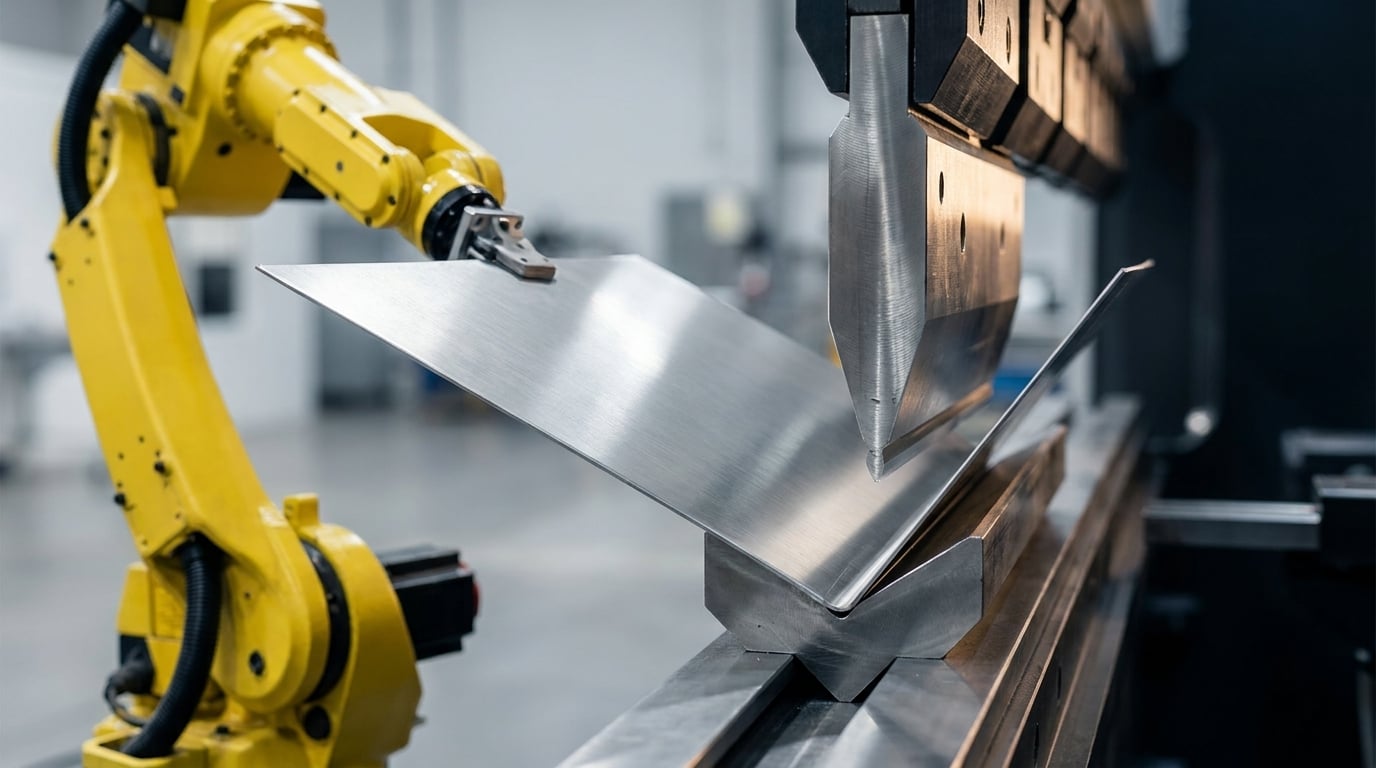
Agile production cells address this constraint by organizing equipment and cross-trained personnel around product families rather than fixed sequences. Modular machinery with quick-disconnect utilities allows factories to rearrange production flows in hours rather than weeks when product requirements change. Automated panel benders support economic batch sizes of one and mass customization by cutting changeover time with automatic tool changers, which enables high-mix runs without batching constraints.
Cellular manufacturing groups equipment and personnel into cells organized around product families, which reduces travel distance and handoffs. By bridging job-shop flexibility with flow-line efficiency, this structure removes the volume thresholds that typically force customers to requalify new suppliers as programs scale. Fabcon uses this approach to serve programs from small initial runs through mid-volume production under a single quality system.
The trade-off to evaluate is the actual flexibility of a shop’s cells. Review changeover time, BOM revision handling and evidence that the shop has processed mixed SKUs within a single production window.
Early DFM Collaboration in Sheet Metal
Design-to-manufacturing disconnect consistently drives rework, cost overrun and schedule delay in HMLV programs. A large share of lifecycle cost locks in before production starts, so design decisions made without fabrication input create compounding downstream consequences.
Early designer-fabricator collaboration aligns part geometry with shop-floor capabilities before material is cut. This alignment prevents scrap at the source and reduces the share of production time spent fixing manufacturability-related errors. Common issues caught in early DFM review include overly tight tolerances, features placed too close to bend lines, nonstandard material specifications and finish requirements that conflict with dimensional specs.
Early DFM collaboration reduces manufacturing risks by catching design issues before production begins. This prevention approach lowers costs through minimized material waste and shorter cycle times, improves product quality by removing defect sources at the design stage and accelerates time to market by avoiding late-stage rework during prototyping or production.
Fabcon engineering and quoting teams review drawings, tolerances and materials before production. They create manufacturing routers and work instructions for the floor so designs can run at scale without revision cycles that compress launch timelines.
The trade-off to evaluate is whether a prospective partner treats DFM as a standard part of onboarding or as a billable add-on that customers skip under schedule pressure. Once design and manufacturing align, the next structural advantage comes from consolidating all production steps under one roof.
One-Roof Fabrication and Assembly Capabilities
Vendor handoffs between fabrication, finishing and assembly introduce freight risk, repackaging labor, scheduling gaps and tolerance misalignment. Vertically integrated sheet metal fabrication lowers total cost of ownership for OEMs by cutting shipping costs, repackaging labor, damage risk and administrative overhead from separate POs, invoices and quality systems across multiple suppliers.
One-roof characteristics that matter for HMLV programs include in-house powder coat, wet paint, screen printing and mil-spec finishing alongside light electromechanical assembly such as wiring, hardware insertion and component integration, all under a single quality system. This physical consolidation enables a single facility to maintain both material flow and information flow so physical parts remain connected to their production records at every handoff.
Fabcon performs fabrication, CNC machining, finishing and light electromechanical assembly across manufacturing space in two Southern California facilities. One PO covers the full build. One team owns quality from raw material to finished assembly.
The trade-off to evaluate is depth of finishing capability. Confirm that in-house finishing covers the specific coatings and standards the program requires, including military-grade or UL-compliant finishes where applicable, rather than outsourcing those steps to a subcontractor outside the partner’s control.
Reducing Vendor Handoffs in HMLV Programs
Fragmented supply chains create a structural accountability gap. When metal fabrication, coating, wiring and assembly sit with separate vendors, no single party owns the outcome. Quality issues trigger finger-pointing, schedule delays compound across POs and engineering changes require coordination across multiple supplier portals.
Vertically integrated fabricators that perform design, engineering, metal fabrication, finishing and graphics under one roof remove vendor handoffs and shipping delays. This structure enables parallel workflows and real-time schedule adjustments that outsourced multi-vendor models cannot match.
The in-house services described earlier, from fabrication through finishing and assembly, remove supplier handoffs and provide a single point of contact for schedule, quality and engineering questions.
The trade-off to evaluate is whether consolidation reduces capability. A consolidated model only works when in-house services match the program’s technical requirements. Verify certifications, finishing standards and assembly complexity before consolidating.
Consolidate the supply chain with one accountable fabrication partner.
Comparing HMLV Sourcing Models
Three sourcing models dominate precision sheet metal programs, and each carries distinct trade-offs across engineering depth, service breadth, volume flexibility, onboarding effort and geographic accountability.
Low-complexity job shops handle transactional, build-to-print work. They offer flexibility on simple parts and low minimums but lack engineering depth for DFM, cannot manage finishing or electromechanical assembly in-house and require customers to manage a fragmented vendor base for any program that needs a finished, integrated product.
Mid-tier build-to-print-plus-assembly shops occupy a middle position. They extend beyond raw fabrication into some finishing and assembly services but vary widely in engineering collaboration capability, quality system rigor and the range of finishing standards they can meet in-house. Scale and vertical integration depth differ significantly across this category.
Large and global contract manufacturers provide sophisticated infrastructure and high-volume capacity. Structural constraints include high minimum order quantities, extended onboarding timelines and limited responsiveness to evolving BOMs or mixed-SKU programs. Large rigid manufacturers that rely on progressive stamping often misalign with mid-volume HMLV programs that do not justify heavy tooling investment or long design-freeze requirements.
Fabcon focuses on the gap between these extremes. The company provides the engineering depth, quality certifications and integrated service breadth of a large CM while maintaining the responsiveness, agile production cells and U.S.-based accountability that HMLV programs require.
Frequently Asked Questions
Is agile sheet metal fabrication more expensive than a standard job shop?
The unit price from a basic job shop may appear lower, but total program cost includes rework, vendor coordination, freight between suppliers, quality escapes and schedule delays. A vertically integrated partner that performs fabrication, finishing and assembly under one roof reduces those downstream costs. The relevant comparison is total cost of ownership across the full program, not the line-item price on a single PO.
Can an agile sheet metal partner scale as volumes grow?
Agile production cells are structured to scale without the high minimums or rigid onboarding requirements of large contract manufacturers. Fabcon supports programs from initial prototypes through mid-volume production runs, adjusting cell configuration, staffing and scheduling as program needs evolve. The same engineering and quality team that builds the first article supports the production ramp.
What if a company already has an established sheet metal supplier?
Most sheet metal suppliers stop at fabrication. Programs that also require powder coating, wet paint, mil-spec finishing, hardware insertion, wiring or light electromechanical assembly still need additional vendors to complete the build. Consolidating those services under one roof reduces vendor count, simplifies quality ownership and shortens the path from raw material to finished assembly.
How does early DFM collaboration affect lead times?
DFM review before production begins removes the revision cycles that commonly compress launch timelines. When tolerance issues, material selections and feature placements are resolved at the drawing stage, first-article results align with design intent and production can proceed without interruption. Incomplete or unreviewed designs remain the primary driver of quoting delays and mid-production rework.
What quality certifications should an agile sheet metal partner hold?
ISO 9001:2015 certification establishes baseline quality management system requirements. AS9100D certification adds aerospace-grade traceability, change control and risk management requirements relevant to high-stakes infrastructure programs. ITAR registration is required for programs with defense or controlled-technology content.
Due-Diligence Checklist for Agile Sheet Metal Partners
Use the following criteria when evaluating a prospective agile sheet metal fabrication partner for an HMLV program.
- Certifications: Confirm ISO 9001:2015 and AS9100D certification scope covers fabrication, finishing and assembly, not just one process. Verify ITAR registration if the program involves controlled technology.
- DFM process: Ask whether DFM review is a standard part of onboarding or a billable add-on. Request examples of design changes recommended during DFM that improved manufacturability or reduced cost.
- Change-control process: Confirm the partner has a documented engineering change order process with version-controlled work instructions and traceability through production records.
- In-house service breadth: Verify that finishing, assembly and any program-specific coatings are performed in-house rather than subcontracted to vendors outside the partner’s quality system.
- Sample-part evaluation: Request a first-article inspection report from a comparable program. Review dimensional results, finish quality and assembly alignment against drawing requirements.
- Volume flexibility: Ask the partner to describe how production cells are reconfigured when volume, SKU mix or BOM revisions change mid-program. Evaluate whether the answer reflects actual cell structure or a general claim.
- Site visit: Tour the facility to confirm that fabrication, finishing and assembly operations share a physical roof and a unified quality system. Observe changeover practices and WIP traceability methods firsthand.
- U.S. accountability: Confirm manufacturing location, supply chain origin for primary materials and the partner’s ability to support direct engineering collaboration without time-zone or language barriers.
Conclusion: Structuring HMLV Programs for Agility
Fragmented sourcing and rigid contract manufacturing models slow HMLV launches, raise total cost and create accountability gaps that surface at critical moments. Agile sheet metal fabrication with a vertically integrated U.S. partner addresses these structural problems by consolidating engineering, fabrication, finishing and assembly under one roof with one quality system.
Fabcon has operated in this role since 1977. The company serves data-center, energy-storage, traffic-safety, EV-infrastructure, telecom, aerospace and industrial-OEM programs from two Southern California facilities. Agile production cells scale from prototype to mid-volume production without the minimums or onboarding delays of large global CMs.
Discuss HMLV program requirements with Fabcon’s engineering team.