
Last updated: August 16, 2026
Key Takeaways for Battery Enclosure Buyers
- Battery enclosure fabrication benefits from integrated capabilities that span DFM collaboration, precision fabrication, finishing and light electromechanical assembly under a single purchase order.
- Engineering and supply chain teams face structural challenges when coordinating multiple vendors, which creates delays, quality disputes and cost overruns that integrated partners reduce.
- Material selection, sealing performance and compliance with UL 9540, UL 9540A and IP67/IP69K standards work best when addressed at the design stage to support certification and long-term reliability.
- Domestic fabrication reduces tariff exposure and supply chain risk while supporting mid-volume flexibility that large contract manufacturers and basic job shops cannot match.
- Fabcon delivers one-PO integration from prototype through mid-volume production with ISO 9001:2015, AS9100D and ITAR registration. Get a quote from Fabcon to consolidate vendor count from day one.
U.S. Market Growth and Common Buyer Challenges
The U.S. battery device enclosure market continues to expand, driven by utility-scale and commercial battery energy storage system deployment. Utility-scale ESS applications drive a significant share of U.S. enclosure demand by value and favor outdoor-rated, large-format modular rack systems.
The United States added substantial battery storage capacity in 2025 (approximately 58 GWh) according to SEIA and other analysts, but no such US-specific statement for 2025 or 2026 appears in InfoLink Consulting reports. North America accounted for a meaningful share of global grid-scale stationary battery storage revenue in 2025 and is projected to grow at a strong CAGR through 2035, supported by the Inflation Reduction Act standalone storage Investment Tax Credit and FERC Orders 841 and 2222.
Despite this demand, the U.S. remains a net importer of battery device enclosures, with imports representing a notable share of domestic consumption by value in 2026, primarily from China, Vietnam and Mexico. Tariffs on certain Chinese-origin steel and aluminum products add to landed costs depending on classification, which makes domestic sourcing increasingly cost-competitive.
These cost pressures compound operational challenges across engineering, supply chain and operations teams. Engineering teams frequently encounter design-to-manufacturing disconnects when vendors lack DFM capability. These disconnects force supply chain teams to manage fragmented purchase orders across metal fabricators, coating shops and assembly houses. The fragmentation creates handoff delays and quality disputes that operations leads must absorb. These are structural problems that stem from choosing the wrong provider model, not from the complexity of the product itself.
How Battery Enclosure Provider Categories Evolved
The battery enclosure fabrication market currently splits into two provider types that fail mid-volume programs in different ways.
Low-complexity job shops handle basic sheet metal work but lack engineering depth for DFM and cannot manage electromechanical integration in-house. At the opposite extreme, large global contract manufacturers offer scale but impose high minimums, long onboarding cycles and rigid production structures that cannot accommodate evolving bills of materials.
The middle ground, an integrated U.S. partner with engineering support, fabrication, finishing and assembly under one roof, serves programs with mid-volume requirements and complex integration needs more effectively. Integrated providers that keep cutting, forming, welding, finishing and assembly in one facility shorten production time by eliminating transfers between suppliers and reducing coordination overhead.
Core Fabrication and Assembly Capabilities That Matter
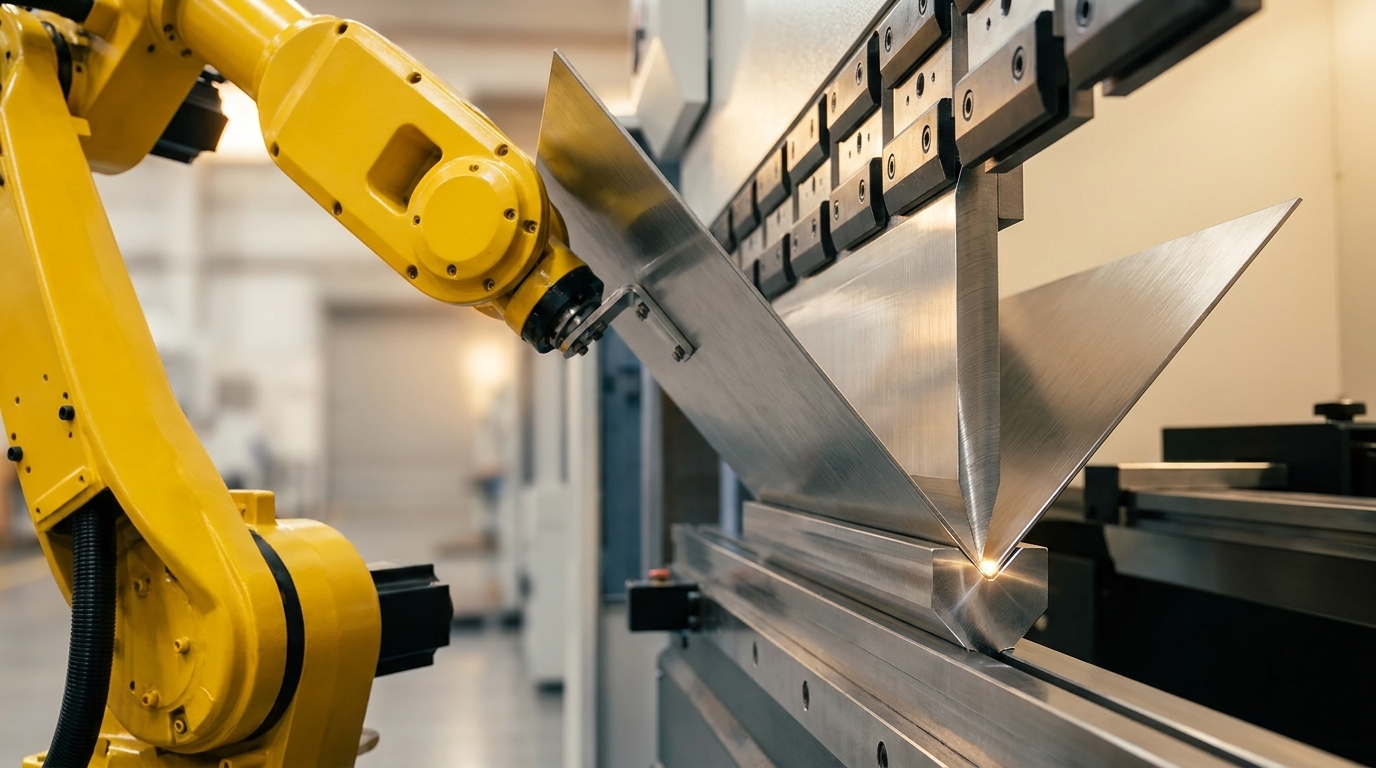
A capable battery enclosure fabricator must support the full production arc, from early design review through finished, tested assemblies. Core processes include precision laser cutting, CNC punching, press brake forming, certified welding and CNC machining for tight-tolerance structural components such as chassis, racks and U- or L-shaped enclosures.
Finishing capabilities, including powder coat, wet paint, CARC military-grade coating and mil-spec treatments, protect enclosures against corrosion, UV exposure and environmental ingress. Light electromechanical assembly, including wiring harness integration and hardware insertion, allows the enclosure to ship as a complete, install-ready unit rather than a loose fabricated shell.
Early collaboration between design engineers and fabrication partners during product development allows assembly requirements to inform part geometry and tolerances, preventing tolerance stack-up problems and reducing costly rework. These assembly and finishing capabilities deliver the most value when integrated with upstream design decisions. DFM review before production begins functions as the mechanism that makes prototype-to-production transitions predictable.
Request a DFM review for your battery enclosure program from Fabcon.
Material Choices, Sealing Strategy and IP Ratings
Material selection for battery enclosures involves trade-offs between weight, thermal performance, fire resistance and corrosion resistance. Aluminum alloy accounts for a large share of battery enclosure market share due to its balance of thermal management, weight reduction and cost performance. Its thermal conductivity supports heat dissipation from battery cells, and its low density reduces overall system weight, which remains a priority for EV applications.
Steel enclosures provide superior fire resistance with a high melting point, which makes steel preferable for stationary applications where fire containment is the primary design driver. Outdoor-rated enclosures account for a significant share of U.S. battery device enclosure market value and reflect dominant demand for weatherproof, climate-adaptive designs.
Sealing performance determines whether an enclosure meets IP67 or IP69K ingress protection requirements. EV battery enclosures must achieve at least IP67 ingress protection, which covers immersion to one metre for 30 minutes. Many programs now target IP69K for high-pressure wash-down resistance, which requires profiled gaskets with specific compression ratios and materials with low compression set.
Silicone rubber is the primary gasket material for battery enclosures due to its wide service temperature range, low compression set after thermal cycling and availability in UL 94 V-0 flame-retardant grades. Viton (FKM) is specified for seals in direct contact with glycol-water coolants or dielectric fluids, while EPDM is preferred for exterior weathersealing applications such as cable entry grommets and underfloor battery cover gaskets.
Thermal Management and Electrical Integration in Enclosures
Integrated thermal management enclosures represent the fastest-growing subsegment of the U.S. battery device enclosure market and are projected to expand at a strong CAGR through 2030. Air and liquid cooling integration, including coolant channel routing, thermal barrier placement and vent path design, works best when addressed at the enclosure fabrication stage rather than retrofitted later.
Battery management system housings require EMI/RFI shielding, high-voltage isolation and materials rated for continuous elevated temperatures. Conductive silicone grades provide EMI/RFI shielding for BMS housings and inverters, while structural enclosure materials must support the mechanical and thermal loads imposed by the BMS and cell stack.
UL 9540 is the system-level safety standard for energy storage systems and evaluates the complete assembly, including the battery, inverter, controls and enclosure, for grid interconnection behavior and redundancy responses. UL 9540A is the companion fire propagation test method conducted at four levels, cell, module, unit and installation, that evaluates thermal runaway, gas release, flame spread and ventilation performance. AHJs increasingly require installation-level UL 9540A data for permitting, which directly influences enclosure design choices including gas venting and thermal barrier placement.
ANSI/CAN/UL 9540A fifth edition, released in March 2025, strengthened cell-level thermal-runaway propagation testing. NFPA 855 requires off-gas detection and sets maximum energy capacity thresholds and siting distances from occupied buildings.
Cost Drivers and Fabricator Evaluation Criteria
Raw material costs, particularly hot-rolled steel and aluminum, represent a significant share of battery enclosure bill-of-materials in the United States, with price volatility directly impacting per-unit margins. Buyers should account for this volatility when evaluating fixed-price versus indexed-pricing structures with fabricators.
Beyond material costs, UL 9540 safety certification has become a de facto market entry requirement for grid-connected battery installations in the United States and adds a meaningful premium to enclosure unit costs. Certification timelines and testing costs should be factored into program budgets early.
The largest cost drivers for sheet metal assembly services include the number of unique parts and fastener types, purchased-component lead time, manual alignment requirements, tight assembly-level tolerance stacks and the extent of electrical or functional testing required. Buyers evaluating fabricators should assess whether DFM collaboration is offered before quoting, because design changes after tooling or production setup cost significantly more than upstream changes.
Evaluation criteria for selecting a battery enclosure fabricator should include quality certifications, ITAR registration status, volume flexibility from prototype through mid-volume, in-house finishing and assembly capability and demonstrated experience with energy storage or EV infrastructure programs.
Fabcon Operating Model and Ideal Program Profiles
Fabcon operating strategy centers on the integration described earlier, with fabrication, finishing and light electromechanical assembly managed under a single purchase order with one accountable partner. Agile production cells replace the rigid production lines of large contract manufacturers and enable volume adjustments and BOM changes without the overhead penalties that large CMs impose.
Industries served include energy storage and power distribution, EV infrastructure, data center infrastructure, aerospace and defense, medical devices and industrial OEM manufacturing. Programs typically range from mid-sized to large enterprises with revenues from $50 million to more than $1 billion and operate in sectors where precision, reliability and scalability remain non-negotiable.
Fabcon 220,000 square feet of vertically integrated manufacturing space across two Southern California facilities supports programs from quick-turn prototypes through scheduled mid-volume production runs. In-house engineering, certified welding, CNC machining, finishing and fulfillment logistics remain available at each stage.
Decision Factors and Competitive Landscape
Quality systems form a baseline requirement for battery enclosure programs in regulated industries. ISO 9001:2015 governs general quality management. AS9100D adds aerospace-grade rigor for traceability, risk management and configuration control. ITAR registration is required for programs involving defense-related components or data. Fabcon holds all three.
Volume flexibility separates integrated U.S. partners from the two dominant alternatives. Job shops lack the infrastructure to scale. Large global contract manufacturers impose high minimums and long onboarding cycles that are incompatible with programs that evolve rapidly. Mid-volume fabricators that support build-to-order and scheduled batch production allow OEMs to transition from prototyping to production without inventory-heavy purchasing commitments.
Domestic fabrication also addresses supply chain risk. Demand for domestic fabrication of fire-rated and safety-certified battery enclosures in the United States continues to grow. Programs that secure domestic fabrication partnerships now reduce exposure to import disruptions and tariff volatility.
Evidence Signals and Supplier Evaluation Checklist
Buyers evaluating battery enclosure fabricators should verify the following before committing to a program:
- Quality certifications: ISO 9001:2015 and AS9100D at minimum for infrastructure-critical programs
- ITAR registration for programs with defense or dual-use applications
- In-house finishing capability to avoid post-fabrication vendor handoffs
- Light electromechanical assembly scope, including wiring and hardware insertion
- DFM collaboration process and whether engineering review is offered before quoting
- Traceability systems that support 15-year part lifecycle documentation requirements
- Volume flexibility from prototype through mid-volume without minimum order penalties
- Compliance alignment with UL 9540, UL 9540A, NFPA 855 and relevant IP rating standards
A responsibility matrix that defines supplier procurement, installation and testing scope prevents mismatched expectations and supports consistent quality in mid-volume production. Buyers should request this documentation from any fabricator under evaluation.
Get a quote from Fabcon and evaluate Fabcon capabilities against specific program requirements.
Frequently Asked Questions
How job shops differ from integrated battery enclosure fabricators
A job shop handles basic sheet metal work on a build-to-print basis and typically cannot offer DFM collaboration, in-house finishing or electromechanical assembly. An integrated fabricator manages the full production arc, including design review, fabrication, coating, wiring integration and hardware insertion, under one roof. For battery enclosure programs, this distinction determines whether a buyer manages one vendor or several for a single finished product.
Certifications that matter for U.S. battery enclosure fabricators
ISO 9001:2015 serves as the baseline quality management certification. AS9100D adds aerospace-grade traceability and risk management requirements that support high-stakes infrastructure programs. ITAR registration is required for programs with defense or dual-use components. For grid-connected energy storage applications, fabricators should also demonstrate familiarity with UL 9540, UL 9540A and NFPA 855 compliance pathways, because enclosure design choices directly affect permitting outcomes.
How DFM collaboration reduces battery enclosure program risk
Design-for-manufacturability review identifies tolerance stack-up problems, material incompatibilities and assembly sequence issues before production begins. Changes made during DFM review cost a fraction of changes made after tooling or production setup. For battery enclosures, DFM review also surfaces sealing geometry requirements, thermal management integration points and hardware insertion sequences that affect performance and certification compliance.
Prototype-to-production support from mid-volume fabricators
Integrated fabricators with agile production cells can support programs from single-unit prototypes through scheduled mid-volume batch production without the minimum order requirements that large contract manufacturers impose. The key factor is whether the fabricator production infrastructure is designed for flexibility, with reconfigurable cells and BOM adaptability, rather than fixed high-volume lines optimized for a single product configuration.
Common materials used in U.S. battery enclosure fabrication
Aluminum alloy is the dominant material for EV battery enclosures due to its thermal conductivity, low density and corrosion resistance when properly surface-treated. Steel is preferred for stationary energy storage applications due to the fire-resistance advantage noted earlier. Sealing materials vary by application, with silicone rubber used for general thermal cycling environments, Viton for coolant-contact seals and EPDM for exterior weathersealing. Material selection should be confirmed during DFM review to align with IP rating, thermal management and certification requirements.
Conclusion: Why Integrated U.S. Fabrication Matters
Battery enclosure fabrication sits at the intersection of precision manufacturing, regulatory compliance and supply chain strategy. As U.S. demand for grid-scale energy storage and EV infrastructure continues to expand, the ability to source certified, integrated enclosures from a domestic partner becomes a competitive and operational advantage.
Programs that require DFM collaboration, mid-volume flexibility and one-PO integration, without the rigidity of large contract manufacturers or the limitations of basic job shops, gain the most benefit from an integrated U.S. fabricator with demonstrated quality systems and end-to-end assembly capability.
Fabcon has operated as that partner since 1977 and supports engineering, supply chain and operations teams across energy storage, EV infrastructure, data centers, aerospace and industrial OEM sectors from vertically integrated Southern California facilities.
Get a quote from Fabcon and start a battery enclosure program with one accountable U.S. partner.