

Key Takeaways for Mid-Volume Contract Manufacturing
- Top U.S. contract manufacturers succeed when industry fit, mid-volume capability and compliance credentials align for the same program.
- Vertical integration under one roof removes vendor handoffs, shortens timelines and reduces total landed cost for precision sheet metal and assembly.
- Mid-volume providers such as Fabcon bridge the gap between job shops and rigid high-volume CMs with scalable cells and early DFM collaboration.
- Regulated sectors including data-center, aerospace, defense and medical require documented traceability and certifications that match every in-scope process.
- Request a capability assessment from Fabcon to evaluate fit and accelerate the next precision sheet metal or assembly program.
How to Choose a U.S. Contract Manufacturer
Selecting a U.S. contract manufacturing partner works best when six dimensions are evaluated together, not in isolation.
Technical capabilities. Confirm the manufacturer can execute the required processes, including laser cutting, CNC punching, forming, welding, CNC machining, finishing and electromechanical assembly. Capability alone is insufficient. The manufacturer must also maintain documented process controls and equipment calibrated to the program's complexity level.
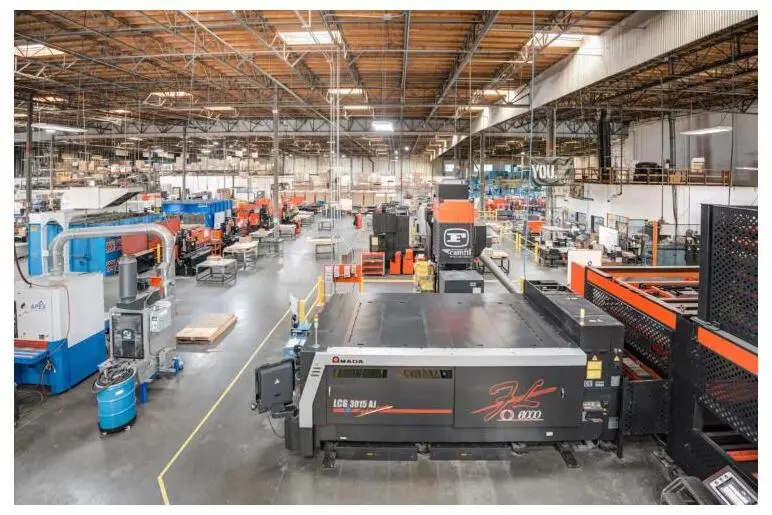
Integration scope. A partner that handles fabrication but outsources finishing or assembly reintroduces handoff delays and quality ambiguity. Roughly 70–80% of total product cost is committed during design. Early integration between engineering and manufacturing protects that cost.
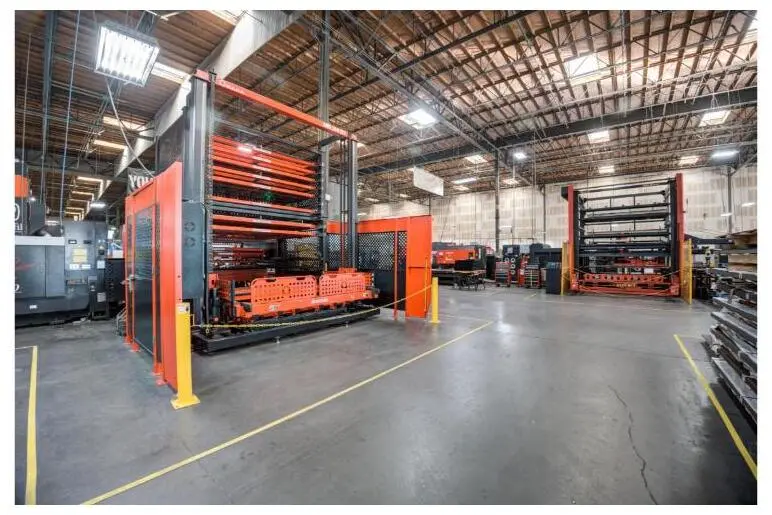
Quality and compliance. ISO 9001 paired with industry-specific standards such as AS9100D forms the baseline expectation for any contract manufacturer evaluated in 2026. Certifications should cover the actual production processes in scope, not only the facility.
Scalability and flexibility. The partner should support changing volumes, mixed SKUs and evolving bills of materials without high minimums or lengthy re-onboarding. Production cells that adjust to demand protect launch schedules and inventory plans.
Supply-chain simplicity. Fewer vendors mean fewer purchase orders, fewer quality disputes and faster resolution when issues arise. One accountable partner creates a simpler structure than a fragmented vendor base.
Total value. Total landed cost, including per-part price, tooling, freight, rejects, rework and late deliveries, often drives precision fabrication outcomes more than unit price. A lower unit price from a less capable vendor frequently generates higher total program cost. Understanding this total-value calculation becomes especially important when choosing between job shops, large global CMs and mid-volume specialists.
Mid-Volume Contract Manufacturing Services: Why the Middle Ground Matters
Job shops operate as transactional suppliers. They produce parts to print but often lack the engineering depth for design-for-manufacturability collaboration and cannot manage wiring, electromechanical assembly or high-level finishing. Job shop manufacturing excels when volumes remain low and product mix changes frequently. It also forces customers to manage a fragmented supply chain across multiple vendors for a single finished product.
Large and global contract manufacturers present the opposite challenge. They require high minimum volumes, impose long onboarding processes and struggle with high-mix programs that carry evolving BOMs. Their infrastructure is optimized for rigid, high-volume production, not the prototype-to-mid-volume scaling that many technology-driven programs demand.
Fabcon occupies the critical middle ground between these two models. Agile production cells adapt to changing volumes and mixed SKUs. Early DFM collaboration between Fabcon's engineering and quoting teams reduces rework before production begins. Given how early design decisions lock in cost, aligning design to the expected volume range at the concept stage prevents expensive late-stage changes.
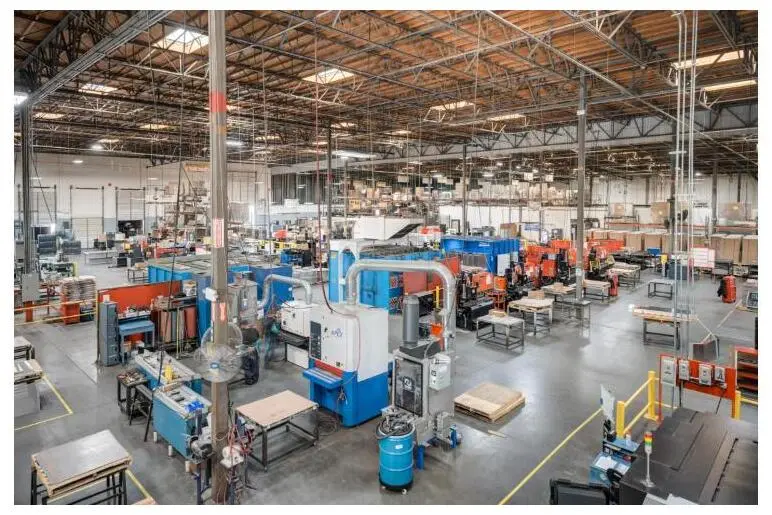
Explore how Fabcon's mid-volume model supports prototype-to-production scaling for the program.
Contract Manufacturing for Data-Center Infrastructure
Data-center programs impose fabrication requirements that general structural work cannot satisfy. Server rack frames holding high-value server equipment cannot have dimensional variation that prevents proper rack mounting, and cooling skid frames must hit bolt pattern locations within specifications that field crews cannot compensate for.
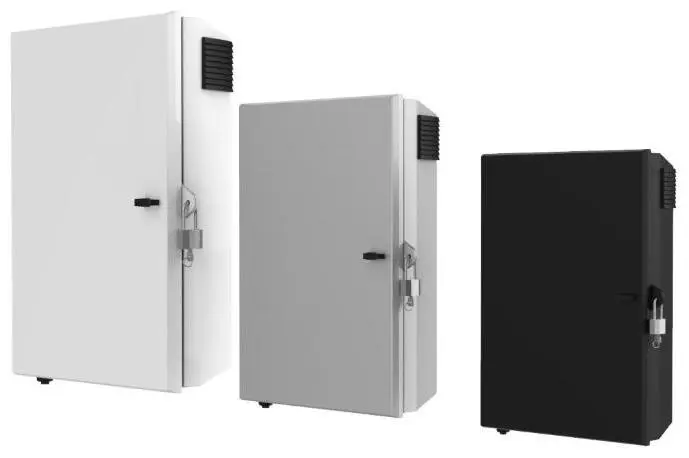
Data-center construction is projected to grow from $241 billion in 2024 to $456 billion by 2030, which generates sustained demand for rack assemblies, structural mezzanines, cooling skids and cable management systems. This growth occurs in a procurement environment where general contractors in data-center construction carry penalty clauses for delays, which elevates on-time delivery performance to the same priority level as dimensional accuracy.
Fabcon's one-roof capabilities, including fabrication, CNC machining, finishing and light electromechanical assembly, reduce the handoffs that introduce dimensional variation and schedule risk. Modular, rack-mounted enclosures and structural systems are produced under a single quality system with full traceability. This structure supports the inspection and documentation expectations of hyperscale and edge deployments.
Regulated Programs: FDA, ITAR and Aerospace Requirements
Regulated industries require more than manufacturing capability. They require documented quality systems, full traceability and certifications whose scope matches the actual processes in production.
For aerospace and defense programs, AS9100 and NADCAP certifications are non-negotiable for aerospace and defense components, while ISO 9001 remains the base QMS framework. ITAR registration is required for any program involving defense articles or technical data subject to U.S. export control.
Fabcon holds ISO 9001:2015 and AS9100D certifications and is ITAR registered. Its integrated quality system spans every stage of the build, including fabrication, finishing and assembly. This structure maintains traceability without relying on external vendors to uphold the same standards. UL and CSA compliance further supports programs with product safety requirements.
Qualification Checklist for Evaluating U.S. Contract Manufacturing Partners
This checklist supports structured evaluation of potential partners for precision sheet metal and light assembly programs.
- Certifications: ISO 9001:2015 at minimum, AS9100D for aerospace, ITAR registration for defense, ISO 13485 for medical devices
- In-scope processes: Certifications that cover fabrication, finishing and assembly, not only the facility
- Vertical integration: Fabrication, CNC machining, finishing and electromechanical assembly performed under one roof
- DFM capability: Engineering team that reviews drawings before production and provides documented feedback
- Volume flexibility: Production cells that scale from prototype through mid-volume without high minimums
- Traceability: Lot-level traceability from material receipt through finished goods
- On-time delivery: Documented OTD performance and a single point of accountability
- U.S. manufacturing footprint: Domestic production that supports supply-chain reliability and Buy American provisions
- Inspection and documentation: First-article inspection, material certifications and quality records aligned to program requirements
Frequently Asked Questions
Reshoring to U.S. Contract Manufacturers for Mid-Volume Programs
Reshoring decisions in 2025–2026 center on supply-chain reliability, regulatory compliance and total cost, not unit price alone. Section 232 tariff increases have reduced import competitiveness for steel and aluminum, which pushes U.S. OEMs toward domestic supply chains. Buy American provisions in infrastructure legislation further favor domestic fabrication. A U.S.-based partner with vertically integrated capabilities reduces exposure to international logistics delays, currency risk and export control complications, particularly for ITAR-controlled programs.
DFM Collaboration and Total Program Cost
Design-for-manufacturability review identifies tolerance, geometry and material decisions that would generate rework, scrap or production delays before tooling or production. Rationalizing tolerances, tightening only functionally critical dimensions and relaxing the rest, can reduce fabrication cost on tolerance-dense designs. Early DFM also aligns the design to the manufacturer's actual equipment and tooling. This alignment prevents engineering change orders that compress launch timelines and increase program cost.
Job Shops vs Vertically Integrated Mid-Volume Manufacturers
A job shop produces custom parts in small quantities using general-purpose equipment. It excels at low-volume, high-mix work but lacks the engineering depth, finishing capability and assembly infrastructure required for complex system builds. A vertically integrated mid-volume contract manufacturer performs fabrication, finishing and electromechanical assembly under one quality system, supports prototype-to-production scaling and provides early engineering collaboration. The practical result for the buyer is fewer vendors, fewer purchase orders, clearer accountability and a shorter path from design to finished, compliant product.
Required Certifications for Aerospace, Defense and Data-Center Programs
ISO 9001:2015 serves as the baseline quality management system for any serious contract manufacturing partner. AS9100D is required for aerospace and defense programs. ITAR registration is required for programs involving defense articles or technical data subject to U.S. export control. UL and CSA compliance support programs with product safety requirements. For data-center programs, certified welding and documented quality systems with full traceability represent standard expectations. Buyers should confirm that each certification's scope covers the specific production processes in the program, not only the facility at a general level.
One-PO Accountability and Supply-Chain Risk
When fabrication, finishing and assembly are split across multiple vendors, each handoff introduces schedule risk, quality ambiguity and coordination overhead. A delay or defect at one vendor propagates through the chain, and accountability for the root cause often becomes disputed. A single accountable partner performing all operations under one roof removes inter-vendor handoffs, compresses the production timeline and provides one point of contact for quality, schedule and change management. For programs with penalty clauses for delays, common in data-center and infrastructure construction, this structural simplicity directly reduces program risk.
Next Steps for Assessing Needs and Engaging a U.S. Partner
Internal preparation strengthens every engagement with a contract manufacturing partner. Operations and supply-chain leaders can begin with a focused needs assessment. Document the current vendor count for fabrication, finishing and assembly. Identify where handoffs generate delays or quality disputes. Confirm the certification requirements for each target market, including aerospace, medical, data-center or energy, and verify that current suppliers hold the correct certifications with the correct scope.
Gather program data before the first conversation, including drawings, material specifications, tolerance requirements, anticipated volume ranges and target launch timelines. A complete RFQ package shortens the quoting cycle and enables a more accurate assessment of fit. Separating critical from conventional dimensions in the drawing package, with functional interfaces and mating features tolerance-controlled deliberately, reduces first-article surprises and supports faster quoting.
Site visits remain a reliable way to assess a manufacturer's actual capabilities, quality culture and production environment. Reviewing the facility, quality documentation and production cells in person provides information that no RFQ response can match.
Fabcon supports customers from initial consultation through prototype and into production, with engineering, fabrication, finishing and assembly managed under one roof at two U.S. facilities. The combination of 45-plus years of precision fabrication experience, 220,000 square feet of vertically integrated capacity and ISO 9001:2015, AS9100D and ITAR credentials positions Fabcon as an accountable mid-volume partner that bridges the gap between job shops and large global contract manufacturers.