
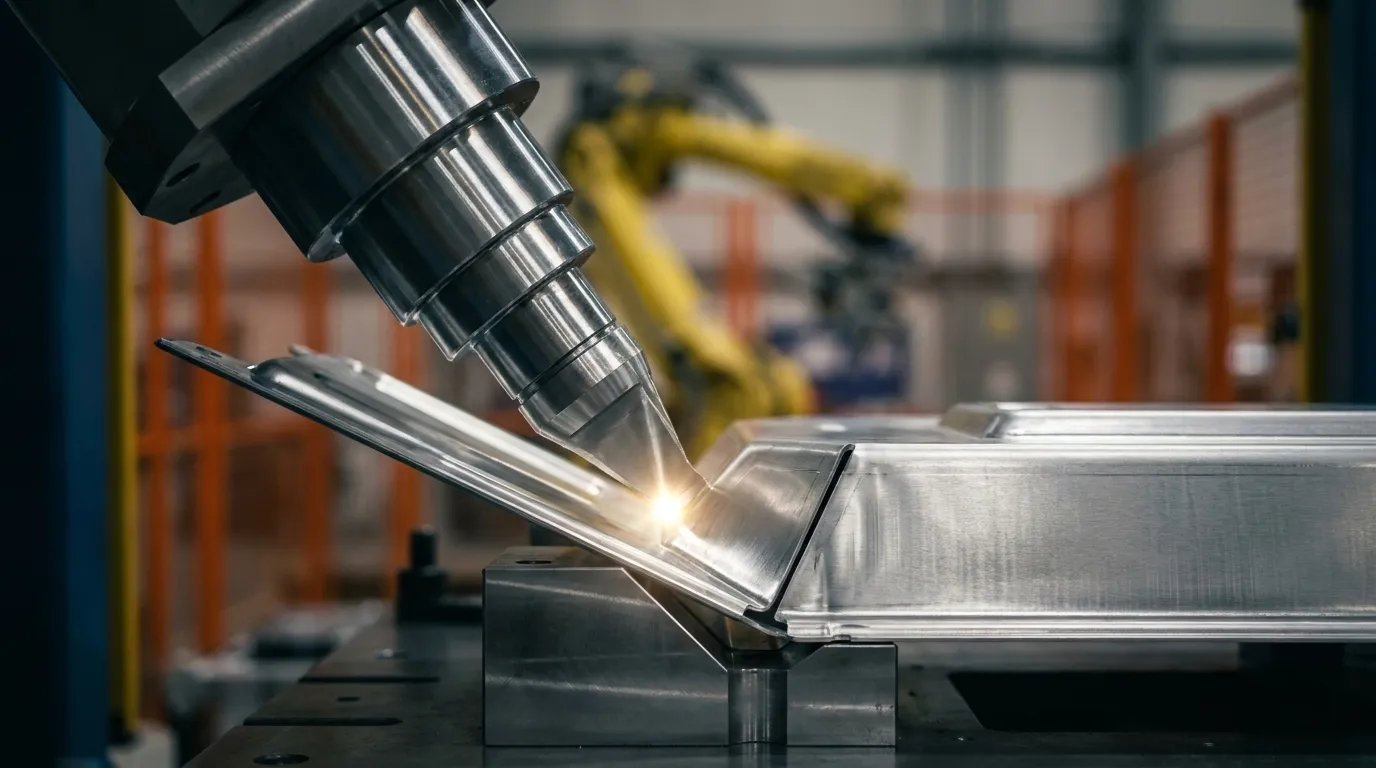
Key Takeaways for Complex Stamped Assemblies
- Selecting a U.S. precision metal stamping partner for complex assemblies consolidates stamping, finishing and assembly under one accountable roof, which reduces handoffs and compresses timelines.
- Buyers can evaluate partners across five dimensions: certifications and traceability, technical capability, DFM collaboration depth, mid-volume scalability and domestic supply-chain risk mitigation.
- Certifications such as ISO 9001:2015, AS9100D, ITAR registration and ISO 13485:2016 act as critical filters for regulated aerospace, defense, medical and related programs.
- Technical capability across die strategy, in-die operations and value-added assembly, combined with early DFM collaboration, supports repeatable quality and scalable production for complex assemblies.
- Discuss complex assembly sourcing with Fabcon to explore domestic supply-chain consolidation and integrated capabilities for the next program.
Defining Complex Assemblies in Precision Metal Stamping
A complex assembly in precision metal stamping combines tight-tolerance formed metal components with coordinated downstream operations such as finishing, hardware insertion, welding or electromechanical integration under one quality system. Complexity increases when part geometry requires multi-stage progressive, transfer or compound die strategies, when regulated industries demand full traceability or when the finished unit includes wiring, connectors or mechanical subassemblies.
Reshoring and supply-chain localization, combined with infrastructure investment and aerospace and defense demand, are driving more orders for fabricated metal components that require precision capabilities and assembly in the United States. EV platforms also expand demand for specialized stamped components such as battery enclosures, thermal interfaces and powertrain shielding, with electrification shifting procurement toward complex, tight-tolerance geometries.
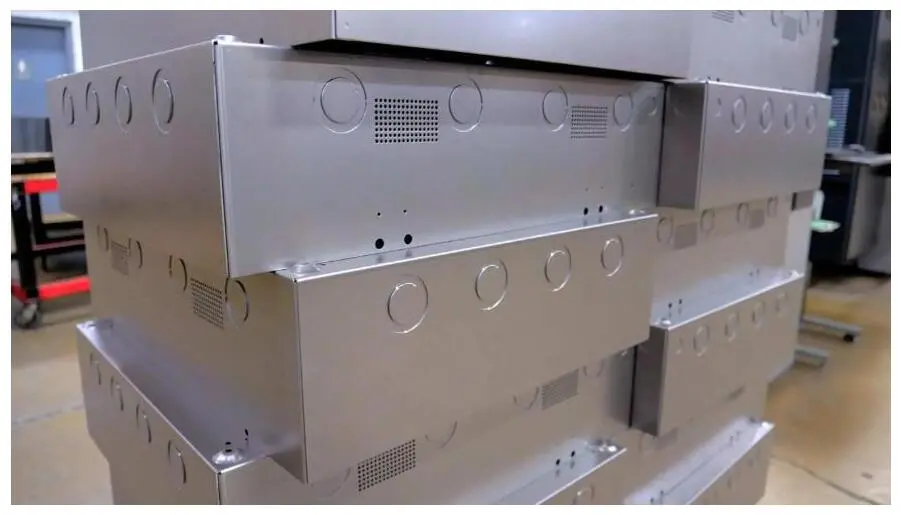
Buyer priorities concentrate on three forces. Reshoring supports supply-chain resilience. Supplier consolidation reduces vendor count and administrative overhead. Rising product complexity outpaces what low-complexity job shops can support. Certifications serve as the first filter that separates capable partners from the rest.
Certifications and Traceability for Regulated Assemblies
Certification requirements vary by end market, but several standards appear consistently across regulated programs.
- ISO 9001:2015 establishes the baseline quality management system for any precision stamping partner. It governs process control, document management and corrective action across fabrication, finishing and assembly.
- AS9100D adds more than 100 requirements beyond ISO 9001, focused on safety, reliability, traceability, risk management, configuration control and product lifecycle oversight for aerospace and defense applications.
- ITAR registration is required for defense-related components. ITAR compliance applies to defense-related aerospace components produced via metal stamping, particularly when parts fall under military or export-controlled programs.
- ISO 13485:2016 governs medical device quality management. The FDA Quality Management System Regulation, effective February 2, 2026, incorporates ISO 13485:2016 by reference and raises expectations for batch traceability, validated processes and documented inspection records.
Beyond certifications, buyers can confirm that partners support first article inspection and statistical process control. Aerospace metal stamping programs require full material traceability, mill certifications and compliance with aerospace material specifications. Medical programs require full batch traceability from raw material coil through finished part, along with validated processes and documented inspection records.

Fabcon holds ISO 9001:2015 and AS9100D certifications and maintains ITAR registration, which supports the traceability infrastructure that aerospace, defense, energy and data-center programs require. These quality credentials establish accountability, but they do not confirm that a partner can execute the die strategies and integrated assembly operations that complex geometries demand.
Assessing Technical Capability for Integrated Assemblies
Technical capability for complex assemblies spans die strategy, achievable tolerances and the range of value-added operations a partner can execute without outsourcing.
Die strategy selection depends on part geometry and volume requirements, and it drives both part quality and program economics. Progressive die stamping performs sequential operations on a continuous metal strip, which suits high-volume production of parts that can remain attached through multiple forming stages. When part geometry requires deep draws or complex 3D shapes that cannot stay on a strip, transfer stamping moves individual parts between stations using mechanical fingers or rails. For flat parts where dimensional accuracy matters more than volume, compound stamping executes multiple operations in a single stroke to achieve superior flatness and hole-to-edge precision.
In-die operations extend capability further. In-die tapping places threads in precise relationship to part geometry from the first hit. In-die assembly keeps forming and assembly under the same tooling and controlled conditions, which reduces variation from manual secondary operations.
Value-added assembly capability separates integrated partners from build-to-print shops. Partners that combine stamping with certified welding, hardware insertion, powder coating and light electromechanical assembly such as wiring, connector integration and component mounting remove inter-facility transportation and quality variation that fragmented models create.
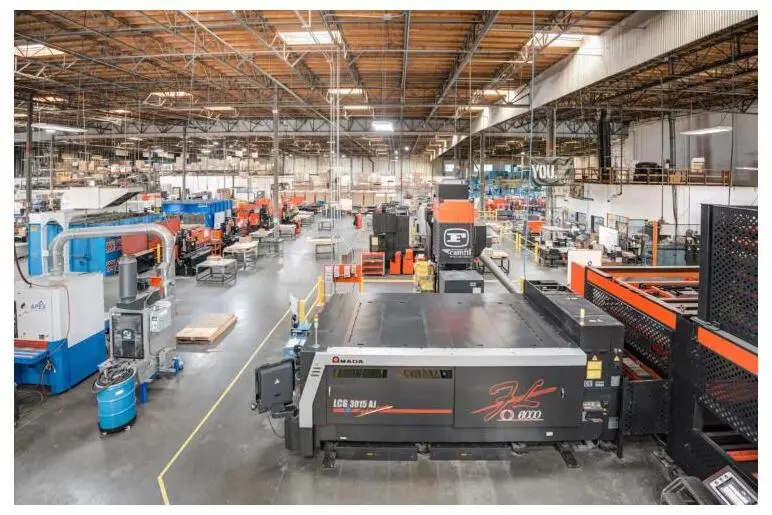
Fabcon operates vertically integrated facilities that combine precision sheet metal fabrication, CNC machining, certified welding, in-house finishing and light electromechanical assembly under one quality system. This structure delivers finished or near-finished assemblies on a single purchase order. Strong technical capability creates the most value when applied early in the design process.
Evaluating DFM Collaboration Depth on Stamping Programs
Design-for-manufacturability collaboration influences whether a program launches on schedule or accumulates rework cycles before the first production run.
Precision metal stamping companies benefit when DFM conversations begin early in custom projects, because features that appear simple on a print can present significant challenges during forming or punching. Buyers can share drawings, models, function statements, assembly context, mating parts and performance requirements so the stamping partner can recommend material types, die designs and secondary processes aligned with functional needs.
Capable partners apply several core DFM principles.
- Set inside bend radii at least equal to material thickness to reduce cracking and springback variation.
- Size hole diameters at least equal to material thickness and space holes at least twice material thickness from edges to prevent punch breakage and edge bulging.
- Apply tight tolerances only to critical locating, connector and press-fit features rather than every dimension, because broad tight tolerancing increases die cost significantly.
- Lock material and thickness early, because later changes invalidate prior DFM assumptions.
- Specify burr direction on drawings when a specific face must be burr-free for mating or grounding surfaces.
Prototyping and validation testing before full production, combined with robust quality control systems and complete documentation, support repeatability in aerospace metal stamping. Fabcon engineering and quoting teams engage with customer technical teams before production begins, review drawings, tolerances and materials and then build manufacturing routers aligned with the production floor. Prototype-to-production alignment connects DFM collaboration to scalable execution.
Confirming Mid-Volume Scalability Without Large-CM Rigidity
Mid-volume, high-mix programs sit between two extremes that often fail them. Low-complexity job shops lack the engineering depth and integrated assembly capability to manage complex system builds. Large contract manufacturers impose high minimum volumes, long onboarding timelines and rigid production lines that cannot accommodate evolving bills of materials.
For mid-volume or high-mix stamping programs, combination or transfer dies often provide a practical balance of flexibility and repeatability compared with high-volume progressive dies. These strategies allow sequential operations without the full cost of dedicated high-volume tooling.
Agile production cells provide a structural answer to this challenge. These flexible manufacturing configurations adapt to changing volumes, mixed SKUs and evolving bills of materials. Partners operating agile cells can scale from prototype quantities through mid-volume production without the overhead rigidity that makes large contract manufacturers unsuitable for innovation-led programs.
Fabcon production cells are purpose-built for mid-volume programs and support changes in volume, SKU mix and product configuration without the constraints of rigid high-volume lines. Scalable capacity within a single domestic facility also reduces supply-chain risk.
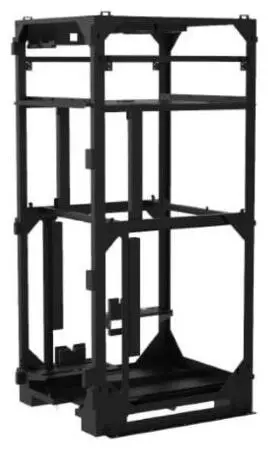
Reducing U.S. Supply-Chain Risk With Integrated Partners
Global supply chain disruptions, U.S. tariffs on imported steel and aluminum under Section 232 and geopolitical uncertainties have encouraged manufacturers to source components domestically or from North American partners. These forces strengthen order books for U.S. metal processors and fabricators.
A domestic, vertically integrated partner reduces risk across several dimensions. Fragmented supply chains that separate stamping, welding, coating and assembly across multiple vendors create hidden costs such as inter-facility transportation, double handling, excess work-in-process inventory, longer cumulative lead times, greater quality variation and higher administrative expenses.
Multi-process suppliers resolve cross-process defects faster than fragmented suppliers because they control all processes internally and avoid inter-supplier finger-pointing on issues such as substrate density versus plating bath contamination. Keeping fabrication, machining and finishing under one roof in end-to-end models reduces tolerance stack-up, improves traceability and strengthens quality control compared with traditional fragmented supplier approaches.
Fabcon operates 220,000 square feet of manufacturing space across two Southern California facilities, which provides a domestic footprint that supports tariff resilience, shorter lead times and real-time program visibility without the coordination overhead of a multi-vendor model. Discuss how this consolidated model can support an upcoming complex assembly program.
Frequently Asked Questions
What certifications should a precision metal stamping partner hold for aerospace and defense programs?
Aerospace and defense programs require partners certified to AS9100D, which extends ISO 9001:2015 with requirements for safety, reliability, traceability, risk management and configuration control specific to aviation and defense applications. ITAR registration is mandatory when components fall under export-control regulations. Partners should also support first article inspection, statistical process control and full material traceability from raw stock through finished assembly. Audit history, certification scope across facilities and demonstrated compliance with customer-specific requirements further strengthen program confidence.
How does early DFM collaboration reduce program risk on complex stamping programs?
Early DFM collaboration allows stamping engineers to identify forming challenges, tolerance conflicts and material incompatibilities before tooling is cut. Changes made at the design stage cost a fraction of changes made after tooling is built. A capable partner reviews geometry, die strategy, bend radii, hole placement and material selection together with the customer engineering team, then documents agreed changes before production begins. This process reduces rework, compresses the prototype-to-production timeline and supports consistent performance at scale. Fabcon engineering and quoting teams engage with customer technical teams at the start of every program to align on manufacturability before production begins.
What are the real trade-offs of consolidating stamping, finishing and assembly under one partner?
Consolidation reduces inter-facility transportation, double handling, work-in-process inventory, quality variation and administrative overhead. It also centralizes accountability so one partner owns quality across the entire build rather than multiple vendors disputing responsibility when defects appear. The primary risk of consolidation is dependency on a single supplier, which buyers can mitigate by selecting a partner with demonstrated capacity, a robust quality system and a record of on-time delivery across program types. Governance structures, performance management processes and the partner ability to scale should be evaluated before committing volume. Fabcon operates a vertically integrated model designed to serve as a primary partner for mid-volume, high-mix programs where consolidated accountability reduces program risk.
How do agile production cells differ from the rigid lines used by large contract manufacturers?
Large contract manufacturers typically build rigid production lines optimized for a single high-volume product configuration. These lines require high minimum order quantities, long setup times for changeovers and extended onboarding processes that fit poorly with programs that have evolving bills of materials or mixed SKUs. Agile production cells are flexible manufacturing configurations that can be reconfigured for different part families, volume levels and product variants without the overhead of a dedicated high-volume line. They allow a partner to support a program from prototype quantities through mid-volume production while remaining responsive to engineering changes and demand shifts. Fabcon production cells follow this model and support high-mix programs across data-center, medical, aerospace, energy-storage and EV-infrastructure sectors.
Next Steps for Building a Defensible RFQ Shortlist
A defensible shortlist for a complex assembly stamping program applies five evaluation dimensions in sequence: certifications and traceability, technical capability across die strategy and integrated assembly, DFM collaboration depth, mid-volume scalability without large contract manufacturer rigidity and domestic supply-chain risk mitigation.
Partners that satisfy all five dimensions share a common profile. They hold AS9100D and ISO 9001:2015 certifications with ITAR registration. They operate progressive, transfer and compound die capabilities alongside in-house finishing and light electromechanical assembly. Their engineering teams engage before tooling is cut. Their production cells scale without high minimums. Their domestic footprint removes tariff exposure and reduces lead-time variability compared with offshore or multi-vendor models.
Fabcon has operated as a vertically integrated U.S. precision metal fabrication and assembly partner since 1977 and combines 220,000 square feet of manufacturing capacity with in-house design, fabrication, finishing and electromechanical assembly under one quality system. This structure creates a single accountable partner for programs that require more than a build-to-print job shop and more agility than a large contract manufacturer can provide.
Request a Fabcon capabilities discussion and quote for the next complex assembly program.