
Last updated: July 28, 2026
Key Takeaways for Rapid Metal Prototype Programs
- Fragmented supply chains create costly delays, quality gaps and coordination overhead when rapid metal prototypes move between separate machining, finishing and assembly vendors.
- Vertically integrated U.S. partners consolidate CNC machining, sheet metal fabrication, finishing and light electromechanical assembly under one roof and one quality system, which reduces handoffs and preserves institutional knowledge.
- Early DFM collaboration with an integrated partner lowers total lifecycle cost by catching manufacturability issues before production begins and eliminating late-stage redesigns.
- Buyers should verify ISO 9001:2015, AS9100D, ITAR registration, in-house metrology and documented prototype-to-production continuity before selecting a precision fabrication partner.
- For programs that require integrated CNC machining, precision sheet metal fabrication, finishing and light electromechanical assembly under a single accountable U.S. partner, contact Fabcon to start the evaluation process.
Buyer Roles This Guide Supports
Three buyer profiles encounter this decision most often, each with distinct pain points.
Senior Mechanical Engineers and Directors of Engineering need a partner that engages early on design for manufacturability, maintains tight tolerances across fabrication and assembly and carries institutional knowledge from prototype into production. Their core risk is a design-to-manufacturing disconnect that forces rework late in the program.
Strategic Sourcing Managers and Procurement Directors need to reduce vendor count, control total cost of ownership and maintain on-time delivery across complex programs. Their core risk is a fragmented supplier base that multiplies coordination overhead and creates accountability gaps.
NPI Program Leads and VPs of Operations need consistent execution, scalable production cells and a single point of contact that owns the build from first article through volume ramp. Their core risk is handoff delays and inconsistent quality when parts move between vendors.
These risks share a common root cause: supply chain fragmentation.
The Problem: Fragmented Supply Chains for Rapid Metal Prototypes
Most rapid metal prototype programs begin with a machining vendor, then route parts to a separate finishing shop, then to a light assembly house. Each handoff introduces a new failure point. When delays occur at one vendor, the entire production flow stalls because downstream operations cannot begin.
These delays create communication gaps as vendors work from outdated information, which produces errors and rework. As parts move between suppliers, quality inconsistencies accumulate because each facility applies different standards and inspection criteria.
Every supplier transition forces a new manufacturer to relearn engineering priorities, product intent, quality expectations, revision history and assembly requirements. That relearning causes lost institutional knowledge and a higher likelihood of production errors.
Supplier fragmentation, tooling transitions, revision-control issues and supply chain coordination complexity are major causes of scale-up delays and higher overall program costs during prototype-to-production transitions.
Compliance demands compound the problem. Compliance planning for standards such as ISO quality requirements, CE marking, UL safety testing and AS9100 must begin early because certification lead times are long and influence both design and manufacturing schedules. A fragmented vendor network rarely owns that compliance thread end to end.
The Integrated Answer: U.S. Precision Fabrication and Assembly Partners
Vertically integrated U.S. precision fabrication and assembly partners consolidate CNC machining, sheet metal fabrication, finishing and light electromechanical assembly under one roof, governed by a single quality management system. This model delivers end-to-end visibility, consistent quality control, faster decision-making, fewer handoffs and simplified coordination.
Consider a hypothetical infrastructure program: an NPI team develops a ruggedized power distribution enclosure for an energy storage deployment. The enclosure requires precision sheet metal fabrication, CNC-machined mounting features, powder coat finishing and light electromechanical assembly with wiring integration.
Under a fragmented model, that program touches four or more vendors, each with its own queue, quality system and revision-control process. Under an integrated model, engineering collaboration begins before drawings are finalized, fabrication and machining run in the same facility, finishing is scheduled internally and assembly is completed before the unit ships. One PO. One quality record. One accountable partner.
Prototypes built using the same equipment and processes as production parts enable a smoother, faster transition from design validation to production readiness. Programs avoid delays from re-quoting with new vendors, redesigning parts for different processes or revalidating quality standards.
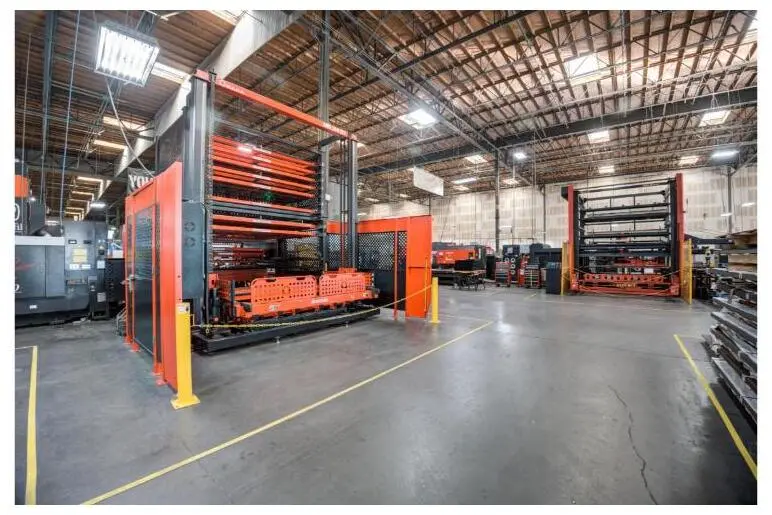
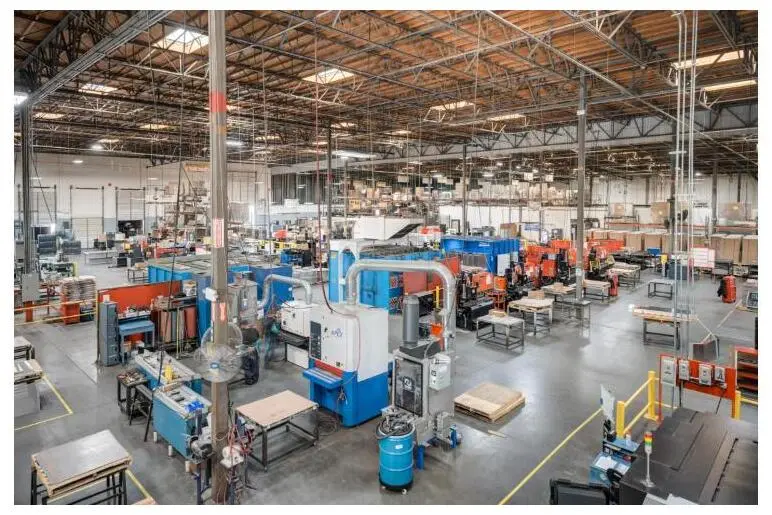
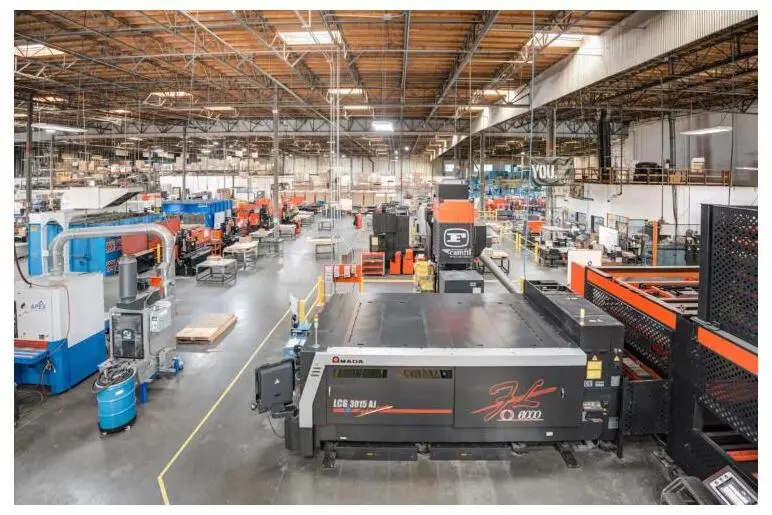
Fabcon operates this model across 220,000 square feet of vertically integrated U.S. manufacturing space, spanning in-house CNC machining, precision sheet metal fabrication, finishing and light electromechanical assembly, supported by ISO 9001:2015 and AS9100D certified quality systems.
Evidence Signals When Screening Partners
Buyers should confirm specific evidence signals before engaging any provider. These signals show whether a partner can support complex, multi-step builds.
- ISO 9001:2015 certification with a documented quality management system covering the full build scope
- AS9100D certification for programs in aerospace, defense or other regulated sectors requiring full traceability
- ITAR registration where program security requirements apply
- In-house metrology and inspection capability, not outsourced to a third party
- Revision-controlled drawings and BOMs with material certifications and first article inspection documentation
- Demonstrated prototype-to-production continuity on programs of comparable complexity
- Single-source accountability for fabrication, finishing and assembly under one contract
Challenge/Solution: DFM and Engineering Alignment
The design phase determines a significant portion of a product’s total lifecycle cost, so early DFM collaboration offers strong cost control. When machining vendors operate in isolation, DFM feedback arrives late or not at all.
Integration enables early engineering and DFM collaboration, which reduces design revisions mid-production, scrap and material waste and unexpected tooling or process changes.
Integrated partners assign engineering and quoting teams to review drawings, tolerances and materials before production begins. This early review streamlines quoting because manufacturing engineers can validate feasibility upfront instead of discovering issues mid-production.
DFM-optimized designs reduce quoting time because engineers spend less time identifying and flagging problematic features. This efficiency requires earlier design sharing, which demands trust and clear IP protection agreements.
Challenge/Solution: Vendor Fragmentation vs Integrated Execution
Splitting laser cutting, forming, welding and finishing across multiple vendors increases total cost through added freight, rework, scheduling gaps and tolerance misalignment between facilities.
Consolidating an industrial equipment manufacturer’s multi-vendor supply chain into a single source reduced total costs and saved procurement teams significant time monthly, according to one VP of Operations. That consolidation worked because integrated partners remove the administrative overhead of managing multiple relationships.
Integrated partners issue one PO, one invoice and one quality record. One coordinated internal schedule removes gaps created by waiting in another vendor’s queue and keeps work moving without shipping time between operations. Buyers consolidating to a single partner accept concentration risk and should confirm that partner’s capacity and financial stability before committing high-volume programs.
Challenge/Solution: Quality and Compliance Control
Disconnected quoting systems, fragmented logistics workflows and separate quality processes increase validation overhead and quality inconsistencies during production scaling across multiple suppliers.
Mid-volume mechanical assembly typically demands 100% inspection for critical dimensions along with comprehensive documentation such as material certifications and first article inspection reports. These requirements create compliance burdens that speed-focused prototype CNC shops often fail to meet for downstream assembly integration.
Integrated manufacturers operate under a single quality management system with standardized inspection processes and in-house metrology tools. This structure ensures consistency from raw material to final assembly and reduces costly rework. Buyers must audit the integrated partner’s quality management system directly rather than relying on individual vendor certifications.
Challenge/Solution: Scaling from Prototype to Production
A working prototype proves a product can function but does not prove it can be manufactured reliably, repeatedly and profitably at required scale. Scaling requires redesigning for manufacturability rather than only for functionality.
Integrated manufacturing platforms reduce scale-up risk by maintaining centralized CAD history, revision tracking, DFM insights and supplier communication across the full product lifecycle. This continuity avoids reintroducing product context at each transition.
Integrated partners use flexible production cells that adapt to changing volumes, mixed SKUs and evolving bills of materials. Integrated partners optimized for mid-volume programs may not fit ultra-high-volume commodity production, where dedicated automation lines at large contract manufacturers offer different economics.
Challenge/Solution: Lead-Time Reliability
Complex CNC machined parts often require short lead times, while parts made from hard materials or with high precision requirements may require longer lead times. When those parts then route to external finishing and assembly vendors, each step adds queue time outside the program team’s control.
An integrated manufacturer controls internal capacity, equipment availability and labor allocation. This control allows OEMs to accelerate prototype development, reduce production cycle times and respond quickly to demand changes without external scheduling dependencies. Integrated partners carry fixed internal capacity, so buyers with sudden large-volume spikes should discuss capacity planning early.
Challenge/Solution: Total Cost of Ownership
A slightly cheaper supplier that offers inconsistent material properties or poor delivery performance ultimately costs more through scrap, delays and customer dissatisfaction than the initial unit price savings.
Vertically integrated partners amortize fixture design and CNC machining costs across the production run to avoid unexpected upfront bills for buyers transitioning from CNC prototype shops. Unit prices from integrated partners may appear higher than quotes from low-complexity job shops, but total program cost, including rework, freight, coordination overhead and compliance remediation, typically favors consolidation.
Provider Type Comparison for Rapid Metal Prototypes
Three provider types dominate the market for rapid metal prototypes and CNC machining in the U.S., each with distinct strengths and limitations.
Automated online platforms prioritize speed for simple, low-complexity parts. Their quoting engines and distributed networks deliver fast turnaround on standard geometries. Engineering support is limited, DFM collaboration is minimal and assembly integration typically sits outside their scope. Compliance maturity varies by network partner and is difficult to audit centrally. These platforms suit buyers who need fast, simple parts and manage their own integration downstream.
Regional job shops offer hands-on relationships and competitive pricing for build-to-print work. Most stop at sheet metal or basic machining and lack in-house finishing, assembly or electromechanical integration. Engineering depth varies widely. Compliance certifications are inconsistent. These shops suit buyers with simple, well-defined parts who manage their own supply chain coordination.
Large global contract manufacturers offer scale and infrastructure but require high minimum volumes, long onboarding processes and rigid program structures. They suit high-volume commodity production but create friction for mid-volume, high-mix programs with evolving bills of materials. Agility and responsiveness are limited by organizational size.
Vertically integrated U.S. precision fabrication and assembly partners occupy the middle ground. They offer the engineering depth, process breadth and compliance maturity of large contract manufacturers with the responsiveness and flexibility that mid-volume infrastructure and technology programs require. Service scope spans the full build process described earlier. Volume fit covers prototype through mid-volume production. Compliance maturity is governed by a single, auditable quality management system.
Risks and Due Diligence for Integrated Partners
Integrated partners carry constraints that buyers should understand. Capacity at any single facility is finite. Onboarding a new integrated partner requires investment in drawing review, process alignment and quality system familiarization. Buyers transitioning from fragmented supply chains should plan for a structured onboarding period.
A practical due diligence checklist for evaluating integrated CNC machining and fabrication partners includes:
- Confirm the certifications mentioned earlier are current and cover the full scope of services
- Review change control and revision management processes for drawings and BOMs
- Request sample first article inspection reports and material certifications from comparable programs
- Assess in-house process breadth so machining, fabrication, finishing and assembly all occur on-site
- Evaluate DFM collaboration process and timing, and confirm engineering engagement occurs before tolerances are finalized
- Conduct a site visit to assess facility scale, equipment condition and production cell organization
- Confirm prototype-to-production continuity so the same facility and team support both phases
Frequently Asked Questions About Integrated CNC and Fabrication
What types of programs are best suited for a vertically integrated CNC machining and fabrication partner?
Programs that require multiple manufacturing steps, such as machining, fabrication, finishing and assembly, under a single quality system benefit most from vertical integration. Infrastructure and technology programs in sectors such as data centers, energy storage, aerospace, medical devices and telecommunications typically fit this profile. Programs with evolving bills of materials, mid-volume production requirements or strict compliance documentation needs are particularly well served by integrated partners.
How does DFM collaboration with an integrated partner differ from working with a standard job shop?
Standard job shops typically build to print without reviewing design intent or flagging manufacturability issues. Integrated partners engage engineering teams before production begins, reviewing tolerances, materials and geometry against actual process capability.
This approach reduces rework, improves cost efficiency and helps designs scale from prototype to production without redesign. Earlier DFM collaboration in the design cycle increases the impact on program cost and timeline.
What certifications should buyers require from a precision CNC machining and fabrication partner?
ISO 9001:2015 is the baseline quality management certification and should cover the full scope of services including machining, fabrication, finishing and assembly. AS9100D is required for aerospace and defense programs and indicates a higher level of traceability, change control and risk management.
ITAR registration is necessary for programs involving controlled defense-related technical data. Buyers in regulated sectors should also confirm UL and CSA compliance where applicable and request documentation of first article inspection processes.
How does an integrated partner support the transition from prototype to production?
Integrated partners use the same equipment, processes and quality systems for prototypes and production runs. This continuity eliminates the re-quoting, process revalidation and institutional knowledge loss that occur when buyers transfer programs to new vendors at scale.
Flexible production cells allow volume to increase without the high minimums or rigid onboarding requirements of large contract manufacturers. Engineering teams carry forward DFM insights, revision history and assembly knowledge from the first prototype through full production.
What is the realistic trade-off between cost and integration when consolidating to a single fabrication and assembly partner?
Unit prices from integrated partners may appear higher than quotes from low-complexity job shops or automated online platforms. Total program cost, however, includes freight between vendors, rework from tolerance misalignment, compliance remediation, coordination overhead and schedule delays caused by external vendor queues.
Buyers who evaluate total cost of ownership rather than unit price often find that consolidation reduces overall program spend while improving delivery reliability and quality consistency.
Neutral Evaluation Framework for CNC Machining Partners
Buyers evaluating U.S. CNC machining services for rapid metal prototypes can apply a simple framework to match partners with program requirements.
First, map the full build scope. List every process the program requires from first cut through final assembly. Identify which of those processes the candidate partner performs in-house versus outsources.
Second, assess compliance requirements. Confirm the partner’s certifications match the program’s regulatory obligations. Review documentation processes for traceability and change control.
Third, evaluate engineering depth. Determine whether the partner engages in DFM collaboration before production begins and whether that engagement is structured or informal.
Fourth, confirm prototype-to-production continuity. Verify that the same facility, team and quality system support both prototype and production phases.
Fifth, assess volume fit and flexibility. Confirm the partner’s production cell structure supports the program’s volume range without requiring high minimums or long onboarding periods.
For programs that require integrated CNC machining, precision sheet metal fabrication, finishing and light electromechanical assembly under a single accountable U.S. partner, with ISO 9001:2015 and AS9100D certified quality systems and prototype-to-production continuity, Fabcon’s integrated U.S. facilities position it as a primary candidate to evaluate first.