
Key Takeaways for Mid-Volume OEM Teams
- Build-to-print manufacturing keeps design control with the OEM, while build-to-spec shifts design responsibility to the supplier.
- The choice between build-to-print and build-to-spec depends on design maturity, IP strategy, and internal engineering capacity.
- Mid-volume U.S. OEMs in regulated industries face sourcing risk from fragmented vendor networks that create quality variation and schedule slip.
- Integrated U.S. precision-fabrication-and-assembly partners reduce handoffs and total cost of ownership by keeping fabrication, finishing and assembly under one quality system.
- Certifications such as ISO 9001:2015, AS9100D and ITAR registration provide measurable proof of process maturity and traceability for aerospace, defense and medical-device programs.
- Consolidate fabrication, finishing and assembly under one domestic partner to simplify the next mid-volume program.
Sourcing Pressure on U.S. Infrastructure and Technology OEMs
Mid-sized U.S. OEMs in data centers, energy storage, aerospace and defense, medical devices and EV infrastructure face a structural sourcing problem. Traditional supply chains that rely on multiple separate suppliers for fabrication, machining, finishing and assembly introduce vulnerabilities including communication gaps, quality inconsistencies and diluted accountability.
Directors of Engineering, Supply Chain and Operations encounter the same pattern. A fragmented vendor base forces management of separate purchase orders, separate quality standards and separate delivery schedules for a single finished product. Managing multiple fabrication vendors creates compounded delays between process handoffs, inconsistent tolerances across suppliers and higher administrative workload.
Each additional vendor multiplies coordination overhead and introduces new failure points. Delays at one supplier disrupt downstream schedules, while tolerance variation accumulates across the chain and increases inspection and rework.
Reshoring pressures and tightening regulatory requirements in aerospace, defense and medical device sectors add urgency. Programs that once tolerated offshore fragmentation now require domestic traceability, audit readiness and configuration control that distributed vendor networks struggle to provide.
The binary choice between low-complexity job shops and large global contract manufacturers leaves many mid-volume programs without a natural home. Job shops lack engineering depth and assembly capability. Large contract manufacturers impose high minimums, long onboarding cycles and rigid production structures that cannot accommodate evolving bills of materials.
Integrated U.S. Precision-Fabrication-and-Assembly Partners
This gap between job shops and large contract manufacturers creates space for a different model. An integrated U.S. precision-fabrication-and-assembly partner occupies that middle ground.
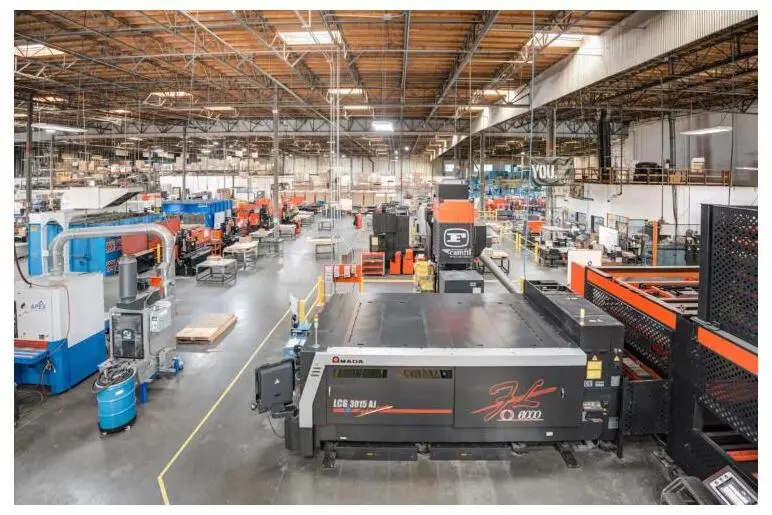
This category combines engineering collaboration, in-house fabrication, finishing and light electromechanical assembly under one quality management system. That structure supports programs from prototype through mid-volume production with fewer handoffs and clearer accountability.
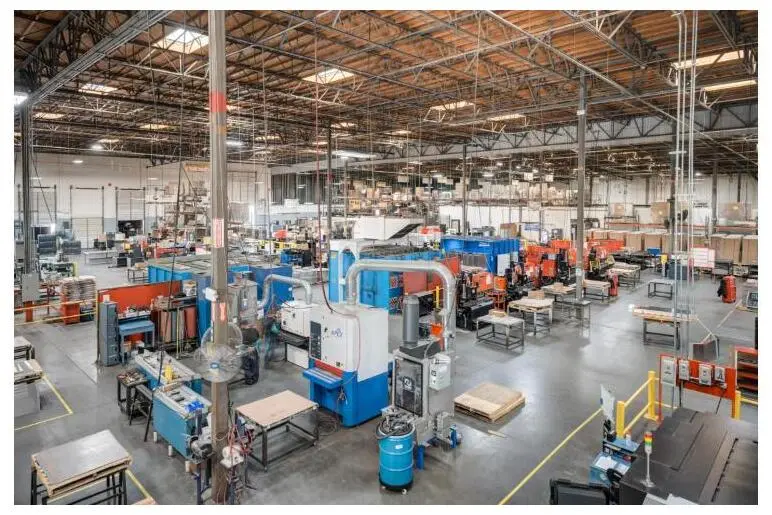
A large portion of a product cost is determined during its design phase, so early DFM collaboration with a manufacturing partner prevents costly late-stage revisions before tooling begins. An integrated partner applies that feedback in the same facility where parts will be produced, which closes the design-to-manufacturing gap.
Consider a hypothetical program. An energy storage OEM needs a weatherproof enclosure with integrated wiring harnesses and powder-coat finishing. Under a fragmented model, the OEM coordinates a sheet metal shop, a separate coating vendor and a wiring subcontractor across three purchase orders and three delivery schedules. Under an integrated model, fabrication, finishing and light electromechanical assembly move through one facility under one quality system, with a single point of accountability from first article through production release.
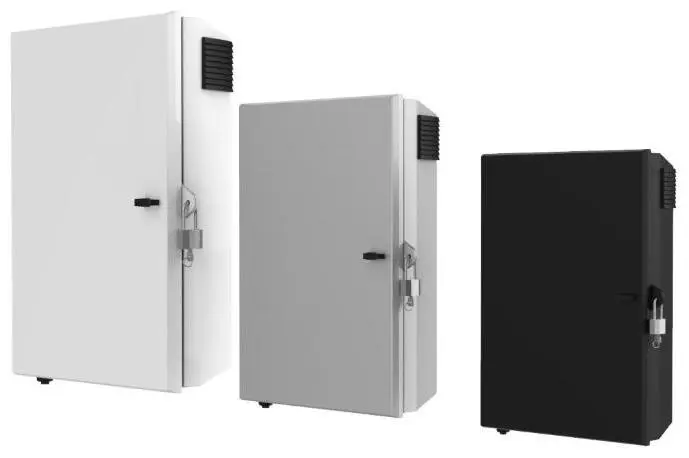
See how Fabcon handles fabrication, finishing and assembly under one roof for programs like this.
Certifications That Demonstrate Reliability
Certifications signal process maturity and risk control. ISO 9001:2015 establishes a documented quality management system with standardized inspection at every production stage. AS9100D extends those requirements to aerospace and defense programs and adds configuration control, traceability and risk management disciplines that regulated industries require.
Buyers in regulated industries should select build-to-print suppliers that hold certifications such as ISO 9001 or AS9100, especially for aerospace, defense or medical-device projects that require strict regulatory compliance. ITAR registration adds a further layer of protection for programs involving controlled technical data.
Fabcon holds ISO 9001:2015 and AS9100D certifications and maintains ITAR registration across its Southern California facilities. Full traceability from raw material to finished assembly supports audit readiness for procurement teams in medical device, aerospace and defense programs.
Certifications establish baseline capability, but OEM teams also evaluate how integrated partners handle common execution challenges. The following six challenge areas show where vendor selection directly affects program outcomes.
Challenge 1: Design-for-Manufacturability Alignment
A hybrid build-to-print plus DFM approach lets engineering input improve cost and efficiency while preserving the customer design intent. This approach suits programs that need controlled optimization rather than a full redesign. Problems arise when suppliers receive drawings without the ability to flag manufacturability issues before material is cut.
Evaluation criteria: confirm the partner engineering team reviews drawings before quoting, documents DFM recommendations in writing and routes changes through a formal approval process that preserves OEM design authority.
Challenge 2: Vendor Consolidation Versus Fragmentation
The fragmentation described earlier appears most clearly in multi-process parts. In traditional multi-vendor procurement, a single multi-process part often requires separate purchase orders covering laser cutting, structural welding, precision machining, inspection and coating. A delay at any single shop causes downstream vendors to lose scheduled windows and creates cascading schedule slippage.
Evaluation criteria: ask the partner to map every process step in-house versus subcontracted, identify which subcontracted steps introduce scheduling dependencies and confirm that a single program manager owns the full build sequence.
Challenge 3: Quality and Compliance Traceability
Quality issues are easier to contain and trace in a single-source setup because one fabricator owns the job from process planning through inspection checkpoints. Fragmented models allow each supplier to meet its individual specification while the final assembly still fails due to weak coordination across the full build sequence.
The ISO-certified quality system described earlier prevents defects and reduces costly rework that arises when quality standards vary between multiple vendors. A single set of procedures and in-house metrology keeps inspection consistent from raw material receipt through final assembly.
Evaluation criteria: request a sample quality data book, confirm the partner non-conformance and corrective action process and verify that traceability records cover raw material certifications through final assembly inspection.
Challenge 4: Scaling Flexibility From Prototype to Mid-Volume
Programs that begin at prototype quantities and ramp to mid-volume production expose the rigidity of both job shops and large contract manufacturers. Job shops lack the infrastructure to scale. Large contract manufacturers impose minimum order quantities and onboarding timelines that conflict with evolving BOMs common in technology-driven programs.
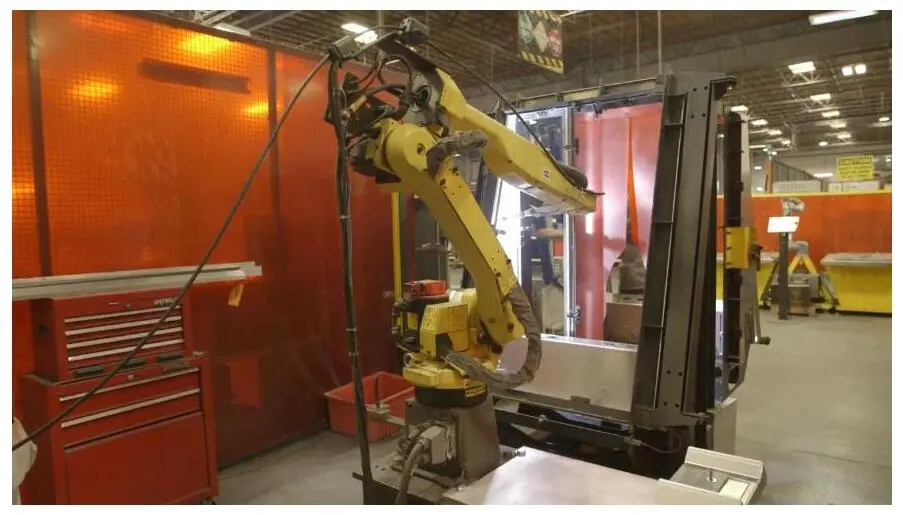
Evaluation criteria: ask the partner to describe how production cells are reconfigured for volume changes, confirm that the same quality system governs prototype and production builds and request references from programs that scaled from first article to mid-volume production.
Challenge 5: Lead-Time Pressure on Launches
Compressed launch timelines face risk from quoting lag, slow prototyping and supplier bottlenecks. Four primary variables drive lead time in metal fabrication: material availability, part complexity, finish requirements and order quantity. Each variable multiplies when separate vendors manage different steps.
Integrated partners control internal capacity, equipment and labor allocation. That control removes external scheduling dependencies and supports faster prototype development, shorter production cycle times and quicker response to demand changes.
Evaluation criteria: request a sample program timeline that maps quoting, first article and production release milestones, and confirm that finishing and assembly are scheduled internally rather than queued at external vendors.
Challenge 6: Total Cost of Ownership
Unit price does not equal total cost. Single-source fabrication reduces indirect costs such as coordination, expediting, incoming inspection, freight, repackaging, rework and schedule slip because the process is organized under one roof or one managed workflow.
A vertically integrated partner provides single-source accountability that reduces total cost of ownership by eliminating multiple supplier markups, streamlining logistics and improving quality control through unified standards.
Evaluation criteria: build a total cost model that includes freight between vendors, incoming inspection labor, rework rates, expediting fees and administrative overhead. Compare that model against a consolidated partner all-in program cost.
Compare Fabcon’s integrated model against the current total program cost.
Comparing Provider Types for Mid-Volume Programs
Three provider categories serve mid-volume OEM programs, and each presents distinct trade-offs.
Basic job shops handle straightforward sheet metal cutting, forming and welding. They offer competitive unit pricing on simple parts and short setup times for low-complexity work. Engineering support is limited or absent, finishing and assembly are typically subcontracted and compliance certifications are inconsistent. These vendors suit commodity parts with stable, mature drawings and no assembly requirements.
Mid-tier fabricators extend capabilities to include some finishing and hardware insertion. Certifications vary. DFM collaboration appears at some providers but often is not built into quoting. Volume flexibility is moderate. Geographic proximity to the OEM varies widely, which affects lead time reliability and audit access.
Large contract manufacturers offer broad process coverage and high-volume capacity. Build-to-print programs at large CMs feature predictable cost structures when prints are mature and stable. Onboarding timelines are long, minimum order quantities are high and program agility is limited. High-mix, evolving-BOM programs fit poorly with rigid production line structures.
Integrated U.S. precision-fabrication-and-assembly partners are purpose-built for mid-volume, high-mix programs. These partners support prototype-to-production continuity, DFM collaboration and domestic traceability without the overhead of a large CM.
Realistic Limits of the Integrated-Partner Model
The integrated model has practical limits. Capacity remains finite, and programs with very high annual volumes may exceed what a mid-sized integrated partner can absorb without affecting lead time commitments to existing customers.
Onboarding requires investment from both parties. Incomplete or ambiguous drawings cause fabricators to price in risk for unknowns and lead to assumptions that surface as expensive changes at first article. OEM teams must supply complete, revision-controlled documentation to capture the full benefit of an integrated partner DFM process.
Programs with extremely simple, commodity parts and no assembly requirements may not justify the onboarding effort. A basic job shop may provide a more efficient choice for those programs.
Due-Diligence Checklist for Integrated Partners
Before selecting an integrated fabrication-and-assembly partner, procurement and engineering teams should evaluate the following, moving from foundational capabilities to execution details.
- Process maturity: confirm which processes are performed in-house versus subcontracted and how subcontracted steps are managed within the quality system.
- Certifications: verify ISO 9001:2015, AS9100D and any vertical-specific registrations such as ITAR, UL or CSA relevant to the program.
- Change-control procedures: confirm that drawing revisions are routed through a documented approval process and that shop floor documentation is updated before production resumes.
- Sample program timelines: request a representative timeline from RFQ through first article and production release for a program of comparable complexity.
- References: speak with engineering and supply chain contacts at existing customers in the same vertical or with similar program complexity.
- Site evaluation: visit the facility to observe production cell organization, in-process inspection practices and finishing and assembly integration.
When the Integrated Model Fits Best
Build-to-print suits repeat OEM parts, approved drawings, replacement parts and controlled production runs where the goal is reliable manufacturing with consistent inspection. Build-to-spec suits new product development and early-stage projects where the part design is not finalized and supplier engineering input can improve cost, manufacturability, strength, assembly or lead time.
The integrated model delivers the most value when:
- The program spans prototype through mid-volume production and requires continuity across both stages.
- The finished product requires fabrication, finishing and light electromechanical assembly under a single quality system.
- The OEM operates in a regulated vertical such as aerospace, defense or medical devices and requires full traceability and audit readiness.
- The program involves a high-mix BOM or evolving design that cannot tolerate the rigidity of a large CM.
- Vendor fragmentation is driving schedule slippage, quality disputes or administrative overhead that affects program execution.
The integrated model is less appropriate when:
- The program consists of simple commodity parts with no assembly requirements and a stable, mature drawing set.
- Annual volumes are high enough to justify the onboarding investment and minimum order requirements of a large CM.
- The OEM internal engineering team has no capacity to support the DFM collaboration that the integrated model requires at program launch.
Frequently Asked Questions
Who owns the design and IP in a build-to-print engagement?
In a build-to-print engagement, the OEM retains full ownership of the design and intellectual property. The supplier role stays limited to production execution against the provided documentation. The supplier has no claim to the design and no authority to modify it without buyer approval. This structure suits programs with high IP sensitivity, mature drawings and a need for configuration control across multiple production runs or suppliers.
How does IP ownership work in a build-to-spec arrangement?
In a build-to-spec arrangement, IP ownership is negotiated or shared because the supplier contributes engineering work to produce the design. The contract terms govern how that IP is allocated. OEMs that want to retain full ownership of the resulting design must address this explicitly in the contract before development begins. Build-to-spec relationships also create higher switching costs because moving production to another supplier requires restarting the design and qualification process.
What is a hybrid DFM model and when does it apply?
A hybrid DFM model combines build-to-print execution with supplier-provided manufacturability recommendations. The OEM retains design authority and IP ownership. The supplier reviews the released drawing and provides process improvement recommendations that improve cost efficiency or production yield without changing the design intent. This model applies when the OEM has a released drawing but wants to benefit from supplier manufacturing knowledge before committing to tooling and production. It remains distinct from build-to-spec because the supplier does not assume design authority.
How should OEMs evaluate a fabrication partner for compliance-sensitive programs?
OEMs in aerospace, defense and medical device programs should verify that the partner holds the certifications relevant to the program, such as ISO 9001:2015, AS9100D or ITAR registration. Beyond certifications, the evaluation should confirm that the quality system covers every production stage in-house, that traceability records are maintained from raw material through final assembly and that the partner has a documented non-conformance and corrective action process. A site visit and reference check with existing customers in the same vertical provide a strong signal of compliance maturity.
Conclusion: Applying This Framework to the Next Program
The choice between build-to-print and build-to-spec rarely stays binary for mid-volume OEM programs. Design maturity, IP strategy, engineering resource availability and vertical compliance requirements each shape the right model. The structural problem often lies in vendor fragmentation and design-to-manufacturing disconnect when neither job shops nor large contract manufacturers can support the full program lifecycle.
An integrated U.S. precision-fabrication-and-assembly partner addresses that gap through the model described earlier. Fewer handoffs, shorter lead times, simplified procurement and a single point of accountability support programs from prototype through production.
Teams can apply the due-diligence checklist above to the next program and assess whether the current vendor structure adds cost and risk that an integrated partner could remove. Start the conversation about consolidating fabrication, finishing and assembly under one U.S. partner.