

Key Takeaways for Mid-Volume Contract Manufacturing
- Selecting an ill-suited contract manufacturer for mid-volume production creates vendor handoff delays, quality disputes and rigid scaling that compound across every phase.
- A structured seven-step evaluation framework helps engineering, supply chain and operations leaders find partners that handle metalwork, coating and light electromechanical build in one facility.
- The framework screens for capability gaps, inconsistent quality, scaling rigidity and hidden cost to identify contract manufacturers that support mid-volume production from prototype through repeatable, auditable runs.
- US-based ITAR-registered manufacturers with encrypted data controls and restricted facility access meet legal requirements for defense and aerospace programs, while vertical integration reduces total landed cost by cutting inter-vendor shipping, redundant margins and coordination overhead.
- Start a conversation with Fabcon’s engineering and quoting team to evaluate a certified, vertically integrated U.S. manufacturer against these seven criteria.
How Mid-Volume Contract Manufacturing Impacts Infrastructure OEMs
Mid-volume production for contract manufacturers sits between early-stage prototyping and full-scale mass production. The exact threshold shifts by industry. In aerospace or medical devices, a run of several hundred units may already constitute significant volume, while other sectors treat similar quantities as early-stage.
For infrastructure OEMs, this range represents the most operationally complex phase. Designs must be repeatable, quality systems must be auditable and the supply chain must absorb engineering changes without halting production. Fixed setup and NRE costs do not scale down effectively at these volumes, so partner selection directly shapes program economics. A structured evaluation framework addresses this challenge by filtering for partners that deliver the required capabilities without the hidden costs of vendor fragmentation.
Step 1: Define Volume, Mix and Integration Requirements
Clear program parameters create accurate quotes and smoother onboarding. Ambiguity at this stage produces mismatched expectations and friction.
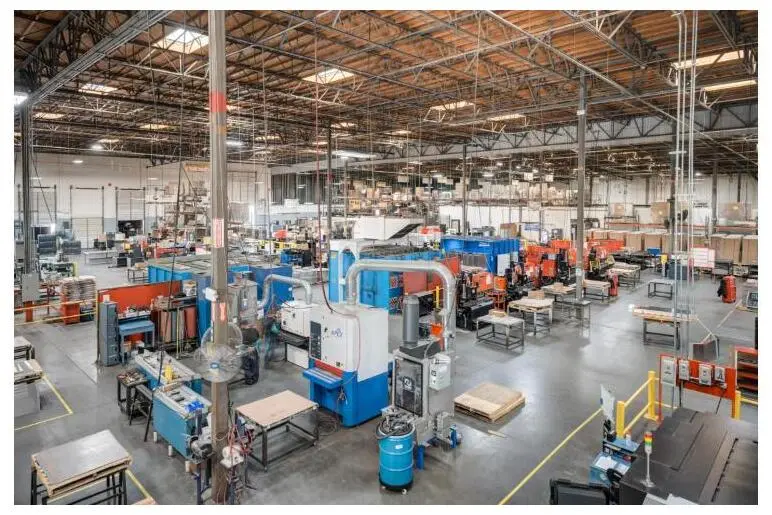
Document projected annual unit volumes and the range of SKUs or configurations in scope. These numbers determine which manufacturers can serve the program economically. Use those volume projections to identify which processes must occur in one facility and which can tolerate a handoff, because fragmentation costs scale with volume.
Confirm whether the program requires build-to-print execution, design collaboration or both. This decision sets expectations for engineering support. Align engineering, supply chain and operations on the definition of “production-ready” before supplier conversations begin so every stakeholder evaluates manufacturers against the same baseline.
The output of this step is a capability requirements matrix that guides every subsequent evaluation decision.
Step 2: Map Required Capabilities Across the Full Build
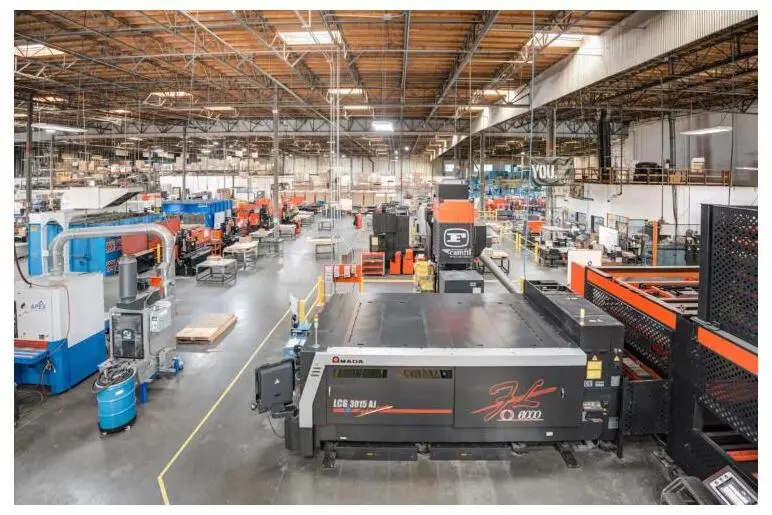
Infrastructure programs often need laser cutting, forming, welding, powder coating and wiring integration in a single finished assembly. Treating fabrication and assembly as separate jobs creates gaps. An enclosure may meet print specifications but prove difficult to wire or test once coating alters bracket tolerances and connector alignment.
- List every process required from raw material through finished goods, including coating and assembly steps.
- Flag processes that, if outsourced by the CM, would introduce a handoff risk.
- Ask manufacturers to name specific machines and quantities for each claimed process instead of accepting general capability statements.
- Request a portfolio of comparable parts or assemblies at similar volumes.
This capability map highlights where a CM can manage the full build and where external vendors would create quality and schedule exposure.
Step 3: Assess DFM Collaboration and Engineering Support
Vague assembly specifications force contract assembly teams to guess during production, which produces rework, scrap and nonconformance reports. Early design-for-manufacturability collaboration prevents these outcomes before they reach the floor.
- Confirm the CM’s engineering team reviews drawings and tolerances before quoting, not after award.
- Evaluate whether the CM identifies long-lead and single-source items during BOM review.
- Verify the CM checks tool access around brackets, panels and connectors and confirms wire paths before cutting metal.
- Assess whether DFM feedback is documented and traceable instead of informal and verbal.
The output of this step is a DFM readiness assessment that confirms the CM can support evolving BOMs without disrupting production schedules.
Step 4: Verify Quality Systems and Traceability for Regulated Programs
Quality certifications form the baseline for supplier selection. For aerospace, defense and regulated infrastructure programs, AS9100D and ITAR registration are nonnegotiable.
- Verify certifications with expiry dates and independent registrar checks, not self-reported claims.
- Confirm traceability spans the full build, including metalwork, coating and assembly, not only incoming materials.
- Review CAPA records and nonconformance tracking processes for evidence of systemic quality management.
- For ITAR-controlled programs, confirm the facility maintains restricted access and encrypted data controls.
Step 5: Evaluate Production Flexibility and the Scaling Path
Production flexibility determines how well a CM supports mid-volume programs over time. Large contract manufacturers often impose high minimums and rigid onboarding timelines that do not fit this phase. Production capacity evaluation must confirm both current throughput and a credible path to scale, including utilization rates that leave room for demand growth.
- Ask how the CM handles mixed-SKU programs and evolving BOMs without line stoppages.
- Confirm whether production cells can be reconfigured for volume changes without long lead times.
- Evaluate the CM’s ability to support engineering changes mid-program with formal ECN processes.
- Verify capacity buffers for demand spikes and confirm backup facilities or redundancy plans.
This step clarifies whether the CM can grow with the program instead of constraining it.
Step 6: Review Total Landed Cost and Build a Risk Strategy
Total Cost of Ownership analysis must include piece price, tooling, logistics, duties, inventory carrying, quality costs, ramp costs and exit costs, not only the per-unit quote. Programs that split metalwork, coating and assembly across multiple vendors absorb hidden costs at every handoff.
Model the cost of inter-vendor shipping, redundant margins and coordination overhead against a single-source alternative to establish the economic baseline. Use that cost model with a risk classification framework that considers geography, product criticality, compliance exposure, quality history and dependency. High-risk suppliers may offer lower unit prices but carry disruption exposure.
Before sharing technical documents with any supplier, execute a comprehensive NDA covering design ownership, sub-supplier disclosure and post-termination obligations. This step protects IP regardless of risk level. Confirm the CM maintains safety-stock buffers and a shortage-escalation protocol for long-lead or single-source components, because supply resilience directly affects total cost of ownership.
Step 7: Run Site Audits and Pilot Builds Before Committing
A manufacturer that cannot deliver quality on a trial order will not deliver quality at volume. Site audits and pilot builds provide objective evidence before committing to a production program.
- Assess facility organization, equipment maintenance, visible quality documents at workstations and First Article Inspection processes during the site visit.
- Run a pilot build that mirrors production conditions, including coating and assembly steps.
- Use PPAP or AS9102 FAIR workflows to generate objective evidence that the CM can consistently meet engineering specifications before scaling.
- Confirm gauges, fixtures and measurement methods are approved before the pilot begins.
Request a pilot build with Fabcon to validate capabilities against program requirements.
Common Risks in Mid-Volume Electromechanical Outsourcing
Supplier delays, quality variation and weak coordination are the most critical risk categories affecting OEM production continuity in outsourced assembly. For mid-volume electromechanical programs, three risks dominate.
Vendor handoff delays. Comprehensive EMS providers that unify fabrication, wiring and system integration in one facility reduce the handoffs that cause delays in outsourced electromechanical programs. The quality and schedule gaps mentioned in Step 2 compound across every transfer, which makes vendor fragmentation a primary driver of production delays.
Design-to-manufacture disconnects. Most cost drivers in outsourced assembly stem from execution problems after design release, not from manufacturing errors. Incomplete documentation, BOM errors and missing test plans force production teams to improvise.
Scaling rigidity. Late engineering changes without formal protocols create mixed revision builds in the same shipment and obsolete stock in warehouses. CMs without agile production cells cannot absorb volume changes or BOM updates without disrupting the line.
Practical mitigation involves involving the CM at design freeze, agreeing on critical-to-quality characteristics before pilots and implementing formal ECN processes with defined communication paths.
US-Based Versus Overseas Manufacturing Considerations
For infrastructure OEMs, the decision between domestic and offshore contract manufacturing extends beyond unit cost. Compliance exposure requires separate analysis. Sending schematics or BOMs for USML-listed items to an offshore facility without proper authorization constitutes an illegal ITAR export. Only US-based ITAR-registered manufacturers with encrypted data controls and restricted facility access meet legal requirements for defense and aerospace programs.
IP protection also differs by region. Domestic manufacturers operate under US contract law with enforceable NDAs and audit rights, while foreign NDAs are frequently unenforceable and documented cases of unauthorized reverse engineering highlight real risks of offshore production.
Nearshoring and selective reshoring are becoming central planning tools as companies respond to tariff volatility, logistics disruptions and geopolitical fragmentation. For mid-volume programs that require frequent engineering coordination, domestic manufacturing enables same-day issue resolution that offshore time zones rarely match.
Frequently Asked Questions
What volume range qualifies as mid-volume production for sheet metal and electromechanical assembly programs?
There is no single volume range that qualifies as mid-volume for sheet metal fabrication and electromechanical assembly programs. Definitions vary by industry and product complexity. Infrastructure OEMs typically operate within this scaling phase between prototype validation and full-rate production. Programs in this phase require repeatable quality systems, documented work instructions and a CM with the capacity to absorb engineering changes without halting the line.
Which quality certifications are most relevant when evaluating a contract manufacturer for infrastructure programs?
UL certification sets the baseline of quality and safety for today’s custom electronics contract manufacturers. Programs in aerospace and defense require AS9100D, which adds configuration management, risk management and first article inspection requirements on top of the ISO 9001 framework. ITAR registration is mandatory for U.S. persons or entities engaged in the business of manufacturing, exporting, temporarily importing or brokering USML defense articles or services. Medical device programs require ISO 13485. For infrastructure OEMs in data center, energy storage and transportation sectors, ISO 9001:2015 combined with UL and CSA compliance covers most regulatory requirements. Certifications should be verified with the issuing registrar, not accepted on the CM’s word alone.
When should an OEM re-evaluate an existing contract manufacturing relationship?
Re-evaluation is warranted when on-time delivery performance declines without a documented corrective action plan, when quality escapes reach end customers or when the CM cannot absorb a volume change or BOM revision without a significant lead time penalty. Programs that have grown beyond the CM’s original capacity, or that now require capabilities the CM does not offer in-house, are also candidates for re-evaluation. A structured annual supplier review that benchmarks OTIF, quality PPM and responsiveness against agreed SLAs provides an objective basis for the decision.
How does vertical integration affect total landed cost for mid-volume programs?
Vertical integration reduces total landed cost by consolidating the full build sequence in one facility, as discussed in Step 6. This structure compresses lead times and reduces the number of purchase orders and quality interfaces. A single accountable partner also provides a clear escalation path when issues arise. Total landed cost analysis should model these factors alongside unit price to produce an accurate comparison.
What documentation should an OEM prepare before engaging a contract manufacturer for mid-volume production?
Production-ready documentation is the single largest driver of a smooth CM onboarding. At minimum, OEMs should provide a complete BOM with manufacturer part numbers, approved alternates and tolerance limits, assembly drawings with exploded views and clear part IDs, finishing specifications including coating type, color and surface preparation requirements, wiring diagrams and harness drawings for electromechanical assemblies and a functional test plan with defined pass/fail criteria. Incomplete documentation forces the CM to make assumptions during production, which produces rework, nonconformance reports and schedule delays. Resolving documentation gaps before design freeze is the most cost-effective investment an OEM can make before scaling.
Conclusion: Using the Framework to Select a Mid-Volume Partner
The seven-step framework, which covers volume and integration requirements, capability mapping, DFM collaboration, quality systems, production flexibility, total landed cost and site audits with pilot builds, provides a structured path from fragmented vendor management to a single accountable manufacturing partner.
Each step filters for a specific failure mode, including capability gaps, quality inconsistency, scaling rigidity and hidden cost. Applied together, these steps identify contract manufacturers that support mid-volume production from the first prototype through repeatable, auditable runs at scale.
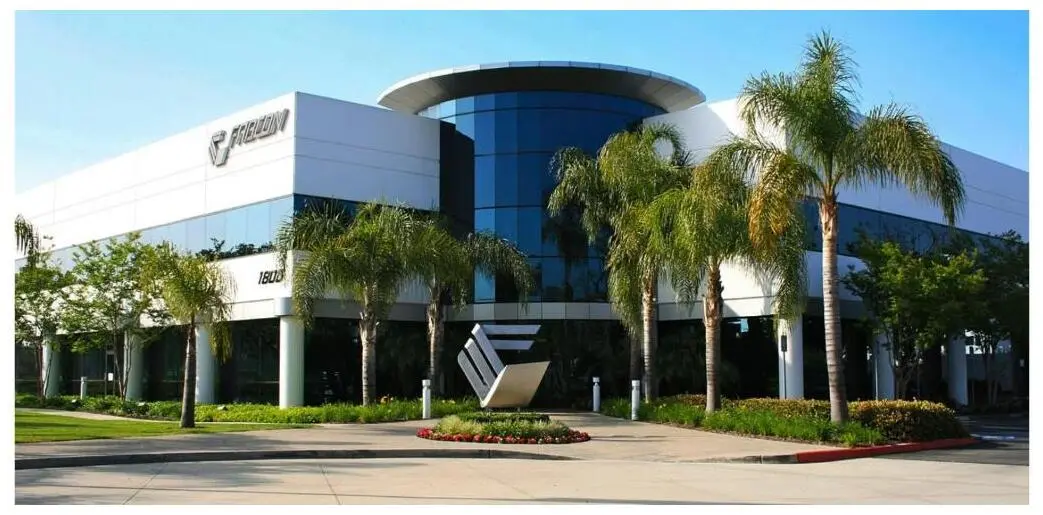
Fabcon is built to meet all seven criteria. Operating from 220,000 square feet of vertically integrated manufacturing space across two US facilities, Fabcon delivers precision sheet metal fabrication, CNC machining, in-house coating and light electromechanical assembly in one operation. ISO 9001:2015 and AS9100D certified and ITAR registered, Fabcon supports infrastructure and technology OEMs from prototype through mid-volume production with the engineering depth, quality systems and production flexibility that fragmented supply chains cannot match.
Start the conversation with Fabcon’s engineering team to evaluate fit for a mid-volume program.