
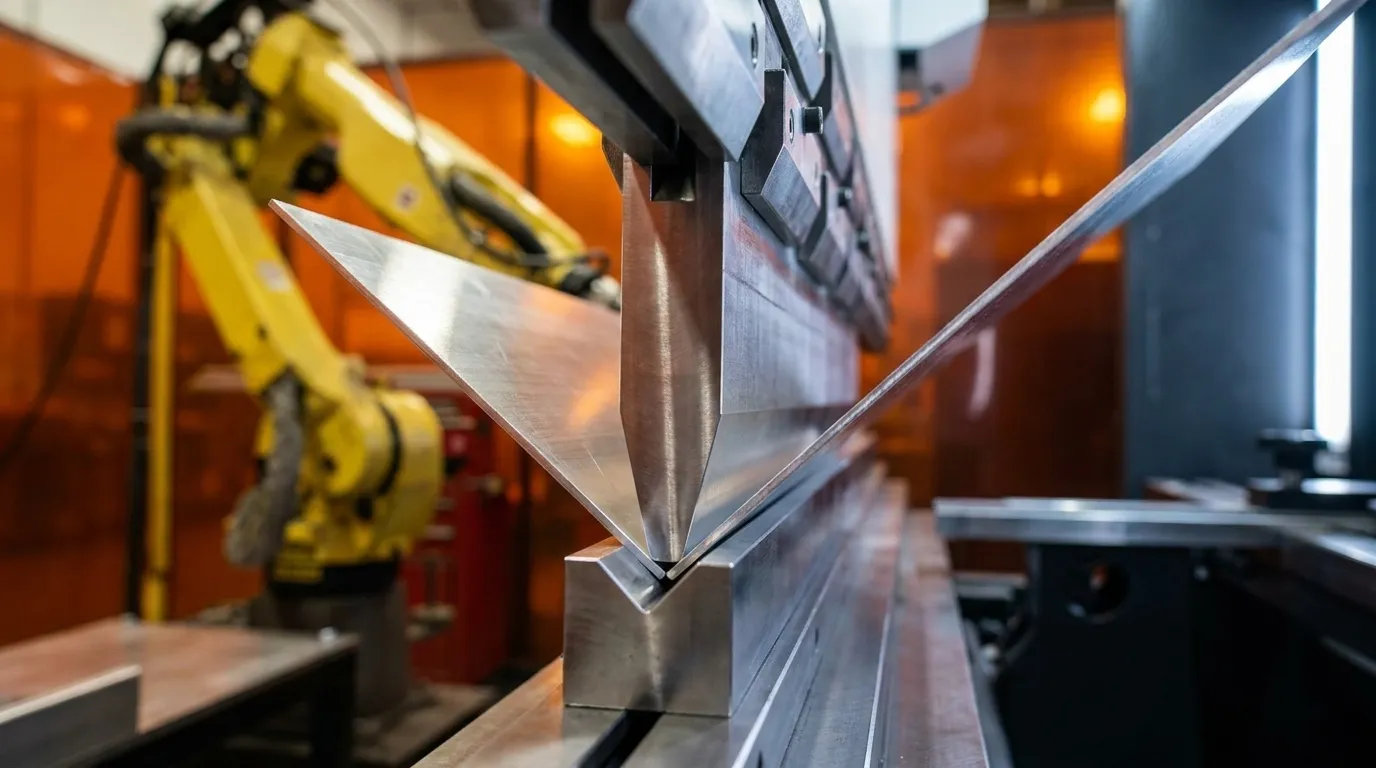
Key Takeaways for Mid-Volume Contract Manufacturing
- Contract manufacturing companies allow OEMs to outsource production while retaining design ownership. Most partners focus on high-volume global programs or simple parts, so mid-volume U.S. programs often lack strong options.
- Mid-volume programs in data centers, energy storage, aerospace, medical devices and traffic safety need integrated fabrication, finishing and light electromechanical assembly in one facility with certified quality systems.
- Large global CMs impose high minimums and rigid processes. Job shops lack the engineering depth, finishing capabilities and compliance certifications required for regulated industries.
- Vertically integrated U.S. partners reduce supply-chain complexity, shorten lead times and lower total program cost by eliminating vendor handoffs and quality accountability gaps.
- Fabcon delivers large-CM infrastructure depth without rigid structures or high minimums. Request a quote to evaluate fit for a mid-volume program.
Global Contract Manufacturers and Where Fabcon Fits
The largest contract manufacturers by revenue focus on high-volume electronics and medical device assembly. Foxconn, Jabil, Flex and Celestica dominate global rankings. These firms operate at enormous scale, serving programs that run into the millions of units per year across multiple continents.
That scale creates constraints for mid-volume work. Onboarding timelines run long, minimum order quantities stay high and production lines favor rigid, repeating programs. A mid-volume precision metal program with an evolving bill of materials and mixed SKUs does not align with that structure.
Fabcon operates at a different tier. Its 220,000 square feet of vertically integrated manufacturing space across two Southern California facilities provide in-house fabrication, CNC machining, finishing and light electromechanical assembly. This infrastructure depth comes without the rigidity, high minimums or extended onboarding common among global players.
Organizations seeking a U.S. partner built for mid-volume programs can request a quote from Fabcon.
OEM, ODM and CM Roles in Product Manufacturing
An OEM (original equipment manufacturer) designs a product and owns its intellectual property. The OEM may manufacture in-house or outsource production entirely. An ODM (original design manufacturer) both designs and manufactures a product, then licenses or sells it to a brand. A CM (contract manufacturer) produces to the OEM’s design and specifications in a build-to-print model without owning the underlying IP.
For buyers in data centers, energy storage, aerospace and medical devices, the CM model serves as the standard. These programs require tight-tolerance fabrication, certified quality systems and full traceability. The OEM retains design control and the CM delivers execution.
Fabcon operates as a build-to-print CM with light electromechanical assembly capabilities. Customers bring designs. Fabcon’s engineering team collaborates on design-for-manufacturability (DFM) improvements before production, then runs fabrication, finishing and assembly under one roof.
Request a quote to see how Fabcon’s build-to-print model aligns with a specific program.
Managing Contract Manufacturing Risk
Contract manufacturing risk decreases when buyers use a structured evaluation framework. Six dimensions guide that evaluation: technical capabilities, integration scope, quality and compliance, scalability and flexibility, supply-chain simplicity and total program value.
Technical capabilities determine whether a CM can hold the tolerances and process requirements a program demands. Technical capability alone falls short when fabrication, finishing and assembly sit across multiple vendors, so integration scope becomes critical. Even an integrated facility introduces risk without strong quality and compliance systems, which is why certifications such as ISO 9001:2015 and AS9100D matter for regulated industries.
These dimensions address current capability. Scalability and flexibility determine whether a CM can move from prototype to production without high minimums or long re-onboarding cycles. Supply-chain simplicity focuses on how many purchase orders, vendor relationships and logistics handoffs a program requires, because complexity multiplies risk. Total program value then accounts for the full cost of delays, rework and quality failures, not just unit price.
Fabcon holds ISO 9001:2015 and AS9100D certifications and is ITAR registered. Its integrated facility removes vendor handoffs that create delay and quality risk in fragmented supply chains.
Teams can evaluate Fabcon against this framework by requesting a quote and capabilities review.
Industries That Rely on Contract Manufacturing
Contract manufacturing plays a central role across capital-intensive, regulated and infrastructure-driven industries. Data center operators source precision rack systems, enclosures and cable management structures from CMs that support modular, repeatable builds. Energy storage and power distribution companies require weatherproof enclosures with integrated electromechanical components. Aerospace and defense programs demand AS9100D-certified fabrication with full traceability and ITAR compliance. Medical device manufacturers need precision assemblies such as carts, lab equipment and medical furniture with documented quality systems. Traffic safety and transportation programs require durable, infrastructure-grade metal components engineered for compliance and consistency.
Fabcon serves all five of these verticals. These certifications, in-house finishing options and electromechanical assembly capabilities align with the specific compliance and performance requirements each sector sets.
Discuss sector-specific requirements with Fabcon’s engineering team.
U.S. Reshoring Trends and Mid-Volume Manufacturing (2025–2026)
The industries described above increasingly bring contract manufacturing back to the United States. Reshoring momentum in U.S. manufacturing has accelerated through 2025 and into 2026, driven by supply chain disruptions, federal incentive programs and rising geopolitical risk in offshore production regions. Infrastructure-intensive sectors such as data centers, energy storage and aerospace lead this shift toward domestic sourcing.
Regulatory pressure reinforces this trend. ITAR requirements restrict offshore production for defense-related programs. Buy American provisions in federal infrastructure spending favor domestic fabricators. Medical device traceability standards create compliance risk when production spreads across multiple international vendors.
Mid-volume programs benefit most from reshoring. Shorter logistics chains reduce lead time variability. Domestic quality oversight lowers defect risk. A single accountable U.S. partner simplifies compliance documentation and audit readiness.
Fabcon’s two Southern California facilities position it as a domestic partner for programs that need proximity, accountability and certified quality systems. Teams planning reshoring initiatives can request a quote to assess fit.
Comparing Contract Manufacturing Partner Types
Applying the six-dimension framework to the three main partner categories clarifies where each type fits and where it falls short.
Low-complexity job shops score well on unit price for simple parts but lack the engineering depth for DFM collaboration, the finishing capabilities for complete assemblies and the quality systems for regulated industries. Programs that start at a job shop often add vendors for coating, wiring and assembly, which fragments the supply chain and introduces handoff risk.
Large and global CMs solve the capability gap that job shops create, since they bring engineering depth and mature quality systems. They introduce a different constraint, though, with high minimums, long onboarding timelines and rigid production structures. Mid-volume programs with evolving BOMs and mixed SKUs struggle in production lines tuned for high-volume, low-variation runs.
Mid-sized vertically integrated fabricators such as Fabcon score across all six dimensions for mid-volume programs because they combine breadth with flexibility. Technical capabilities span laser cutting, CNC punching, forming, welding, CNC machining and light electromechanical assembly. Integration scope covers fabrication, finishing and assembly under one roof. Quality and compliance rely on the certified systems described earlier. Scalability comes from agile production cells that adapt to changing volumes and SKUs. Supply-chain simplicity results from a single purchase order and a single accountable partner. Total program value reflects reduced rework, fewer delays and lower coordination overhead.
Teams can request a quote and apply this framework to a current program.
Checklist for Evaluating Mid-Volume U.S. Partners
Effective partner evaluation starts with process scope. Buyers should confirm the range of in-house processes. A partner that handles fabrication but outsources finishing or assembly reintroduces the fragmentation that contract manufacturing aims to remove.
Certification scope matters for regulated industries. ISO 9001:2015 covers general quality management. AS9100D adds aerospace-specific requirements. ITAR registration is mandatory for defense-related programs. Buyers in medical devices should also confirm traceability documentation practices.
DFM collaboration capability separates integrated fabricators from transactional vendors. A CM that reviews drawings, tolerances and materials before production reduces rework and compresses development timelines.
Logistics and fulfillment support determines whether a CM can manage just-in-time delivery, kitting and final-mile distribution or whether those functions require additional vendors.
Fabcon covers all four criteria: in-house fabrication, finishing and assembly; certified quality credentials; engineering-led DFM collaboration; and JIT delivery and fulfillment services. Teams can request a quote to verify fit against program-specific requirements.
Addressing Common Concerns About Fabcon
Cost concerns appear frequently. Fabcon does not position itself as the lowest unit-price vendor. The relevant comparison is total program cost, which includes unit price plus the cost of delays, rework, quality failures and vendor coordination overhead. Integrated manufacturing reduces those downstream costs.
Scale concerns arise when buyers assume mid-sized fabricators cannot support growth. Fabcon’s agile production cells scale from prototype through mid-volume production without high minimums or repeated re-onboarding cycles. Programs can evolve while maintaining a single partner.
Existing supplier relationships often create inertia. Many metal fabrication shops stop at sheet metal. Fabcon adds integrated coating, wiring and light electromechanical assembly. Consolidating to a single partner reduces vendor count, shortens lead times and removes system-level integration risk that a basic fab shop cannot manage.
Lead time concerns improve with internal integration. Because fabrication, finishing and assembly share one facility, production does not wait on third-party schedules or inter-vendor shipping. Teams can discuss lead time expectations for a specific program.
Conclusion and Next Steps for Mid-Volume Programs
Contract manufacturing companies serve a wide range of programs, yet much of the market focuses on the extremes of high-volume global programs or simple transactional parts. Mid-volume U.S. programs in data centers, energy storage, aerospace, medical devices and traffic safety need a partner that combines integration scope, certified quality systems and production agility.
The six-dimension framework introduced earlier provides a structured basis for partner selection. Applied honestly, it highlights where job shops and large CMs fall short and where a vertically integrated mid-sized fabricator delivers the strongest program value.
Recommended next steps include an internal needs assessment to document program requirements, a site visit to evaluate facility capabilities and a consultation to align on DFM, certification and logistics requirements. Fabcon has operated from its Southern California facilities since 1977, serving regulated and infrastructure-intensive industries with certified quality systems, a substantial footprint and the integration depth that mid-volume programs demand.
Start a conversation with Fabcon’s engineering and program team to explore alignment with current or upcoming programs.
Frequently Asked Questions
What is the difference between a contract manufacturer and a job shop?
A job shop typically acts as a transactional vendor focused on producing individual parts or simple assemblies to a customer’s print. Job shops generally lack the engineering support, finishing capabilities and assembly services needed to deliver a finished product. A contract manufacturer provides a broader scope that includes fabrication, finishing, assembly and quality management under a single accountable relationship. For programs that require integrated electromechanical assembly, certified quality systems and DFM collaboration, a contract manufacturer serves as the appropriate partner. Job shops fit programs where a single, simple component represents the entire scope of work.
How do ISO 9001:2015 and AS9100D certifications affect partner selection for regulated industries?
ISO 9001:2015 establishes the baseline for quality management systems, covering process control, documentation, corrective action and continuous improvement. AS9100D extends those requirements for aerospace and defense, adding expectations for risk management, configuration control, first-article inspection and counterfeit parts prevention. For aerospace, defense and medical device programs, these certifications often function as minimum qualification requirements rather than differentiators. ITAR registration is a legal requirement for any program involving defense-related technical data or hardware. Buyers in regulated industries should confirm that a CM’s certifications are current and that quality systems cover fabrication, finishing and assembly, not just one stage of the build.
What does vertically integrated manufacturing mean in practice for a mid-volume program?
Vertical integration means that a single facility controls multiple stages of the production process. In Fabcon’s case, that includes design support, fabrication, CNC machining, finishing and light electromechanical assembly. For a mid-volume program, this structure removes the vendor handoffs that occur when separate shops handle metal, coating and assembly. Each handoff introduces scheduling risk, quality accountability gaps and logistics cost. A vertically integrated partner issues one purchase order, maintains one quality record and owns the outcome across the entire build. This approach simplifies program management, compresses lead times and reduces the coordination burden on internal supply chain and operations teams.
What industries benefit most from mid-volume contract manufacturing partnerships?
Industries with complex, precision-fabricated products that require certified quality systems and integrated assembly gain the most benefit. Data center infrastructure programs need modular, repeatable enclosure and rack systems. Energy storage and power distribution programs need weatherproof enclosures with electromechanical integration. Aerospace and defense programs require AS9100D and ITAR compliance with full traceability. Medical device programs need precision assemblies with documented quality systems. Traffic safety and transportation programs require durable, infrastructure-grade components built to compliance standards. All five verticals share a common need for a partner that manages fabrication, finishing and assembly under one roof while maintaining the certifications and documentation those industries require.
How does design-for-manufacturability collaboration reduce program risk?
Design-for-manufacturability collaboration reviews a design’s tolerances, materials and assembly requirements before production, with the goal of identifying features that are difficult or costly to manufacture at scale. When a CM’s engineering team engages early, design changes occur on paper rather than on the production floor. This approach reduces rework, shortens quoting cycles and ensures that a design optimized for performance also supports repeatable, cost-efficient manufacturing. Programs that skip DFM collaboration often encounter tolerance stack-up issues, material substitution delays and assembly fitment problems that compress launch timelines and increase total program cost. Early engineering engagement stands out as a clear differentiator between a transactional vendor and an integrated manufacturing partner.