
Key Takeaways
- Contract manufacturing DFM services review sheet-metal and light-assembly designs before production to flag geometry, tolerance, material and assembly risks early.
- Fragmented sourcing creates vendor handoffs that drive rework, schedule risk and quality disputes while most product cost locks in during design.
- Common sheet-metal DFM failures include bend-related geometry issues, tolerance stack-ups, material selection problems and assembly integration gaps that integrated partners catch early.
- DFM and DFA reviews work best under one engineering team because siloed vendors improve only their own scope and leave integration risk with the buyer.
- An integrated U.S. precision-fabrication partner such as Fabcon unifies engineering, fabrication, finishing and assembly to reduce risk and accelerate mid-volume sheet-metal programs.
The Sourcing Gap in Precision Sheet-Metal Programs
Mid-sized infrastructure and technology companies face a structural sourcing gap. On one side, transactional job shops execute purchase orders but lack the engineering depth for substantive DFM reviews or electromechanical integration. On the other side, large global contract manufacturers impose high minimums, long onboarding cycles and rigid production lines that struggle with evolving bills of materials.
This gap produces fragmented supply chains. Engineering teams manage separate vendors for fabrication, finishing, wiring and assembly. Each handoff introduces delay, quality ambiguity and accountability gaps. Most product cost locks in during the design phase, so pre-production DFM collaboration offers the strongest cost-control leverage. When that window closes without a capable partner engaged, programs absorb rework, compliance risk and delayed launches that compound at volume.
The reshoring environment increases this pressure. Many manufacturers still depend on global suppliers for raw materials and semifinished products, which keeps supply chain vulnerability high for mid-volume programs.
Common DFM Failure Modes in Sheet-Metal Programs
Sheet-metal DFM failures cluster around geometry, tolerances, materials and assembly integration. Clear awareness of these failure modes helps engineering and sourcing teams evaluate contract manufacturing partners.
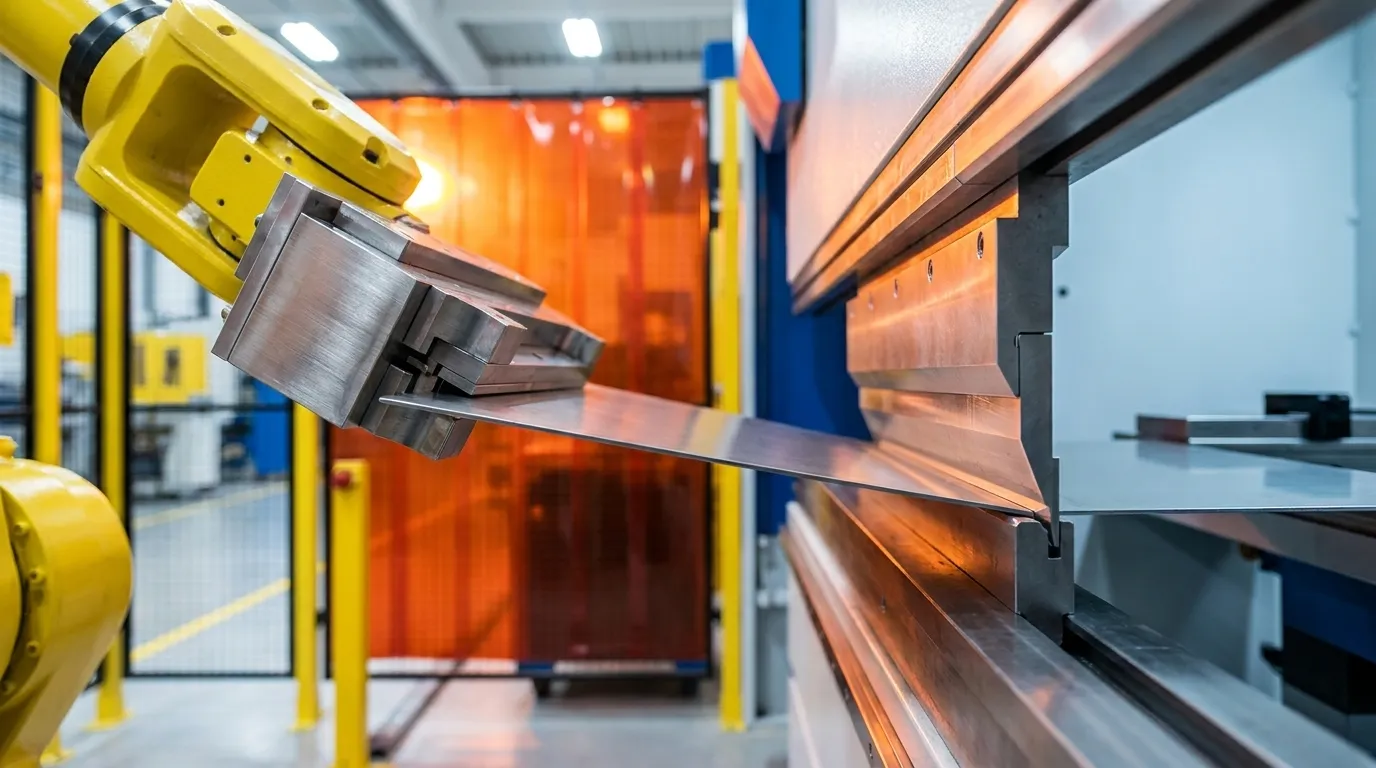
Geometry and bend-related failures cause many production problems. Holes, slots or bosses placed close to bend lines can distort, crack at the edges or lose strength during bending. Designs that ignore minimum bend radii, springback and tooling geometry often require special tooling, add cost and extend lead time. Springback can also cause the material to partially return to its original shape, creating fit and assembly issues.
Tolerance and stack-up failures affect assemblies with multiple formed parts. Tight tolerances belong on functional interfaces only because broad tight tolerances increase setups, inspection time and cost. Accumulated positional error from weak fixturing and weld distortion often drives DFM failures in sheet-metal enclosures.
Material selection failures affect both forming and finishing. Material grade and temper influence springback, bend cracking, cosmetic appearance and corrosion performance. Standard gauge thicknesses improve material availability, reduce lead time and avoid supplier limits tied to nonstandard gauges.
Assembly integration failures appear when fabrication and assembly run as separate scopes. Hardware insertion equipment needs access to both sides of the part, and nearby bends or hardware can block tooling access. Fastening failures such as thread stripping or joint loosening often appear only after production or field use.
An integrated partner addresses these failure modes by reviewing geometry, tolerances, materials, finishes and assembly requirements before production. This level of review requires in-house engineering, fabrication and assembly capabilities, not a build-to-print job shop.
How DFM and DFA Work Together in Contract Manufacturing
DFM, or design for manufacturability, focuses on whether individual parts can be fabricated efficiently and within tolerance. DFA, or design for assembly, focuses on whether those parts can be assembled reliably with minimal steps and low error risk. Both disciplines apply to precision sheet-metal programs, but they address different failure modes.
For enclosures and electromechanical assemblies, DFM governs bend geometry, hole placement, material selection and finish compatibility. DFA governs fastener access, component sequencing, wiring routing and hardware insertion order. Interlocking tabs in sheet-metal designs can hold parts in place during welding, enhance strength, limit shrinkage and reduce misalignment. That decision sits at the intersection of DFM and DFA.
When separate vendors handle fabrication and assembly, DFM and DFA reviews happen in silos. The fabricator improves forming efficiency without insight into assembly sequence. The assembler receives parts that meet print but assemble poorly. An integrated partner combines both reviews under one engineering team and catches cross-discipline conflicts before tooling or production. In siloed models, each vendor improves its own scope and the integration risk falls on the buyer’s program team.
Integrated U.S. Precision-Fabrication Capabilities at Fabcon
An integrated U.S. precision-fabrication partner consolidates engineering, fabrication, finishing and light electromechanical assembly in one organization. This structure removes vendor handoffs that drive rework, schedule risk and quality disputes in fragmented supply chains.
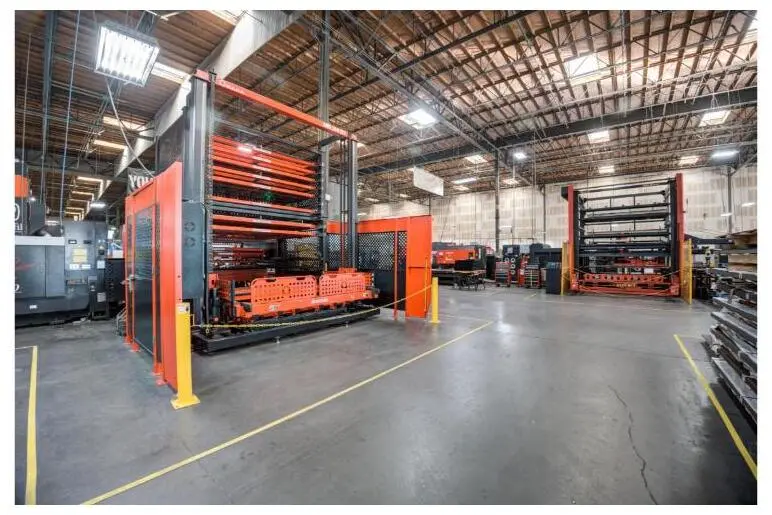
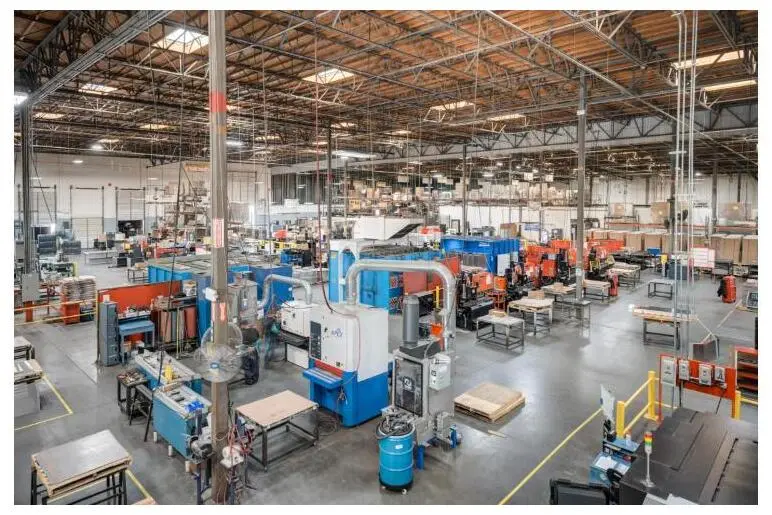
Fabcon operates 220,000 square feet of vertically integrated manufacturing space across two U.S. facilities. The company supports programs from prototype through mid-volume production and combines laser cutting, CNC punching, forming, welding, CNC machining, powder coat and wet paint finishing and light electromechanical assembly in a single accountable environment. Engineering and quoting teams collaborate with client technical teams before production, reviewing drawings, tolerances and materials to refine manufacturing routers and work instructions.
Integrated precision fabrication partners invest in OEM success through design expertise, value engineering and cost reduction during the prototype-to-production handoff. Transactional job shops do not provide this level of support. Early DFM collaboration also keeps technical resources from being pulled back into the project after launch and reduces post-launch disruption.
Fabcon holds ISO 9001:2015 and AS9100D certifications and is ITAR registered, which supports the quality management and traceability infrastructure that regulated infrastructure programs require.
Request a quote and verify Fabcon’s certifications for specific program requirements.
DFM Objectives for Enclosures and Racks
DFM objectives for enclosures and racks address seven critical dimensions:
- Geometry validation prevents forming failures
- Tolerance rationalization reduces inspection cost and stack-up risk
- Material selection improves lead time reliability
- Finish compatibility maintains EMI shielding performance
- Assembly integration reduces electromechanical assembly rework
- Weld and fixturing review ensures dimensional accuracy
- Change control readiness supports evolving designs
Seven-Item DFM Readiness Checklist
Engineering teams can use this checklist to confirm that a design is ready for DFM review with a contract manufacturing partner.
- Geometry: Bend relief slots, hole-to-bend spacing, flange lengths and U-channel ratios align with fabrication constraints.
- Tolerances: Tight tolerances appear only on functional interfaces, and noncritical dimensions use standard fabrication tolerances.
- Materials: Grade, temper and gauge use standard stock, and material behavior under forming and finishing is confirmed.
- Finishes: Coating type, thickness range, masking requirements and grounding surface treatment are documented before tooling.
- Assembly integration: Hardware insertion access, fastener edge distances and wiring routing align with the formed geometry.
- Documentation: Native CAD files, 2D drawings with GD&T callouts, welding symbols and hardware callouts are complete and current.
- Change control: A defined revision process governs BOM updates, drawing changes and production notifications to the manufacturing partner.
Industry Examples of Early DFM Collaboration
Early DFM collaboration produces measurable benefits across the infrastructure and technology sectors Fabcon serves.
Data-center infrastructure: Rack and enclosure programs involve dense cable management, thermal management and EMI shielding requirements. Maintaining conductive mating surfaces and using continuous conductive elastomers with compression stops protects EMI performance. An integrated partner captures these requirements during DFM review rather than at assembly and reduces rework before deployment.
Medical devices: Fabricated carts, lab equipment and medical furniture require full traceability and consistent dimensional accuracy across production runs. Under FDA’s QMSR, contract manufacturers that build medical device components face full inspection. An integrated partner with ISO 9001:2015 certification and documented quality systems supports these compliance needs from prototype through production.

Energy storage: Weatherproof enclosures for commercial and public deployments require electromechanical integration, finish durability and dimensional consistency across mixed SKUs. Powder coating, plating and passivation affect fit, hole size, grounding areas and clearance. Integrated DFM review addresses these interactions before production.
Traffic safety equipment: Infrastructure-grade components require compliance, consistency and durability across production volumes. Early DFM collaboration on material selection, weld sequences and finish specifications reduces field failures and supports regulatory documentation.
Comparing Job Shops, Mid-Tier Partners and Global CMs
Job shops operate as transactional suppliers. They execute build-to-print orders for simple parts but lack the engineering depth for DFM reviews, in-house finishing or electromechanical assembly. Programs that need more than formed metal parts must manage additional vendors, which increases handoff risk and blurs quality accountability.
Large global contract manufacturers provide scale and infrastructure but introduce constraints that conflict with many mid-volume programs. High minimum order quantities, long onboarding processes and rigid production lines make support for evolving BOMs, mixed SKUs or prototype-to-production transitions difficult without significant overhead.
Mid-tier integrated partners sit between these extremes. They provide engineering collaboration, vertical integration across fabrication and assembly and production flexibility that scales with program needs. Specialized precision manufacturing partners can scale production up or down without the fixed costs and long-term commitments of internal capacity, which helps companies respond to market volatility or growth opportunities. Not all mid-tier shops offer the same engineering depth, finishing capability or compliance infrastructure, so structured due diligence remains essential.
Due-Diligence Checklist for U.S. Contract Manufacturers
Procurement and engineering teams can verify the following factors when evaluating a U.S. precision fabrication partner for sheet-metal programs.
- Certifications: ISO 9001:2015 as a baseline QMS, AS9100D for aerospace and defense, ITAR registration for controlled technology and UL or CSA compliance for infrastructure applications.
- In-house process ownership: Fabrication, finishing and assembly performed under one roof without subcontracting critical operations to unqualified third parties.
- Engineering support: Dedicated DFM and DFA review capability with in-house engineering staff, not only quoting personnel reviewing drawings.
- Prototype-to-production handoff: Documented procedures for transitioning from prototype to production, including work instruction development, BOM management and change control.
- Reference-site evaluation: Verified experience in the buyer’s industry segment, with references for programs of comparable complexity and volume.
- Traceability systems: Documented lot and serial traceability from raw material through finished assembly, with records accessible during audits.
Use this checklist to evaluate Fabcon’s capabilities for specific program needs.
Frequently Asked Questions
Does early DFM collaboration increase total program cost?
Early DFM review adds engineering time at the front of a program but reduces total cost of ownership. It catches design issues before tooling, production and assembly. Rework, scrap and vendor handoff delays that follow skipped DFM reviews often cost more than the review itself. An integrated partner’s engineering team identifies geometry, tolerance and assembly risks when changes remain inexpensive.
Can an integrated mid-tier partner scale production without high minimums?
Fabcon’s agile production cells support mid-volume programs with evolving BOMs and mixed SKUs. The production model scales from prototype through production without the minimum order requirements or rigid line configurations common at large global contract manufacturers. Programs can adjust volumes and configurations as market conditions change.
How difficult is it to transition an existing program to a new contract manufacturer?
Transition complexity depends on documentation completeness, BOM complexity and the current supplier’s cooperation. Fabcon’s engineering and quoting teams conduct a structured DFM review during onboarding that also functions as a program audit. This process identifies undocumented requirements, tolerance ambiguities and assembly integration gaps that may have accumulated with a previous supplier. The result is a cleaner production baseline rather than a simple vendor swap.
How does vertical integration affect lead time reliability?
When fabrication, finishing and assembly stay internal, production schedules do not depend on third-party availability or inter-vendor shipping. Fabcon manages each stage of the build within its own facilities, which reduces schedule variability and improves responsiveness when design changes or volume adjustments arise. Lead time reliability improves as a partner controls more of the production process.
How can a buyer confirm that a partner’s DFM process is substantive?
A substantive DFM review produces documented outputs such as marked-up drawings, tolerance rationalization notes, material and finish recommendations and assembly integration flags. Buyers can request examples of DFM deliverables from past programs and ask how the partner handles bend geometry conflicts, tolerance stack-up across welded assemblies and finish compatibility with fastener and grounding requirements. Partners with in-house engineering staff, not only quoting teams, answer these questions with specificity.
Conclusion: Selecting an Integrated Partner for Mid-Volume Sheet-Metal
Fragmented job shops and rigid large contract manufacturers both create design-to-manufacture disconnects that inflate total cost and delay launches. The sourcing gap between them exposes mid-volume infrastructure and technology programs to rework, compliance risk and vendor handoff delays.
An integrated U.S. precision-fabrication partner with in-house engineering, fabrication, finishing and light electromechanical assembly addresses these risks at the source. Early DFM and DFA collaboration, combined with vertical integration and a compliance-focused quality management system, gives engineering, procurement and operations teams a single accountable partner from prototype through production.
Fabcon has supported precision sheet-metal programs across data centers, medical devices, energy storage and traffic safety since 1977. With the certifications and vertically integrated U.S. manufacturing capacity described above, Fabcon is structured for mid-volume programs that demand both engineering depth and production agility.
Start the next sheet-metal program with Fabcon’s integrated DFM services.