

Key Takeaways for OEM Traceability Programs
- Traceability in contract manufacturing links every raw material, process step, operator, inspection result and shipment record to a unique unit identity for rapid reconstruction during audits or recalls.
- Eight core data elements – unit identity, production order, timestamp, material batch, inspection result, process parameters, proof of delivery and change identifier – form the minimum traceability data model required across ERP, MES and quality systems.
- U.S. federal regulations impose mandatory data capture, retention and retrieval obligations on contract manufacturers, with retention timelines that vary by industry and regulation.
- Vertical integration under one roof closes genealogy gaps that occur at vendor handoffs, which enables a single accountable system to meet 4-hour mock recall targets and regulatory retrieval windows.
- Request a traceability compliance review from Fabcon before the next audit.
Eight Core Traceability Data Elements for Contract Manufacturers
A minimum traceability data model for series production must answer four audit questions. What was manufactured. When and by whom. With what materials. Was it in order. Eight mandatory fields accomplish this across ERP, MES and quality systems.
- Unit Identity: Serial number, batch or lot ID that serves as the common key linking all other fields.
- Production Order: Work order or job number connecting the customer order to the production run.
- Production Timestamp: Date and time stamps for each operation and process step.
- Material Batch(es): Supplier batch, heat or lot numbers for all consumed raw materials and components.
- Inspection Result: Measured values, pass/fail status and acceptance criteria reference for each quality gate.
- Process Parameter Reference: Torque, temperature, pressure, cure time and other critical process values.
- Proof of Delivery: Shipping records, customer acceptance confirmation and chain-of-custody documents.
- Change Identifier: Engineering change order or ECR reference that affects the unit or assembly.
Regulatory Drivers for Traceability in Contract Manufacturing
U.S. traceability requirements rest on binding regulation. Multiple federal rules define specific data capture, retention and retrieval obligations for contract manufacturers and their customers.
Traceability Record Keeping Expectations for Contract Manufacturers
Retention timelines vary by industry and regulation, so contract manufacturers align document control systems to the longest applicable retention period for each program.
Records may be maintained as original paper, electronic files or true copies such as scans or photocopies, provided they remain legible and stored to prevent deterioration or loss. Electronic records may include valid working links to required information.
Serial Number Traceability in Regulated Manufacturing
Best-practice serialization assigns the serial number as early as possible in the production process, ideally at raw material allocation or the first machining operation, to capture upstream production conditions. Every serial number links forward to the customer or shipment and backward to raw materials and components.
Regulated industries such as medical devices, aerospace and automotive safety components typically require serial-number-based traceability rather than batch-only traceability because an untargeted recall can create significant costs and regulatory exposure.
A well-designed serialization system encodes production context such as year, month, machine or line and sequence directly into the serial number structure for rapid decoding without a database lookup. IIoT platforms can link each serial number to timestamped machine identity, operating parameters, alarm states and material batch during production, which creates a digital birth certificate for the unit.
Material Traceability Practices That Prevent Substitution
Material substitution is prevented by requiring EN 10204 3.1 certificates on every incoming material batch and cross-checking heat numbers for traceability. EN 10204 3.2 applies to pressure-containing and safety-critical components.
Core material traceability practices work together to create an unbroken chain from supplier to finished product. Teams start by capturing supplier batch, heat or cast numbers at incoming inspection to establish material identity. For time-sensitive materials, they link expiration and shelf-life status to prevent use of degraded stock. At every join operation, they record supplier identifiers and PO numbers to maintain the genealogy chain across assembly steps. They maintain certificates of conformance with manufacturer name, part number and lot or date code to provide third-party verification of material properties. Finally, they segregate storage by lot to prevent commingling, which enables targeted containment if a supplier lot is later found nonconforming.
Product Genealogy and Mock Recall Performance
End-to-end traceability documents every material, machine, parameter, operator, shift and result across the full value chain from raw-material receipt through all manufacturing steps, inspections and customer delivery. Product genealogy is the structured output of that documentation.
Backward traceability starts from a faulty end-product serial number and reconstructs all components, batches, machines, parameters, operators and test results to support root-cause analysis. Forward traceability starts from a faulty component or supplier lot and identifies every end-product, shipment and customer that incorporated the item, which enables targeted recalls instead of broad production holds.
A mock recall test requires tracing a random incoming material lot forward to every finished product and customer within a target of 4 hours to demonstrate audit-ready traceability. Fragmented vendor networks, where fabrication, finishing and assembly occur at separate facilities, break the genealogy chain at every handoff and make that 4-hour target difficult to meet.
AS9100 Traceability Requirements for Aerospace Programs
AS9100 Rev D clause 8.5.2 requires identification and traceability appropriate to the product. Clause 8.7 addresses the control of nonconforming outputs.
Aerospace traceability records must be retained for the full operational life of the aircraft. Aerospace traceability systems often require long-term retention throughout the product lifetime.
Aerospace traceability typically follows AS9100 quality systems, AS9102 first article inspection reports and IPC-1782 electronics traceability standards. Configuration control elements such as BOM revision, fabrication drawing revision, assembly drawing revision, firmware revision, approved deviations and ECOs must all be captured and linked to the unit identity.
FAA Advisory Circular AC 20-154A, issued July 3, 2024, provides guidance for developing receiving inspection systems that establish sufficient traceability to confirm aircraft parts were manufactured under 14 CFR part 21 or previously determined airworthy under 14 CFR part 43. Medical device manufacturers face similarly rigorous traceability obligations under FDA regulations.
FDA and DSCSA Traceability Expectations for Contract Manufacturers
Under FDA 21 CFR Part 820.65, manufacturers of devices intended for surgical implant or to support or sustain life, where failure could reasonably cause significant injury, must establish procedures to identify each unit, lot or batch of finished devices and appropriate components with a control number documented in the DHR to support corrective action. The Device History Record under 21 CFR Part 820.184 must include dates of manufacture, quantity, acceptance records, labeling and device identification.

Most medical devices must carry a Unique Device Identifier consisting of a Device Identifier and a Production Identifier that may include lot number, serial number, manufacturing date or expiration date. The UDI appears in both human-readable and machine-readable formats and is submitted to the GUDID.
The DSCSA, updated with FDA guidance issued in late August 2023, establishes a one-year stabilization period before enforcement of DSCSA package-level electronic traceability requirements starting November 27, 2024.
Ready-to-Use Traceability Clause Template for OEM Contracts
The following clause language reflects requirements drawn from aerospace quality clause standards, DFARS 252.246-7008 and responsible sourcing best practices. OEM legal teams can adapt it to program-specific requirements.
TRACEABILITY AND RECORD RETENTION CLAUSE
- Scope. Supplier shall maintain documented traceability for all items delivered under this Purchase Order, linking each unit or lot to its material batch, production order, process parameters, inspection results and shipping records.
- Unit Identity. Supplier shall assign a unique serial number, lot number or batch identifier at the earliest production operation and maintain that identifier as the common key across all manufacturing, quality and shipping systems.
- Material Certification. Supplier shall provide certificates of conformance and material certifications that show clear traceability from raw material source through all processing steps to the delivered item, including manufacturer name, CAGE code, batch or heat identification and all supply chain intermediaries.
- Counterfeit Prevention. Supplier shall not disguise material pedigree or chain of ownership by removal or alteration of traceability information and shall comply with DFARS 252.246-7007 Contractor Counterfeit Electronic Part Detection and Avoidance Systems where applicable.
- Retrieval. Supplier shall provide complete traceability records within 24 hours of a written request from Buyer or a regulatory authority.
- Retention. Supplier shall retain all traceability records, including first article inspection reports, test reports, raw material certifications and process certifications, for the period specified by the applicable regulation or a minimum of seven years from PO completion, whichever is longer.
- Flowdown. Supplier shall flow down the substance of this clause to all subcontractors and sub-tier suppliers that provide materials or services incorporated into delivered items.
- Audit Rights. Buyer retains the right to audit Supplier traceability systems with reasonable notice. Supplier shall submit a Corrective Action Plan within 30 days of any identified gap.
- Breach. Failure to produce required traceability records within the specified retrieval window constitutes a material breach and may result in suspension of deliveries, rejection of delivered supplies or termination for cause.
Work with Fabcon’s quality team to implement these traceability requirements in the next program.
Five-Question Audit Checklist with Expected CM Answers and Benchmark
| # | Audit Question | Expected CM Answer | 5-Minute Benchmark |
|---|---|---|---|
| 1 | Show the complete genealogy for a randomly selected finished unit delivered in the last 90 days. | CM retrieves unit identity, material batch, production order, process parameters, inspection results and proof of delivery from a single system within minutes. Full reconstruction meets the mock recall standard. | CM opens the record within 5 minutes without manual re-keying across systems. |
| 2 | If a supplier lot is found nonconforming today, how do you identify every affected finished unit and customer? | CM demonstrates forward traceability from the lot number to all production orders, serial numbers and shipping records that consumed it. This demonstrates the forward traceability capability described earlier. | CM produces the affected unit list within 5 minutes of lot number entry. |
| 3 | What is the retention period for traceability records on this program, and where are they stored? | CM states the applicable regulatory retention period, confirms records are stored in a queryable system, not scanned PDFs or spreadsheets, and identifies the backup and access-control policy. Compliant data must be stored in standardized, queryable formats with an immutable audit trail. | CM provides a written retention schedule within 5 minutes. |
| 4 | How are engineering change orders linked to affected serial numbers in your system? | CM shows that each ECO or ECR reference is captured as the Change Identifier field tied to the unit identity and that affected units can be filtered by ECO number. Engineering change and ECO references must be captured at every affected operation. | CM filters units by ECO number and displays results within 5 minutes. |
| 5 | Provide the material certifications and certificates of conformance for the raw material used in the selected unit. | CM retrieves EN 10204 3.1 or equivalent certificates that show manufacturer name, heat or batch number and all processing steps. Certificates demonstrate the complete processing chain from ingot to delivered part. | CM produces the certificate package within 5 minutes without leaving the audit room. |
Why Fabcon Delivers Full Genealogy Under One Roof
Fragmented vendor networks are a primary cause of traceability gaps. When fabrication, finishing and assembly occur at separate facilities, the genealogy chain breaks at every handoff, which creates audit exposure and recall risk that no contract clause can fully repair after the fact.
Fabcon is an AS9100D and ISO 9001:2015 certified, ITAR-registered precision metal fabrication and electromechanical assembly partner that operates from 220,000 square feet of vertically integrated manufacturing space across two U.S. facilities. Laser cutting, CNC punching, forming, welding, finishing, machining and electromechanical assembly all occur under one roof, governed by a single quality management system.
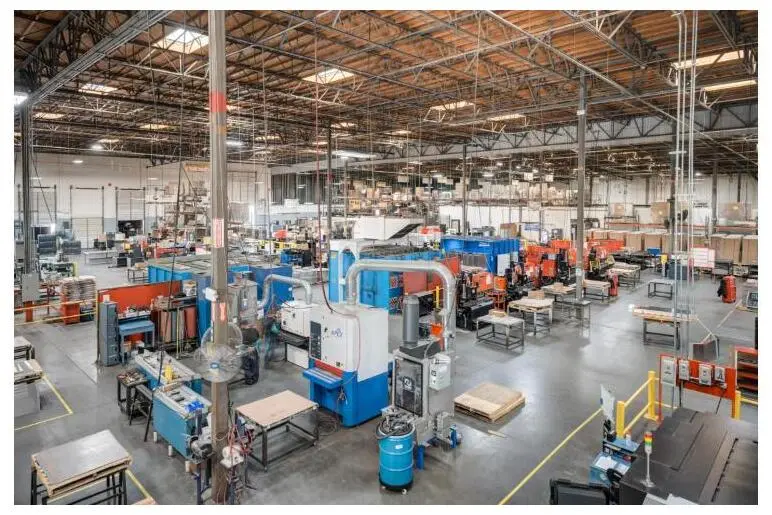
One purchase order covers the full build. That structure means the unit identity, material batch, process parameters, inspection results and proof of delivery all live in one accountable system, not distributed across three vendors with separate records. For Directors of Supply Chain who manage mid-volume, high-mix programs in aerospace, medical, data center and energy storage markets, that single-source genealogy often marks the difference between a 4-hour mock recall and a multi-day crisis.
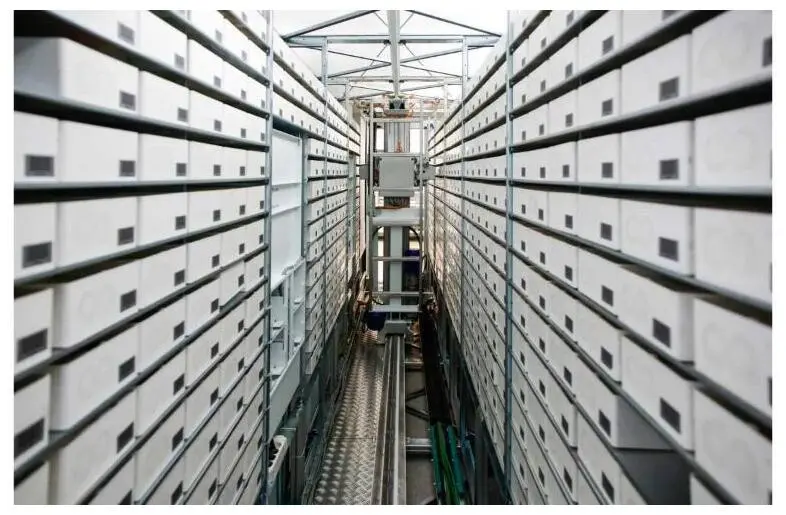

Fabcon engineering teams engage at the DFM stage before production begins and align tolerances, materials and work instructions to the traceability data model the program requires. That upstream alignment reduces rework, prevents configuration drift that corrupts genealogy records and keeps programs on schedule from prototype through production.
Frequently Asked Questions
Difference Between Lot Traceability and Serial-Number Traceability
Lot traceability links a group of units produced under the same conditions to a shared batch or lot identifier. Serial-number traceability assigns a unique identifier to each individual unit and links it to its specific material batch, process parameters, inspection results and shipping record. Regulated industries such as aerospace, implantable medical devices and automotive safety components typically require serial-number traceability because a recall based on lot data alone may affect far more units than necessary. Serial-number systems enable surgically targeted containment, which reduces recall costs and regulatory exposure.
How AS9100D Traceability Compares with FDA 21 CFR Part 820
AS9100D clause 8.5.2 focuses on identification and traceability appropriate to the product and requires material certifications, special process records and production sequence documentation across the aerospace supply chain. It also requires that traceability enable isolation of affected products when a nonconformance is discovered under clause 8.7. FDA 21 CFR Part 820 focuses on medical device manufacturers and requires a Device History Record that links each device to its component lots, production equipment and personnel. It also mandates Unique Device Identifiers on labels and submission to the GUDID database. Both standards require rapid reverse-lookup capability, but the specific data elements, record formats and retention periods differ. A contract manufacturer that serves both markets must maintain a quality system that satisfies the stricter requirement at each data element.
Key Traceability Terms for OEM Contract Manufacturing Agreements
An enforceable traceability clause specifies the unit identity format and the earliest point in production at which it must be assigned. It requires material certifications that show chain of custody from raw material source to delivered item, including all supply chain intermediaries. The clause defines a retrieval window, typically 24 hours, for producing records on regulatory or buyer request. It states the applicable retention period by regulation and program type. It includes flowdown language that requires the contract manufacturer to impose the same obligations on all subcontractors. Finally, it defines audit rights, corrective action timelines and the consequences of non-compliance, including suspension of deliveries and termination for cause.
FSMA Food Traceability Rule Compliance Dates as of 2026
The FDA finalized the Food Traceability Rule under FSMA Section 204 on November 21, 2022. The original compliance date was January 20, 2026. In August 2025, FDA proposed extending the compliance date by 30 months. Congress then directed in P.L. 119-37 that no funds may be used to administer or enforce the rule before July 20, 2028. On February 20, 2026, FDA issued draft Q&A guidance that clarified which activities constitute transformation events that trigger Key Data Element recordkeeping requirements. Covered entities continue building compliant systems now, as the rule Key Data Element and Critical Tracking Event requirements remain substantively unchanged.
How Vertical Integration Improves Traceability Outcomes
When fabrication, finishing and assembly occur at a single facility under one quality management system, the unit identity, material batch, process parameters and inspection results are captured in one linked system rather than distributed across multiple vendors with separate records. That structure eliminates the genealogy gaps that occur at vendor handoffs, gaps that are a common cause of audit failures and extended recall investigations. A vertically integrated contract manufacturer can also respond to a regulatory retrieval request within the required window because all records are accessible without coordination across external suppliers. For OEMs that manage mid-volume, high-mix programs in regulated markets, vertical integration reduces traceability risk and the administrative burden of managing multi-vendor genealogy chains.