
Last updated: July 22, 2026
Key Takeaways for Complex Electromechanical Programs
-
Fragmented supply chains create delays, quality issues and higher total costs when fabrication, finishing and assembly sit with multiple vendors.
-
Early DFM collaboration with a qualified partner reduces manufacturing costs, prevents engineering change orders and improves first-article success rates.
-
Vertically integrated U.S. partners that control fabrication, finishing and light assembly under one roof remove handoff risks and shorten lead times.
-
ISO 9001:2015, AS9100D, ITAR registration and full traceability form the baseline for infrastructure, aerospace and defense programs.
-
Fabcon provides vertically integrated sheet metal fabrication and electromechanical assembly from prototype through mid-volume production.
Step 1: Define Program Requirements and Constraints Upfront
Strong partner selection starts before supplier outreach. Cross-functional teams in engineering, supply chain and operations align on program requirements before issuing RFQs.
Key inputs to document include:
-
Part complexity, tolerances and material specifications
-
Assembly scope: fabrication only or fabrication plus finishing and electromechanical integration
-
Volume range from prototype through anticipated production
-
Compliance requirements: ISO 9001:2015, AS9100D, ITAR, UL, CSA
-
Lead-time expectations and schedule constraints
-
Budget parameters and total cost of ownership priorities
These inputs roll into a requirements document that filters suppliers objectively. Evaluating fabrication partners on piece price alone is misleading because hidden costs appear as rework, missed deadlines and field failures. A clear requirements document exposes cost, complexity and risk trade-offs before commitments.
Step 2: Assess Practical DFM Collaboration Capability
Early engineering involvement drives most cost control in a fabrication program. Design decisions made during the CAD phase lock in the majority of manufacturing cost for precision sheet metal parts.
Engineering teams that pull manufacturing expertise into design development through early DFM collaboration achieve lower fabrication costs than teams that treat design and manufacturing as separate stages. Typical DFMA outcomes include part-count reduction, assembly-time reduction and total product-cost reduction, along with simpler supply chains and fewer inspection points.
When evaluating a partner’s DFM capability, start by asking at what design stage the engineering team engages. Concept validation support creates more savings than late pre-production reviews. Confirm that the partner reviews drawings, tolerances and materials before quoting, not after. Then test whether the team can flag manufacturability issues such as weld accessibility problems, hardware insertion constraints and bend-line conflicts before first article, because those issues drive the most expensive rework.
Clear drawings, material specifications, required tolerances, assembly context and anticipated volume shared during DFM review enable precise feedback. That feedback prevents engineering change orders, first-article failures and production rework. Partners without in-house engineering support cannot provide this level of collaboration.
Step 3: Verify Precision Fabrication and In-House Finishing Capability
DFM collaboration defines what needs to be built correctly. The next step confirms that the partner has the equipment and processes to execute those designs with precision.
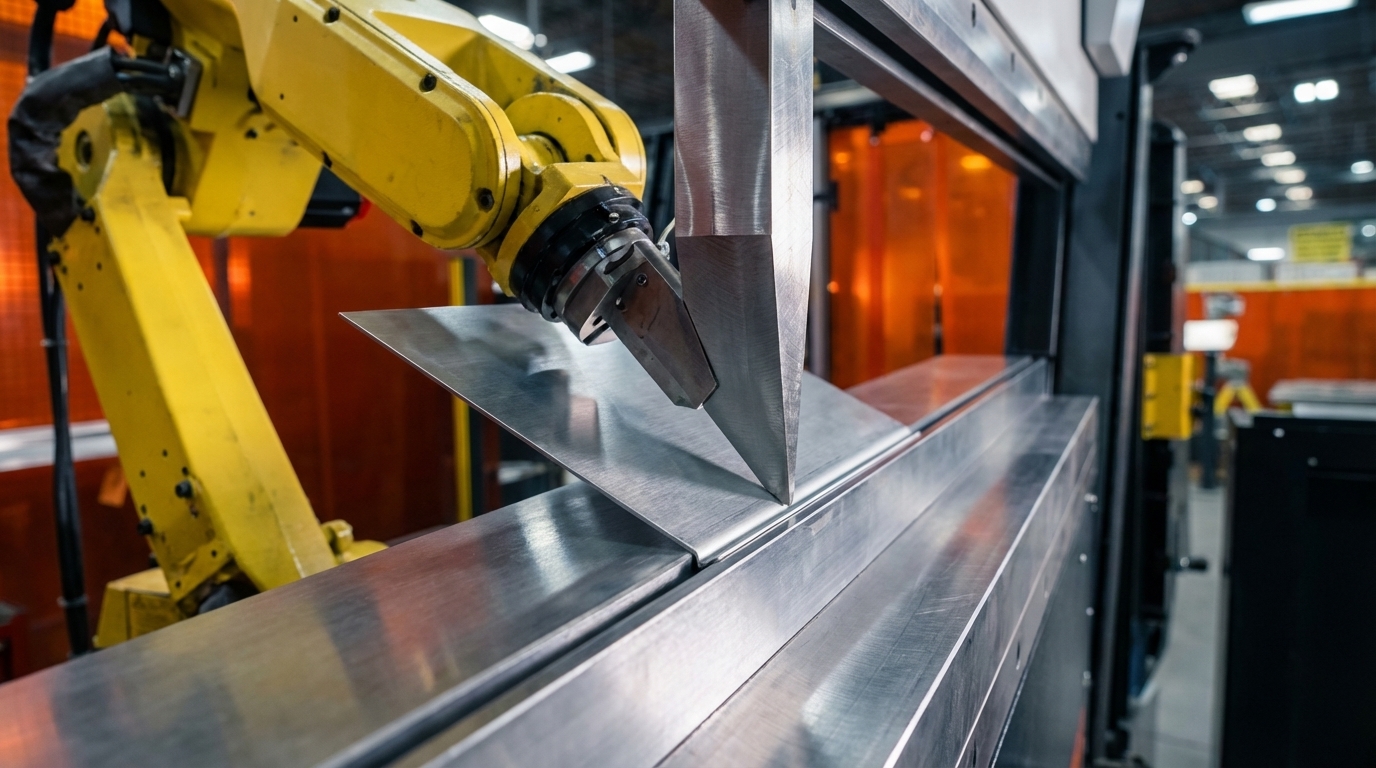
Precision fabrication capability must be confirmed, not assumed. A qualified partner operates laser cutting, CNC punching, forming, welding and certified finishing processes within a single facility.
Each process transfer between vendors can add days for shipping, handling and inspection, which increases lead time in multi-vendor workflows. Consolidating these steps under one roof removes that delay and eliminates many handoff points where quality gaps start.
In-house finishing such as powder coat, wet paint, screen printing and mil-spec coatings matters for cosmetic and compliance-driven programs. When finishing is outsourced, the customer absorbs the scheduling risk of a third-party queue. When finishing stays in-house, the fabricator controls the schedule from raw material through final finish.
A higher quote from a certified, vertically integrated shop often produces lower total project cost. Fewer change orders, tighter tolerances and more stable schedules offset higher piece prices because unified workflows prevent tolerance stack-up errors common in multi-vendor handoffs.
Step 4: Confirm Electromechanical Integration and Light Assembly Capability
Complex programs often require more than sheet metal. Enclosures with wiring, hardware insertion and component integration demand a partner that supports electromechanical work as well as fabrication.
Build-to-print plus light assembly means the same facility that cuts and forms the metal also installs hardware, routes wiring and integrates components into a functional unit. Beyond fabrication and finishing, most programs benefit when this integration happens in the same operation that produced the metal parts.
The supply-chain simplification is measurable. One purchase order, one point of contact and one quality system replace the coordination overhead of separate fabricators, finishers and assembly houses. A single integrated partner handling fabrication through final electromechanical assembly reduces logistics cost and simplifies the supply chain compared with fragmented models.
Get a quote for custom sheet metal fabrication and electromechanical assembly with FABCON.
Step 5: Evaluate Quality Systems and Traceability Discipline
Certifications set the floor for participation in critical programs. A qualified partner holds ISO 9001:2015 and, for aerospace and defense work, AS9100D. ITAR registration supports programs with defense-controlled content. UL and CSA compliance support products sold in North American markets.
Traceability turns those certifications into daily practice. In aerospace and defense manufacturing, material traceability is a core control that supports AS9100 quality management, NADCAP special processes, DFARS material restrictions and ITAR data controls.
A complete traceability system links every finished part to its material certifications, process records, inspection results and nonconformance dispositions. Aerospace auditors test this system in both directions, from shipped serial number back to source material and from suspect material lots forward to every affected shipment.
When auditing a potential partner’s quality system, request:
-
Current certification certificates with scope and expiration dates
-
A sample first article inspection report
-
Evidence of in-process inspection at fabrication, finishing and assembly stages
-
Corrective action response time metrics
-
ITAR registration documentation if applicable
Step 6: Test Scaling Flexibility from Prototype to Mid-Volume
Programs succeed when the partner that builds the prototype can also support production. Many programs struggle at this transition because the prototype fabricator lacks scale, or the large contract manufacturer lacks agility for evolving bills of materials.
Agile production cells solve this problem. These flexible configurations adapt to changing volumes, mixed SKUs and updated bills of materials without major disruption. When the contract manufacturer already has fixtures, automation concepts and quality systems in place, the timeline shrinks and market windows become easier to hit.
Evaluate scaling flexibility by asking structured questions:
-
What is the minimum order quantity at prototype and production stages
-
How the partner handles mid-program design changes without restarting qualification
-
Whether the partner can demonstrate experience with high-mix, variable-volume programs
The objective is a partner that grows with the program rather than one that forces a vendor change at each volume threshold.
Common Challenges in Electromechanical Programs and Practical Mitigation
Electromechanical programs encounter recurring challenges that respond well to structured mitigation.
Incomplete drawings. Drawings missing tolerances, hardware specifications or assembly context force fabricators to make assumptions that cause first-article failures. The practical mitigation is a required DFM review before quoting, with all drawing ambiguities resolved before purchase order issuance.
Late design changes. Changes cost less during concept and detail design than after tooling commitments, where the cost multiplier increases sharply. The mitigation is early involvement of the fabricator’s engineering team at the concept or design validation phase, not after drawings release.
Underestimated integration requirements. Programs scoped as fabrication-only often expand to include finishing, wiring and assembly as the design matures. The mitigation is selection of a partner with full integration capability from the start, even when early phases use only part of that capability.
Objective Success Indicators and Tracking Methods
Three metrics provide a clear picture of partner performance across quality, delivery and design stability.
First-pass yield (FPY) measures the percentage of units that pass inspection without rework on the first attempt. Strong FPY during NPI supports faster transition from prototype to production, lower rework and repair costs, fewer engineering changes and higher confidence during scale-up. FPY should be tracked by stage: fabrication, finishing and assembly.
On-time delivery (OTD) measures the percentage of orders shipped on the committed date. OTD reflects internal scheduling discipline and supply chain control. A vertically integrated partner with in-house finishing and assembly has more levers to protect delivery dates than a shop dependent on outside processors.
Engineering change frequency measures how often design changes occur after production release. High frequency signals DFM gaps upstream. Tracking engineering change orders by phase and root cause reveals whether changes originate from design intent, manufacturing feedback or field performance.
Advanced Considerations: Long-Term Supplier Integration and Improvement
High-value manufacturing partnerships extend beyond transactional builds. Long-term collaboration enables incremental process improvements that reduce cycle time, improve yield and lower total cost over successive production runs.
A strategic supplier may recommend fixture redesigns or advanced tooling that cut cycle times while maintaining tolerance accuracy. These recommendations emerge when the supplier holds deep program knowledge and shares in the customer’s success.
Supply-chain resilience strengthens under this model. A nearshore or domestic U.S. supply chain compresses replenishment cycles for electromechanical assemblies compared with offshore sourcing, which reduces program risk and inventory carrying costs. Durable trade actions have pushed many U.S. OEMs to prioritize local supply chains for reliability and compliance rather than lowest-cost sourcing.
A single integrated U.S. partner also simplifies audit readiness. One quality system, one set of certifications and one point of contact replace the complexity of managing compliance across multiple vendors.
Frequently Asked Questions
What certifications should a sheet metal fabrication and electromechanical assembly partner hold
The baseline for most industrial programs is ISO 9001:2015, which governs quality management across fabrication, finishing and assembly. Programs in aerospace, defense or space require AS9100D, which adds traceability, configuration control and risk management requirements specific to those sectors. ITAR registration applies to any program involving defense-controlled technical data or hardware. UL and CSA compliance are standard for products sold in North American markets. Partners serving medical device customers may also need ISO 13485. Certifications should be current, cover the relevant scope and be maintained by an accredited registrar.
What is the difference between a job shop and a vertically integrated partner for electromechanical programs
A job shop typically handles one process such as cutting, bending or welding and then returns parts to the customer for the next step. The customer manages the sequence, coordinates multiple vendors and absorbs scheduling and quality risk at each handoff. A vertically integrated partner performs fabrication, finishing and electromechanical assembly under one roof, with a single quality system governing every stage. In practice, one partner owns the outcome from raw material to finished assembly, which removes the finger-pointing that occurs when defects cross vendor boundaries.
How should operations teams evaluate a partner’s ability to scale from prototype to mid-volume production
Key indicators include production cell flexibility, minimum order quantity policies and experience with high-mix programs. A partner using agile production cells can adapt to changing volumes and evolving bills of materials without full re-qualification at each volume step. Operations teams can request examples of programs that moved from prototype to production within the same facility and confirm that engineering and quality systems scale with the program rather than handing off to a separate production team. Rigid high-minimum models signal infrastructure tuned for high-volume commodity work, not the variable-volume programs common in infrastructure and technology sectors.
What traceability documentation should a qualified partner provide
A complete traceability package links every finished assembly to its material certifications, process records, inspection results and any nonconformance dispositions. For aerospace and defense programs, this includes first article inspection reports per AS9102, in-process inspection logs, material test reports tied to heat or lot numbers, special process certifications and configuration control records showing the drawing revision for each unit. For industrial and infrastructure programs, the minimum expectation is material certifications, final inspection records and a corrective action system that documents how nonconformances were identified and resolved. A sample traceability package before award confirms that documentation practices match program requirements.
Conclusion: Selecting a Vertically Integrated Partner with Proven Depth
Fragmented sourcing between low-complexity job shops and rigid large contract manufacturers creates hidden costs, compliance risk and unreliable lead times. The six steps above provide a structured method for identifying a vertically integrated U.S. partner that reduces those risks.
The core evaluation criteria include defined requirements, early DFM collaboration, in-house fabrication and finishing, electromechanical integration capability, certified quality systems with full traceability and agile scaling from prototype to mid-volume production. A partner that meets all six criteria reduces vendor count, shortens timelines and delivers measurable improvements in quality and program velocity.
FABCON operates as a vertically integrated precision sheet metal fabrication and electromechanical assembly partner, serving infrastructure and technology-driven industries from 220,000 square feet of U.S. manufacturing space. ISO 9001:2015, AS9100D and ITAR registered, FABCON supports programs from prototype through production under one roof.
Get a quote for a custom sheet metal fabrication partner for complex electromechanical assemblies.