
Last updated: July 10, 2026
Key takeaways for sourcing micro laser cutting in 2026
- Medical device OEMs benefit from U.S. micro laser cutting partners that combine technical precision, regulatory alignment and supply chain integration to shorten timelines between design freeze and submission.
- ISO 13485, ISO 9001:2015 and AS9100D certifications indicate that a supplier’s quality system supports medical device requirements instead of general industrial standards.
- Material-specific laser platforms, especially femtosecond systems for nitinol and heat-sensitive alloys, paired with validated cleanroom controls, support micron-level edge quality and biocompatibility.
- Vertical integration reduces risk by removing handoffs, preserving a single chain of custody and enabling in-house finishing and assembly under one accountable partner.
- Partner with Fabcon for vertically integrated U.S. micro laser cutting that combines precision fabrication, ISO-certified quality systems and DFM collaboration from prototype through production.
Micro laser cutting for medical device components
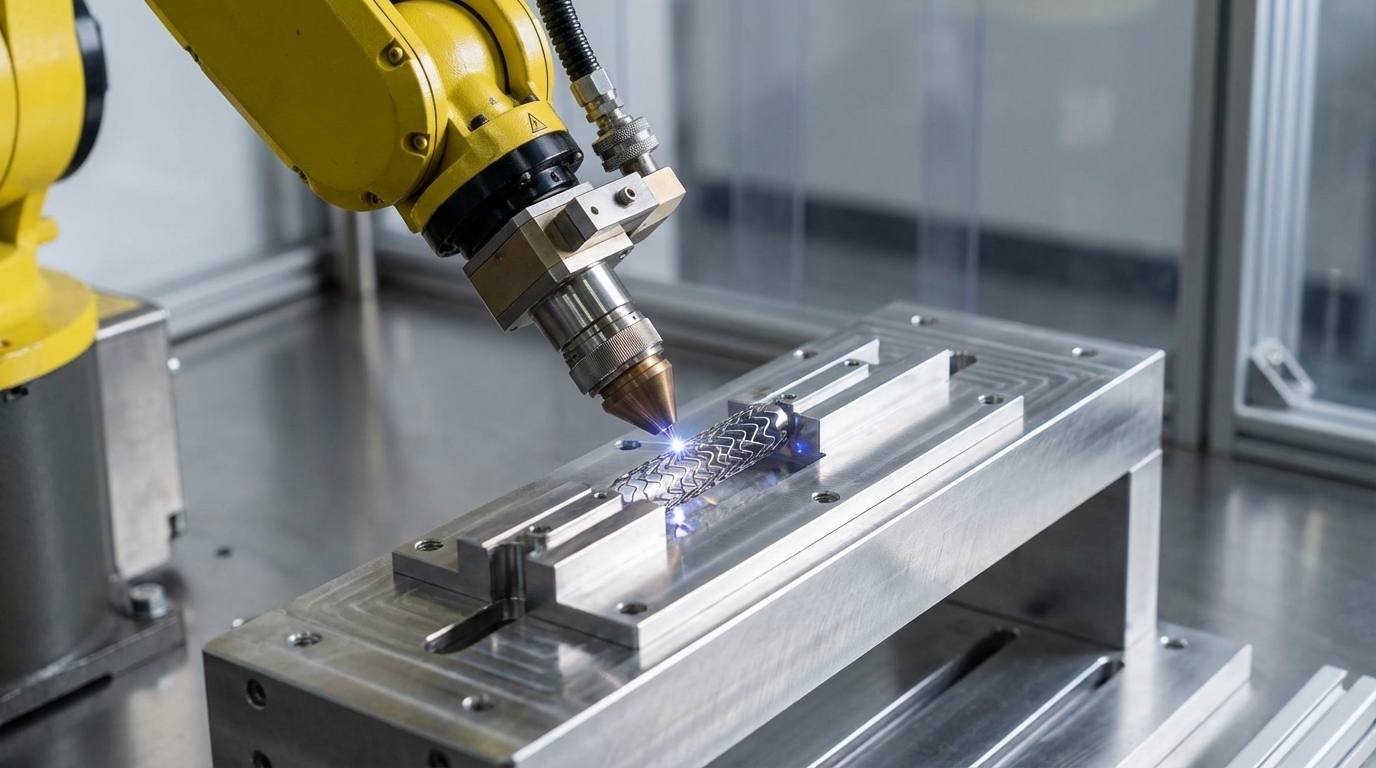
Micro laser cutting uses focused laser energy to remove material at sub-millimeter scales and create intricate geometries in metal tubes, sheets and polymer substrates. Typical applications include vascular stents, hypotubes, structural heart components and neurovascular implants. This work requires micron-level precision, validated process controls and full traceability from raw material to finished part. In 2026, domestic sourcing of these services serves as a strategic priority for OEMs that manage regulatory risk and supply chain resilience.
U.S.-based, ISO-certified partners and regulatory confidence
Domestic manufacturing reduces exposure to cross-border logistics delays and foreign regulatory variability. A U.S.-based partner operates under FDA oversight, supports Unique Device Identification traceability requirements and participates directly in design reviews without export-control friction. ISO 13485 and ISO 9001:2015 certification shows that a supplier’s quality management system aligns with medical device requirements instead of a general industrial framework. Partners that hold AS9100D certification add rigor in process documentation and traceability that transfers directly to medical program requirements.
Material compatibility for stents, hypotubes and implants
Material selection drives laser parameter selection and shapes how a supplier configures its equipment. Nitinol, stainless steel, titanium, cobalt chrome and bioresorbable polymers each respond differently to laser energy, so each material requires distinct pulse durations, wavelengths and assist-gas configurations. These differences reveal how deeply a supplier understands material behavior and inform supplier selection.
Nitinol superelastic properties make this alloy sensitive to thermal input. Any uncontrolled heat can alter phase-transformation behavior and compromise device performance. Titanium and cobalt chrome present a different challenge and demand tight oxide management at cut edges. Bioabsorbable polymers add another constraint and require athermal or near-athermal processing to preserve molecular weight and degradation profiles. A qualified supplier documents material-specific process parameters and validates them against biocompatibility standards such as ISO 10993 before production begins.
Heat-affected zone control and edge quality on micro features
Femtosecond lasers vaporize base material to create micron-sized features with little to no heat-affected zone, which makes them a strong choice for thin-walled tubes and heat-sensitive materials such as nitinol. Fiber lasers melt metal for faster cutting of larger-diameter stainless steel tubing, and this method introduces a heat-affected zone at cut edges that requires acid cleaning to remove.
This cleaning requirement has driven many medical device manufacturers toward ultrashort-pulse technology. Ultrashort-pulse femtosecond lasers deliver energy in pulses measured in quadrillionths of a second and enable nearly athermal material removal with minimal melting, burrs or dross. The practical result is reduced post-processing, more stable production and cleaner edge geometry on the smallest components. Coaxial gas-assisted femtosecond laser cutting can produce single-pass full-wall cuts with intricate geometries while maintaining high edge quality on metal and polymer stents. Supplier evaluations should include specific questions about which laser platform supports each material class and which post-processing steps remain in the validated process.
Cleanroom requirements and environmental controls for implants
Implantable medical device assembly typically uses ISO Class 6-7 cleanrooms for direct patient contact in sterile or semi-sterile zones under ISO 14644-1 classifications. ISO Class 7 cleanrooms serve most medical device assembly and precision component manufacturing needs. ISO Class 6 environments support implants and biotech applications that require tighter particulate control.
Cleanroom classification alone does not address all environmental risks. Ambient temperature, humidity and vibration isolation become critical operational challenges when scaling micro laser cutting, because sub-micron precision requires isolation from building vibrations and acoustic noise. Suppliers should demonstrate validated environmental monitoring, documented gowning protocols and annual ISO 14644-2 recertification. Evidence of these controls should appear before a program award.
Prototype-to-production scalability for micro laser programs
Scaling micro laser cutting from prototype to production requires precise matching of laser parameters to material properties, with process development often using Design of Experiments for specific material-geometry combinations. A supplier that cannot demonstrate a structured DOE methodology at the prototype stage will struggle to hold tolerances at production volumes.
High-volume production of micro laser cut medical components requires real-time power monitoring, machine vision for alignment and quality verification and optical coherence tomography to support repeatability across production runs. Supplier evaluations should confirm that quality infrastructure scales with volume instead of remaining sized only for low-quantity prototype work. Agile production cells that adapt to changing volumes and mixed SKUs reduce program risk during ramp.
Supplier selection criteria and U.S. providers at a glance
The following suppliers represent a cross-section of the U.S. micro laser cutting market and illustrate different capability profiles. Each provider brings distinct strengths, and these differences help OEMs align supplier capability with program requirements.
Accumet focuses on precision laser processing for medical tubing and implantable components with documented material experience across nitinol and stainless steel. Resonetics operates as a specialized micromachining firm with deep expertise in cardiovascular and neurovascular device geometries. Spectralytics concentrates on laser cutting of stents and other vascular components with a process library built around nitinol and cobalt chrome. A-Laser offers laser cutting and marking services for medical and industrial applications with capabilities that span metal and polymer substrates. Gateway Laser Services provides contract laser processing with a focus on precision tubing and sheet components. Norman Noble sustains laser machining accuracies throughout entire production runs and applies proprietary athermal laser technology for nitinol, bioabsorbable polymers and exotic alloys. Creganna, now part of TE Connectivity, combines catheter and minimally invasive device assembly with laser processing under one program structure.
Fabcon occupies a distinct position in this landscape and centers its model on vertical integration. As a U.S. contract manufacturer, Fabcon combines precision fabrication with in-house finishing and light assembly under one roof. With ISO 9001:2015 and AS9100D certification, Fabcon delivers full traceability across the entire build, reduces vendor count and removes the handoff delays that fragment quality accountability across micromachining-only suppliers.
Request a design-for-manufacturability review from Fabcon.
Common pitfalls when sourcing micro laser cutting services
Fragmented vendor bases often create the most significant program delays. When laser cutting, cleaning, finishing and assembly span three or four suppliers, no single partner owns quality from start to finish. This fragmentation creates traceability gaps at every handoff, which in turn forces regulatory submissions to reconcile records from multiple quality systems.
Limited DFM input at the quoting stage compounds this problem. Suppliers that review drawings only for basic buildability miss chances to refine geometry for laser parameter efficiency, reduce post-processing steps and improve yield at production volumes. Early DFM collaboration between the OEM engineering team and the supplier process engineers prevents costly redesigns after tooling is committed.
Unclear traceability requirements introduce audit risk. Medical device applications require compliance with FDA Unique Device Identification traceability via laser marking and validated process protocols with batch records. A supplier without a mature quality management system cannot produce the documentation that an FDA audit or notified body review demands. Fabcon quality management spans fabrication, finishing and assembly and produces a single chain of custody for every part.
RFQ checklist for medical device OEM sourcing teams
Use the following criteria when issuing an RFQ for micro laser cutting services. These ten criteria help separate suppliers with mature medical device capabilities from those adapted from general industrial work.
- Laser platform type and documented material-specific process parameters for nitinol, stainless steel, titanium and relevant polymers
- Cleanroom classification, certification status and environmental monitoring records
- ISO 13485 and ISO 9001:2015 certification scope and most recent audit date
- Traceability methodology from raw material receipt through finished part shipment
- DFM review process and timeline at the prototype stage
- Quality inspection methods, including in-process monitoring and final inspection protocols
- Scalability plan from prototype to production volumes, including capacity and lead time performance
- Finishing and assembly capabilities available in-house versus subcontracted
- Biocompatibility testing support and ISO 10993 documentation experience
- FDA UDI laser marking capability and batch record format
Next steps with the Fabcon engineering team
Fabcon vertical integration addresses core challenges that medical device OEMs face when sourcing micro laser cutting services, including fragmented vendor bases, inconsistent traceability and gaps between prototype capability and production readiness. With ISO 9001:2015 and AS9100D certification, in-house finishing and light assembly and DFM collaboration built into the quoting process, Fabcon delivers repeatable quality across prototype and production volumes under one accountable partner.
Get a quote and start a DFM review with the Fabcon engineering team.
Frequently asked questions
What certifications should a micro laser cutting supplier hold for medical device work?
A supplier should hold ISO 9001:2015 certification with a quality management system that covers the full scope of laser cutting, finishing and assembly operations. ISO 13485 certification serves as the medical device-specific standard and shows that the supplier quality system aligns with device manufacturing requirements, including design controls, process validation and complaint handling. AS9100D certification, while aerospace-focused, demonstrates additional rigor in traceability and process documentation that supports medical programs. Suppliers should also demonstrate cleanroom certification that matches the component patient-contact classification.
How does vertical integration reduce risk in medical device fabrication programs?
When fabrication, finishing and assembly sit with a single partner, quality accountability does not transfer between vendors. Every handoff between suppliers introduces a potential traceability gap, a delay and a point of quality ambiguity. A vertically integrated partner maintains a single chain of custody from raw material to finished assembly, produces unified batch records and responds to design changes without coordinating across multiple supplier schedules. For medical device OEMs that manage regulatory submissions, this structure simplifies documentation and reduces audit exposure.
What is the difference between femtosecond and fiber laser cutting for medical components?
As discussed earlier, femtosecond lasers use non-thermal vaporization and produce minimal heat-affected zone, which supports heat-sensitive materials and thin-walled geometries. Fiber lasers cut through thermal melting, which increases speed for larger-diameter stainless steel components but introduces a heat-affected zone at cut edges that requires post-processing. Material class, wall thickness and edge quality requirements should drive the choice of laser platform. A qualified supplier documents which platform supports each material and validates the process against device performance specifications.
How should an OEM evaluate a supplier ability to scale from prototype to production?
Prototype capability and production capability differ in practice. A supplier that produces accurate prototype quantities may lack the process monitoring infrastructure, production cell capacity and quality system depth to sustain those results at volume. During supplier evaluation, teams should request evidence of Design of Experiments methodology used during process development, real-time monitoring systems used during production runs and examples of programs that transitioned from prototype to repeatable production volumes. Agile production cells that adapt to changing volumes and mixed SKUs provide an advantage over rigid production lines that require high minimum order quantities to operate efficiently.
What information should an OEM include in an RFQ for micro laser cutting services?
A complete RFQ should include material specifications and certifications, part geometry with critical tolerance callouts and surface finish and edge quality requirements. It should also define required cleanroom classification for processing and packaging, traceability and documentation requirements, including batch record format, expected prototype and production volumes and any biocompatibility or regulatory testing requirements such as ISO 10993 compliance. Including DFM review as a requested deliverable at the quoting stage signals that the OEM expects engineering collaboration, not only a price. Suppliers that engage substantively with DFM at the RFQ stage are more likely to identify manufacturability issues before they become production problems.