
Last updated: August 16, 2026
Key Takeaways for Modular Data Center Enclosures
- Modular data center enclosures are factory-built, rapidly deployable systems that integrate IT, power and cooling for hyperscale, enterprise and edge programs.
- Engineering and sourcing teams can evaluate partners with a six-criteria framework that covers capabilities, integration, quality, scalability, supply chain and value.
- Key specifications include power redundancy, rack density, environmental protection (IP55/RC2), PUE targets, seismic compliance and subsystem integration scope.
- Early design-for-manufacturability (DFM) reduces redesigns, enables tab-and-slot assembly and supports factory finishing that replaces on-site work.
- Contact Fabcon for vertically integrated U.S. manufacturing, ISO 9001:2015 and AS9100D certification, and expert DFM collaboration from prototype through production.
Executive Summary for Modular Enclosure Sourcing
Engineering and sourcing teams evaluating modular data center enclosures face recurring decisions on configuration, specifications and manufacturing partners. Each decision affects deployment speed, field risk and long-term operating cost.
This guide applies a structured six-criteria evaluation framework to help technical and procurement teams select a fabrication partner that supports quality at scale without fragmenting the supply chain.
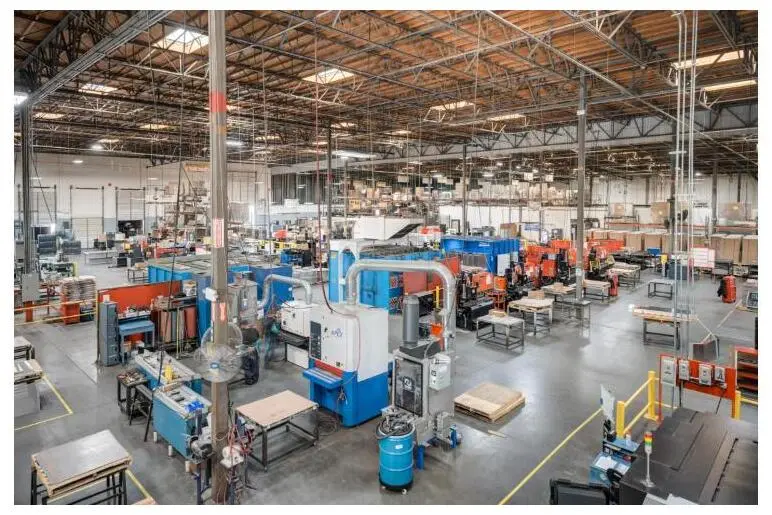
Fabcon operates from vertically integrated manufacturing space across two U.S. facilities. Certified to ISO 9001:2015 and AS9100D, Fabcon delivers precision sheet-metal fabrication, in-house finishing and light electromechanical assembly under one roof, from prototype through mid-volume production.
Modular Enclosure Configurations and Use Cases
Modular data center deployments span several distinct form factors, each aligned with specific capacity, site and operational requirements.
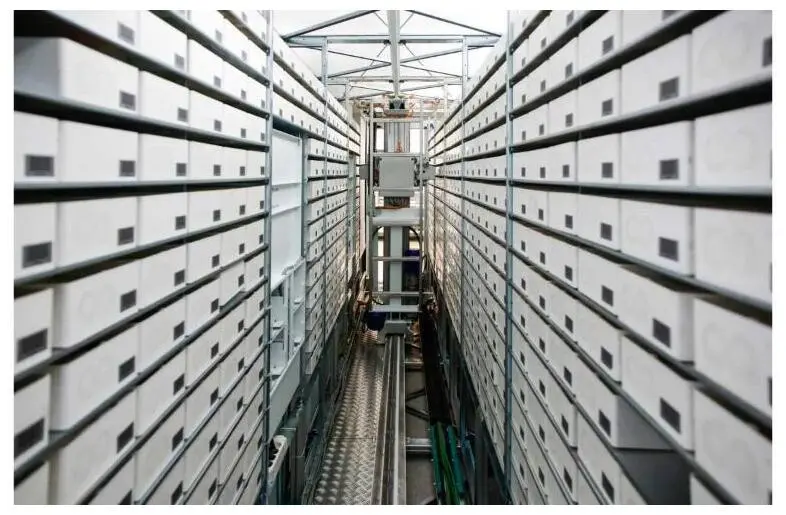
IT or white-space modules house server racks, containment systems, cable management and network infrastructure. These modules focus on density and airflow management and serve as the primary compute environment in prefabricated room and campus configurations.
Power or gray-space modules integrate medium-voltage feeds, transformers, switchgear, UPS systems, batteries and power distribution units. These modules typically sit adjacent to IT space and receive separate evaluation for electrical safety certification.
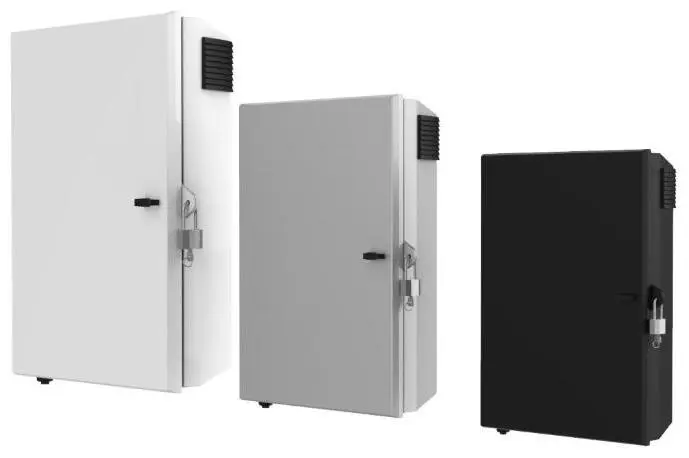
Edge or all-in-one units combine IT, power and cooling in a single transportable enclosure. Edge shelters and containerized all-in-one units suit distributed, low-latency footprints and require harsh-environment adaptation and remote operations capability. These designs prioritize fast field deployment and transportability with limited civil work.
Engineering Specifications that Shape Enclosure Design
Specifying a modular data center enclosure requires alignment across structural, electrical, thermal and environmental parameters. Each domain carries interdependencies that influence the others, such as power capacity driving cooling needs and structural loads.
The following categories represent the primary specification domains engineering teams address.
Power capacity and redundancy: IT load ranges vary significantly by form factor, from micro-module configurations supporting lower densities to prefabricated room deployments supporting multi-megawatt programs. Redundancy architecture, including N, N+1 or 2N, must be defined at the enclosure level.
Rack density and cooling readiness: Air cooling with containment works well at lower per-rack densities, while higher densities require liquid-ready designs and AI inference deployments target elevated minimum rack power. Enclosure structural design must support the weight and thermal load of high-density configurations.
Environmental protection: A published standalone modular data center specification includes IP55 protection and RC2 break-in resistance along with provisions for generator integration, hot and cold aisle containment and fire suppression systems such as Novec 1230.
PUE targets: Modular data centers can achieve efficient PUE values that often fall below those from traditional construction, especially when cooling and power distribution are factory engineered as a system.
Structural and seismic requirements: Enclosures must meet IBC structural requirements for the installation jurisdiction. These requirements include seismic anchoring and lifting point specifications for crane-assisted placement.
Subsystem integration scope: A complete modular data center module integrates seven subsystems: power train, cooling train, white space, network, security and fire, monitoring and controls, and envelope and site interface. The fabricator scope must be defined clearly against each subsystem.
DFM and Manufacturing Choices that Cut Risk
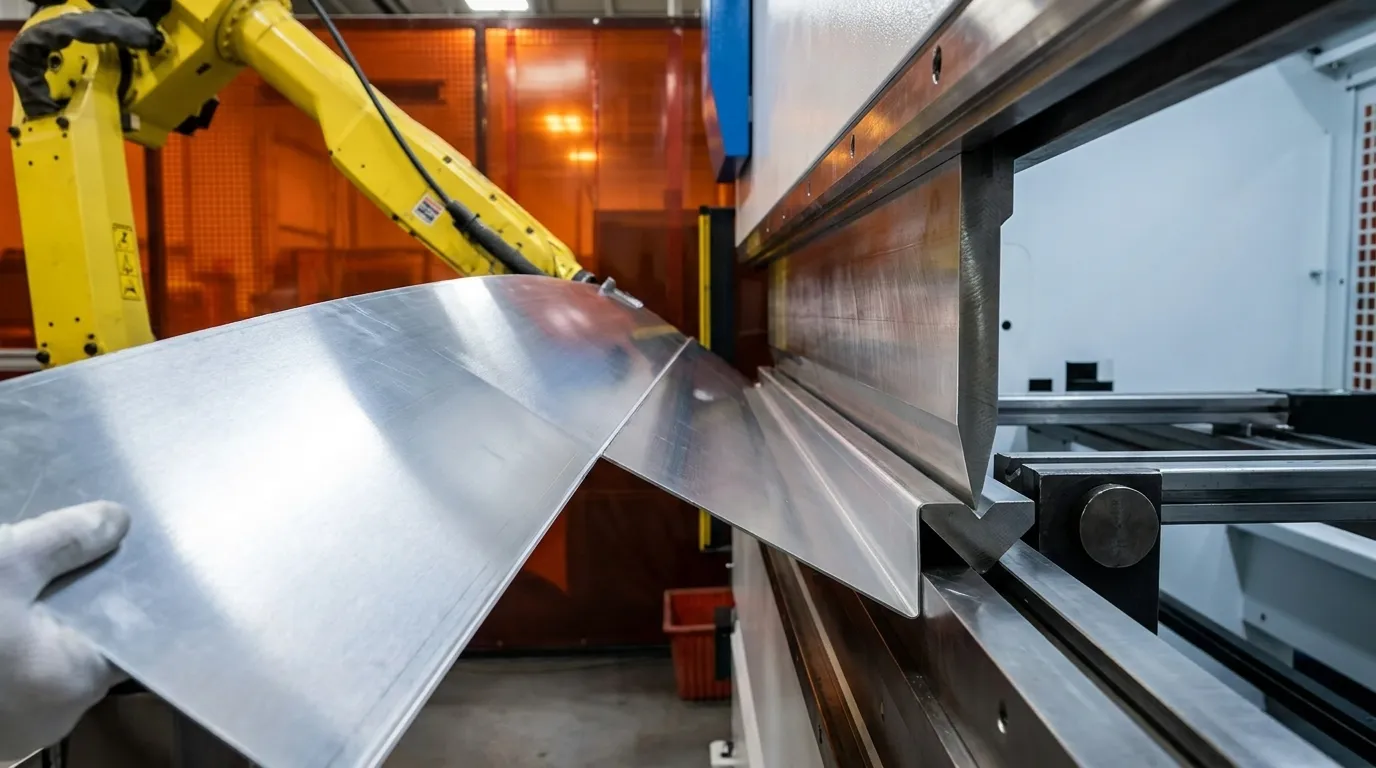
DFM applied early in concept and initial design prevents costly redesigns and builds manufacturability into products from the beginning. For modular data center enclosures, DFM resolves bend radii, hole placement, flange geometry and material selection before production begins, not after the first prototype exposes tolerance conflicts.
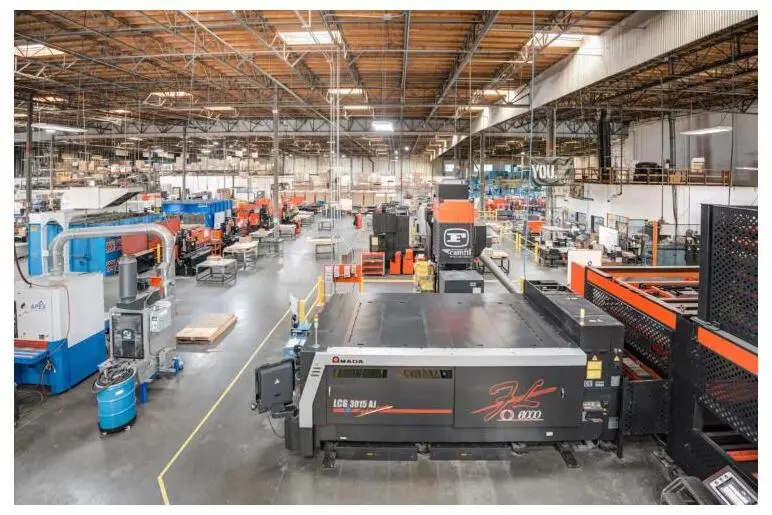
Integrating DFM and Design for Install from day one with OEM design teams creates measurable savings in engineering-and-design time and shortens total timelines compared with traditional stick-built data center construction.
These timeline gains stem from specific manufacturing decisions made during the DFM phase. Replacing field welding with laser-cut tab-and-slot self-locating assemblies and high-strength bolted joint systems eliminates the need for on-site certified welders, fire watches and inspection-gated sequencing. Factory-applied finishing before delivery removes on-site surface prep and curing while meeting data center corrosion and contamination requirements.
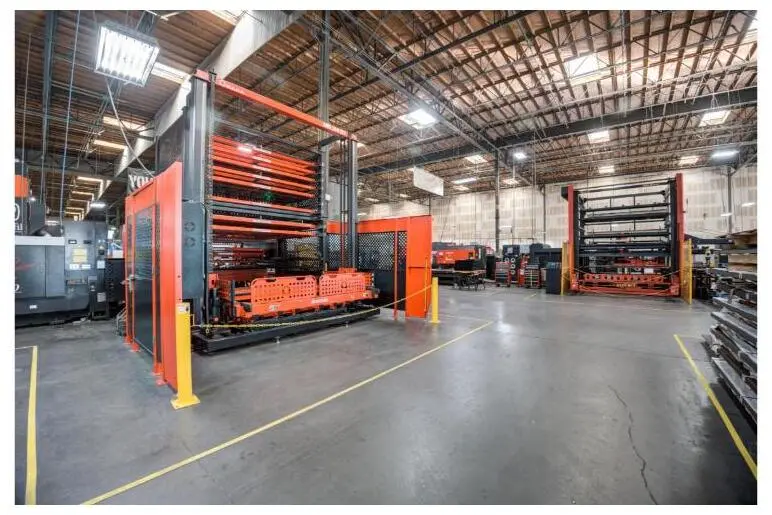
A DFM review for modular enclosure programs should address the following:
- Bend radius consistency relative to material thickness and grade
- Hole and cutout placement that avoids deformation-prone zones
- Flange geometry tuned for assembly alignment and hardware insertion
- Weld joint accessibility that supports in-process inspection
- Finishing compatibility with enclosure geometry, with no blind pockets that trap coating
- Electromechanical routing paths defined before sheet-metal geometry is locked
- Tolerance stack-up analysis across fabricated, machined and assembled components
- Modular sub-assembly design that enables parallel production scheduling
Fabcon engineering and quoting teams collaborate with customer design teams before production begins. They review drawings, tolerances and materials to refine manufacturing routers and work instructions for the production floor.
Compliance, Quality and Traceability for Modular Enclosures
Modular data center enclosures operate under a layered compliance framework that spans product safety, electrical code, structural code and quality management systems.
UL 2755, the Outline of Investigation for Prefabricated Modular Data Center Systems and Related Modular Units, enables evaluation of modular data centers and their subsystems as a single integrated product before shipment. UL 2755 certification allows modular data centers to be assessed as complete integrated systems before leaving the factory, so that only installation verification is typically required on-site.
UL 2755 applies to modular units that relocate to a site and interconnect, including prefabricated data centers, skid-mounted power modules, telecommunication enclosures, energy storage system containers and modular mechanical rooms. UL 2755 does not replace IBC or local building code requirements, and if a prefabricated unit is classified as a building, state modular building program requirements also apply.
NFPA 70 Article 646 directly covers modular data centers and sets requirements for electrical equipment, wiring, labeling and installation within a modular unit. Modular AI data centers must satisfy the same state-adopted version of the IBC as site-built structures, with occupancy classification determined early by the local Authority Having Jurisdiction.
Factory quality control under ISO 9001:2015-certified systems, including laser-cut tolerance verification, weld inspection and powder-coat adhesion testing, catches errors that would otherwise require on-site rework cycles when discovered during installation.
Fabcon quality management holds certification to ISO 9001:2015 and AS9100D, with integrated QA that spans fabrication, finishing and assembly. Full traceability is maintained across every build stage and supports compliance documentation requirements for infrastructure-critical programs.
Cost Drivers and Total Ownership for Modular Programs
The global modular data center market continues to expand as AI infrastructure buildout, edge deployment growth and enterprise capacity needs increase demand.
Traditional data center construction often takes longer from groundbreaking to commissioning for a mid-scale facility. Prefabricated modular deployments compress that timeline for core infrastructure, especially when factory production runs in parallel with site preparation.
The primary cost drivers for modular enclosure programs include:
- Material selection and grade, with hot-rolled coil steel and aluminum sheet serving as key inputs for standard enclosures in the U.S. market
- Finishing scope, since coating and finishing processes add meaningful production cost in the metal finishing and coatings industries, with costs rising as environmental regulations on VOC emissions tighten
- Integration depth, because fully integrated power, cooling and IT scope increases unit cost but reduces soft costs such as project management and engineering oversight
- Volume and standardization, as OEM contracts that exceed defined annual unit thresholds can receive volume discounts off distributor pricing
- Site preparation, since foundation, utilities and crane access still require lead time and local permits that add to total project costs even for prefabricated modules
Prefabricated data centers can reduce total cost by cutting soft costs such as project management and engineering oversight. Supply-chain consolidation with fewer vendors, fewer handoffs and single-point accountability reduces hidden costs that fragmented sourcing introduces.
Seventy-three percent of supply chain executives plan to transform their operating model within the next one to three years to enhance agility, flexibility and resilience amid global disruptions, according to KPMG’s March 2026 U.S. Supply Chain Survey of 462 C-suite leaders. Vendor consolidation serves as a direct response to that pressure.
Evaluating U.S. Fabricators and Full-System Vendors
Full-system vendors such as Schneider Electric, Vertiv and Eaton deliver complete integrated modular data center products. U.S. precision fabricators occupy a different position in the supply chain and manufacture structural enclosures, racks, chassis and electromechanical sub-assemblies that full-system vendors and OEMs integrate into finished products.
These fabricators also serve as primary manufacturing partners for custom programs that full-system catalogs do not accommodate.
Apply the following six-criteria framework when evaluating fabrication partners for modular data center enclosure programs:
- Technical capabilities: The fabricator should support laser cutting, CNC punching, forming, certified welding and CNC machining in-house and hold the tolerances required for rack alignment and hardware insertion.
- Integration scope: The fabricator should offer finishing, including powder coat, wet paint and mil-spec coatings, and light electromechanical assembly under the same roof to avoid extra vendor handoffs.
- Quality and compliance: ISO 9001:2015 and AS9100D certifications should be in place, with full traceability across fabrication, finishing and assembly stages.
- Scalability and flexibility: The fabricator should support prototype, pilot and mid-volume production without high minimum order quantities or extended onboarding timelines.
- Supply-chain reliability: U.S.-based operations with domestic material sourcing capability reduce exposure to material shortages and supply chain volatility in manufacturing.
- Cost versus total value: The partner’s integrated scope should reduce total program cost through fewer handoffs, faster quoting and reduced rework, even when unit price is not the lowest.
A vendor evaluation checklist for modular enclosure programs should include:
- Confirmed ISO 9001:2015 and AS9100D certification status
- In-house DFM review capability with a documented engineering collaboration process
- Vertically integrated finishing and assembly with no sub-contracted coating or wiring
- Demonstrated experience with data center, telecom or infrastructure enclosure programs
- Agile production cell structure that supports high-mix, variable-volume programs
- Full traceability documentation available for every build stage
- U.S.-based manufacturing with domestic supply-chain access
- Prototype-to-production alignment without mandatory volume minimums at prototype stage
Edge and Hyperscale Deployment Considerations
Edge and hyperscale deployments impose different requirements on enclosure design, manufacturing and supply-chain structure.
Edge deployments prioritize transportability, environmental hardening and remote operability. Containerized all-in-one units focus on fast field deployment and transportability with minimal civil work but require crane access and allow narrower maintenance space. Edge enclosure designs must account for IP-rated shells, seismic anchoring and harsh-environment finishing specifications.
High-mix, lower-volume production runs are common for edge programs, which makes fabricator agility a critical selection criterion.
Hyperscale deployments prioritize repeatability, phased capacity expansion and cost efficiency at scale. The CapEx advantage of modular construction remains most consistent for enterprise deployments, campus expansions and edge facilities. For large hyperscale facilities with stable long-term demand, traditional construction economics can remain competitive.
Fabricators serving hyperscale programs must demonstrate large-part capability, in-house finishing at scale and automated process control that supports repeatability across multi-campus programs.
An artificial intelligence buildout is driving activity in the technology sector and supporting U.S. manufacturing growth, with AI infrastructure investment accelerating demand for both hyperscale and edge enclosure programs at the same time. Fifty-one percent of supply chain leaders cited managing and mitigating risks as their most important transformation objective in a KPMG survey, a priority that applies directly to enclosure sourcing decisions for both deployment types.
Conclusion and Practical Next Steps
Selecting a fabrication partner for modular data center enclosures benefits from a structured framework that covers technical capabilities, integration scope, quality systems, scalability, supply-chain reliability and total value. The evaluation criteria above give engineering and sourcing teams a repeatable process for comparing partners against program requirements.
Recommended next steps include conducting an internal needs assessment that defines enclosure configuration, volume range, compliance requirements and integration scope. Teams can then gather existing drawings, BOMs and tolerance specifications and engage a U.S. fabricator with vertically integrated capabilities for a DFM review before design lock.
Fabcon engineering teams review enclosure designs, identify manufacturability improvements and align fabrication scope with program requirements from prototype through production.
Frequently Asked Questions
What does ISO 9001:2015 certification mean for a modular enclosure program?
ISO 9001:2015 is an internationally recognized quality management system standard. For a modular enclosure program, it means the fabricator operates documented processes for design review, production control, inspection and corrective action.
Every build stage follows defined procedures, and quality records are maintained for traceability. This structure reduces the risk of defects reaching the field and provides documentation that procurement and compliance teams can audit.
What does AS9100D add beyond ISO 9001:2015?
AS9100D is the aerospace and defense quality management standard built on the ISO 9001:2015 foundation. It adds requirements for risk management, configuration control, first-article inspection and counterfeit-part prevention.
For data center and infrastructure programs, AS9100D certification signals a fabricator capable of managing complex, high-stakes builds with full traceability and rigorous process discipline that align with the reliability expectations of critical infrastructure deployments.
What is UL 2755 and why does it matter for procurement teams?
UL 2755 is the safety standard for prefabricated modular data center systems and equipment enclosures. It enables factory evaluation of a modular unit as a complete integrated system before shipment, which reduces on-site inspection requirements.
For procurement teams, UL 2755 certification on a finished modular unit simplifies the Authority Having Jurisdiction approval process and lowers the risk of deployment delays tied to on-site safety evaluations. The standard applies to prefabricated data centers, skid-mounted power modules, telecom enclosures and energy storage containers.
How does vertically integrated assembly reduce program risk compared with multi-vendor sourcing?
Multi-vendor sourcing for modular enclosure programs introduces handoff points between fabrication, finishing and assembly suppliers. Each handoff creates opportunities for quality disputes, schedule delays and tolerance mismatches that no single vendor owns.
A vertically integrated partner manages fabrication, coating and electromechanical assembly under one roof with one quality system and one accountable point of contact. This structure removes vendor finger-pointing, compresses production timelines and ensures that tolerance decisions made during DFM carry through to the finished assembly.
What volume ranges fit a mid-volume U.S. fabricator?
Mid-volume fabricators support programs that require more engineering collaboration and integration scope than a basic job shop provides but do not meet the minimum volume thresholds or onboarding requirements of large global contract manufacturers.
These programs typically span prototype builds, pilot runs and production volumes that evolve as the program scales. Agile production cells allow a mid-volume fabricator to adjust to changing SKUs, BOM revisions and volume fluctuations without the overhead rigidity of a large contract manufacturer, which suits data center, telecom and infrastructure programs with dynamic demand profiles.
What is the difference between a containerized modular data center and a prefabricated modular data center?
A containerized modular data center integrates IT, power and cooling into a single transportable enclosure, typically an ISO shipping container or equivalent structural shell. It prioritizes speed of deployment and transportability, with all systems factory integrated before shipment.
A prefabricated modular data center forms a broader category that includes containerized units as well as prefabricated room modules, skid-based power and cooling systems and micro-module configurations. Prefabricated room deployments generally support larger capacity ranges and greater maintainability than containerized all-in-one units, while containerized units offer the fastest field deployment with minimal civil work requirements.