
Key Takeaways for Electromechanical Assembly Credentials
- Electromechanical assembly certification validates skills in building, wiring, inspecting and testing mechanical-electrical units using IPC J-STD-001, IPC-A-610 and IPC/WHMA-A-620 standards.
- IPC J-STD-001 covers soldering processes, IPC-A-610 defines acceptance criteria for electronic assemblies and IPC/WHMA-A-620 sets standards for cable and wire harness assemblies.
- Most IPC training runs through licensed centers or employer programs, with CIS credentials required for production roles and CIT for trainers.
- Certified assemblers integrate best when fabrication, finishing and assembly operate under unified ISO 9001:2015 and AS9100D quality systems that ensure traceability.
- Fabcon combines certified IPC assemblers with in-house precision sheet metal fabrication and finishing under one roof, and get a quote to discuss program requirements.
Core Responsibilities of an Electromechanical Assembler
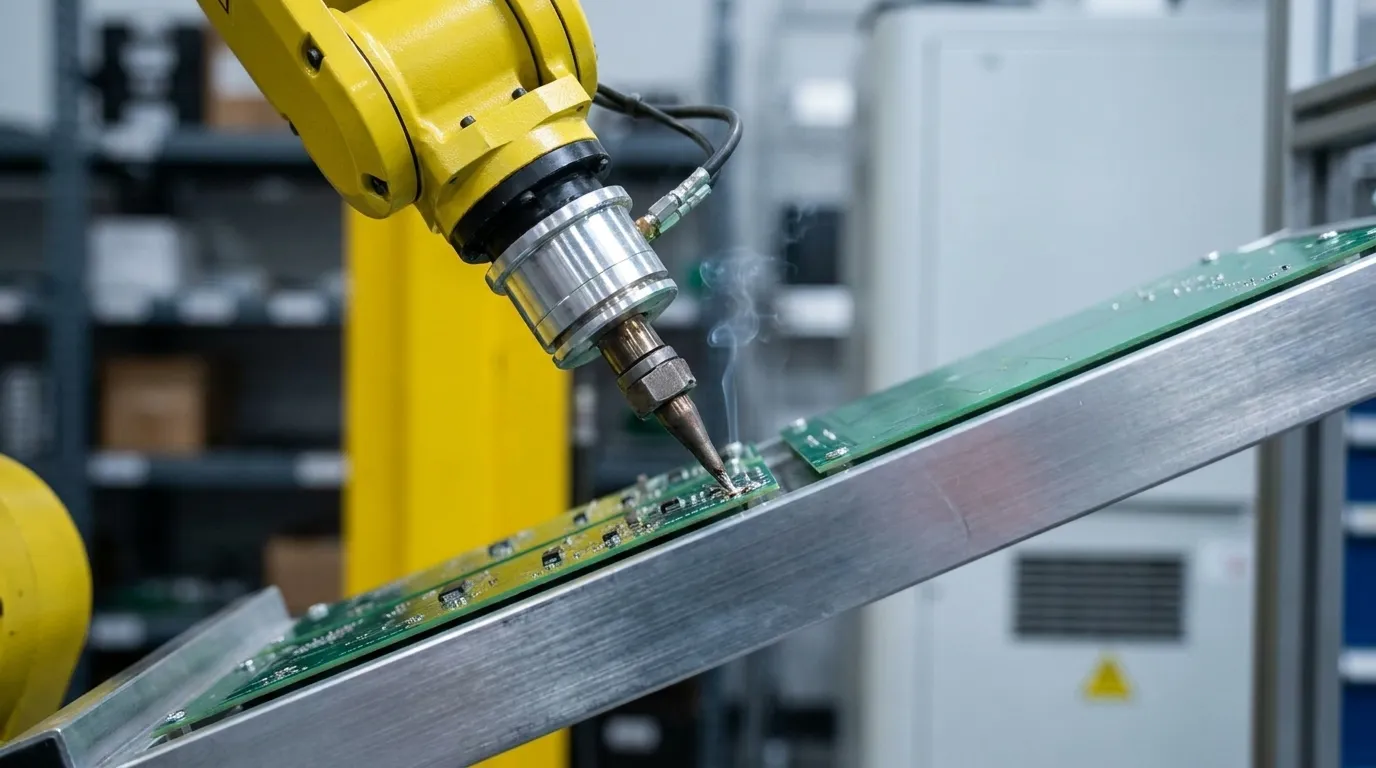
Electromechanical assemblers build finished units from mechanical enclosures, wiring harnesses, printed circuit boards and electromechanical components. Daily work includes reading engineering drawings and bills of materials, soldering and crimping connections, routing and securing wire harnesses and installing hardware into sheet metal enclosures. Assemblers also perform functional tests before shipment to confirm that units meet performance and safety requirements.
Three IPC standards form the foundation of electromechanical assembly certification, and each one covers a distinct part of the build process. Together, these standards align with the skill sets that hiring managers list in job postings for assembler, technician and quality inspector roles.
IPC Certifications Hiring Managers Commonly Require
IPC J-STD-001 is the foundational soldering standard for electromechanical work. It applies to roles that involve hand soldering, wave soldering or reflow processes on electronic assemblies. Aerospace and defense programs frequently require this credential as a baseline, and it appears in job postings for electronics assembler and production technician titles across industrial and energy sectors.
IPC-A-610, the Acceptability of Electronic Assemblies standard, is the most widely cited IPC credential in hiring requirements. Quality technicians, inspection leads and process engineers in medical device and aerospace manufacturing are expected to hold this certification. It defines three product classes, Class 1 through Class 3, with Class 3 applying to mission-critical and life-support applications where defect tolerance is near zero.
IPC/WHMA-A-620 addresses cable and wire harness assemblies specifically. It is the primary credential for roles that focus on harness fabrication, connector termination and cable routing. Defense and aerospace programs that involve complex wiring looms treat this standard as a mandatory requirement rather than a preferred qualification.
Supporting credentials frequently appear alongside the core IPC standards, and each one addresses a specific operational environment or safety requirement. Satellite and launch vehicle programs require the IPC-A-610 Space Addendum and the J-STD-001 Space Addendum to meet the heightened reliability standards of space applications. Facilities that handle high-voltage systems or operate heavy equipment typically require OSHA 10 or OSHA 30 cards to confirm baseline safety competency. Beyond these domain-specific needs, robotics and automation familiarity now appears as a preferred qualification as manufacturers integrate collaborative robots into assembly cells.
Training Pathways for Electromechanical Technicians
Most IPC training runs through IPC-licensed training centers or employer-sponsored programs. Courses typically run one to three days per standard, followed by a written and hands-on examination. Costs vary by provider and location, and employer sponsorship is common in aerospace and medical device manufacturing because the credential supports quality system compliance.
IPC certifications follow a two-year renewal cycle. Recertification requires passing an updated examination, which keeps credential holders aligned with revisions to the underlying standards.
The CIS versus CIT decision shapes the first credential step for many technicians. CIS stands for Certified IPC Specialist and serves as the production-floor credential. It confirms that a technician can apply the standard correctly during assembly or inspection. CIT stands for Certified IPC Trainer and qualifies an individual to train and certify others. Hiring managers seeking assemblers and quality technicians require CIS, while organizations building internal training programs or reducing reliance on external training providers pursue CIT for key personnel.
Career changers and mid-career technicians entering electromechanical assembly benefit from pursuing CIS first, then evaluating CIT if a training or lead role is the target. This sequence aligns initial credentials with hands-on production work, then expands into training responsibilities as experience grows.
Community college electronics programs and specialized technical training providers offer short-format courses that bundle IPC preparation with hands-on soldering and harness fabrication practice. These programs create practical entry points for career changers who lack a formal electronics background.
How Certified Assemblers Support End-to-End Builds
Certification validates individual skills, and program success depends on how certified assemblers fit into a broader manufacturing system. Effective systems control quality across every upstream and downstream step, from raw material through final test.
Precision sheet metal fabrication produces the enclosures, chassis and structural frames that house electromechanical assemblies. When fabrication, finishing and light electromechanical assembly operate under one roof, the tolerances established during metal forming carry directly into the assembly stage without the dimensional variation that accumulates across vendor handoffs. Wire harnesses route correctly the first time, hardware inserts align and functional tests reflect the actual production configuration rather than a best-case scenario assembled from parts sourced separately.
Manufacturers that maintain ISO 9001:2015 and AS9100D quality systems extend that traceability across the entire build. Every part, process and inspection record ties to a single quality chain. For aerospace and medical device programs, that traceability functions as a procurement requirement and supports audits and field performance reviews.
Fabcon operates as a vertically integrated partner for these programs. From its Southern California facilities, Fabcon manages precision sheet metal fabrication, CNC machining, in-house finishing and light electromechanical assembly under ISO 9001:2015 and AS9100D certified quality systems. Certified assemblers work within production cells designed for mid-volume, high-mix programs, and engineering and quoting teams engage early through design-for-manufacturability collaboration so the build is refined before the first part is cut.
Hiring managers evaluating contract manufacturing partners benefit from looking beyond individual IPC credentials. The most effective partners align quality systems, fabrication capability and assembly capacity as a unified system. Fabcon integrated model provides that alignment with a single accountable partner and one purchase order, and get a quote to connect with Fabcon engineering team and discuss program requirements.
Frequently Asked Questions About IPC Credentials
What salary range can a certified electromechanical assembler expect?
Compensation varies by region, industry and credential level. Assemblers holding IPC J-STD-001 CIS and IPC-A-610 CIS credentials often command higher base pay than non-certified peers because they reduce the employer inspection burden and quality risk. Aerospace and medical device employers, where Class 3 workmanship standards apply, tend to offer strong compensation premiums for certified technicians. Adding IPC/WHMA-A-620 CIS for harness-focused roles further strengthens a candidate position in competitive hiring markets.
Is a degree required to work as an electromechanical technician?
A four-year degree does not serve as a standard requirement for electromechanical assembler or technician roles. Most employers prioritize IPC certifications, hands-on soldering and harness fabrication experience and demonstrated ability to read engineering drawings. An associate degree in electronics technology or a related field can accelerate advancement into lead technician or quality inspector roles, but it does not function as a prerequisite for entry-level or mid-level positions.
How long does it take to earn IPC certification?
Each IPC standard requires one to three days of training followed by a written and practical examination. A technician pursuing all three core credentials can complete the training sequence within two weeks if courses are scheduled consecutively. Employer-sponsored programs often compress the timeline further by scheduling training on-site.
What is the difference between IPC-A-610 and IPC/WHMA-A-620?
IPC-A-610 covers the acceptability of electronic assemblies, including solder joints, component placement and board-level workmanship. IPC/WHMA-A-620 covers cable and wire harness assemblies, including connector terminations, wire routing, bundling and strain relief. Many electromechanical assembly roles require both credentials because finished units combine circuit board assemblies with wiring harnesses inside a mechanical enclosure.
Does Fabcon work with companies that need both fabrication and electromechanical assembly?
Fabcon provides precision sheet metal fabrication, finishing and light electromechanical assembly under one roof. Programs that require custom enclosures, chassis or structural frames combined with wiring and component integration form a core part of Fabcon service model. Fabcon supports customers from prototype through mid-volume production while maintaining ISO 9001:2015 and AS9100D quality systems throughout.
Conclusion: Next Steps for Job Seekers and Hiring Teams
Technicians and career changers benefit from a direct path into electromechanical roles. The first step involves identifying the production environment and pursuing the corresponding IPC CIS credential. Supporting credentials can follow as the target role requires, and recertification on the two-year cycle maintains standing with employers that audit credential currency.
Hiring managers and program leads gain clarity from a defined credential map. IPC J-STD-001 CIS for soldering roles, IPC-A-610 CIS for inspection and quality functions and IPC/WHMA-A-620 CIS for harness-focused positions cover the core requirements for most aerospace, medical device, energy and industrial programs.
Operations and supply chain leaders evaluating contract manufacturing partners benefit from looking beyond individual credentials. A vertically integrated partner that combines certified assembly personnel with precision fabrication, finishing and the quality systems described above reduces vendor fragmentation and program risk. Fabcon delivers that integrated capability across the sectors where IPC standards matter most, and get a quote to start the conversation.