
Last updated: July 12, 2026
Key Takeaways for Metal Prototyping Teams
- Desktop fiber lasers handle marking and engraving but do not cut structural metal sheets or produce bent, assembled functional prototypes.
- Production-grade metal prototypes require professional equipment, DFM collaboration and certified quality systems beyond desktop capabilities.
- Integrated U.S. fabrication partners combine cutting, forming, finishing and assembly in one facility, which removes vendor handoffs and timeline risk.
- Certifications such as ISO 9001:2015, AS9100D and ITAR registration signal the traceability and compliance needed for aerospace, medical and energy programs.
- When in-house desktop tools reach their limits, partner with Fabcon to move from prototype to production-ready parts with full engineering support.
The Limits of Desktop Fiber Lasers for Functional Metal Prototypes
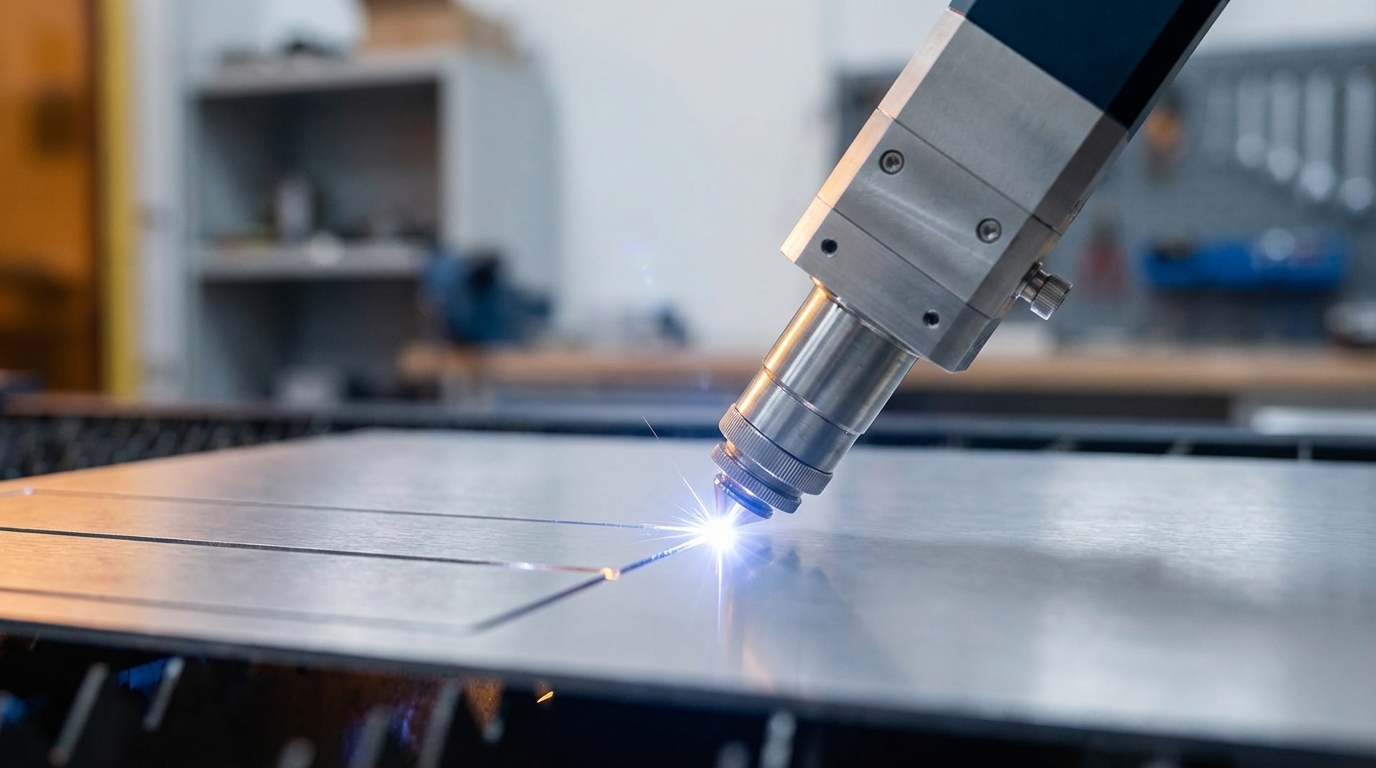
Desktop fiber lasers perform well for marking, engraving, annealing and serialization on metal surfaces. Consumer-grade desktop fiber laser units mark and engrave metals including stainless steel and anodized aluminum but do not cut through metal sheets. Kilowatt-range industrial systems handle functional metal cutting applications.
Published fiber laser thickness charts begin at 500W for metal cutting, a power level far above desktop units. Desktop fiber lasers operating below that threshold serve as marking tools, not as cutting systems for structural metal parts.
Even when desktop systems achieve fine marking repeatability, production-ready metal prototypes require professional tools including metal shears, press brakes and CNC cutting machines. Functional parts that need bending, forming or assembly integration extend beyond surface marking. Bend radius must equal at least material thickness to prevent cracking. K-factor calculations are essential for accurate flat patterns, and desktop marking systems do not support those forming requirements. These forming rules place functional prototypes outside the scope of desktop tools entirely.
For engineering teams that need parts which assemble, load-bear or pass inspection, the transition to professional fabrication becomes a required step. Partner with Fabcon to access the forming, assembly and inspection capabilities that desktop tools cannot provide.
How Integrated U.S. Precision Fabrication Partners Run Programs
Integrated fabrication partners manage the full build sequence under one roof. The process typically begins with a design-for-manufacturability review before a single part is cut. This upfront collaboration between engineering and quoting teams catches tolerance conflicts and material specification issues that would otherwise halt production and trigger rework.
After DFM review, laser cutting, CNC punching, forming, welding, finishing and assembly occur within a single facility and quality system. Industrial laser-cut parts require no further modification before welding or assembly due to precise fit and alignment, which supports smooth integration with downstream processes. That continuity removes the coordination delays that appear when parts move between separate vendors for each operation.
The same partner that cuts the enclosure applies the powder coat, inserts the hardware and ships the finished assembly. Program visibility stays intact from first article through production.
Quality and Compliance Signals That Build Confidence
Quality certifications provide a baseline signal of reliability. ISO 9001:2015 governs process consistency and traceability across the build. AS9100D builds on that foundation with aerospace-grade documentation and risk management requirements. For programs involving controlled technologies, ITAR registration adds another compliance layer specific to defense and sensitive infrastructure work.
A large majority of fabricators now use digital QA systems to improve accuracy and traceability in industrial metal fabrication projects. Partners with integrated QA spanning fabrication, finishing and assembly provide the documentation chain that procurement and compliance teams expect for high-stakes programs.
Traceability at the part level, not just the batch level, reduces liability exposure and supports regulatory submissions in medical device, aerospace and energy storage applications.
Challenge Area 1: Design-for-Manufacturability Collaboration
The DFM gap mentioned earlier becomes critical during iteration. An engineer cuts a prototype, discovers a forming or fit issue and then iterates manually without the feedback loop that professional fabrication partners provide. That cycle consumes time and obscures whether the design will scale.
Integrated fabrication partners embed DFM review at the quoting stage. Engineering teams flag tolerance conflicts, material substitutions and bend geometry issues before production begins. Evaluation criteria for this capability include assignment of a dedicated engineering contact, documentation of DFM feedback and experience with the specific material and finish combination required.
Challenge Area 2: Reduction of Vendor Handoffs
Fragmented supply chains introduce compounding risk. Each handoff between a cutting vendor, a finishing vendor and an assembly vendor adds a scheduling dependency, a quality inspection point and a potential delay.
CNC-enabled fabrication shops report meaningful reductions in lead times through real-time monitoring and advanced machining capabilities. Partners that control fabrication, finishing and assembly internally remove the inter-vendor gaps that drive those delays. Evaluation criteria include the number of in-house finishing processes, availability of light electromechanical assembly on-site and whether a single purchase order covers the full build.
Challenge Area 3: Consistent Quality and Compliance
Desktop tools produce variable results as operators change, materials vary or settings drift. No quality management system governs the output, and regulated industries receive no traceability record or audit trail.
The ISO 9001:2015 and AS9100D frameworks described earlier ensure that controlled processes govern every stage, from initial cutting through final assembly. Work instructions, inspection records and material certifications travel with the part. Evaluation criteria include certification scope, QA coverage of finishing and assembly in addition to fabrication and the partner’s ability to produce first-article inspection reports.
Challenge Area 4: Flexibility to Scale from Prototype to Mid-Volume
Desktop tools remain fixed in capacity. Scaling requires additional equipment purchases, operator training and management of a production environment that was not designed for volume. Large contract manufacturers solve the volume problem but impose high minimums and rigid onboarding that exclude early-stage programs.
Agile production cells in mid-tier integrated facilities adapt to changing volumes, mixed SKUs and evolving bills of materials. A significant share of manufacturers are reshoring fabrication projects to mitigate risks from material shortages and logistics disruptions. A U.S.-based partner with flexible cells supports prototype validation and production ramp without a program restart at each volume tier. Evaluation criteria include minimum order quantities, lead time consistency across volume changes and experience with similar ramp profiles.
Challenge Area 5: Management of Total Program Timelines
Desktop prototyping creates a false baseline for timeline planning. Parts that pass a desktop marking test still require professional fabrication for functional validation, so the desktop step adds time without advancing the program.
Partners with integrated quoting, fabrication and assembly compress the cycle from drawing to finished part. Laser cutting decreases reliance on physical molds and dies, accelerating product development cycles particularly in prototyping and small-batch production. Evaluation criteria include quoting turnaround time, raw material inventory practices and concurrent scheduling of finishing and assembly with fabrication.
Comparison of Metal Fabrication Provider Types
Basic job shops handle build-to-print sheet metal work. They offer competitive pricing on simple parts but lack engineering depth for DFM, cannot manage finishing or assembly in-house and require customers to coordinate multiple vendors for a finished product. Programs with evolving BOMs or compliance requirements quickly exceed their scope.
Mid-tier fabricators add more process capability and some engineering support. The better ones offer finishing and limited assembly. Quality systems vary and vertical integration remains inconsistent. They represent a meaningful step up from transactional job shops but may still rely on external vendors for specialized coatings, machining or electromechanical assembly.
Large and global contract manufacturers provide scale and infrastructure but impose high minimum volumes, long onboarding timelines and limited responsiveness to program changes. They suit stable, high-volume programs but create friction for NPI teams managing evolving designs and mid-volume production targets.
Integrated U.S. precision fabrication partners occupy the middle ground. They combine the engineering depth and process integration of large CMs with the responsiveness and volume flexibility that mid-sized programs need. Geographic accountability, domestic supply chain control and single-partner ownership of the full build distinguish this category from the alternatives.
Due Diligence Checklist for Selecting a Fabrication Partner
No fabrication partner fits every program. Capacity constraints, geographic proximity and program complexity all affect the match. Onboarding a new partner mid-program introduces risk, so evaluation works best before a program faces timeline pressure.
A structured due diligence process covers the following areas:
- Certifications: Confirm ISO 9001:2015, AS9100D and any industry-specific compliance requirements are current and in scope for the services needed.
- Change control: Verify a documented process for managing engineering change orders and BOM revisions without disrupting production schedules.
- Sample evaluation: Request first-article parts before committing to production volumes, then evaluate dimensional accuracy, finish quality and documentation completeness.
- References: Speak with customers in similar industries and at similar program scales, with focus on responsiveness during design changes and ramp transitions.
- In-house scope: Confirm which processes occur internally versus subcontracted, since subcontracted finishing or assembly reintroduces vendor handoff risk.
- Engineering access: Confirm that DFM review occurs at the quoting stage and that a dedicated engineering contact is assigned to the program.
Frequently Asked Questions
Desktop Fiber Lasers and Functional Metal Prototypes
Desktop fiber lasers are designed for marking, engraving and surface treatment on metals. They do not cut through metal sheets at thicknesses required for structural or functional parts. Functional metal prototypes that require bending, forming, hardware insertion or assembly integration need industrial fabrication equipment and professional process controls. Desktop tools support identification and serialization tasks but do not replace precision sheet metal fabrication in program contexts.
Differences Between Integrated Partners and Standard Job Shops
A standard job shop typically handles cutting and forming to print, then returns parts to the customer for finishing, coating and assembly. An integrated partner performs fabrication, finishing and assembly under one roof within a single quality management system. The practical result is fewer vendors, fewer handoffs and a single accountable partner for the complete build. Integrated partners also provide DFM collaboration at the quoting stage, which job shops generally do not offer.
What to Expect When Moving to Professional Fabrication
The transition from desktop prototyping to professional fabrication involves submitting drawings or CAD files for DFM review, receiving manufacturability feedback and approving first-article parts before production. Engineering teams can expect questions about tolerances, material specifications, finish requirements and assembly details. The DFM process adds a step at the front of the program but reduces rework, improves cost predictability and supports designs that scale without modification.
Scaling from Prototype to Mid-Volume with a Precision Partner
Partners with agile production cells adjust output to match program needs without new onboarding, new tooling setups or minimum volume commitments at each tier. The same quality system, work instructions and engineering contacts that supported the prototype govern the production run. This continuity reduces the risk of quality drift as volumes increase and keeps program documentation consistent across the full lifecycle.
Key Certifications for High-Stakes Metal Fabrication
ISO 9001:2015 provides the baseline for process consistency and traceability. AS9100D adds aerospace-grade risk management and documentation requirements relevant to defense, aerospace and high-reliability infrastructure programs. ITAR registration applies to programs involving controlled technologies. UL and CSA compliance matter for products entering regulated markets. Partners holding these certifications provide the documentation infrastructure that procurement and compliance teams need to satisfy regulatory and customer requirements.
Conclusion: Moving from Desktop Tools to Professional Fabrication
Desktop fiber lasers serve a defined purpose: marking, engraving and surface treatment on metals and other materials. That purpose does not extend to cutting structural parts, achieving production-grade forming tolerances or supporting the compliance documentation that infrastructure and technology programs require.
When a program moves from concept to functional prototype, the fabrication partner becomes a program variable. The right partner brings DFM collaboration, integrated finishing and assembly, certified quality systems and the flexibility to scale without friction. Those capabilities reduce rework, compress timelines and remove the vendor coordination that fragments supply chains and delays launches.
Fabcon has operated as a vertically integrated U.S. precision fabrication partner since 1977, supporting programs from prototype through production across data center, energy, aerospace, medical and transportation sectors. With ISO 9001:2015, AS9100D and ITAR credentials and 220,000 square feet of integrated manufacturing space across two Southern California facilities, Fabcon provides the engineering depth and process continuity that functional metal programs demand.