
Last updated: August 3, 2026
Key Takeaways
- Complex CNC parts now create a critical supply chain bottleneck, so supplier selection carries high stakes for aerospace, defense and industrial programs.
- Four part attributes, tolerance stack-up, material difficulty, production volume and certification needs, determine which shops can deliver consistently.
- A complete RFQ package plus early DFM collaboration cuts cost, scrap and first-article failures before production starts.
- Screening for 5-axis, mill-turn, EDM and exotic-alloy capabilities, then verifying ISO 9001, AS9100D and ITAR credentials, reduces disqualification and legal risk.
- Fabcon offers vertically integrated US CNC machining, fabrication, finishing and assembly under one certified roof, get a quote today.
Four Attributes That Determine the Right CNC Partner
Four core attributes define which category of CNC shop can handle a complex part without cost or quality surprises.
Tolerance stack-up. CNC production falls into three zones: a stable capability zone for general tolerances, a controlled capability zone that needs in-process monitoring and a capability limit zone where consistency depends on operator attention and real-time adjustment. Assigning a part to the wrong zone produces scrap and rework.
Material difficulty. Exotic and hardened materials such as titanium, Inconel and nickel alloys increase precision challenges including heat concentration, rapid tool wear, work hardening and vibration. Shops without documented exotic-alloy experience cannot hold tight tolerances on these materials with confidence.
Production volume range. High-volume production runs require evaluation of process repeatability and throughput in addition to tolerance capability, while prototypes and low-volume work can use general tolerances on non-critical features to reduce cost. A shop optimized for one end of that spectrum rarely performs well at the other.
Certification and traceability requirements. Aerospace, defense and energy programs carry mandatory quality-system and regulatory requirements. Confirming these before engaging a supplier prevents disqualification after investment in tooling and first articles. This is where the best US CNC machining companies for complex industrial parts separate themselves from general-purpose job shops.
Step 1: Build a Complete RFQ Package From Part Requirements
An incomplete RFQ produces misaligned quotes and downstream rework. A complete package includes:
- Model files and fully dimensioned drawings with GD&T callouts on all functional features
- Material specification including alloy grade, temper and applicable standards
- Surface finish requirements for each face or feature
- Inspection plan identifying critical-to-function dimensions and required measurement methods
- Finishing and coating requirements with applicable specs
- Assembly context showing how the part interfaces with mating components
- Volume and release cadence expectations
These elements give a supplier the information needed to quote accurately and flag manufacturability risks early. A supplier DFM review before the first production run often identifies tolerance relaxation opportunities, setup reduction possibilities and material substitutions that reduce total cost on the first pass. A shop with in-house engineering support at the RFQ stage captures that value early.
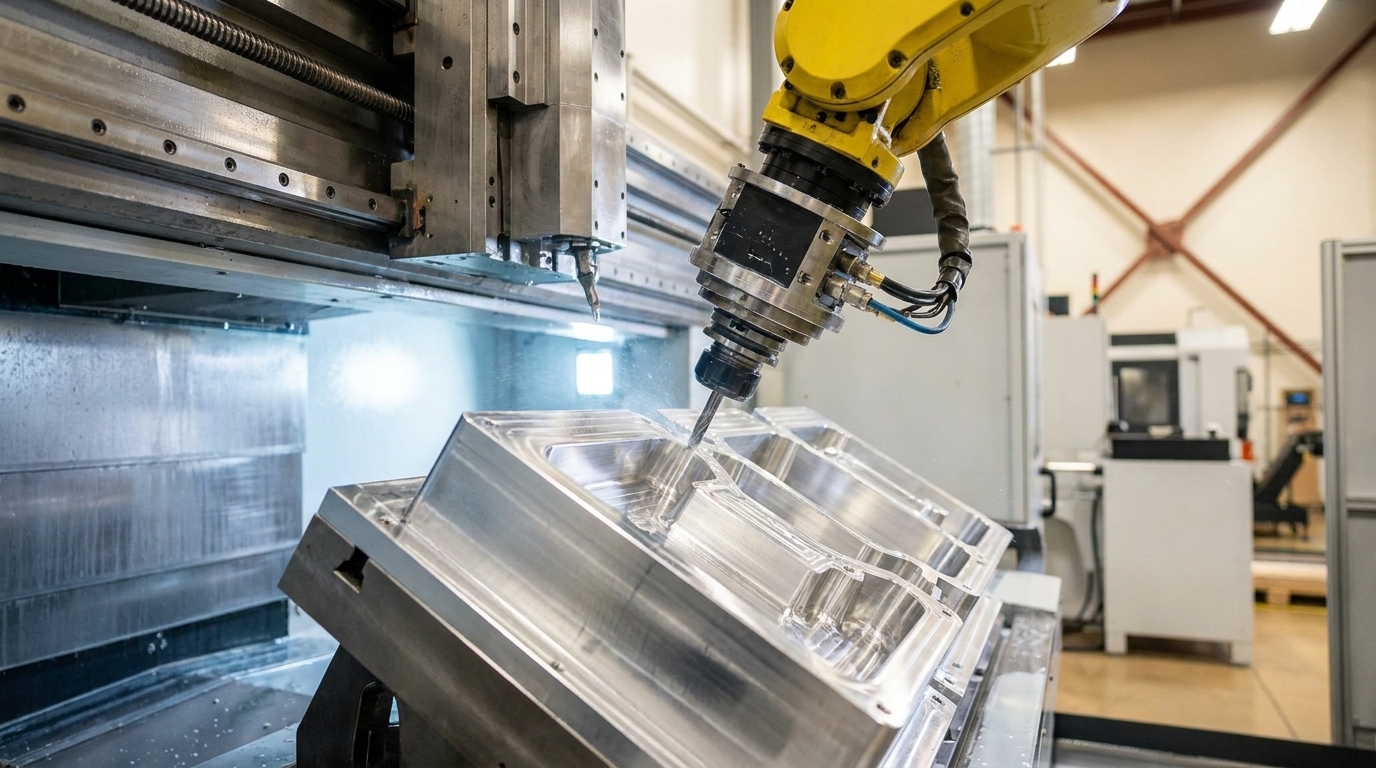
Step 2: Match Complex Geometry to 5-Axis, Mill-Turn, EDM and Alloy Skills
Capability mapping keeps complex parts away from shops that will struggle to hold tolerances or need excessive setups. The following four process capabilities determine whether a shop can execute complex geometries without tolerance loss or setup multiplication, so each one should match the part geometry before an RFQ goes out. Key process-to-geometry alignments include:
- 5-axis machining for complex contours, aerospace parts and impellers where rotary-axis accuracy and fewer setups reduce tolerance stack-up
- Mill-turn centers for complex parts with critical assembly, sealing or alignment features, combining operations in fewer setups to reduce error accumulation
- EDM for critical fits and precision surfaces where grinding or spark erosion is required to achieve the tightest tolerances
- Documented exotic-alloy programs for titanium and nickel-based superalloys, including toolpath strategy, coolant approach and in-process inspection
Process selection for CNC features should align with part geometry, with milling for pockets and prismatic parts, turning for diameters and shafts and grinding or EDM for critical fits and precision surfaces. Shops that lack a specific process often substitute a less capable one, which shows up in first-article failures.
Step 3: Confirm Quality Systems, Certifications and Traceability
Formal certifications define legal eligibility and quality-system rigor for regulated programs, not just marketing claims.
ISO 9001:2015 establishes the baseline quality management system. It serves as a prerequisite for most industrial and commercial programs and governs document control, process verification and corrective action.
AS9100D extends ISO 9001 for aerospace and defense, adding requirements for risk management, configuration control and first-article inspection. Defense OEMs typically evaluate machining suppliers on whether they maintain AS9100-compliant quality systems.
ITAR registration. ITAR is a legal eligibility requirement, not a quality credential, that applies to any company handling ITAR-controlled work anywhere in the supply chain, including receiving controlled drawings. Using an unregistered supplier for ITAR-covered work creates legal exposure for both the supplier and the contracting company. Confirm active DDTC registration before awarding defense-related work.
Beyond registration status, regulated programs require documented proof that quality controls were followed throughout production. Traceability documentation. Material certifications, inspection records, lot tracking, process verification, calibration records and first article inspections are typically expected in controlled machining environments. With the certifications and integrated quality assurance described above, Fabcon meets the requirements for aerospace, defense and industrial programs.
Get a quote from a certified US precision manufacturing partner.
Step 4: Check Prototype-to-Mid-Volume Scalability
Volume tier often determines whether a machining relationship succeeds over the full program lifecycle. Many shops perform well at one volume tier and fail at another. Large contract manufacturers often require high minimum order quantities and lengthy onboarding, which makes them impractical for programs that start at prototype and scale in stages. Small job shops often lack the infrastructure to support production volumes without adding vendors.
The CNC machining bottleneck is especially acute for companies with just-in-time procurement models, which pushes supply chain professionals to diversify machining suppliers geographically and evaluate nearshoring opportunities. A partner that supports prototype through mid-volume production under consistent quality documentation removes re-qualification costs as programs grow.
Scalability assessment should cover whether the shop uses flexible production cells or fixed lines, whether the same quality documentation applies at prototype and production volumes and whether engineering support remains available after initial launch.
Step 5: Reduce Risk With Integrated Fabrication, Finishing and Assembly
Hybrid assemblies that combine machined components with sheet metal, coatings and electromechanical integration carry risk that scales with the number of vendors involved.
Complex assembly programs benefit when a single partner offers in-house finishing such as powder coat, wet paint and mil-spec coatings, along with mechanical and electromechanical assembly. Get a quote for vertically integrated CNC and fabrication services.
Common Sourcing Pitfalls and How to Avoid Them
Several recurring issues account for most first-article failures and program delays in complex CNC sourcing, so each one deserves a clear mitigation plan.
- Late design changes: Changes issued after tooling is cut or first articles are approved generate rework costs and schedule impact. The early DFM engagement recommended in Step 1 prevents this issue.
- Incomplete tolerance callouts: Applying ISO 2768-m general tolerances on non-critical dimensions while specifying tighter GD&T tolerances only on functional features reduces machining time, inspection cost and scrap risk without compromising assembly performance. Over-tolerancing non-critical features inflates cost and cycle time.
- Under-scoped finishing and assembly: Finishing requirements affect critical dimensions. Consolidating CNC machining and finishing under one supplier delivers the most value for parts with tight tolerances where finishing can affect critical features.
- Material procurement gaps: Exotic alloy availability affects schedule. Material stock status with the supplier should be confirmed before placing an order, particularly for aerospace-grade titanium and nickel alloys.
Objective Success Metrics for Ongoing Evaluation
Supplier qualification continues across the full program lifecycle, not just at kickoff. Process capability, capacity constraints and quality system maturity all shift as programs scale and suppliers take on new work. Track these metrics across the program lifecycle to detect degradation before it affects delivery:
- First-article acceptance rate: A high rate on first submission indicates strong DFM collaboration and process control. Repeated first-article failures signal a process or communication gap.
- On-time delivery performance: Measure against committed ship dates, not original estimates. Consistent on-time delivery reflects scheduling discipline and internal capacity control.
- Engineering-change frequency: Frequent changes after production launch indicate insufficient DFM review at the prototype stage. A partner with early engineering involvement reduces this rate.
- Nonconformance and corrective action cycle time: The speed of identifying, containing and resolving a quality issue reflects the maturity of the quality management system.
Frequently Asked Questions
What certifications should a US CNC machining supplier hold for aerospace and defense work?
AS9100D is the primary quality management standard for aerospace and defense CNC suppliers. It extends ISO 9001:2015 with requirements for risk management, configuration control and first-article inspection. ITAR registration with the U.S. Directorate of Defense Trade Controls is a legal requirement for any supplier manufacturing defense articles or receiving controlled technical data. Some defense contracts also require CMMC certification for handling Controlled Unclassified Information. Buyers should verify active registration status for each credential before awarding work.
How does vertical integration reduce supply chain risk for complex assemblies?
Vertical integration consolidates fabrication, machining, finishing and assembly under one organization. This removes handoff delays between vendors, removes ambiguity about accountability when quality issues arise and keeps technical data within a single controlled environment. For programs with tight tolerances, integrated operations allow machining decisions to account for finishing requirements from the start, which reduces rework caused by post-machining dimensional changes from coatings or heat treatment.
When should a program re-qualify its CNC machining supplier?
Re-qualification is warranted when a supplier changes ownership, facility or key personnel, when a program moves from prototype to production volume, when a new material or process is introduced, when nonconformance rates exceed program thresholds or when a supplier’s certifications lapse. Re-qualification also makes sense when a program’s tolerance or traceability requirements tighten due to regulatory changes or customer flow-downs.
How does production volume affect CNC machining cost structure?
Setup costs are fixed per batch and amortize across the number of parts produced. At low volumes, setup represents a large share of per-part cost. As volume increases, machine time and material become the dominant cost drivers. For complex parts in difficult alloys, material cost and cycle time remain elevated regardless of volume, which makes process refinement and DFM review valuable at the prototype stage before committing to a production configuration.
What distinguishes a vertically integrated US manufacturer from a standard job shop?
A standard job shop typically performs one or two processes, such as machining or sheet metal fabrication, and relies on outside vendors for finishing, coating and assembly. A vertically integrated manufacturer performs all of those operations internally under a unified quality system. This means one point of contact, one set of documentation and direct accountability across the entire build. For programs requiring tight tolerances, traceability and electromechanical integration, the difference in risk profile is significant.
Conclusion
Selecting the right US CNC machining partner for complex industrial parts benefits from a structured approach. Map part attributes to shop capabilities, build a complete RFQ package, screen for multi-axis and exotic-alloy experience, verify certifications, assess scalability and confirm integrated finishing and assembly. Each step reduces the probability of first-article failure, schedule disruption and quality disputes.
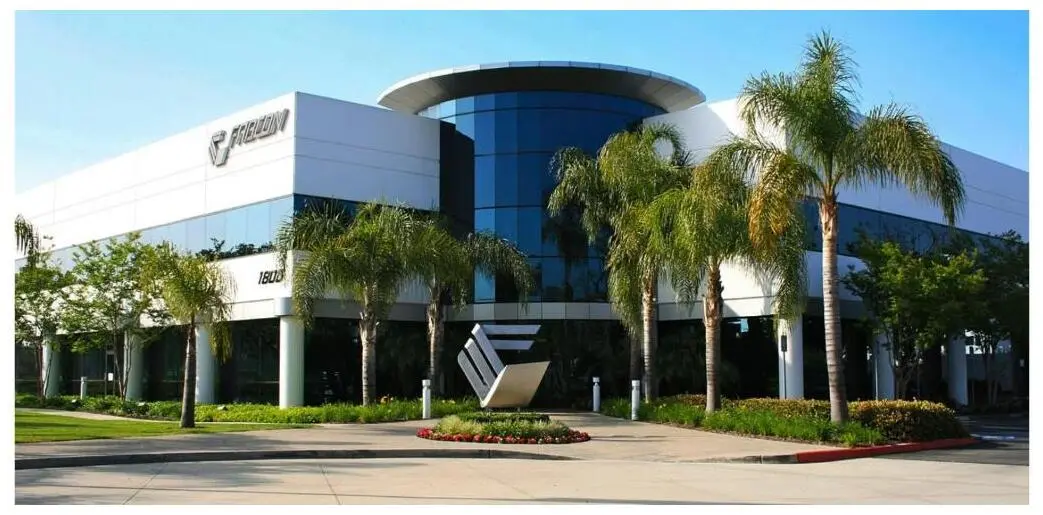
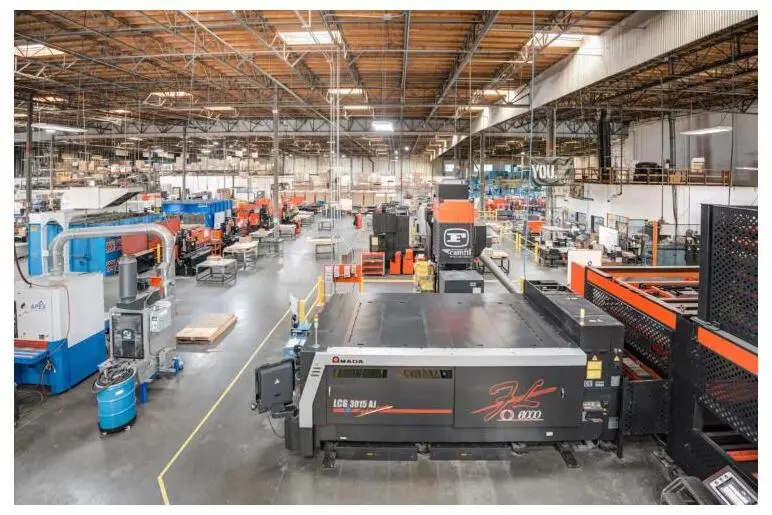
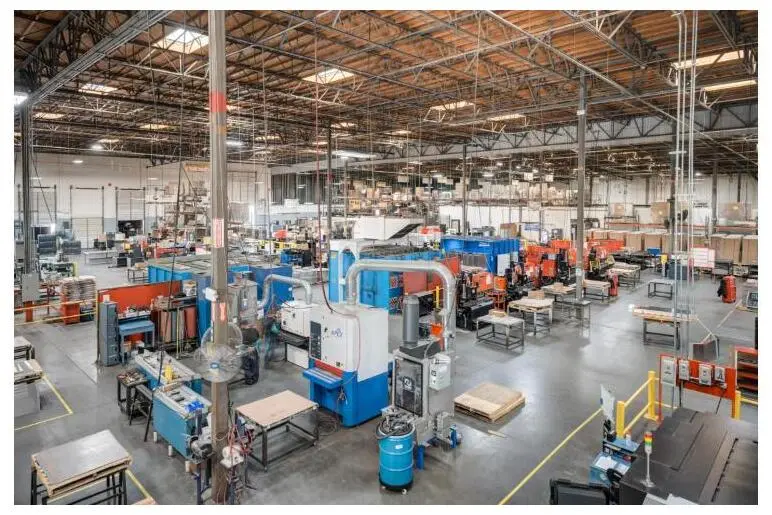
Fabcon combines precision CNC machining with vertically integrated sheet metal fabrication, in-house finishing and electromechanical assembly across US manufacturing space. Fabcon supports programs from prototype through mid-volume production with engineering collaboration, agile production cells and a single point of accountability. Get a quote and start the qualification process with Fabcon today.