What Drives CNC Machining Pricing for Complex Assemblies
Last updated: July 30, 2026
Key Takeaways for CNC Assembly Costs
CNC assembly pricing depends on seven interacting cost factors: part count, fixturing, tolerance stack-up, inspection, material machinability, setup amortization and lead-time premiums.
Reducing part count through DFM consolidation lowers total program cost because each added part increases setup, programming and inspection overhead.
Controlling tolerance stack-up at the assembly level prevents blanket tightening of dimensions and avoids rework when parts pass inspection but assemblies fail.
Vertically integrated manufacturing removes vendor handoffs, supports cross-process DFM collaboration and provides traceability for aerospace, defense and medical device programs.
Request a DFM review with Fabcon before production release to identify consolidation options, refine tolerances and secure predictable lead times for the next complex CNC assembly.
Part Count as a Primary CNC Assembly Cost Driver
Every additional part in an assembly adds its own setup, programming, inspection and handling cost. Setup count ranks as the largest controllable cost driver for CNC parts, and part count directly multiplies setup count across the bill of materials.
Consider a data center chassis with a fabricated enclosure, machined mounting rails and a set of machined brackets. Each component requires its own CAM program, fixture and inspection record. CAM programming and initial machine setup represent fixed costs, so a 10-part assembly can carry setup overhead that exceeds raw material spend at low volumes.
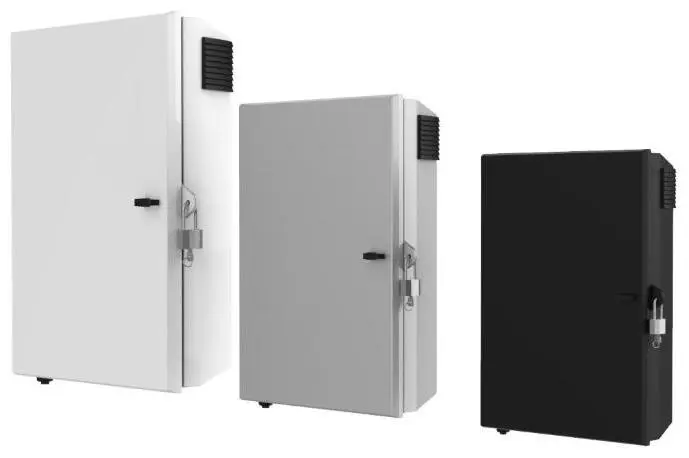
Weatherproof, customizable enclosures with electromechanical integration for energy storage and power distribution — engineered for commercial and public deployments.
Design choices that reduce part count directly reduce total program cost. Consolidate two or more parts that share a mating interface into a single machined component where geometry allows. Evaluate whether fastened subassemblies can shift to integrated features, which removes both the extra part and the assembly labor.
Multi-Setup Fixturing and Its Impact on CNC Pricing
Each setup, flip, re-fixture or machine change adds labor and lost spindle time. For a complex assembly with multiple components that need access to several faces, those costs accumulate across the full bill of materials.
An energy storage enclosure with machined mounting bosses on three faces illustrates this effect. Accessing each face requires a separate setup or a higher-axis machine. Designing so all features are accessible from two or three sides at most avoids cost increases compared with parts that require access to all six faces.
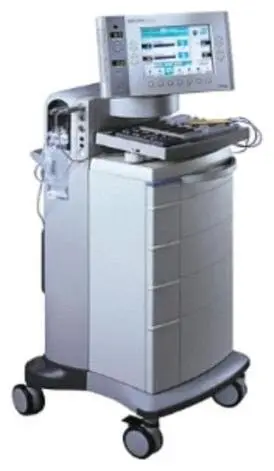
Fabricated assemblies and finished products — carts, lab equipment, and medical furniture — built with precision assembly and full traceability for regulated industries.
Several practical design choices help control fixturing cost. Add self-fixturing features such as flat mounting surfaces, through-holes for clamping or sacrificial tabs to avoid custom fixture fabrication. Orient features so most are accessible from a single setup, even when that requires a small geometry change. Specify modular reusable fixtures instead of custom solutions when production volumes support that investment.
Tolerance Stack-Up Effects on Multi-Part Assembly Pricing
Tolerance stack-up describes the accumulation of individual feature or part tolerances along an assembly chain. Each piece can meet specification while the assembly fails when worst-case extremes add together. In a multi-part assembly, stack-up functions as an assembly-level issue, not a single-part issue.
Expanding the number of tightly constrained parts raises cost across every part and every cycle instead of affecting only one component. Tightening tolerances across an entire bill of materials to compensate for unanalyzed stack-up remains one of the most common sources of avoidable cost in complex assemblies.
Stack-up errors in CNC parts often stay hidden during individual feature checks and appear only after assembly, which creates downstream rework costs for the program.
Several design practices help control stack-up. Perform a formal stack-up analysis before production release to identify the one or two features that dominate the functional chain, then tighten only those. Use standard ISO 286 fits on cylindrical mating features to control functional relationships without applying bilateral tolerances to every dimension. Add adjustment features such as shims or eccentric pins to absorb residual variation in long tolerance chains.
Inspection and Documentation Costs in Complex CNC Assemblies
Tight tolerances and complex stack-up requirements increase the need for rigorous inspection. Creating an automated CMM program for a complex CNC milled part can take as long as programming the CNC machine itself and often appears as a setup or NRE cost. In a multi-part assembly, that overhead applies to each component with critical interfaces.
Producing a full First Article Inspection report for CNC milled components requires significant engineering labor to bubble drawings and record data for hundreds of dimensions. For aerospace, defense or medical device programs, that documentation burden is mandatory and scales directly with part count.
Several choices reduce inspection overhead without sacrificing quality. Define inspection levels by risk tier so critical interfaces receive CMM verification while nonfunctional features use go/no-go gauges or calipers. Standardize datum reference frames across mating parts so a single CMM setup can verify multiple components in sequence. Use in-process probing during machining to catch errors before final inspection and reduce scrap and rework.
Material Machinability and Assembly Performance Tradeoffs
Material machinability often affects final CNC part cost more than price per kilogram because it shapes cycle times, tool wear and productivity. In a multi-part assembly, that effect carries across every component in the bill of materials.
Transitioning from 304 stainless steel to a free-machining alloy can cut billable labor hours through faster machining and reduced tool wear. In an assembly context, applying that logic to even two or three components can create meaningful program-level savings.
Material selection reviews help control cost while preserving performance. Audit each part’s material specification against its actual structural, thermal, corrosion and regulatory requirements before defaulting to a premium alloy. Reserve high-performance alloys such as titanium or Inconel for components where performance requirements demand them. Evaluate near-net-shape stock to reduce raw material waste and machining time on high-value materials.
Production Volume and Setup Amortization in CNC Assemblies
Machine setup time accounts for a large share of total cost for low-volume prototype CNC orders. As volume increases, those fixed costs spread across more units and per-part cost falls. A setup cost spread over five parts adds significant cost per part, while the same setup across 500 parts adds a small amount per part.
High-mix, mid-volume programs, common in EV infrastructure and traffic safety, face a different challenge. No single SKU reaches the volume needed to fully amortize setup costs. Grouping similar parts into families that share fixtures and tooling paths becomes the main lever for sourcing and engineering teams.
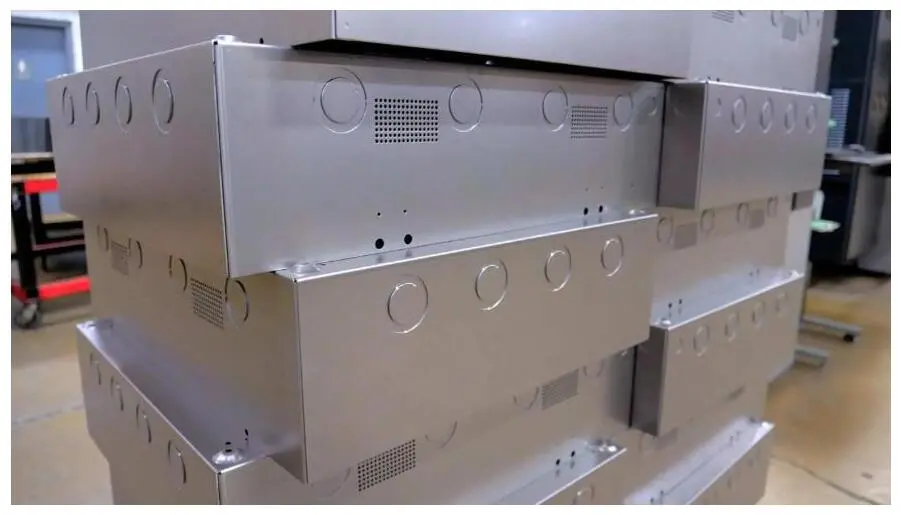
Precision metal enclosures with tight, clean bends and consistent finishing — produced to ISO 9001:2015 and AS9100D standards with full traceability on every part.
Several DFM practices support better setup amortization. Group parts with similar geometries, materials and tolerances into machining families that share setups and tooling. Build long-term production agreements with a manufacturing partner to lock in standard lead times and avoid expediting premiums on predictable demand.
Lead-Time, Expediting Premiums and Assembly Complexity
Expedited production often adds a premium over standard lead times because rush CNC orders disrupt production schedules and resource allocation. Complex assemblies magnify these premiums.
For assemblies sourced across multiple vendors, a single delayed component can trigger expediting across the entire supply chain. For high-mix, mid-volume electromechanical assemblies, 12-hour time-zone gaps and varying QC standards can stretch design clarification cycles from hours to days, which raises inventory holding and time-to-market costs.
Several sourcing strategies help control lead-time cost. Consolidate assembly sourcing with a single partner to remove inter-vendor handoffs that create schedule dependencies. Establish blanket orders or production agreements on predictable programs to avoid spot-market expediting premiums.
DFM Checklist for Complex CNC Assemblies
Audit part count and identify consolidation candidates before quoting.
Map all setups per part and target two to three orientations per component.
Perform stack-up analysis and tighten only the dimensions that govern functional fit.
Define inspection levels by risk tier and match metrology methods to criticality.
Validate material specifications against functional requirements and avoid premium alloys when standard grades qualify.
Group parts into machining families and share fixtures and tooling paths across similar SKUs.
Consolidate vendors and remove handoffs that create schedule and quality risk.
How a Single Vertically Integrated U.S. Partner Reduces Program Risk
Each of the seven cost drivers remains controllable when the full assembly stays visible. Controlling them requires visibility across the entire assembly, not just one machined part at a time. A fragmented supply chain, where fabrication, machining, finishing and assembly sit with separate vendors, makes that visibility difficult.
Consolidating a multi-vendor supply chain with a single integrated partner can reduce total program costs and improve quality through coordinated assembly and kitting services.
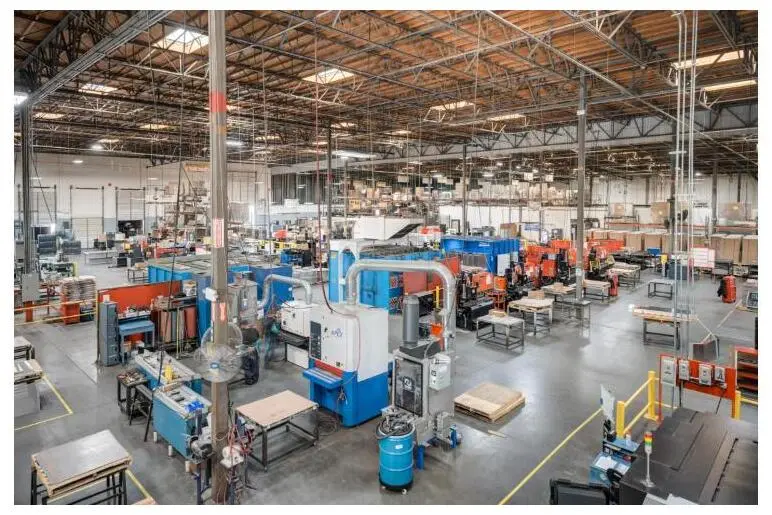
Fabcon’s vertically integrated operations in Southern California include in-house CNC machining, precision sheet metal fabrication, powder coat and wet paint finishing and light electromechanical assembly, all under one roof across 220,000 square feet of manufacturing space. ISO 9001:2015 and AS9100D certifications govern every stage of the build and provide the traceability that aerospace, defense and medical device programs require.
Founded in 1977, Fabcon runs 220,000 sq ft of vertically integrated fabrication across two Southern California facilities — engineering, machining, fabrication, finishing, and assembly under one roof.
Early DFM collaboration, before production begins, offers the best opportunity to address the seven cost drivers. Fabcon’s engineering and quoting teams review drawings, tolerances and materials together with the customer’s technical team to improve manufacturability before a router is written or a fixture is built.
Conclusion: Using This Cost Framework on the Next Assembly
CNC assembly pricing depends on multiple interacting factors. Part count, fixturing, tolerance stack-up, inspection overhead, material machinability, setup amortization and lead-time premiums each increase total program cost and can amplify one another when unmanaged. The seven-driver framework above gives engineering, sourcing and operations teams a structured way to evaluate design and sourcing decisions before they become cost surprises.
The most effective point of intervention occurs before the first quote. A DFM review that maps all seven drivers against current assembly drawings can reveal consolidation opportunities, tolerance refinements and sourcing simplifications that reduce total program cost and risk.
What differs between CNC machining cost for a single part and a multi-part assembly?
Single-part CNC machining cost depends mainly on cycle time, setup and material. Multi-part assembly pricing adds tolerance stack-up analysis, cross-component fixturing, integration labor, assembly-level inspection and documentation overhead. Each additional part introduces its own fixed costs for setup, programming and inspection that accumulate across the full bill of materials. Assembly pricing therefore scales nonlinearly with complexity instead of as a simple multiple of single-part cost.
How does a vertically integrated manufacturer reduce CNC assembly pricing?
A vertically integrated manufacturer controls fabrication, machining, finishing and assembly under one roof. This structure removes vendor handoffs that create schedule dependencies, quality disputes and incoming inspection overhead. DFM collaboration covers the full build, not a single process step, so consolidation opportunities, tolerance refinements and fixturing strategies appear before production begins. The result is fewer surprises, fewer rework cycles and a single accountable partner for the entire program.
When should an OEM request a DFM review for a CNC assembly program?
The highest-value point for a DFM review occurs before the first production quote, ideally at the prototype or pre-production stage when design changes carry no rework cost. A DFM review at that stage can identify part consolidation opportunities, flag tolerance specifications that drive unnecessary cost and align fixturing and inspection strategies with the functional requirements of the assembly. Requesting a DFM review after production release limits available interventions and increases the cost of any changes.
How do tolerance specifications affect total CNC assembly program cost?
Tolerance specifications affect cost at both part and assembly levels. At the part level, tighter tolerances require slower feeds, more capable machines, more frequent tool changes and more rigorous inspection, which all add to unit cost. At the assembly level, tolerances that are not analyzed for stack-up can force tightening across multiple parts at once, multiplying that cost increase across the entire bill of materials. The most cost-effective approach is to perform a stack-up analysis, identify the one or two features that govern functional fit and apply tight tolerances only where assembly performance demands them.
Which industries benefit most from a vertically integrated CNC assembly partner?
Industries with complex, multi-part assemblies that require tight tolerances, full traceability and reliable delivery schedules gain the most benefit. Data center infrastructure, energy storage and power distribution, aerospace and defense, medical devices, EV infrastructure and traffic safety all face high risk from fragmented supply chains. These programs often involve high-mix, mid-volume production with evolving bills of materials, conditions where a single vertically integrated partner’s agility and end-to-end ownership provide a clear advantage over a fragmented vendor base.