
Last updated: July 8, 2026
Key Takeaways for Powder Coated Enclosures
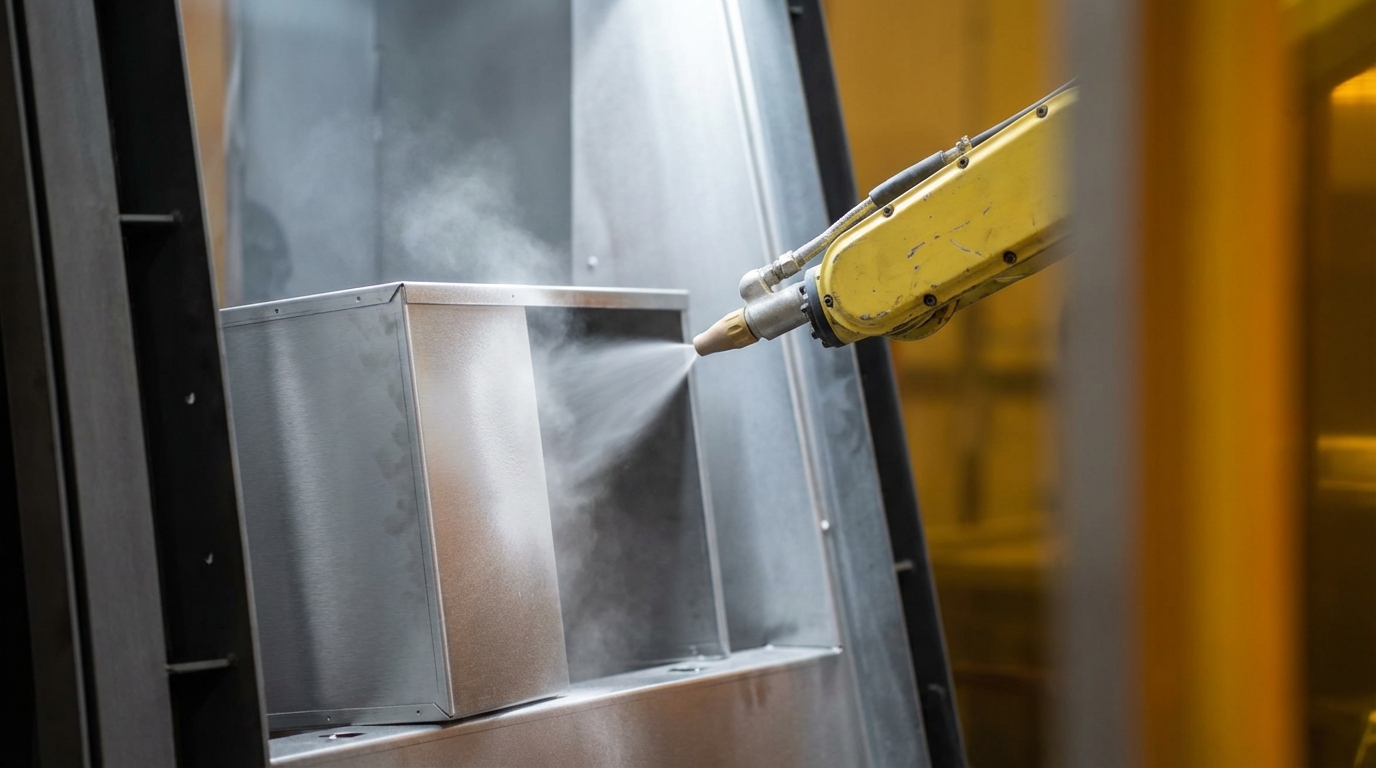
- Custom powder coating uses an electrostatic process to create a durable protective layer on metal enclosures within a single U.S. workflow at Fabcon.
- Cost depends on enclosure size, complexity, surface prep and number of coats, and integrated fabrication with coating reduces overall program expenses.
- Polyester and urethane coatings support strong outdoor durability, while correct masking, grounding and finish selection extend service life in harsh environments.
- Design for manufacturability review before fabrication improves coating uniformity, reduces rework and ensures grounding points and masking zones are specified.
- Choosing an integrated U.S. partner like Fabcon keeps fabrication, coating and assembly under one quality system for consistent reliability and traceability.
Cost Drivers for Powder Coated Metal Enclosures
Powder coating costs for metal enclosures depend on several variables. Enclosure size and surface area drive cost because larger parts require more powder, more oven time and more labor. Complexity follows closely. Enclosures with tight interior corners, deep channels or intricate masking zones take longer to prep and coat than flat panels.
Additional variables include the amount of surface preparation required, the number of coating layers and whether a custom color demands a second coat. Electrical enclosures typically require custom quotes based on engineering specifications and production requirements rather than fixed price lists.
When fabrication and coating are managed by separate vendors, total program cost rises through shipping, reinspection and scheduling delays between steps. An integrated partner absorbs those transitions internally and reduces the overhead that fragmented sourcing introduces. Beyond cost, coating durability shapes total cost of ownership across the enclosure’s service life.
Request a cost estimate based on specific enclosure specifications.
Service Life of Powder Coating on Metal Enclosures
Longevity depends on coating chemistry, application quality and operating environment. Polyester and urethane powder coatings offer strong outdoor durability for metal enclosures, while epoxy and hybrid formulations suit interior use only.
For outdoor deployments, finish texture affects performance. Sandtex-style textures are a common benchmark for outdoor performance. These textures hide surface imperfections and provide slip resistance. Matte finishes reduce glare in direct sunlight, which supports enclosures mounted in exposed infrastructure environments. Gloss finishes offer scratch resistance but require more maintenance outdoors.
Powder-coated mild steel enclosures perform well in dry, indoor and general industrial environments such as electrical rooms, manufacturing plants and factory control cabinets. In coastal, chemical or washdown environments, coating selection and substrate choice require closer engineering review.
Service life improves when coating is applied correctly from the start, gaskets are specified to match conditions and IP or NEMA ratings align with the installation site. Failures most often trace back to poor coating application, inadequate sealing or a mismatch between finish specification and environment.
Masking and Grounding Requirements for Coated Enclosures
Powder coating is a plastic-based, nonconductive finish. Designers plan dedicated grounding points separately from coated surfaces to meet CE, ETL, UL or other certification requirements. A grounding point positioned near the power supply entry and secured with lock washers and nuts is a standard approach for enclosures that carry electrical loads.
Masking zones must be identified before coating begins. Threaded holes, mating surfaces, connector cutouts and hardware mounting points all require masking to preserve fit and function. When these zones are defined during fabrication rather than handed off to a separate coater, the risk of masking errors drops significantly.
Fabcon’s integrated workflow keeps the engineering team that designs the enclosure responsible for coordinating masking and grounding specifications before the part reaches the finishing line. That continuity reduces rework and supports traceability requirements for certified programs.
Powder Coating for Existing and Custom Metal Cabinets
Both new fabrications and legacy enclosures qualify for powder coating when the substrate is compatible and the surface can be prepared correctly. Metal and aluminum surfaces, including enclosure doors, equipment housings and cabinet panels, are suitable for powder coating.
Existing enclosures may require burn-off or sandblasting to remove prior coatings before a new finish can be applied. The amount of prep work required is a primary cost variable. Enclosures with complex geometries or prior damage require more preparation time.
Specifying powder coating during initial fabrication offers clear advantages. Hole placement, edge radii, weld locations and masking zones can be aligned with finishing requirements before the first part is cut. Retrofitting coating onto an existing design that was not engineered with finishing in mind often introduces constraints that increase cost and reduce coating uniformity.
Powder Coating vs. Alternative Finishes for Enclosures
Powder coating is the industry standard for structural manufacturability and cost efficiency in metal enclosure production. The electrostatic application process delivers consistent coverage, and high-temperature curing produces an impact-resistant finish suited to large, heavy enclosures used in infrastructure applications.
Wet paint, or liquid coating, remains relevant for thermally sensitive components or applications that require ultra-high-gloss or mirror-like branding finishes. For many enclosure programs in data center, energy storage and transportation infrastructure, powder coating provides stronger corrosion resistance and mechanical durability than liquid alternatives.
Thermoset powder coatings hold a dominant share of the market because they resist corrosion, abrasion, impact and weathering. For programs requiring UL or CSA compliance, finishing processes that have passed PPAP audits confirm coating thickness, adhesion and salt spray resistance to specification.
Fabcon also offers wet paint, CARC military-grade finishing and mil-spec coatings for programs with specialized requirements. All finishes are applied in-house under the same quality management system.
DFM Priorities for Powder Coated Enclosure Designs
DFM review before fabrication begins is the most effective way to improve coating uniformity and reduce rework. Several design decisions directly affect finishing outcomes.
Inside bend radius should match material thickness to maintain structural integrity and avoid stress points that can cause coating to crack or peel at formed edges. Weld locations affect surface smoothness. Welds that are not ground or filled correctly create surface irregularities that show through the finished coat. Hole placement near edges can cause powder buildup or thin coverage in recessed areas.
As discussed earlier, masking zones and grounding points must be specified in the drawing package before fabrication. Clear callouts for threaded inserts, mating flanges and connector cutouts allow the finishing team to plan plug and cap placement before the part enters the coating line.
Fabcon’s engineering and quoting teams review drawings, tolerances and material specifications with the customer’s technical team before production begins. That early collaboration reduces the design-to-manufacturing disconnect that drives rework and delays in fragmented supply chains.
Submit drawings for a DFM review and fabrication quote.
Information Needed to Quote Powder Coated Enclosures
A complete quote package accelerates review and reduces back-and-forth. Each of the following inputs addresses a specific cost or technical variable that shapes fabrication approach, finishing requirements and program feasibility.
- Enclosure dimensions and overall geometry (CAD files preferred, 2D drawings accepted)
- Base material type and gauge
- Operating environment (indoor, outdoor, corrosive, washdown, coastal)
- Finish color, gloss level and texture specification (RAL, Pantone or custom match)
- Masking zones, including threaded holes, mating surfaces, connector cutouts and hardware locations
- Grounding point locations and certification requirements (UL, CSA, CE, ETL)
- Estimated annual volume and program stage (prototype, pilot, production)
- Traceability or certification documentation requirements (ISO 9001:2015, AS9100D)
Selecting an Integrated U.S. Partner for Powder Coated Cabinets
Manufacturers are reshoring metal fabrication to U.S.-based partners to improve supply chain reliability, reduce risk and maintain control over production quality and timelines. For mid-volume enclosure programs, the supplier evaluation framework often centers on four areas.
Technical capability covers the full fabrication scope, including laser cutting, CNC punching, forming, welding and in-house finishing. A partner that controls all of these steps can align each one with the others. A standalone coater cannot influence how the enclosure was fabricated, and a fabricator that outsources coating cannot fully control finishing outcomes.
Integration scope determines whether fabrication, coating and assembly are managed under one quality system or handed off between separate facilities. As noted in cost considerations, integrated workflows eliminate the overhead of managing separate vendors and improve consistency across the production process.
Compliance credentials matter for infrastructure programs. ISO 9001:2015 certification covers quality management across the build. AS9100D adds aerospace-grade traceability and process control requirements that defense, energy and transportation programs increasingly demand. Fabcon holds both certifications and is ITAR registered.
Scalability separates purpose-built mid-volume partners from job shops and large contract manufacturers. Agile production cells that adapt to changing volumes and mixed SKUs support programs from prototype through production without the high minimums or rigid onboarding of large contract manufacturers.
Manufacturers now prioritize stability, speed and quality over lowest cost and extended timelines when making sourcing decisions for metal fabrication and finishing. A U.S. partner with in-house finishing removes international shipping delays and quality variability associated with offshore sourcing.
See how integrated U.S. manufacturing compares for a specific enclosure program.
Frequently Asked Questions
Does powder coating add significant cost compared with wet paint for metal enclosures?
Powder coating and wet paint carry different cost profiles depending on part geometry, volume and finish requirements. For many metal enclosure programs, powder coating delivers a more durable finish with lower long-term maintenance cost. When coating occurs in-house alongside fabrication, total program cost is lower than managing two separate vendors.
Can an integrated partner handle both prototype and production volumes for powder coated enclosures?
Fabcon supports programs from prototype through production using flexible manufacturing cells that adapt to changing volumes and evolving bills of materials. Programs do not require high minimum order quantities to access the full fabrication, finishing and assembly workflow.
What certifications should a powder coating partner hold for infrastructure enclosure programs?
ISO 9001:2015 is the baseline quality management certification for metal fabrication and finishing. AS9100D adds aerospace-grade process control and traceability requirements relevant to defense, energy storage and transportation infrastructure programs. Fabcon holds both certifications and maintains compliance with UL and CSA standards.
How does specifying powder coating during fabrication reduce rework?
When the fabrication team and finishing team operate under the same roof, DFM decisions, including edge radii, weld placement, masking zones and grounding points, are coordinated before the first part is cut. That alignment prevents surface defects, masking errors and grounding omissions that generate rework when coating is outsourced after fabrication.
What is the risk of using a standalone powder coater for metal enclosures?
Standalone coaters receive parts they did not fabricate, which limits their ability to flag DFM issues, coordinate masking requirements or maintain traceability across the full build. Quality problems that arise at the coating stage are difficult to resolve when the fabricator and coater operate independently, and the resulting finger-pointing delays program timelines.