
Key Takeaways For Data Center Enclosure Programs
- Traditional data center enclosure sourcing separates metal fabrication from electrical integration. That shift pushes wiring, thermal setup and testing into the field where labor costs rise and quality control becomes harder.
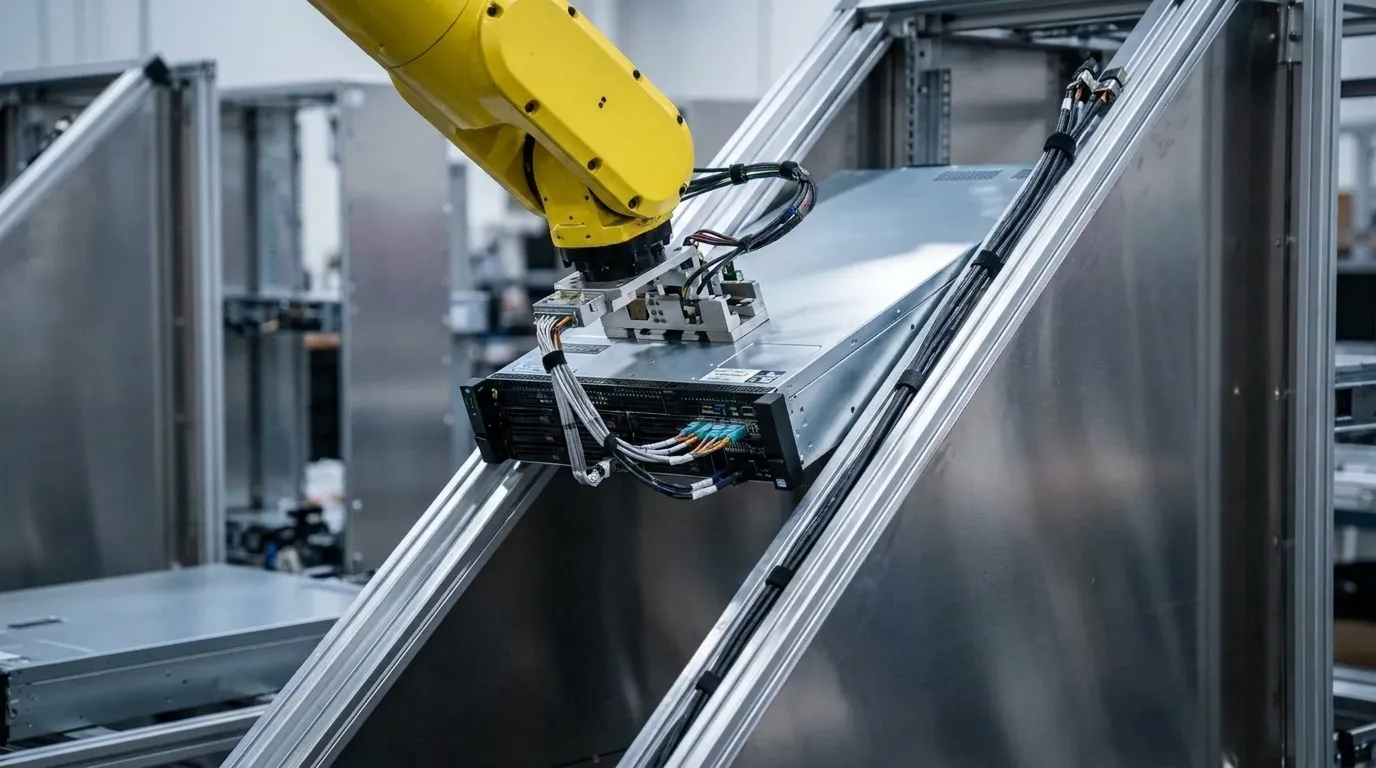
- Electromechanical assembly integrates structural framing, power distribution, cabling, thermal management and controls into a single factory-tested unit that ships drop-in ready.
- The four-stage integration sequence mechanical framing, electrical populating, thermal setup and factory testing establishes dimensional accuracy, proper harness routing and verified performance before shipment.
- Factory integration reduces on-site labor, shortens vendor handoff delays and provides single-source accountability while meeting EIA-310, NEMA, UL, IPC-A-610 and ISO quality standards.
- Start a data center enclosure project with Fabcon to consolidate enclosure fabrication, assembly and testing under one roof and accelerate the next deployment.
Core Concepts For Data Center Enclosure Integration
This guide serves data center infrastructure engineers, mechanical and product design engineers, supply chain and procurement leaders, and operations and program managers at mid-sized to large enterprises building hyperscale or edge deployments.
The following terms appear throughout this guide and support a common vocabulary.
- DFM (Design For Manufacturability): Engineering collaboration that prepares a design for efficient, repeatable production before fabrication begins.
- BOM (Bill Of Materials): The complete list of components, subassemblies and materials required to build a unit.
- EIA-310: The standard governing 19-inch rack geometry, mounting-hole patterns and dimensional compatibility.
- NEMA ratings: Environmental protection classifications for enclosures, including NEMA 4 and NEMA 4X for harsh or outdoor environments.
- UL listing: Certification by Underwriters Laboratories that confirms electrical safety compliance.
- IPC-A-610: The workmanship acceptability standard for electronic assemblies, including wiring and component mounting.
- Service loop: Intentional cable slack that allows terminal replacement, retermination and maintenance without rework.
- Thermal clearance: The minimum physical distance required between heat-generating components and adjacent structures or cables.
- Grounding path: The continuous conductive connection that safely routes fault current to ground.
- Drop-in readiness: The condition of a fully integrated, tested unit that can be installed at a site without field modification.
Rising power densities and a shift toward liquid cooling now shape data center infrastructure. The AFCOM State Of The Data Center Report 2026 found that more than one in four racks now use liquid cooling, and air cooling thermal ceiling no longer supports AI and ML server racks that routinely exceed 40 to 100 kW. AFCOM 2025 State Of The Data Center reported average rack density rising from 16 kW in 2024 to 27 kW in 2025, the largest year-over-year increase ever recorded. These trends make factory integration of enclosures a baseline requirement.
The Four-Stage Integration Sequence For Data Center Enclosures
The integration sequence functions as the product. The value of electromechanical assembly for data center enclosures lies in the order and control of the integration steps. That sequence determines whether a unit ships drop-in ready or creates field rework.
Each stage below outlines the core actions, inputs, outputs, the engineering dependency it creates for the next stage and the critical inspection point. Skipping or reordering stages often causes field failures in enclosure integration. The walkthrough begins with Stage 1, which produces the enclosure structure that anchors every later step.
Stage 1 Mechanical Framing And Structural Build
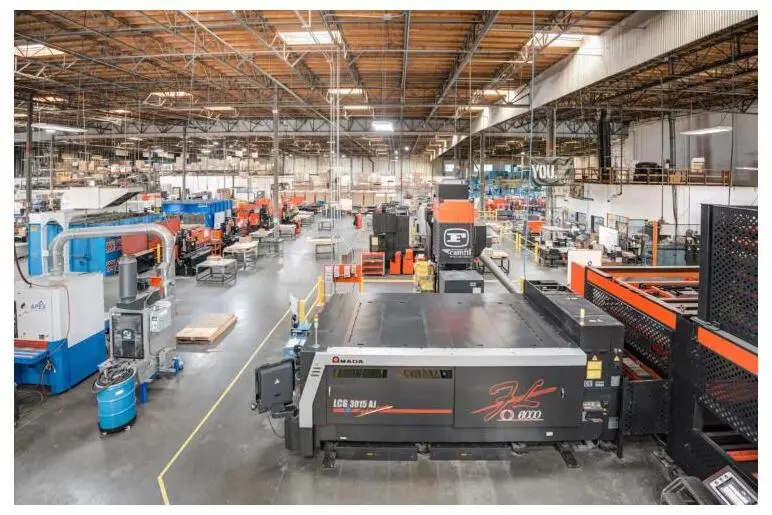
Stage 1 produces the enclosure structure. Cabinets, chassis, racks and structural frames are built to tight tolerances using laser cutting, CNC punching, forming, welding and hardware insertion.
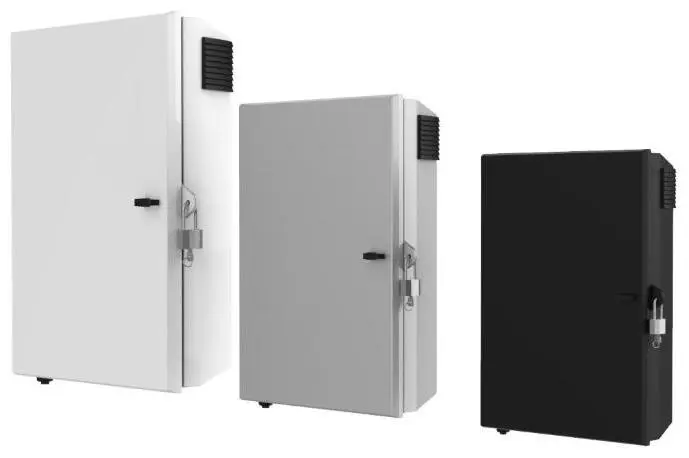
Rack geometry and mounting-hole patterns must conform to EIA-310 so that rails, PDUs and equipment mount without field modification. EIA-310-E establishes the 19-inch rack mounting width at 482.6 mm, sets the rack unit at 1.75 inches and specifies a half-spacing hole pattern. These dimensions ensure any compliant device slides onto the same rails without retooling. Dimensional accuracy at Stage 1 determines fit for every later stage.
The DFM decisions made at this stage have the longest downstream reach. Connector placement, service loop allowance, thermal clearance and grounding paths must be resolved before fabrication begins. A DFM review for a custom server chassis should consider motherboard mounts, GPU support, PSU access, fan walls, rails, connector openings, cable routing, grounding surfaces and serviceability. It should also cover material, bend radii, tolerances and assembly sequence. For liquid-cooled enclosures, manifold orientation, mounting datum, filled mass, isolation, venting, draining, removal direction and connection forces should be frozen before releasing the rear frame.
Early engineering collaboration prevents rework downstream. Design changes become more expensive in later stages of product development. DFM decisions therefore belong at Stage 1.
The critical inspection point at Stage 1 is dimensional verification and fit-check before any electrical work begins. A unit that fails this check cannot be corrected efficiently once wiring and thermal components are installed.
Stage 2 Electrical Populating And Wiring Integration
Stage 2 covers the electrical build. Power distribution units, busbars, breakers, harnesses, connectors and controls are mounted and wired into the framed enclosure.
Harness routing and connector placement must respect the service loops and thermal clearances established in Stage 1. Panel harness routing should follow a documented path built around duct entries, bend limits, access to terminals, door swing, heat sources and future maintenance. Changing routing after Stage 1 completes forces rework of the mechanical build, which becomes the most expensive form of enclosure rework.
Service loops must be purposeful: enough controlled slack permits terminal replacement and retermination, while excessive slack hides wire numbers, fills ducts, captures heat and increases the risk of pinch damage. Routing also determines signal integrity. Motor and mains conductors should be separated from analog, encoder, fieldbus and low-level I/O wiring using independent wire ducts, separated cable tray compartments or a physical barrier.
IPC-A-610 is the workmanship acceptability standard governing assembly quality for electronic assemblies, including wiring and component mounting. UL provides the safety framework for the electrical build. Both standards apply simultaneously.
The critical inspection point at Stage 2 is continuity, polarity and grounding verification before thermal components are installed. Continuity testing is necessary but not sufficient for harness release: a continuity tester can confirm that a wire reaches the expected point but cannot prove correct label orientation, adequate strain relief, terminal retention, torque, shield bonding, voltage rating or motion clearance. Validation should divide checks into component-level, harness-level and installed checks.
Discuss integrated electrical assembly with Fabcon engineering.
Stage 3 Thermal And Cooling Setup
Stage 3 covers thermal integration. Airflow containment, fan and manifold mounting, and for high-density workloads liquid-cooling manifold routing and connection points all come together here.
High-density and liquid-cooling requirements change enclosure design fundamentally. In-rack manifolds are compact distribution assemblies mounted vertically at the rear of the rack, featuring supply and return connections to the row manifold, branch lines to individual servers or cooling zones and quick-connects compatible with server manufacturers cold plate designs. These components must be designed into the enclosure at Stage 1. Retrofitting air-cooled data centers for liquid cooling is complex and costly; designing for liquid cooling from the outset is typically faster, more cost-effective and less risky.
Thermal components are installed after electrical populating because they occupy the same internal volume and their placement depends on final harness routing. Installing thermal components before wiring completes forces harness rerouting and restarts Stage 2 inspection requirements.
ASHRAE TC 9.9 thermal guidelines define the reference environmental envelope for data centers, including inlet temperature ranges and humidity limits by equipment class. For liquid-cooled systems, successfully implementing a fluid network requires attention to material compatibility, proper fluid selection and adequate redundancy. Commissioning procedures include flushing and pressure testing, followed by ongoing monitoring of temperature, pressure, flow rates and fluid chemistry.
The critical inspection point at Stage 3 is pressure and airflow verification, plus leak checks on liquid-cooling connections. The factory acceptance test must include a real leak test and a proven leak-detection and isolation response, because a coolant joint over energized hardware carries a different risk category than a mechanical assembly defect.
Stage 4 Testing, Quality Control And Shipment
Stage 4 covers factory testing and QC. Continuity, grounding, pressure and airflow verification, and functional checks all occur before the unit leaves the facility.
Factory testing catches the common integration failures that would otherwise surface in the field. Common electrical problems in data centers include loose connections, overloaded circuits, overheating busbars or cables, UPS battery failure, breaker or switchgear faults, power distribution failures, harmonic distortion, poor grounding, insulation breakdown and failures in backup power systems. Many of these issues originate in integration rather than in the hardware itself.
The Uptime Institute 25-year dataset attributes 66 to 80 percent of all data center downtime incidents to human error, with installation issues cited as a specific cause. Factory testing under controlled conditions, with trained assemblers and documented inspection criteria, reduces that exposure before the unit ships.
- ISO 9001:2015 and AS9100D certified systems with full traceability across the build
- Compliance with UL and CSA standards
The output of Stage 4 is a tested, documented, drop-in-ready unit shipped with traceability records.
Request factory-tested enclosure delivery from Fabcon.
Standards That Govern Data Center Enclosure Assembly
Each standard below governs a distinct aspect of enclosure integration. A supplier that can speak to all of them can deliver integrated units.
- EIA-310: Governs rack geometry, mounting-hole patterns and dimensional compatibility for server rack enclosures. Sets the 19-inch mounting width and rack-unit pitch that ensure compliant equipment mounts without field modification.
- NEMA ratings (including NEMA 4/4X): Govern environmental protection for edge and harsh-environment enclosures. NEMA 4X adds corrosion resistance over the same protection class as NEMA 4, making it the appropriate rating for outdoor or washdown environments.
- UL: Governs electrical safety for power distribution and wiring within the enclosure. UL listing confirms that the electrical build has been independently tested against defined safety and performance criteria.
- IPC-A-610: Governs workmanship acceptability for electronic assembly, including wiring and component mounting. Sets the inspection criteria that determine whether a harness or connection meets production quality standards.
- ISO 9001:2015 and AS9100D: Govern quality management and traceability across the build. These certifications confirm that every stage of production follows documented processes with full traceability for every part.
EIA-310 governs fit. NEMA governs environment. UL governs safety. IPC-A-610 governs workmanship. ISO 9001:2015 and AS9100D govern the system that keeps all of the above consistent.
How Factory Integration Reduces On-Site Labor
Factory integration moves wiring, thermal setup and testing from the field into a controlled manufacturing environment. Off-site manufacturing in a controlled setting provides enhanced oversight and a lower likelihood of errors or rework compared to field-built installations. Controlled off-site manufacturing produces higher and more repeatable build quality than field assembly because factories offer a stable skilled workforce, parts inventory and repeatable scheduling and testing conditions that congested, weather-exposed job sites cannot match.
The case for factory integration rests on four pillars. A controlled environment, repeatable processes, testing before shipment and one accountable partner all reduce risk. Factory integration is the 2026 default for dense liquid-cooled systems because mis-cabling and leak risk are too high to absorb on the install floor.
Field integration remains appropriate in specific situations. Last-mile customization requirements, site-specific constraints that make shipping a fully integrated unit impractical or lower-density air-cooled configurations with manageable cabling risk can still justify field work. Field integration survives for lower-density, air-cooled or 19-inch-EIA configurations where weight and cabling risk remain manageable.
The hidden costs of fragmented supply chains strengthen the argument for factory integration. When metal fabrication, coatings, wiring and assembly come from different suppliers, vendor handoff delays, quality disputes across multiple POs and rework often surface in the field rather than at the factory. The economic case for factory integration is a labor-arbitrage and schedule-certainty case: factory installation is repeatable, weather-independent, inspected under controlled conditions and performed by a trained workforce. On-site electrical assembly is sequential, exposed to trade stacking and delays and dependent on scarce local labor. Those conditions produce a predictable set of failures that factory testing is designed to catch.
Common Integration Failures And Factory Test Coverage
The following failures appear regularly in enclosure integration programs that rely on field assembly rather than factory testing. Each has a traceable root cause and a corresponding factory test that catches it before shipment.
- Intermittent continuity from poor harness routing: Manifests as random link errors or power instability after deployment. Root cause often involves a harness routed through a pinch point or with insufficient service loop, which creates stress on the conductor under thermal cycling. Factory harness inspection and continuity testing under simulated conditions catch this before shipment. Exceeding a cable defined bend radius or tension limits does not always cause immediate failure but introduces stress that can degrade performance over time.
- Inadequate grounding paths: Manifests as nuisance trips, EMI interference or safety failures in the field. Root cause involves grounding conductors that were not specified, routed or verified at Stage 2. Protective earth conductors must meet applicable safety and conductor requirements, and shield clamps, grounding bars, braided bonds and PE conductors should be called out separately in build documentation. Factory grounding verification catches this before the unit ships.
- Airflow short-circuits from missing containment: Manifests as elevated inlet temperatures and thermal shutdowns after deployment. Root cause involves missing blanking panels or containment components that allow hot exhaust air to recirculate to the front intake. Adding blanking panels to a previously open cabinet typically drops inlet temperature by 2 to 5 degrees C. Factory airflow verification confirms containment integrity before shipment.
- Cooling leaks from manifold connections made without pressure testing: Manifests as coolant loss, hardware damage or emergency shutdown after deployment. Root cause involves liquid-cooling connections that were assembled but never pressure-tested in a controlled environment. The factory acceptance test must include a real leak test and a proven leak-detection and isolation response, and the site acceptance test must confirm both survived the trip and the field connection.
- Dimensional drift that forces field modification of rack rails: Manifests as equipment that does not mount without shimming, drilling or rail replacement in the field. Root cause involves dimensional tolerance errors at Stage 1 that were not caught before electrical work began. Factory dimensional verification and fit-check at the end of Stage 1 provide the reliable catch point for this failure.
Talk with Fabcon about factory testing coverage for enclosure programs.
Buyer Checklist For Integrated Enclosure Suppliers
The following questions reveal whether a manufacturer can deliver integrated electromechanical assembly for data center enclosures or only fabricates metal.
- Can the unit be wired, assembled and tested before shipment, with documented test results provided at delivery
- Which standards govern rack geometry and environmental ratings specifically EIA-310, NEMA, UL and IPC-A-610 and can the supplier demonstrate compliance with each
- How does the supplier handle DFM collaboration before production begins, and at what stage can engineering changes be incorporated without restarting fabrication
- What traceability documentation is provided with each unit, and does it cover fabrication, finishing, electrical assembly and testing
- Can the supplier scale from prototype through mid-volume production without changing partners, and what does that transition look like in practice
- How does the supplier manage the engineering dependency between mechanical framing decisions and downstream electrical and thermal integration
- What quality certifications govern the build, and are those certifications current and third-party verified
- Does the supplier have in-house finishing capabilities, or does the enclosure leave the facility for coating and return for assembly, which introduces a handoff and potential dimensional change
Measuring Success In Enclosure Integration Programs
The four-stage sequence produces measurable outcomes. First-pass yield at factory testing, on-time delivery against committed dates, engineering change frequency after design freeze, defect rates at incoming inspection and field reliability after deployment all show whether the integration process works.
Early-stage indicators such as RFQ cycle time, first-article inspection results and DFM review turnaround signal whether the supplier engineering process aligns with the program pace. Long-term performance indicators such as field reliability, lifecycle cost and defect rate trends across production runs confirm whether factory integration quality holds at volume.
Simple tracking methods include inspection checklists tied to each stage of the integration sequence, periodic supplier reviews against agreed quality metrics and first-article inspection outcomes documented against the approved drawing. Post-phase reviews should feed commissioning results and field lessons back into the next phase basis of design and specifications. That feedback loop closes the integration cycle.
Advanced Integration Methods And Iteration
Advanced methods extend the basic four-stage integration process once the core sequence runs reliably. Digital twins for enclosure layout validation, design automation for rack configurations across high-mix programs, supplier integration for programs with evolving BOMs and data-driven continuous improvement tied to first-pass yield and field reliability metrics all build on a stable base.
CFD modeling can validate airflow and thermal performance before modules are installed, helping teams understand how standardized cooling systems will behave within the actual building and IT environment. Digital twin approaches apply the same logic at the enclosure level, surfacing fit and routing conflicts before fabrication begins and feeding improvements back into Stage 1 through Stage 4.
Readiness criteria for adopting these advanced approaches include process stability across at least one production run, data availability from factory testing and field feedback, and volume thresholds that justify the engineering investment. Systematic pilots, run as controlled experiments on a limited scope and followed by phased rollouts, reduce the risk of introducing complexity before the baseline process reaches stability.
Explore advanced integration options with Fabcon.
Why Fabcon For Electromechanical Assembly Of Data Center Enclosures
Fabcon operates as a full-service U.S. precision sheet metal fabrication and electromechanical assembly partner. The company, founded in 1977, runs 220,000 square feet of vertically integrated manufacturing space, including a Southern California facility in Santa Ana.
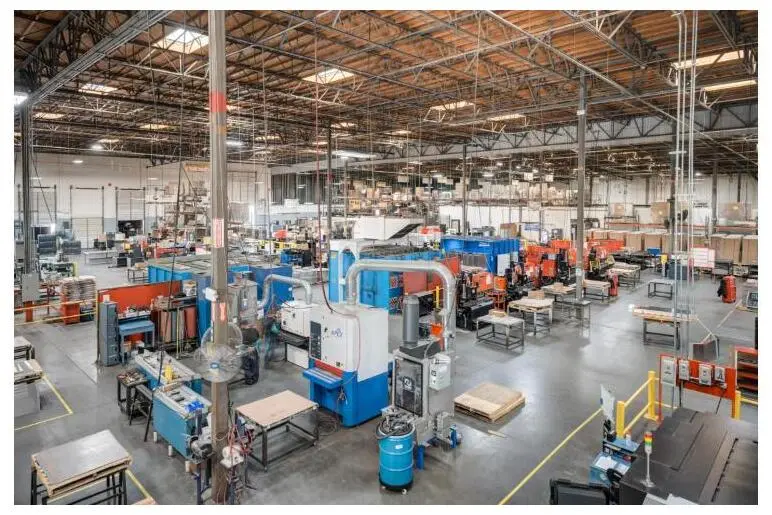
The four-stage integration sequence described in this article runs under one roof at Fabcon with one PO and one accountable partner. That structure removes vendor handoff delays, quality disputes and coordination overhead that often characterize fragmented enclosure supply chains.
Fabcon performs all four stages under one roof. Precision fabrication, in-house engineering, thermal integration and certified testing happen in the same facility, so harness routing and manifold decisions are made with full visibility into the mechanical build.
- Powder coat
- Wet paint
- Screen printing
- CARC military-grade finishing
- Mil-spec coating
In-house finishing completes the enclosure without an external handoff that could affect dimensional accuracy or schedule.
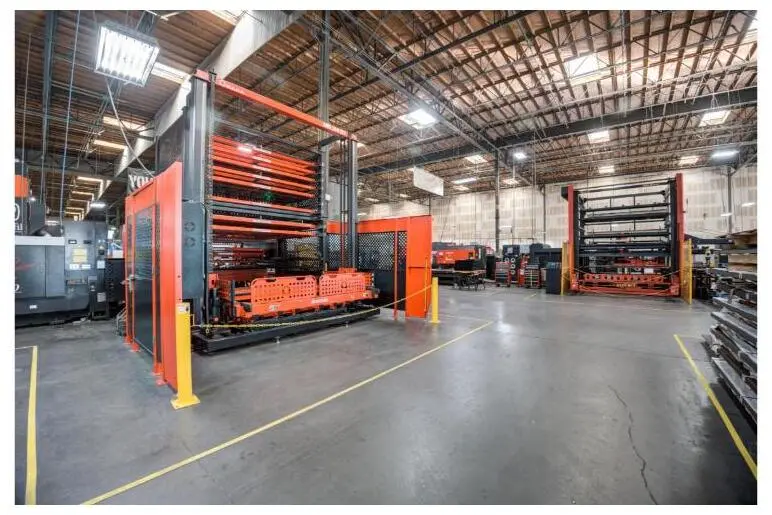
Fabcon agile production cells scale from prototype through mid-volume production without the high minimums, long onboarding or rigidity of large contract manufacturers. That flexibility fits the mid-volume, high-mix programs that define many data center infrastructure builds, where BOMs evolve, configurations vary and the supplier must adapt without restarting the relationship.
Fabcon data center infrastructure value proposition centers on modular, rack-mounted enclosures and structural systems that simplify cooling, cable management and integration for hyperscale and edge deployments.
Consolidate enclosure fabrication, assembly and testing with Fabcon.
Frequently Asked Questions
What Is Electromechanical Assembly For Data Center Enclosures
Electromechanical assembly for data center enclosures means factory integration of structural framing, power distribution, cabling, thermal management and controls into a single tested unit. The process combines mechanical fabrication laser cutting, forming and welding with electrical populating, thermal setup and factory testing. The result is a unit that is ready for drop-in deployment without field modification. The defining characteristic is that all integration work happens in a controlled manufacturing environment rather than on the installation floor. Fabcon performs this full sequence under one roof, from fabrication through testing and finishing.
What Are The Key Components Of A Data Center Enclosure
A data center enclosure typically includes a structural frame or cabinet built to EIA-310 rack geometry, mounting rails and hardware, power distribution units, busbars and breakers, cable harnesses and management systems, and blanking panels for airflow containment. High-density deployments add liquid-cooling manifolds, quick-disconnect fittings and CDU connection points. Grounding paths and bonding conductors function as structural components of the electrical build. The enclosure may also include access hardware such as doors, hinges, latches and gaskets that govern both physical security and environmental sealing. In a fully integrated unit, all of these components are assembled, routed and tested as a system before shipment.
What Standards Apply To Data Center Enclosure Assembly
Five frameworks govern different aspects of enclosure assembly, and each covers a distinct domain. EIA-310 governs rack geometry and mounting-hole patterns, ensuring dimensional compatibility between the enclosure and the equipment installed in it. NEMA ratings including NEMA 4 and NEMA 4X govern environmental protection for edge and harsh-environment enclosures, covering resistance to dust, water and corrosion. UL governs electrical safety for power distribution and wiring within the enclosure. IPC-A-610 governs workmanship acceptability for electronic assembly, setting the inspection criteria for wiring, component mounting and harness quality. ISO 9001:2015 and AS9100D govern the quality management system that keeps all of the above consistent and traceable. A supplier that can demonstrate compliance with all five frameworks is equipped to deliver integrated units.
How Does Factory Integration Reduce On-Site Labor
Factory integration moves wiring, thermal setup and testing from the field into a controlled manufacturing environment. On-site electrical assembly is sequential, weather-dependent and reliant on local skilled labor that must be hired and managed at the installation site. Factory assembly is repeatable, performed by a trained workforce using documented processes and completed before the unit ships. Field work then shifts from assembly and testing to placement and tie-ins. The hidden costs of field integration rework, vendor handoff delays, quality disputes and schedule slippage often exceed the apparent savings of deferring integration work to the site.
Modular Vs. Standard Rack Enclosures: When Should Each Be Chosen
Standard rack enclosures built to EIA-310 geometry suit most enterprise and colocation deployments. Modular enclosures suit programs that require rapid deployment, high-density liquid cooling or phased capacity expansion without repeated site construction.