
Key Takeaways
-
Data center enclosures protect and organize IT equipment, and selecting the right US manufacturer directly affects reliability, compliance and deployment speed.
-
The US market includes major brands such as Chatsworth Products, Panduit, Rittal, Vertiv, AMCO Enclosures and Eaton, plus vertically integrated custom fabricators.
-
Standard enclosures suit straightforward, fast-track projects, while custom enclosures serve high-density, liquid-cooled or compliance-driven deployments.
-
Key certifications to verify include TAA, BABA, ISO 9001:2015, relevant UL listings and seismic ratings, with AS9100D and ITAR required for aerospace or defense work.
-
Custom enclosure programs benefit from manufacturers that provide engineering collaboration, integrated finishing and assembly in a single US facility.
Leading US Data Center Enclosure Manufacturers
The US market includes large global brands, regional fabricators and vertically integrated custom manufacturers. Each category supports different program types. The following profiles cover manufacturers with documented US production facilities.
-
Chatsworth Products (CPI): California-based manufacturer that offers structural cabinets and seismic-rated server racks for data center and telecommunications environments.
-
Panduit: Panduit, based in Tinley Park, Illinois, provides network infrastructure and electrical wiring solutions. Its data center portfolio includes cabinets, containment systems, cable management and routing products.
-
Rittal North America: Headquartered in Schaumburg, Illinois, Rittal LLC manufactures scalable IT server enclosures and modular data center systems, with primary manufacturing in Urbana, Ohio. In March 2026, Rittal and Siemens entered a strategic partnership to develop standardized power distribution infrastructure for AI and modular data centers.
-
Vertiv: Ohio-based manufacturer that supplies racks, cabinets and thermal management solutions. Vertiv launched SmartRun in March 2025, a prefabricated modular overhead infrastructure system that integrates power distribution, liquid-cooling piping and hot-aisle containment.
-
AMCO Enclosures: Illinois-based manufacturer operating a facility in Des Plaines that specializes in standard and custom modular enclosures with seismic-rated options. AMCO holds ISO 9001 certification and builds to UL 2416, EIA-310D, NEBS/Zone 4 seismic and ASHRAE standards.
-
Eaton: Operates US facilities including a new plant in Arkansas for modular electrical enclosures through its Fibrebond business, serving data center, utility and industrial markets.
These brands anchor the US enclosure landscape. They sit alongside vertically integrated custom fabricators that provide engineering depth, in-house finishing and light assembly in a single location. Fabcon is one such manufacturer, operating in Southern California and building custom enclosures, racks and chassis for data center and infrastructure programs.
Standard And Custom Enclosures For Different Program Needs
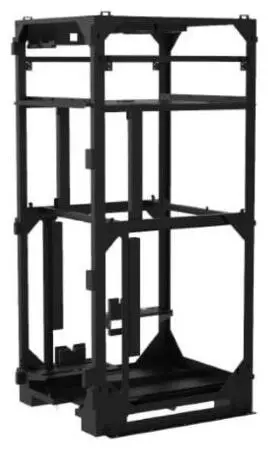
Standard enclosures are off-the-shelf products manufactured to common specifications. They support programs with straightforward requirements, fast deployment timelines and limited integration needs. Major brands maintain stocked inventory for common configurations, which shortens lead times.
Custom enclosures are engineered to specific requirements such as size, cooling architecture, integration depth or structural load. They serve programs where catalog products cannot meet the technical brief, where high-density or liquid-cooled deployments require nonstandard geometry, or where wiring and assembly must be integrated before delivery.
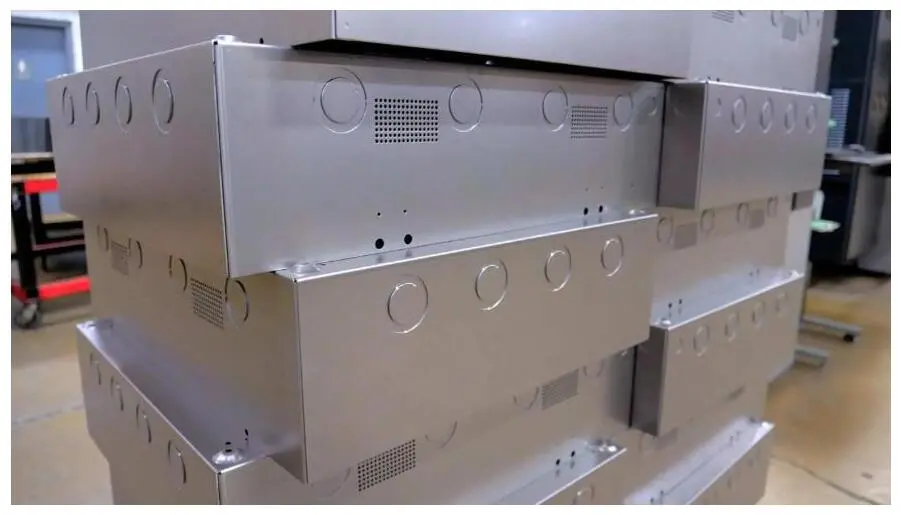
Custom enclosures require engineering and tooling that standard products do not, so lead times often extend beyond off-the-shelf offerings. Early manufacturer engagement and design-for-manufacturability collaboration keep programs on schedule by resolving issues before production begins.
Fabcon focuses on custom enclosures. Engineering and quoting teams work with customer technical teams before production, reviewing drawings, tolerances and materials to improve manufacturability. Wiring and light electromechanical assembly occur in-house, which reduces handoffs and shortens deployment timelines.
Compliance And Certifications For US Data Center Projects
Compliance requirements depend on project type, end-use environment and funding source. Procurement teams evaluating US manufacturers should confirm the following certifications before shortlisting a vendor.
-
TAA (Trade Agreements Act): Required for all GSA Schedule (MAS) contracts and for other federal contracts above applicable dollar thresholds, such as $183,000 for supplies. Enclosures must be manufactured or substantially transformed in a TAA-designated country. Domestic US manufacturing supports TAA compliance and reduces risk associated with overseas suppliers.
-
BABA (Build America, Buy America): Mandatory for federally funded infrastructure projects under the 2021 Infrastructure Investment and Jobs Act. Iron, steel, construction materials and manufactured products used in covered projects must be produced in the United States. Technology-based infrastructure categories, such as broadband, power grid reliability and EV charging, require enclosures and cabinets that meet Made in the USA standards.
-
Seismic certification (for example, Telcordia GR-63-CORE): Required for facilities in seismic zones. AMCO’s Titan ZN4 DT rack, for example, provides GR-63-CORE seismic protection with a certified load rating for mission-critical facilities in seismic regions.
-
UL listings: UL 2755 covers prefabricated, factory-built and skid-mounted modular data center enclosures. UL 2416 applies to Audio/Video, Information and Communication Technology Equipment Cabinet, Enclosure and Rack Systems. UL 508A applies to industrial control panels. The applicable listing depends on the enclosure type.
-
ISO 9001:2015: Baseline quality management certification for precision fabrication that confirms documented processes, traceability and consistent quality across production runs.
-
AS9100D and ITAR: Required for aerospace and defense programs. These certifications govern quality management and export control for controlled technical data and hardware.
Fabcon holds ISO 9001:2015 and AS9100D certifications and is ITAR registered. Its quality system supports UL and CSA compliance across fabrication, finishing and assembly operations.
Data Center Rack Cost And Total Program Economics
Standard 42U server rack enclosures typically range from a few hundred to several thousand dollars, depending on materials, load ratings, cooling provisions and included accessories. A complete standard rack setup including rail kits, cable management and delivery can reach several thousand dollars per unit before PDUs or active cooling.
Custom enclosures carry higher upfront engineering and tooling costs, yet total cost of ownership often favors custom solutions. Regional certification requirements add engineering cost and schedule time for multi-market suppliers. Fragmented supply chains add coordination overhead that compounds across a program lifecycle.
A vertically integrated manufacturer reduces total cost by compressing lead times, limiting rework from poor manufacturability and removing vendor handoffs that create quality disputes and schedule delays. Unit price alone rarely reflects the lowest total program cost.
Fabcon positions as a value-focused partner rather than a low-price vendor. Customers select Fabcon because integrated manufacturing reduces downstream costs such as rework, delays and quality issues that make low bids expensive over time.
Rack Sizes, Cooling Density And Configuration Choices
Beyond cost, the physical configuration of enclosures shapes which manufacturers can meet the technical brief. The 19-inch rack is the dominant standard for data center enclosures and follows the EIA-310 standard. Common heights include 42U and 48U, with deeper configurations available for high-density deployments. Custom fabricators can engineer beyond catalog limitations, including heights from 42U through 72U and depths tuned to specific equipment.
Cooling density now drives many enclosure decisions. The AFCOM State of the Data Center Report 2026 found that 36% of survey respondents have deployed liquid cooling, with another 28% planning adoption within the next 12 to 24 months. Rack densities are increasing to support GPU-based AI infrastructure, which makes thermal architecture a primary design input.
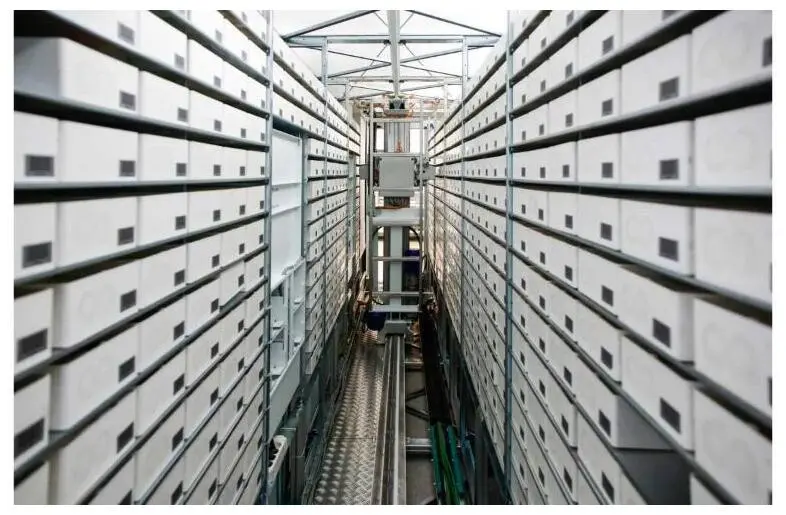
Cable management requirements scale with density. Enclosures for high-density AI clusters need structured pathways, high-percentage perforation patterns for airflow and precise grounding provisions. Fabcon engineers enclosures to specific size, integration and thermal requirements for programs where catalog products fall short.
Checklist For Evaluating US Enclosure Manufacturers
Procurement teams benefit from a structured checklist when comparing US data center enclosure manufacturers. The following criteria build from footprint to capabilities and then to delivery performance.
-
US manufacturing footprint: Confirm domestic facilities and production capacity, since domestic production supports TAA and BABA compliance and reduces logistics risk.
-
In-house capabilities: Check whether fabrication, finishing and assembly occur under one roof. Outsourced finishing or assembly introduces handoff risk and schedule variability.
-
Engineering support and DFM collaboration: Verify that engineering teams engage before production. Early collaboration reduces rework and prevents designs with manufacturability issues from reaching the floor.
-
Compliance certifications: Confirm ISO 9001:2015, relevant UL listings and TAA or BABA compliance for government programs. Validate AS9100D and ITAR registration for aerospace or defense work.
-
Scalability and flexibility: Assess support for mid-volume, high-mix programs without high minimums or long onboarding cycles. Flexible production cells that adapt to changing BOMs provide an advantage.
-
Lead time reliability and supply chain control: Determine whether the manufacturer controls its own production schedule. Heavy dependence on external finishing or assembly limits delivery reliability.
Request a quote to evaluate Fabcon against this checklist for an active enclosure program.
The Case For Vertically Integrated US Manufacturers
Vertical integration means fabrication, finishing and assembly occur in a single facility under one manufacturer. Shorter communication loops between engineering and manufacturing teams simplify revision cycles and reduce delays during product development. Fewer handoffs reduce quality disputes, schedule slippage and coordination failures.
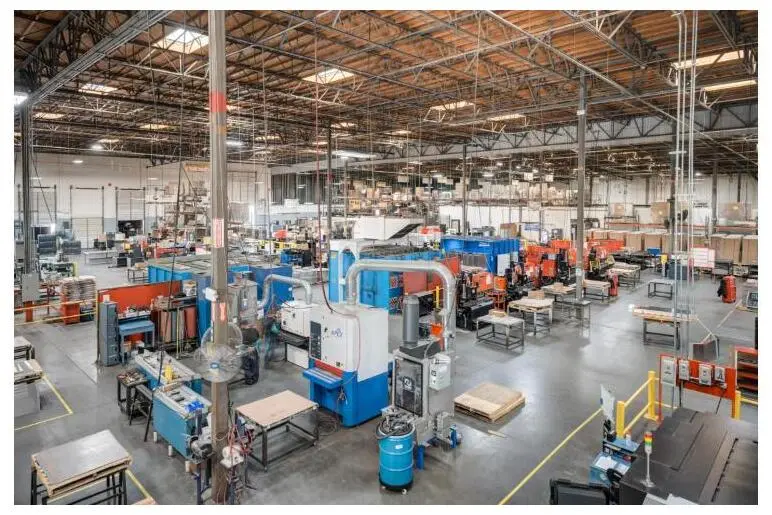
Keeping design and fabrication under one roof eliminates coordination delays inherent in multi-vendor supply chains. This structure supports faster turnarounds and single-point quality control, which benefits programs with evolving BOMs or phased deployment schedules.
The US data center enclosure market often divides into two extremes. Large global contract manufacturers provide scale but demand high minimums, long onboarding and rigid processes. Low-complexity job shops handle basic sheet metal but lack engineering depth, advanced finishing and integrated assembly. Mid-volume, high-mix programs fall between these extremes and require a partner that combines DFM collaboration, integrated finishing and light assembly.
Fabcon serves this middle segment with vertically integrated manufacturing in Southern California. It delivers the engineering depth and end-to-end capabilities associated with large contract manufacturers, paired with the agility and responsiveness that mid-volume programs require.
Frequently Asked Questions
What Companies Make Data Center Racks?
Major US data center rack manufacturers include Vertiv, AMCO Enclosures, Eaton and Rittal. These brands provide standard and configurable rack systems at scale. Custom fabricators such as Fabcon support programs that need build-to-print or design-for-manufacturability services with integrated finishing and light assembly. Regional fabricators such as EVS Metal, FabTech-IGM, Apparatus Manufacturing and MJM Manufacturing also serve specific US markets with domestic production capabilities.
Who Are The Best Manufacturers Of Server Racks?
The most suitable manufacturer depends on program requirements. Large brands supply standard products at scale with broad distribution. Vertically integrated custom fabricators such as Fabcon provide engineering collaboration, DFM support and integrated assembly for mid-volume, high-mix programs where catalog products do not meet the technical brief. Government and defense programs require manufacturers with TAA, BABA, ISO 9001:2015 and, in some cases, AS9100D and ITAR credentials.
What Is The Average Cost Of A Data Center Rack?
As outlined in the cost section, standard racks range from a few hundred to several thousand dollars depending on configuration. Custom enclosures add upfront engineering cost but can reduce total cost of ownership by limiting rework, compressing lead times and reducing coordination overhead across the supply chain. Total program cost provides a more meaningful metric than unit price for mid-volume procurement decisions.
What Is The Difference Between Standard And Custom Enclosures?
Standard enclosures are off-the-shelf products built to common specifications and suited for quick deployment in environments with straightforward requirements. Custom enclosures are engineered to specific size, cooling, structural and integration requirements. They support high-density AI deployments, seismic zones, government programs with compliance mandates and applications where catalog products cannot meet the technical brief. Custom fabricators can also integrate wiring and assembly before delivery, which reduces on-site labor and coordination complexity.
What Certifications Should A US Manufacturer Have?
ISO 9001:2015 serves as the baseline quality management certification for precision fabrication. Relevant UL listings, including UL 2416 for rack systems, UL 2755 for modular data center enclosures and UL 508A for control panels, confirm product-level safety compliance. TAA compliance applies to federal procurement, and BABA compliance applies to federally funded infrastructure projects. Aerospace and defense programs require AS9100D certification and ITAR registration. Seismic certifications such as GR-63-CORE apply to facilities in seismic zones.
How Should Teams Choose Between A Large Contract Manufacturer And A Mid-Tier Fabricator?
Large contract manufacturers offer scale but often require high minimum order volumes, long onboarding cycles and rigid production processes that do not adapt well to evolving BOMs or high-mix programs. Mid-tier vertically integrated fabricators such as Fabcon provide engineering support, DFM collaboration and integrated finishing and assembly without the overhead of large contract manufacturers. Programs that need agility, custom engineering and a single accountable partner from prototype through production often align best with a vertically integrated mid-tier fabricator.
Conclusion And Next Steps For Enclosure Procurement
US-based manufacturing, compliance certification and custom engineering capability are the three factors that most directly influence enclosure program outcomes. The manufacturer evaluation process works best when it starts with these criteria before shifting to unit cost comparisons.
The US data center enclosure market spans large global brands and regional job shops. Mid-volume, high-mix programs gain the most from vertically integrated manufacturers that combine engineering depth, in-house finishing and assembly in a single facility. Fabcon is structured around this program profile.
Procurement and engineering teams can apply the checklist in this guide to evaluate potential partners. Confirm certifications, assess in-house capabilities and engage engineering teams early to validate manufacturability before committing to a production partner.
Discuss a custom enclosure program with Fabcon to assess fit for an active or upcoming project.