
Key Takeaways
This guide explains how vertically integrated data center cabinets support high-density AI and edge deployments from rack power to cooling.
-
Vertically integrated cabinets combine power distribution, cooling, monitoring and security in a single factory-assembled rack-scale system.
-
AI and HPC workloads above 100 kW per rack, such as the NVIDIA GB200 NVL72, depend on integrated liquid cooling and power architectures.
-
Core subsystems include redundant rack PDUs, direct-to-chip liquid cooling with CDUs, environmental sensors with DCIM integration and smart access controls.
-
Selection criteria include power density, cooling approach, form factor, environmental ratings, redundancy strategy and integration capabilities.
-
For precision sheet metal fabrication and electromechanical assembly, partner with Fabcon’s engineering team.
What Is a Vertically Integrated Data Center Cabinet?
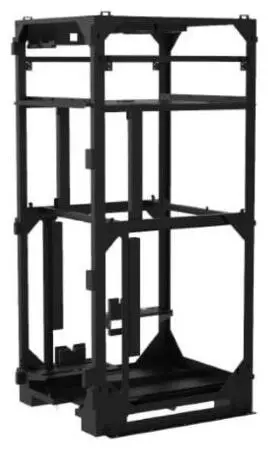
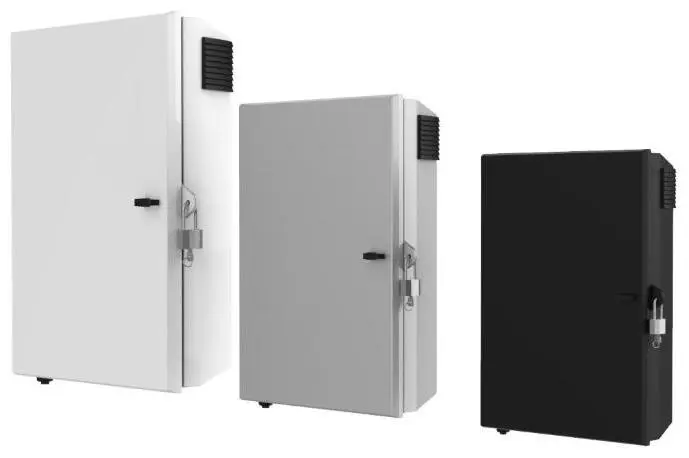
A vertically integrated data center cabinet is a standalone, pre-engineered enclosure that bundles power distribution, cooling, environmental monitoring and physical security into one rack-scale system. The cabinet ships as a unified infrastructure unit that is designed and factory-assembled as a complete solution.
Traditional cabinets act as passive enclosures. They depend on room-level cooling, external power distribution and separate monitoring and security systems. Vertically integrated cabinets move those subsystems from the room to the rack. This shift improves thermal control, power delivery and operational visibility at the enclosure level.
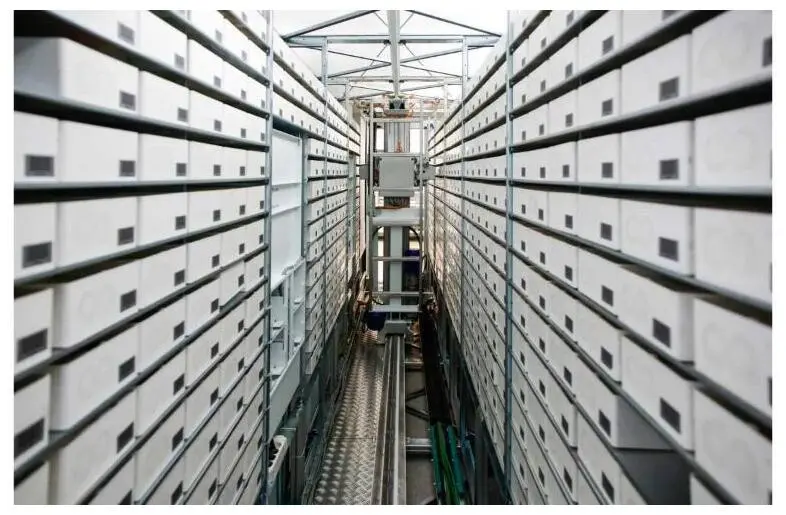
AI workloads now routinely exceed 100 kW per rack, a level that room-level air cooling cannot support reliably. The industry now places precision cooling, intelligent power distribution and integrated monitoring inside the cabinet. Systems like the NVIDIA GB200 NVL72, a 48U rack-scale system drawing about 120–132 kW, are factory-integrated by design. Power, liquid cooling and thermal management are engineered as one system.
Core Integrated Subsystems
Vertical integration designs, tests and factory-assembles these subsystems as one system, which removes on-site assembly risk.
Power Distribution and Redundancy
Integrated power subsystems include rack-mounted PDUs, UPS systems, busways and power monitoring hardware. Buyers now specify rack power, busway, monitoring software, UPS interfaces and cooling coordination as a single power architecture instead of treating PDUs as isolated devices.
The shift toward higher-voltage DC architectures is accelerating. At Data Center World 2026, Schneider Electric’s CTO linked the move toward 800 VDC to the need to reclaim rack space for GPUs. The GB200 NVL72 illustrates this in practice. The HPE configuration uses six to eight power shelves feeding a 50V DC busbar, and it provides N+N redundancy. NVIDIA is also promoting disaggregated “sidecar” power models that relocate AC-DC conversion into dedicated power systems to address per-rack demands trending toward 500 kW.
Cooling Systems for High-Density Workloads
Integrated cooling subsystems include rear-door heat exchangers, direct-to-chip liquid cooling, coolant distribution units and rack manifolds. Liquid cooling is mandatory for the GB200 NVL72, since air cooling cannot meet its thermal requirements. The rack requires a CDU that supplies coolant at controlled temperature and flow. A rack manifold connects all cold plates to a common supply and return manifold that holds flow within ±5 percent per branch.
Density thresholds guide cooling architecture. Conventional air cooling supports 5–8 kW per rack. Rear-door heat exchangers or direct-to-chip liquid cooling become necessary at 20–30 kW per rack. Full liquid cooling loops are required at 40–50 kW per rack. ASHRAE TC 90.4 guidelines recommend liquid cooling above 40 kW per rack and mandate it above 75 kW per rack for sustained workloads. At Data Centre World London 2026, direct-to-chip liquid cooling was identified as the new industry standard for AI-centric hyperscale deployments, with CDU capacity scaling to 1.8 MW.
Environmental Monitoring and Management
Integrated monitoring subsystems include temperature, humidity, airflow, leak detection and smoke sensors, plus remote DCIM integration. Intelligent rack PDUs feed real-time load, temperature and alarm data into DCIM platforms. Operators can see which racks can accept more compute and which circuits approach limits.
At Data Centre World London 2026, Schneider Electric previewed a consolidated software platform that merges its BMS, EPMS and SCADA products into one system. The platform tracks electrical waveforms and cooling performance without application switching. This unified operational technology aligns with managing integrated cabinets through a single pane of glass.
Physical Security
Integrated security subsystems include smart electronic access control, RFID readers, video monitoring and tamper detection. Vertiv’s rack cabinet line integrates access control components into a SEAL solution that deters and delays physical threats. Physical security plays a central role for edge deployments in non-traditional spaces such as warehouses, industrial sites and offices. NEMA and IP-rated enclosures protect against dust and moisture in those environments.
These integrated subsystems form the foundation for the high-density and edge deployments described in the next sections.
Benefits for AI, HPC and Edge Deployments
Vertically integrated cabinets support AI and HPC densities that traditional infrastructure cannot handle. A single GB200 NVL72 rack draws 125–135 kW of continuous IT load and requires 100 percent direct-to-chip liquid cooling with no rack fans. Integrated liquid cooling and power distribution support these densities without major facility reconstruction.
Integrated cabinets also address space and management limits at the edge. Factory-prefabricated modular units cut on-site engineering and deployment cycles, reducing time to market from 12–18 months for field-built approaches to 3–6 months for prefabricated integrated architectures. In non-traditional spaces without dedicated data halls, these units can be deployed in days rather than months.
Key benefits of vertically integrated cabinets include:
-
Rapid deployment through factory assembly and testing
-
Space efficiency as rack-level cooling and power reduce room-level infrastructure
-
Improved cooling efficiency through controlled air paths and lower PUE
-
Simplified management through unified monitoring and control interfaces
-
Lower integration risk because factory testing reduces on-site errors
Discuss cabinet design and electromechanical assembly with Fabcon’s engineering team.
Integrated Cabinets, Traditional Racks and Micro Data Centers
Traditional racks are passive enclosures that depend on room-level power, cooling and monitoring. Vertically integrated cabinets shift those functions to the rack level. This shift enables deployments in environments where room-level infrastructure is impractical or absent.
Micro data centers form a related category. A micro data center uses a vertically integrated cabinet or a small cluster with added self-contained capabilities. These systems typically include UPS, cooling, monitoring and security in a single enclosure. The micro data center segment held 38.7 percent of the edge data center infrastructure market in 2025, which reflects strong demand for self-contained deployments at the network edge. Vertically integrated cabinets act as the building blocks for these solutions.
Traditional racks still fit standard-density enterprise workloads in purpose-built data halls. Integrated cabinets now serve as the preferred architecture for high-density AI and HPC, edge deployments and non-traditional spaces without room-level systems.
How to Select an Integrated Cabinet
Selection starts with a clear view of power density, cooling needs and deployment constraints. The following criteria support consistent evaluation across AI and HPC halls, edge sites and colocation facilities.
-
Power density requirements: Define target IT load in kW per rack. Many enterprise and colocation data centers top out at 40–60 kW per rack on air cooling alone. AI workloads at 100 kW and above require liquid cooling and integrated power distribution.
-
Cooling architecture: Match air, rear-door heat exchangers, direct-to-chip liquid cooling or immersion to density and facility constraints.
-
Form factor and footprint: Consider rack height, width, depth and weight. The GB200 NVL72 weighs about 1.36 metric tons and exceeds standard raised floor ratings, which drives slab-on-grade installation or floor reinforcement.
-
Environmental ratings: Use NEMA and IP ratings for edge deployments in non-ideal environments.
-
Deployment environment: Data halls, edge sites, colocation facilities and non-traditional spaces each present distinct constraints.
-
Redundancy requirements: N+1 and 2N strategies for power and cooling affect cost and footprint.
-
Integration level: Decide whether to bundle power, cooling, monitoring and security or target specific gaps.
-
Manufacturing partner capabilities: Confirm that one partner can manage fabrication, finishing, electromechanical assembly and testing.
Talk with Fabcon’s engineering team about deployment requirements.
Cost and Total Return Considerations
Cost for vertically integrated cabinets depends on integration level, cooling technology, power capacity, customization and partner capabilities. Single-source partners reduce coordination effort by handling fabrication, finishing and assembly in one operation.
Major cost drivers include integration level, cooling approach and power redundancy. Fully integrated cabinets cost more upfront than passive racks. Liquid cooling adds capital cost but supports higher densities. N+1 redundancy adds cost, while 2N redundancy adds even more. Custom form factors, materials and finishes increase cost. Single-source manufacturing can offset some of that spend through shorter timelines and fewer handoffs.
Total cost of ownership extends beyond purchase price.
-
Power and cooling represent 20–30 percent of total data center cost, and improving PUE from 2.0 to 1.3 cuts power costs.
-
Integrated systems shorten deployment time compared with stick-built construction, which accelerates time-to-revenue.
-
Factory-integrated systems reduce field coordination problems, which cause 40 percent of construction delays.
Future Directions for Data Center Cabinets
Direct-to-chip liquid cooling now serves as the industry standard for AI-centric hyperscale deployments. Air cooling still fits less AI-driven build-outs but no longer supports dense GPU clusters.
Rack densities continue to climb. Consultants now design 2.2 MW racks for some clients within a 5-year horizon. NVIDIA’s Rubin Ultra “Kyber” rack is expected to reach 600 kW as a test unit. The direction is clear even if the timing for the highest densities remains fluid.
The industry is shifting from AC to 800 VDC power distribution architectures. AI power density and the goal of lower conversion losses drive this change. Solid-state transformers enable megawatt-scale conversion of grid power to 800 VDC.
More than 40 percent of new global data center capacity in 2026 will use prefabricated or modular architecture, up from about 25 percent in 2023. The modular data center market is projected to grow from $39.26 billion in 2025 to $104.98 billion by 2030.
Standardized power and cooling interfaces for modular units are under active development, which may compress a decade of solar-industry standardization into a few years.
Conclusion
Vertically integrated data center cabinets combine power, cooling, monitoring and security in a unified rack-scale system. They support AI and HPC workloads above 100 kW per rack and enable edge deployments in non-traditional spaces without room-level infrastructure. Effective selection weighs power density, cooling architecture, form factor, redundancy and total cost of ownership.
Next steps include assessing power and cooling requirements, aligning integration options with the deployment environment and engaging a manufacturing partner early in design. Early DFM collaboration reduces rework, improves cost efficiency and ensures that designs scale in production.
Fabcon’s precision sheet metal fabrication and electromechanical assembly capabilities, operated across 220,000 square feet of vertically integrated manufacturing space and certified to ISO 9001:2015 and AS9100D, support custom integrated cabinet programs from prototype through production. Start a conversation with Fabcon about high-density cabinet design.
Frequently Asked Questions
What distinguishes a vertically integrated data center cabinet from a standard server rack?
A standard server rack is a passive enclosure that holds equipment and depends on the surrounding data hall for cooling, power distribution and monitoring. A vertically integrated cabinet moves those functions inside the enclosure.
Power distribution units, cooling hardware such as rear-door heat exchangers or direct-to-chip liquid cooling manifolds, environmental sensors and physical access controls are engineered and factory-assembled as part of the cabinet.
The result is a self-contained infrastructure unit that deploys without the room-level systems a traditional rack requires. This distinction matters most for high-density AI workloads and edge deployments in non-traditional spaces.
At what rack density does liquid cooling become necessary?
The threshold depends on workload type and duration. Conventional air cooling supports standard enterprise workloads at lower rack densities.
Rear-door heat exchangers or direct-to-chip liquid cooling become necessary as densities rise into the 20–30 kW per rack range. Full liquid cooling loops are required at 40–50 kW per rack and above. The ASHRAE guidelines mentioned earlier recommend liquid cooling above 40 kW per rack and mandate it above 75 kW per rack for sustained workloads.
AI systems like the NVIDIA GB200 NVL72, which draw more than 120 kW continuously, require 100 percent direct-to-chip liquid cooling with no rack fans. Facilities that plan to host GPU-dense AI infrastructure should evaluate cooling architecture against these thresholds before procurement.
How does vertical integration affect total cost of ownership?
Integrated cabinets carry higher upfront costs than passive racks, and multi-year TCO analysis often favors integration for high-density and edge deployments. Purchase price represents only a fraction of 5-year spend, while power, cooling, facilities, staff and maintenance account for most cost. Integrated systems improve PUE, which lowers energy spend over the life of the deployment.
Factory-assembled and tested units reduce on-site integration errors and coordination delays that drive many construction overruns. Modular and integrated approaches also reduce stranded capacity, so capital aligns more closely with demand.
For AI infrastructure, facility preparation costs for high-density racks, including structural reinforcement, upgraded power distribution and liquid cooling infrastructure, should appear in any TCO model alongside cabinet purchase price.
What should engineers evaluate when selecting a manufacturing partner for custom integrated cabinets?
The central requirement is the ability to manage the full program scope under one roof. Custom integrated cabinets need precision sheet metal fabrication, in-house finishing and electromechanical assembly, including wiring and component integration. Engineering support for design-for-manufacturability review also plays a key role.
Partners that handle only sheet metal push finishing and assembly onto separate vendors, which introduces handoff delays and quality coordination issues. Certifications such as ISO 9001:2015 and AS9100D indicate that quality systems cover the entire build with full traceability.
Agile production cells that scale from prototype to production without high minimum order thresholds support programs with evolving bills of materials. Early engagement before drawings are final allows DFM feedback that reduces rework and improves cost efficiency at scale.
How does the edge data center market relate to demand for integrated cabinets?
Edge deployments act as a primary growth driver for vertically integrated cabinets. Edge sites such as warehouses, industrial facilities, retail locations and remote infrastructure nodes lack dedicated data halls and room-level infrastructure. Integrated cabinets provide self-contained power, cooling, monitoring and security in a single enclosure that deploys in those environments without civil works or dedicated mechanical and electrical rooms.
The global edge data center market is projected to grow from about $50.86 billion in 2025 to $109.20 billion by 2030, driven by AI inference workloads, 5G expansion, IoT growth and data sovereignty requirements.
The micro data center segment, which functions as a vertically integrated cabinet with full self-contained capabilities, held the largest infrastructure share of that market in 2025. As AI inference moves closer to end users and devices, demand for factory-integrated, rapidly deployable cabinet solutions at the edge will accelerate.