
Key Takeaways
This guide distills community insights and practical criteria for selecting data center cabinets, from supplier shortlists to custom fabrication decisions.
- Forum research shows that cabinet depth is the critical specification for AI workloads, with deeper cabinets supporting cable management and rear-door cooling.
- Perforation ratios between 60 and 80 percent open area support stable intake temperatures and energy use in high-density racks.
- Standard racks from Vertiv, CPI, Schneider Electric, Rittal and Panduit dominate enterprise deployments, while custom fabrication supports non-standard dimensions, specialized cooling and proprietary hardware.
- Procurement teams benefit from validating load ratings, cable management provisions, model-specific certifications and lead-time reliability before volume orders.
- US precision sheet metal fabricators such as Fabcon provide vertically integrated engineering, fabrication and assembly for programs that standard products cannot support.
Top US Data Center Cabinet Suppliers: The Community Shortlist
Enterprise IT forums, market research and procurement discussions highlight two main supplier groups. Established brands offer standardized ecosystems, while fabricators such as Fabcon support custom requirements.
- Vertiv: A global infrastructure leader headquartered in Westerville, Ohio, often discussed in enterprise forums for integrated rack, power and cooling solutions. Vertiv acquired Great Lakes Data Racks & Cabinets in July 2025 for approximately USD 200 million, expanding its high-density AI-ready rack portfolio. The Vertiv Rack Extreme, announced in June 2026, supports static and dynamic load ratings of up to 4,500 lbs.
- Chatsworth Products (CPI): A 100 percent employee-owned US manufacturer founded in 1991, with manufacturing facilities in New Bern, North Carolina, and Georgetown, Texas. CPI earns praise for its integrated ZetaFrame cabinet systems, TAA compliance and domestic production.
- Schneider Electric / APC: NetShelter racks appear as a default specification in many enterprise environments and support integrated power and cooling. Schneider Electric AI rack solutions support ORV3 architectures and integrate direct-to-chip liquid cooling for NVIDIA GB200 and GB300 GPU clusters.
- Rittal: German-engineered racks with strong liquid cooling integration. Rittal LCP and RiMatrix modules support high-density IT and AI use cases, while CDU in-rack options scale to significant per-rack heat loads. Forum users often mention premium pricing and systems integrator involvement for complex deployments.
- Panduit: FlexFusion cabinets align with EIA-310-E, TIA/EIA-942 and UL 2416 standards. Discussions often focus on high-density AI deployments within a unified ecosystem of power, connectivity and containment.
- Enconnex: A US-based supplier of server racks, cabinets and custom containment modules, frequently mentioned in colocation and enterprise projects.
- Hoffman (nVent): Industrial-grade enclosures with broad NEMA-rated options, commonly specified for edge locations and non-standard environments.
- Crenlo: A US manufacturer of custom and standard enclosures known for engineering flexibility.
- Great Lakes Data Racks: Now part of Vertiv and historically recognized for custom rack solutions.
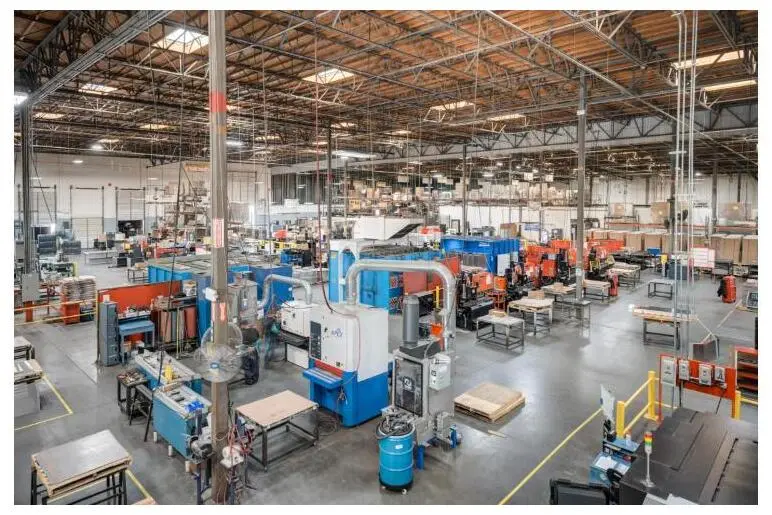
- Fabcon: A US precision sheet metal fabricator that operates 220,000 square feet across two facilities. Fabcon provides vertically integrated engineering support, fabrication, finishing and light electromechanical assembly under one roof, which suits projects where standard products fall short. Connect with Fabcon’s engineering team about upcoming cabinet programs.
What Real Users Say: Insights From Forums
Beyond vendor claims, community discussions reveal how these suppliers and cabinet designs perform in practice.
Depth Is The First Battleground
Forum users consistently state that cabinet depth is the primary specification to verify. For AI hardware and rear-door heat exchangers, 1,000 to 1,200 mm depth is recommended. Standard 800 mm cabinets often fail to support cable management and rear-door heat exchangers at the same time.
Perforation Percentage Drives Cooling Performance
Engineers on technical forums frequently debate door perforation ratios. A perforation ratio below 65 percent can raise intake temperatures by 3 to 5 degrees Celsius and increase long-term energy costs. Community consensus centers on 60 to 80 percent open area, with higher values favored for racks in the 10 to 30 kW range.
Cable Management Often Becomes A Late-Stage Problem
Many threads describe buyers who focus on rack dimensions and load capacity while underestimating cable management needs. This pattern appears most often in AI clusters with dense east-west traffic. Procurement guides recommend confirming vertical and horizontal managers, top and bottom cable entry, rear routing and bend-radius space before ordering.
Build Quality Extends Beyond The Spec Sheet
For AI and GPU cluster racks, procurement teams benefit from third-party load-test reports instead of relying only on spec sheets. Forum users report that cabinets with identical published specifications can differ in weld quality, powder coating durability and rail alignment.
Vendor Reliability Shapes Project Outcomes
Discussions often highlight lead time reliability, post-sale support and documentation quality as key differentiators. Sourcing firms advise validating compatibility before purchase and confirming that a fast quote does not create rework during installation. These insights translate into a practical checklist for evaluating cabinets.
How To Choose A Data Center Cabinet: Selection Criteria
A structured checklist reduces common sourcing errors and separates equivalent options from lookalike alternatives.
- Physical dimensions: Verify usable internal depth instead of external depth. Account for cable bend radius, PDU mounting and rear door clearance. Measure the deepest server including cable bend radius behind the rear rail and add 100 to 150 mm of clearance.
- Weight capacity: Calculate total equipment weight and add a growth margin. Base load capacity on total equipment weight plus a 20 percent expansion allowance, compared against the static load rating. For seismic zones, verify dynamic ratings per GR-63-CORE.
- Power density and cooling: Match cabinet perforation and cooling provisions to actual heat load. Air cooling becomes thermally insufficient between 30 and 50 kW per rack, after which liquid cooling is required.
- Cable management: Specify vertical and horizontal managers, confirm entry points align with overhead or raised-floor pathways and separate power from data cabling.
- Security and access control: Confirm lock types, door configurations and electronic access options for regulated environments. PCI DSS 4.0 requires cabinet-level access auditing where payment processing systems operate, and HIPAA Security Rule 45 CFR 164.310 mandates physical safeguards including locks for protected health information systems.
- Compliance standards: Request model-specific documentation for UL 2416, EIA-310-E and seismic certifications instead of generic corporate claims.
- Customization needs: For non-standard dimensions, integrated power distribution or specialized mounting, custom fabrication from a US partner often provides the best fit.
Discuss cabinet specifications and custom options with Fabcon’s team.
Custom Vs. Off-The-Shelf: When To Consider A US Fabricator
Standard racks from established brands support most deployments, while custom fabrication serves defined edge cases.
Scenarios that favor custom fabrication include:
- Unusual dimensions that standard product lines cannot accommodate
- High-density cooling integration that requires modified airflow paths or mounting provisions
- Specialized mounting for non-standard equipment or proprietary hardware
- Branding, aesthetic or finish requirements beyond standard options
- Programs that need design-for-manufacturability collaboration from prototype through production
As noted earlier, Fabcon operates as a US-based precision sheet metal fabricator with vertically integrated engineering support, fabrication, finishing and light electromechanical assembly. This consolidation reduces supplier complexity, shortens vendor handoffs and provides a single accountable partner from prototype to mid-volume production.
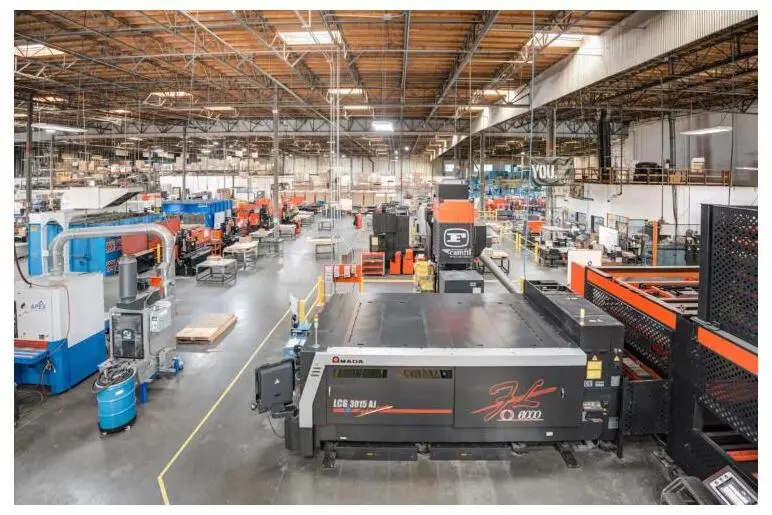
Industry analysis from August 2026 reports that proximity to engineering, faster revision turnaround and dependable delivery increasingly outweigh distant low-cost sourcing for revision-sensitive enclosures, rails, supports, cabinets and related assemblies in data center programs. Fabcon ISO 9001:2015 and AS9100D certifications support integrated quality management across the entire build, with traceability and consistency from first prototype through production runs.
How To Vet A Supplier: Practical Steps
Forum research provides a starting point. A structured vetting process confirms real capability.
- Request references from companies with similar deployment profiles to verify real-world performance.
- Ask for model-specific certification documentation and third-party test reports to confirm compliance claims. Where products appear as tested to applicable standards, confirm the exact scope of compliance for the cabinet model and configuration supplied.
- Conduct site visits or virtual tours to assess manufacturing capabilities and process control.
- Run a pilot order before large volumes to evaluate quality, communication and schedule adherence. Evaluate OEM manufacturing capability, production timeline, quality control processes and comparable project references before issuing a purchase order.
- Validate lead time commitments in writing, including contingency plans for potential delays.
- Treat procurement as a structured process with clear technical submittals, defined substitution handling and explicit acceptance requirements so decisions reflect more than unit price.
Future Trends: AI And High-Density Racks
AI workloads are redefining cabinet requirements across density, cooling and structural performance. The AFCOM 2025 State of the Data Center reports that average rack density jumped from 16 kW in 2024 to 27 kW in 2025, the largest year-over-year increase recorded, driven by GPU workloads.
Uptime Institute AI Infrastructure Advisory states that AI high-density facilities should define rack densities in the 40 to 130 kW range or higher, with AI racks commonly specified at 48U to 52U versus conventional 42U. These racks require deeper, reinforced frames with integrated liquid cooling provisions and structural ratings beyond standard cabinets.
GPU rack power has climbed from roughly 25 kW to more than 130 kW in two years and is projected to exceed 600 kW per rack by 2027. Such rapid scaling demands cabinets engineered for specific cooling and structural needs, which increases the value of suppliers with strong engineering support and customization capabilities.
Conclusion And Next Steps
An effective sourcing process starts with community insights, continues with clear requirements and ends with direct supplier engagement. Forums reveal how vendors perform in the field, while structured evaluation criteria and firsthand vetting confirm fit.
The strongest cabinet partners combine product quality with engineering collaboration. Established brands such as Vertiv, CPI and Schneider Electric support deployments where standard products meet the specification. US custom fabricators support programs with non-standard dimensions, specialized cooling integration or proprietary hardware requirements through design-for-manufacturability support and simplified supply chains.
Fabcon’s vertically integrated model spans engineering, fabrication, finishing and light electromechanical assembly under one roof and aligns with these custom needs. Request a Fabcon proposal for upcoming data center cabinet or enclosure projects.
Frequently Asked Questions
What Is The Difference Between A Standard Data Center Cabinet And A Custom-Fabricated One?
Standard cabinets from established brands follow fixed dimensions, load ratings and accessory ecosystems defined by the manufacturer. They suit most enterprise deployments where equipment fits within EIA-310-E rack unit conventions and standard depth ranges.
Custom-fabricated cabinets are engineered to a specific bill of materials. They accommodate non-standard dimensions, specialized mounting configurations and modified airflow paths for high-density cooling. They also support finish and branding requirements that standard product lines do not offer.
Custom fabrication enables design-for-manufacturability collaboration, where the fabricator engineering team reviews drawings and tolerances before production. This approach reduces rework and supports smooth scaling from prototype to production.
What Certifications Should A US Data Center Cabinet Supplier Hold?
For structural and safety compliance, buyers often look for UL 2416 certification, which covers structural integrity, fire-escape compliance and grounding standards for IT enclosures in North America. EIA-310-E governs the 19-inch rack mounting geometry that most IT equipment requires.
For seismic environments, Telcordia GR-63-CORE defines zone-specific requirements for physical protection. Regulated environments may also require compliance with PCI DSS 4.0 for cabinet-level access auditing or HIPAA Security Rule physical safeguard provisions.
On the manufacturing side, ISO 9001:2015 certification indicates a quality management system that spans the production process. AS9100D certification, which Fabcon holds, adds aerospace-grade quality and traceability requirements that support infrastructure-critical programs.
When Does A Data Center Deployment Require Liquid Cooling Integration In The Cabinet?
Air cooling remains viable for rack densities up to roughly 30 to 40 kW per rack, depending on containment strategy and room conditions. Above that threshold, air alone becomes thermally insufficient and the room acts as a bottleneck.
Rear-door heat exchangers extend air cooling viability to higher densities. Direct-to-chip liquid cooling serves as the standard architecture for GPU racks that exceed 80 kW. AI infrastructure from current and next-generation NVIDIA platforms draws well above 100 kW per rack and requires cabinets with provisions for coolant distribution units, manifolds and leak detection.
Buyers specifying cabinets for AI or HPC workloads benefit from confirming that the cabinet frame supports the depth, weight and mounting provisions required by the cooling architecture as well as the IT equipment.
What Are The Most Common Mistakes In Data Center Cabinet Procurement?
The most frequent errors include:
- Specifying external cabinet dimensions instead of usable internal depth, which causes compatibility failures once cable managers, PDUs and rear-door accessories are installed.
- Underestimating load requirements by calculating current equipment weight without a growth margin or by checking static load ratings without reviewing dynamic ratings for seismic zones.
- Treating cable management as an afterthought, which creates installation and maintenance problems in live environments.
- Accepting vague compliance claims instead of requesting model-specific certification documentation and third-party test reports.
- Selecting a supplier based on unit price alone without evaluating lead time reliability, post-sale support, documentation quality and production consistency.
How Does Fabcon Differ From Standard Data Center Cabinet Manufacturers?
Established cabinet brands offer fixed product lines that serve the broadest possible market. Fabcon operates as a precision sheet metal fabrication and assembly partner that builds custom cabinets and enclosures to specific requirements.
The key distinction is vertical integration. Fabcon handles engineering support, fabrication, finishing and light electromechanical assembly under one roof, which removes vendor handoffs and coordination delays that appear when multiple suppliers share the work.
Fabcon engineering teams engage during the design phase to refine manufacturability before production, which reduces rework and accelerates time to production. This model suits programs with non-standard dimensions, specialized cooling provisions, proprietary hardware mounting or evolving bills of materials where a single accountable manufacturing partner adds measurable value.