
Key Takeaways
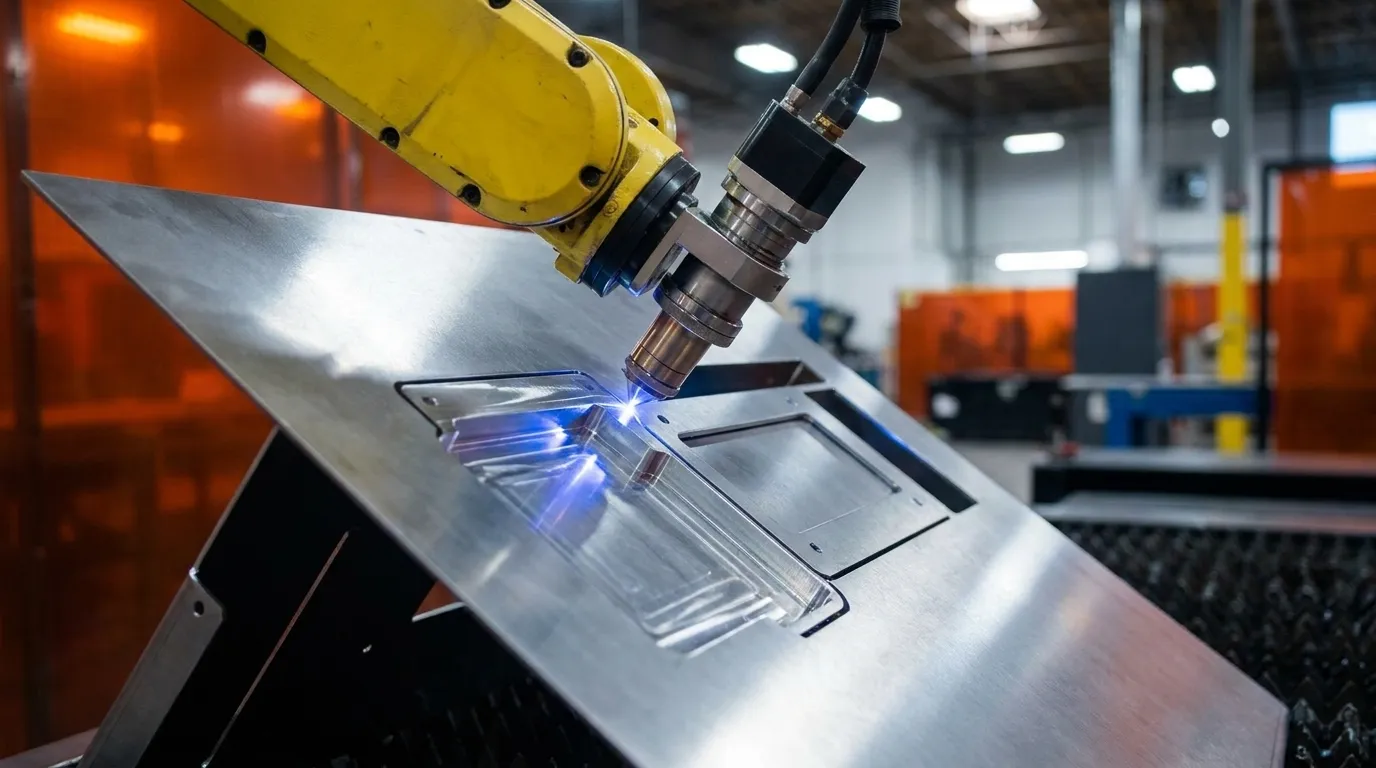
- AI data centers now run GPU workloads that can exceed 100 kW per rack, so rack selection directly affects program success.
- Server rack enclosures must support high structural loads, effective thermal management, scalable power and relevant seismic, NEMA and UL standards.
- True manufacturers own fabrication, finishing and assembly, while resellers source catalog products from third parties.
- Stronger programs start with clear criteria for fabrication depth, engineering support, assembly integration, certifications, volume range and supply chain strength.
- Teams that want a custom enclosure partner can start a custom server rack enclosure program with Fabcon.
How The Server Rack Enclosure Supplier Landscape Breaks Down
The server rack enclosure market splits into three supplier types, and each one changes expectations for customization, lead time and accountability. These categories frame which partners fit a custom program and which fit standard deployments.
Global Standard-Setters
- Global enclosure brands focus on broad product families, standardized footprints and high-volume production for data center and industrial use.
- They provide proven platforms and accessories, with limited flexibility for deep mechanical changes or new architectures.
- These suppliers often fit hyperscale or enterprise programs that align with existing catalog systems.
US Custom Fabricators
- US custom fabricators focus on engineered enclosures, build-to-print work and collaborative design support.
- They adapt dimensions, structural elements, cooling interfaces and cable management to specific deployments.
- Fabcon operates in this category as a vertically integrated precision sheet metal and electromechanical assembly partner from prototype through production.
Budget And Standard-Cabinet Suppliers
- Budget and standard-cabinet suppliers provide cost-focused, off-the-shelf racks for lighter-duty or smaller deployments.
- They support server rooms, labs and non-critical spaces where price and availability outweigh deep customization.
- These suppliers suit straightforward IT environments that align with standard 19-inch rack formats.
Compare Fabcon’s fabrication capabilities against these supplier tiers.
How Supplier Types Map To Data Center Rack Programs
Those supplier categories map directly to how data center racks get built, and deployment type drives the right fit. Hyperscale, edge and colocation environments each place different demands on rack design and sourcing.
Hyperscale operators such as Microsoft, Google and Amazon Web Services need ultra-high-density racks. Power distribution, immersion cooling and direct-to-chip cooling integration drive those designs. These programs often favor standardized, high-volume racks, including the Open Compute Project’s 21-inch Open Rack, which uses 48V DC bus bars and liquid-cooled rear-door heat exchangers for GPU workloads.
Edge and colocation deployments follow a different pattern. Edge data centers are projected to reach 36 percent of the global rack market in 2026. These sites need compact, purpose-built and remotely manageable enclosures for constrained spaces. Custom, modular enclosures simplify cooling, cable management and service access in those environments.
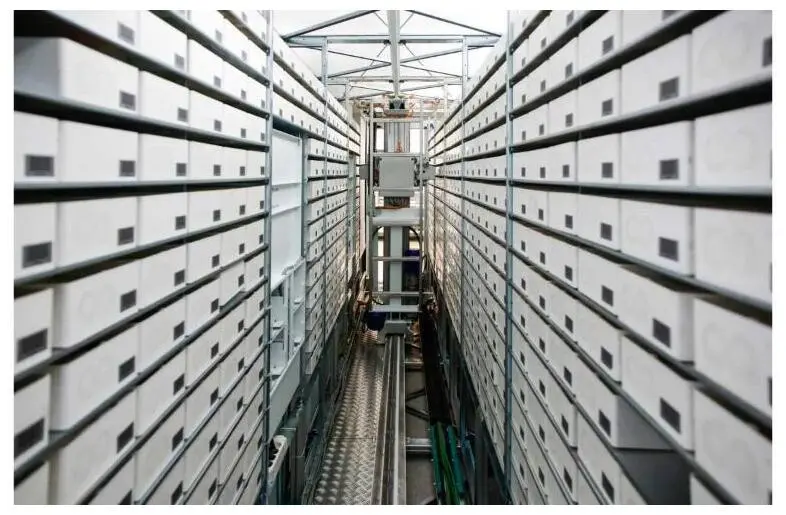
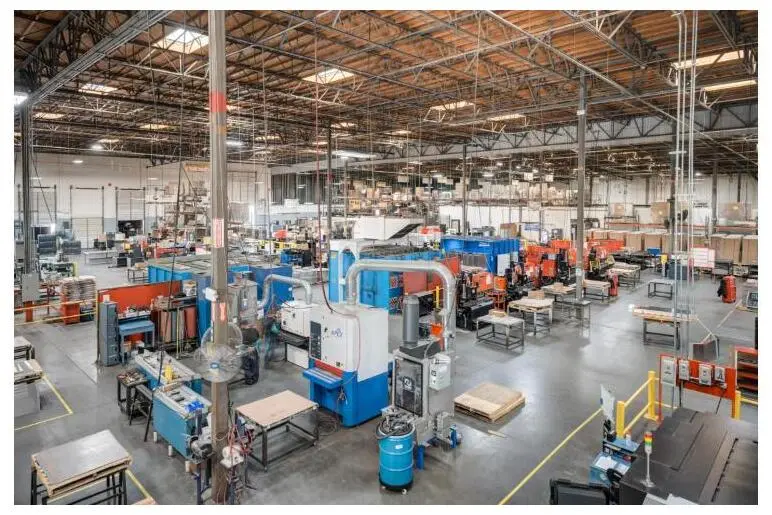
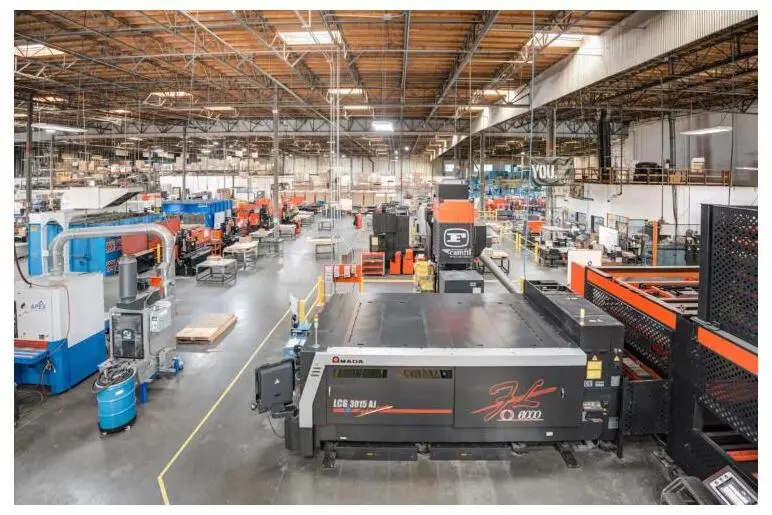
The distinction between true manufacturers and resellers shapes every sourcing decision, and it serves as the primary filter before qualification. Fabcon operates as a US-based manufacturer that builds custom server rack enclosures and structural systems for data center infrastructure. In-house engineering, fabrication, finishing and light electromechanical assembly occur under one roof, which removes vendor handoffs and closes quality gaps.
Send drawings to Fabcon for a custom server rack enclosure review.
How To Evaluate A Server Rack Enclosure Manufacturer
Once teams distinguish manufacturers from resellers, the next step is testing each candidate against consistent criteria. Six core factors influence lead time, customization depth and total cost of ownership.
- In-house fabrication capability: Laser cutting, CNC punching, forming, welding and finishing work best when performed internally. Outsourcing these steps adds handoff risk and schedule variability.
- Engineering and DFM support: Early design-for-manufacturability collaboration catches problems before tooling, which reduces rework and keeps designs buildable at scale. Procurement teams should request evidence of structured collaboration rather than rely on a catalog part number.
- Assembly integration: Wiring, component integration and final assembly under one roof simplify program management. This structure removes the need to coordinate multiple vendors for a single finished rack.
- Quality certifications: ISO 9001:2015 and AS9100D govern quality systems, testing and traceability. UL 2416 covers rack and cabinet enclosures. NEMA 250 defines environmental protection Types. NEBS (Telcordia GR-63-CORE) governs seismic qualification. These standards matter for data center, medical, aerospace and energy storage programs.
- Volume flexibility: The ability to move from prototype to mid-volume production without strict minimums supports evolving BOMs and mixed SKUs.
- Supply chain and logistics: Made-in-USA sourcing, just-in-time delivery and fulfillment support reduce exposure to global disruptions and long transit times.
Fabcon’s vertically integrated model aligns with these criteria. The company operates significant manufacturing space with in-house finishing, including powder coat, wet paint, screen printing, CARC and mil-spec coatings. Agile production cells adapt to changing volumes, so programs can progress from prototype to production without a partner change.
Manufacturer Vs. Reseller: Practical Ways To Tell Them Apart
The manufacturer-versus-reseller distinction often hides behind marketing language, yet it remains the most important qualification filter. A reseller can quote quickly from a catalog, while a manufacturer controls design changes, lead time and quality.
These questions help separate a true manufacturer from a catalog reseller or distributor:
- Do you own your fabrication equipment?
- Can you modify standard enclosures or build to print?
- Do you handle finishing and assembly in-house?
- What certifications apply to your manufacturing process, and what is their scope?
Integrated capabilities, where multiple manufacturing steps stay in-house, reduce handoff risk and schedule slippage. When a quality issue arises, the true manufacturer owns the outcome and can correct the process.
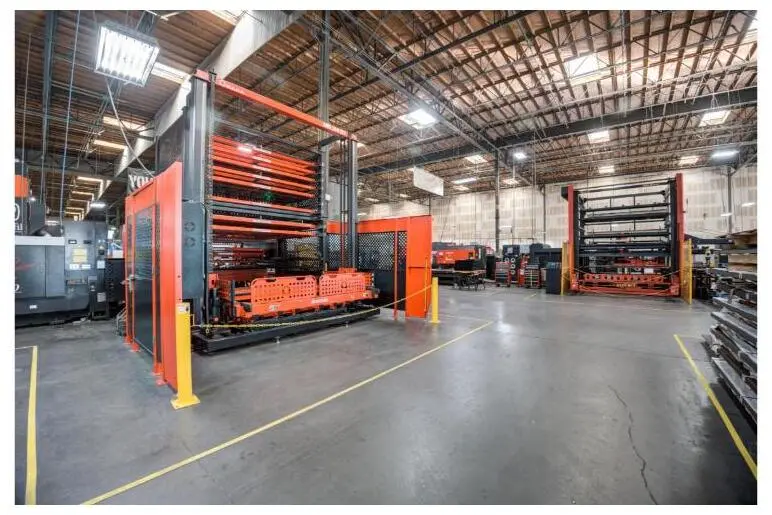
Fabcon performs design, engineering, testing, fabrication, machining, electromechanical assembly, fulfillment and logistics in-house, so one purchase order covers the full scope and one partner stays accountable for the result.
Review Fabcon’s in-house capabilities for a custom enclosure program.
Custom Vs. Standard Server Rack Enclosures: Key Questions For Each Tier
Server rack enclosure sourcing falls into three tiers, and each tier changes expectations for tooling, engineering effort and lead time.
- Standard catalog enclosures: These racks use fixed dimensions and standard finishes with no engineering customization. They fit low-density, non-critical deployments where speed and price drive decisions.
- Modified-standard enclosures: These platforms start from a standard design and add features such as custom cutouts, extra cable management or non-standard finishes. nVent HOFFMAN’s Express Customization service illustrates how some global manufacturers handle this tier within existing families.
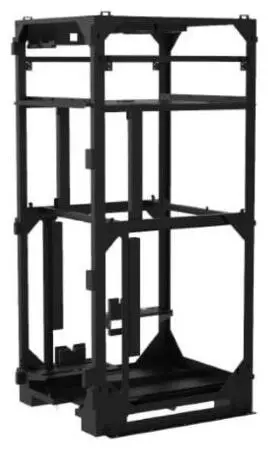
- Fully custom engineered enclosures: These racks are built to print or co-developed with the manufacturer’s engineering team. They address non-standard dimensions, seismic bracing, high-density cooling, liquid interfaces and integrated cable management.
Key questions at each tier include tooling ownership, achievable tolerances across a run, available materials for frames and panels and how volume affects unit cost and lead time.
Teams that define IT equipment requirements first, then derive cabinet dimensions, loading, cooling constraints and liquid interfaces from those needs, achieve stronger results than teams that adapt workloads to a generic cabinet. Fabcon supports build-to-print work, quick-turn prototypes and in-house engineering collaboration so programs can scale without changing manufacturers.
What Certifications Matter For Server Rack Enclosure Manufacturers
Certification review sits at the center of technical qualification, and each standard covers a specific scope. Teams need to confirm that the exact configuration on order matches the listing.
- UL 2416: UL 2416 defines safety requirements for rack and cabinet enclosures. It covers structural integrity, fire-escape compliance and grounding.
- NEMA 250: ANSI/NEMA 250 defines enclosure Types, construction, performance testing and marking. NEMA develops the standard, while third parties test and evaluate products.
- NEBS (Telcordia GR-63-CORE): Zone 4 seismic qualification requires cabinets to withstand acceleration with payload without tipping or ejecting hardware. GR-63-CORE provides seismic design guidance, and buyers in seismic zones should request a test report.
- ISO 9001:2015 and AS9100D: These quality management standards govern testing, traceability and process control across manufacturing operations.
- ITAR registration: Under 22 CFR 122.1, manufacturers of defense articles on the USML must register with the Directorate of Defense Trade Controls. Registration applies even without exports, with limited exemptions for unclassified technical data and experimental work.
To verify certifications, teams should confirm the exact manufacturer and model against the certification record, then check the file number in UL Product iQ or the relevant Nationally Recognized Testing Laboratory database to confirm that the listing is current and covers the configuration on order.
Fabcon holds ISO 9001:2015 and AS9100D certifications, maintains ITAR registration and complies with UL and CSA standards across its manufacturing operations.
Request Fabcon’s certification documentation for a current project.
Streamlined Sourcing Checklist For RFQ Planning
The six criteria above translate directly into RFQ questions. Procurement teams can ask each candidate to describe in-house processes, DFM support before production and finishing and assembly services performed at the same facility. Additional questions cover volume flexibility, supply chain strategy and references for similar data center or infrastructure programs.
Conclusion And Next Steps
Procurement teams that verify fabrication depth, certification scope and single-partner accountability before awarding a contract avoid handoffs and quality gaps that stall data center programs. Clear technical requirements for load, cooling, seismic needs and certifications give manufacturers a precise target.
Next steps include documenting those requirements, shortlisting manufacturers that meet the criteria above and scheduling site visits or audits to confirm capabilities on the floor. Fabcon combines engineering, fabrication, finishing and assembly under one roof, which keeps a custom server rack enclosure program with a single accountable partner from prototype through production.
Teams ready to move forward can send Fabcon a custom server rack enclosure RFQ.
Frequently Asked Questions
What Is The Difference Between A Server Rack Enclosure Manufacturer And A Reseller?
A true manufacturer owns the fabrication equipment, finishing processes and assembly operations used to build server rack enclosures. When a buyer places an order, the manufacturer controls every step from raw material to finished product. A reseller sources catalog enclosures from a third-party manufacturer and sells them without controlling production. The practical difference appears in customization, lead time and accountability. A reseller cannot modify a design, expedite production or correct a fabrication-level quality issue. A true manufacturer can handle all three. During evaluation, buyers can ask whether the company owns its fabrication equipment, performs finishing in-house and can build to a customer-supplied drawing.
What Certifications Should A Server Rack Enclosure Have For Data Center Use?
The most relevant certifications for data center racks in North America include UL 2416, NEMA 250 Type ratings, NEBS Telcordia GR-63-CORE for seismic qualification and ISO 9001:2015 for quality management. NEMA 250 defines environmental protection Types such as Type 1 for clean indoor spaces, Type 12 for dusty industrial areas and Type 4 and 4X for outdoor or washdown conditions. GR-63-CORE outlines seismic design guidance, and buyers in seismic zones should request a test report during the RFQ process. For mission-critical or defense-adjacent programs, AS9100D and ITAR registration add further assurance. Teams should verify certifications by checking the manufacturer’s listing in UL Product iQ and requesting certificates with scope documentation.
How Are Server Rack Enclosures Designed For High-Density AI Workloads?
High-density AI and GPU workloads place demands that standard catalog racks often cannot meet. AI clusters can push rack power densities to high levels, which requires reinforced frames, higher load ratings and door perforation that maintains airflow. Many programs also need compatibility with liquid cooling, including rear-door heat exchangers and direct-to-chip manifolds. Rack depth must accommodate deep GPU servers, rear cable routing and cooling hardware. Structural ratings must address dynamic loads, and racks in seismic zones require GR-63-CORE qualification. Custom fabricators that offer early engineering collaboration help teams derive enclosure specifications from actual equipment requirements.
What Is The Advantage Of Sourcing Server Rack Enclosures From A US-Based Manufacturer?
US-based manufacturing reduces freight cost and transit time and avoids international shipping delays, port congestion and tariff shifts. Domestic sourcing also simplifies compliance for government, defense and regulated programs that require documented US supply chains. A US manufacturer can support faster prototyping, in-person engineering collaboration and responsive production changes when designs evolve. For ITAR-controlled work, a US-based manufacturer with ITAR registration is mandatory. Fabcon operates US facilities that support customers from prototype through mid-volume production with in-house fabrication, finishing and assembly.
How Does Fabcon Support Custom Server Rack Enclosure Programs?
Fabcon supports custom server rack enclosure programs through a vertically integrated model that covers design and engineering, precision sheet metal fabrication, CNC machining, finishing and light electromechanical assembly. Programs begin with design-for-manufacturability collaboration, where engineering and quoting teams review drawings, tolerances and materials before production. This approach reduces rework and keeps designs scalable. Agile production cells adapt to changing volumes and mixed SKUs without strict minimums. ISO 9001:2015 and AS9100D certifications govern quality with full traceability, and ITAR registration supports defense-adjacent work. The result is a single accountable partner from first prototype through production delivery.