
Key Takeaways
- Data center enclosure manufacturers fall into three categories: standard cabinet OEMs, custom fabricated enclosure manufacturers and modular or prefab room providers.
- Average rack density reached 27 kW in 2026, a 69% year-over-year jump, which drives demand for liquid-cooling-ready, seismic-rated and high-density enclosure designs.
- Use a six-dimension evaluation framework covering technical capabilities, integration scope, quality and compliance, scalability, supply chain and total cost versus value to compare manufacturers.
- Custom fabrication partners that consolidate fabrication, finishing and electromechanical assembly under one roof reduce handoff risk, lead-time variability and total cost of ownership.
- For mid-volume, high-mix programs that need precision fabrication and a single accountable partner, start a custom enclosure project with Fabcon.
Executive Summary And Evaluation Framework
This guide explains enclosure types and deployment scenarios, the three manufacturer categories, a six-dimension evaluation framework and supply-chain trade-offs between those categories.
Use these six dimensions to compare manufacturers consistently and build a defensible shortlist:
- Technical Capabilities: Sheet metal fabrication, CNC machining, welding and the ability to build nonstandard geometries, seismic-rated structures and outdoor enclosures.
- Integration Scope: Whether the manufacturer handles finishing, electromechanical assembly, wiring and power or cooling component integration in-house or relies on subcontractors.
- Quality And Compliance: Certifications such as ISO 9001:2015, AS9100D, UL and CSA, plus documented traceability systems that satisfy procurement and regulatory requirements.
- Scalability And Flexibility: Support for prototype, NPI and mid-volume production runs without high minimums or rigid onboarding requirements.
- Supply Chain And Logistics: Vendor count, handoff risk between fabrication, coating, wiring and assembly, and domestic versus offshore manufacturing footprint.
- Total Cost Versus Total Value: Unit price relative to rework risk, lead-time reliability, quality consistency and the cost of managing multiple vendors versus one accountable partner.
Major Data Center Enclosure Manufacturers By Category
The market segments into three categories, and each category fits specific deployment and volume profiles.
Standard Cabinet And Rack OEMs such as Schneider Electric/APC, Vertiv, Rittal, nVent, Eaton and Chatsworth Products produce catalog 19-inch cabinets, containment systems and power distribution units at scale. These manufacturers set benchmarks for standardized colocation and enterprise deployments where ecosystem compatibility and catalog availability matter most. The global electrical enclosures market is projected to grow from $8.11 billion in 2025 to $11.58 billion by 2031, which reflects sustained demand for both standard and custom enclosure products.
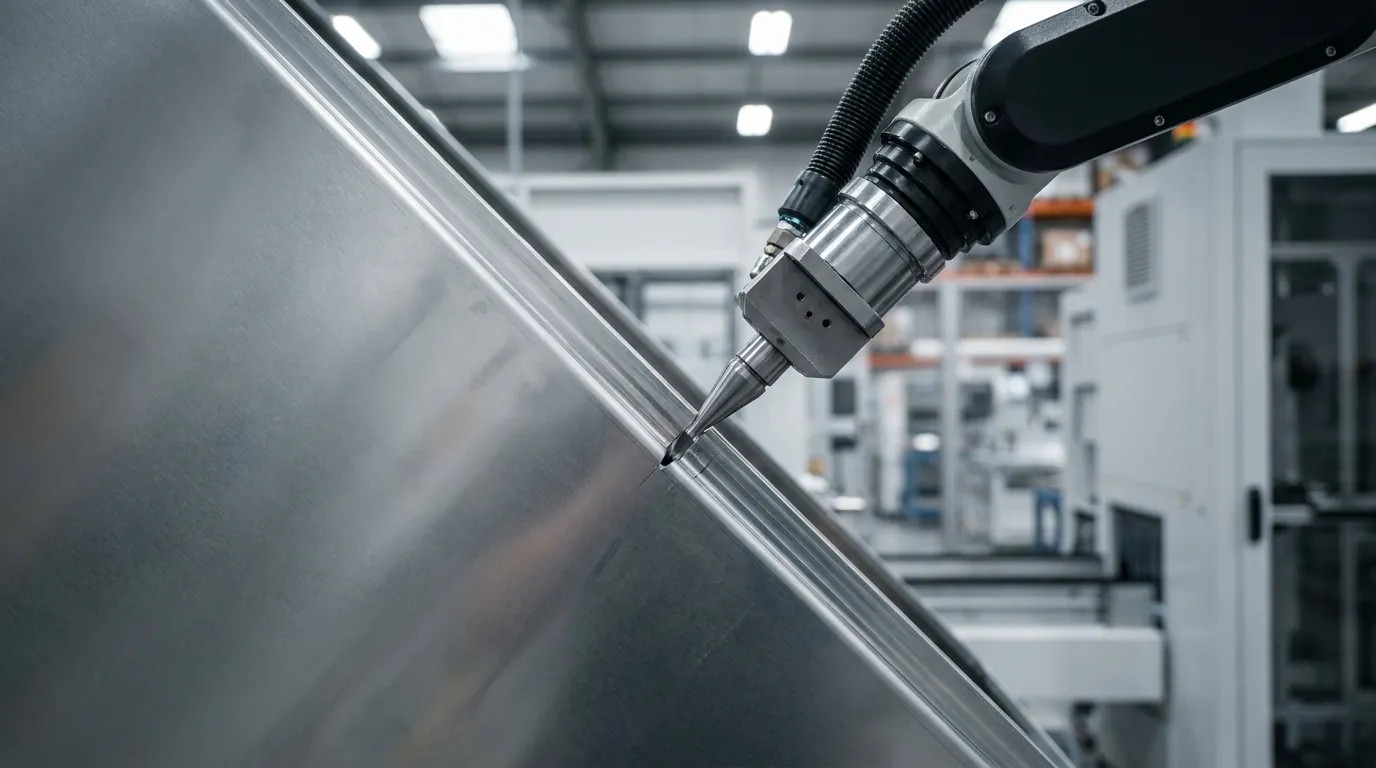
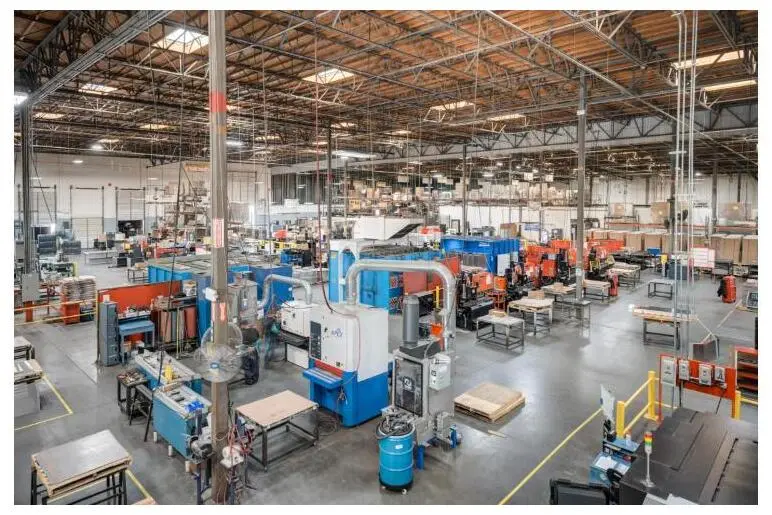
Custom Fabricated Enclosure Manufacturers build to print or to design. They handle sheet metal fabrication, finishing and electromechanical assembly for nonstandard sizes, seismic-rated enclosures, outdoor and weatherproof cabinets and integrated power or cooling assemblies. This category serves programs that OEMs cannot support without high minimums or long custom-product onboarding. Fabcon operates in this category as an integrated custom fabrication partner, combining precision sheet metal fabrication, CNC machining, finishing and light electromechanical assembly under one roof in Santa Ana, California.
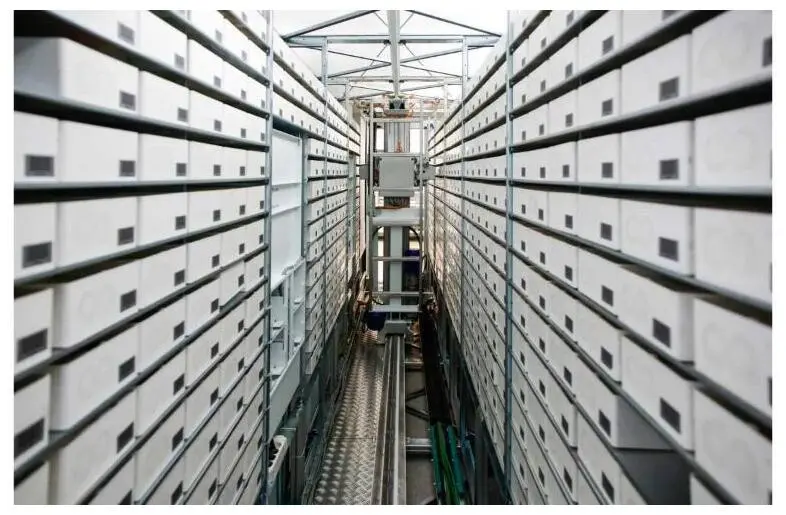
Modular Or Prefab Room Providers deliver containerized or skid-mounted data center rooms and often integrate power and cooling at the room level. Prefabricated modular data centers compress physical construction to four to six months by completing build and test work in factory conditions before shipping to site. This compares with 18 to 24 months for traditional construction.
Standard Cabinets And Custom Fabricated Enclosures
With the three manufacturer categories in mind, the next decision concerns whether a standard cabinet or a custom fabricated enclosure fits the program.
Standard 19-inch cabinets fit high-volume, standardized colocation and enterprise deployments where catalog availability, ecosystem compatibility and broad accessory support matter most. When the bill of materials is stable, power density stays within standard ranges and the deployment environment is controlled, OEM catalog products provide an efficient choice.
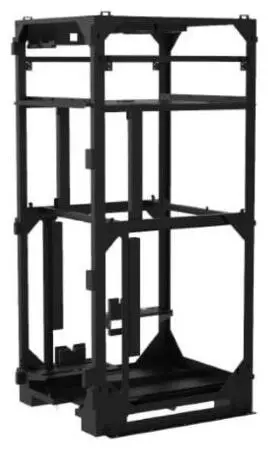
Custom fabricated enclosures fit programs with nonstandard dimensions, seismic-rated installations, outdoor or weatherproof deployments that require NEMA ratings, integrated electromechanical assemblies or enclosures that must match a specific cooling or cable-management architecture. For AI workloads, structural capacity, airflow management and liquid-cooling interfaces become key enclosure selection criteria that standard catalog products rarely address.
Custom fabrication also supports more than one-off projects. Mid-volume programs with evolving bills of materials often need a fabrication partner that can scale from prototype through production while accommodating engineering changes without the high minimums and rigid onboarding that characterize large global contract manufacturers. Fabcon agile production cells support this model and serve programs from NPI through sustained production runs.
Request a quote for a custom enclosure program.
Seismic And Cooling Requirements For Data Center Enclosures
Seismic Qualification
Seismic-rated enclosures are designed and tested to resist lateral forces generated by earthquakes without structural failure or equipment damage. They matter in earthquake-prone regions and in mission-critical facilities classified as essential facilities under building codes.
Data centers are classified as Risk Category IV essential facilities under IBC 2024 Table 1604.5, triggering an importance factor of Ip = 1.5, which means anchored equipment must resist 50 percent more seismic force than the same equipment in a standard commercial building. ASCE 7-22 Chapter 13 governs seismic design of nonstructural components, including server racks and enclosures. Even factory-rated cabinets still require project-specific PE-stamped anchorage calculations because shake-table certification covers the equipment itself but does not design the connections fastening it to the building floor.
When evaluating a manufacturer for seismic-rated enclosures, request shake-table test reports, the applicable seismic zone or IBC seismic design category covered, engineering calculations and compliance documentation. Telcordia GR-63-CORE Zone 4 is the highest seismic testing level in the NEBS framework and applies to carrier-grade and mission-critical environments. Confirm whether the documentation covers the specific seismic design category of the project site.
Thermal And Cooling Integration
ASHRAE TC 9.9 2026 Thermal Guidelines recommend direct-to-chip liquid cooling above 20 kW per rack. Enclosure design directly affects cooling efficiency at higher power densities. Evaluate whether a manufacturer can integrate rear-door heat exchanger provisions, liquid cooling manifold routing and airflow containment features into the enclosure structure. Cooling and power components must fit precisely within the enclosure, which favors manufacturers that control fabrication, finishing and assembly under one roof.
Materials And Finishes
Common enclosure materials include cold-rolled steel, stainless steel and aluminum. Each material fits different environmental and structural requirements. Finishes such as powder coat and wet paint affect corrosion resistance, cosmetic standards and long-term durability. Evaluate materials and processes against the deployment environment, such as indoor controlled, outdoor weatherproof or corrosive, rather than relying on catalog descriptions alone.
Certifications And Traceability
Key certifications to request from a data center enclosure manufacturer include:
- ISO 9001:2015: Signals a documented quality management system with controlled records. ISO 9001 clause 8.5.2 requires manufacturers to control the unique identification of outputs and maintain associated records where traceability is required. The certificate alone does not confirm deep component genealogy, so buyers should verify traceability depth through documentation review and audit.
- AS9100D: Adds aerospace-grade quality requirements including deeper traceability, configuration management and risk management, which support mission-critical enclosure programs.
- UL And CSA: Confirm compliance with North American electrical safety standards applicable to enclosures that house power distribution equipment.
- ITAR Registration: Required for programs that involve defense-related content or controlled technical data.
Fabcon holds ISO 9001:2015 and AS9100D certifications and is ITAR registered, with integrated quality assurance that spans fabrication, finishing and assembly.
OEM And Custom Fabrication Partner Supply Chain Trade-Offs
Applying the evaluation framework to supply chain decisions highlights clear trade-offs between OEMs and custom fabrication partners.
The OEM model offers catalog products, broad ecosystem compatibility and scale. Standard cabinets ship from inventory with established accessory ecosystems. The trade-off involves limited flexibility for nonstandard requirements and high minimum volumes or long onboarding timelines for custom work. Regional fabricators carve out niches with faster custom enclosure builds compared with global vendor lead times of roughly one month, which reflects the structural difference between catalog and build-to-order models.
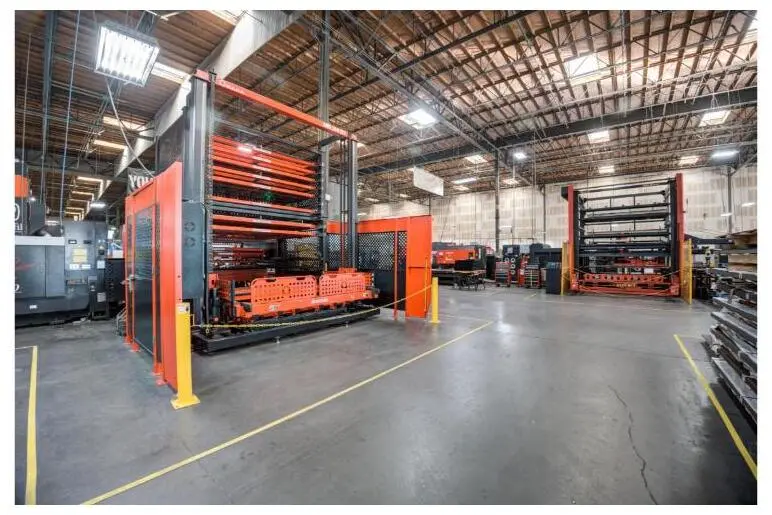
The custom fabrication model supports build-to-print and design-for-manufacturability collaboration. An integrated fabrication partner consolidates sheet metal fabrication, finishing and electromechanical assembly under one roof. This structure eliminates many handoff delays and quality disputes that arise when metal fabrication, coating, wiring and assembly are split across multiple vendors. A fragmented supply chain creates delay, dimensional variation and miscommunication at every handoff. One vendor cuts, another forms, a third handles finishing and someone else does assembly, which increases coordination cost.
The modular or prefab model delivers room-level integration and faster site deployment. The trade-off involves less granular control over individual enclosure specifications, which matters when cooling architecture, seismic requirements or electromechanical integration must be precisely specified at the enclosure level.
A custom fabrication partner addresses several procurement concerns at once. Reducing vendor count eliminates handoff risk between fabrication and assembly suppliers, which improves lead-time reliability and lowers total cost of ownership. Total cost of ownership for enclosure sourcing includes product, customization, tooling, rework and logistics. A lower unit price can become more expensive when the buyer team must modify parts, correct quality issues or manage multiple vendor relationships after delivery.
High-Density And AI-Era Enclosure Requirements
AI and high-density computing are reshaping enclosure specifications. Average rack density jumped 69 percent year-over-year to 27 kW in 2026, with projections of 45 to 100 kW per rack by 2027. At those densities, enclosure design becomes a thermal management and power delivery decision.
Above roughly 30 to 40 kW per rack, airflow alone struggles to carry the thermal output of dense GPU racks, which makes direct-to-chip liquid cooling or rear-door heat exchangers necessary considerations for enclosure design. Liquid cooling is now a baseline requirement for high-density AI systems, and the industry conversation has shifted from adoption to standardization.
Cable management and integration complexity also increase with rack density. Power delivery components, cooling manifolds and cable pathways must fit precisely within the enclosure structure. This integration complexity favors manufacturers that control fabrication, finishing and electromechanical assembly in-house. Misalignment between the metal structure and integrated components cannot be resolved easily when parts move between separate vendors.
Fabcon integrated capabilities include precision sheet metal fabrication, CNC machining, finishing and light electromechanical assembly. Programs that need cooling provisions, power integration and precise structural geometry built into the enclosure from the start benefit from a single accountable partner rather than a fragmented vendor base.
Request a quote for liquid-cooling-ready and high-density enclosure programs.
US Data Center Enclosure Manufacturers And Domestic Advantages
Domestic sourcing for data center enclosures improves supply chain visibility, logistics risk management, IP protection and responsiveness to engineering changes.
North America had 66 GW of data center capacity under construction in H1 2026, with 95 percent already precommitted. New builds are shifting toward the Midwest and South, with Indiana, Illinois, Michigan and North Carolina each reporting cumulative 2026 data center starts of $10 billion or more. Three-quarters of all planned US data centers will be built in the South and Midwest, which creates sustained demand for enclosure manufacturing capacity that can serve these regions reliably.
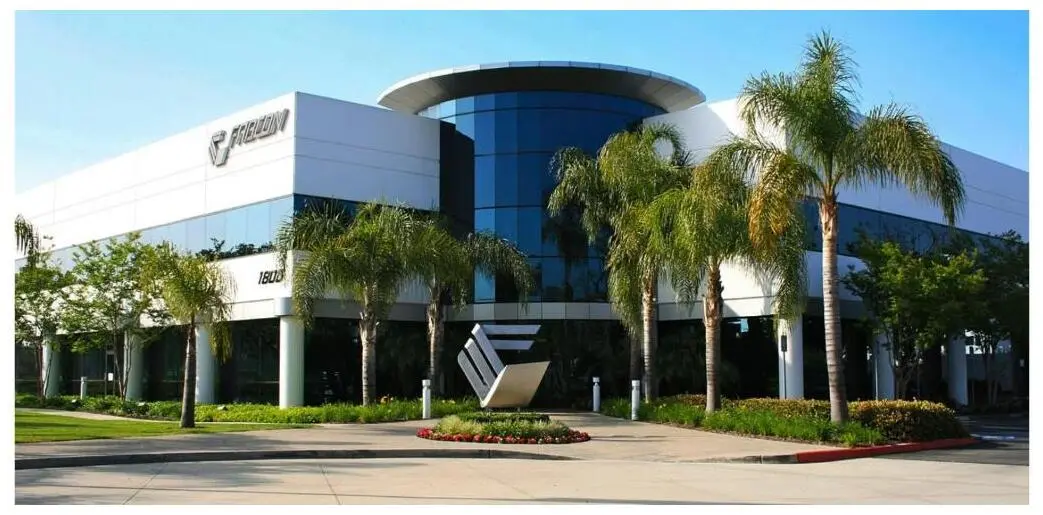
This demand for domestic capacity makes Fabcon US operations relevant. Fabcon is US-based, founded in 1977 and operates 220,000 square feet of vertically integrated manufacturing space across two US locations, including a Southern California facility in Santa Ana. Domestic fabrication supports faster iteration during prototype and NPI phases because engineering conversations and first-article reviews stay within domestic freight networks and time zones. When a drawing changes mid-program, a domestic partner can respond within the same business cycle instead of waiting on overseas production queues.
IP protection also matters for programs that involve proprietary enclosure designs or controlled technical data. Domestic manufacturing under ITAR registration provides a documented chain of custody that supports these requirements.
Building A Shortlist With A Step-By-Step Framework
A repeatable shortlisting process for data center enclosure manufacturers follows these steps:
- Define Enclosure Requirements: Standard or custom, seismic design category, cooling integration needs, NEMA rating, certifications required and traceability depth.
- Categorize The Manufacturer Type Needed: Standard cabinet OEM, custom fabricated enclosure manufacturer or modular or prefab room provider, or a combination.
- Apply The Six-Dimension Evaluation Framework: Technical capabilities, integration scope, quality and compliance, scalability and flexibility, supply chain and logistics and total cost versus total value.
- Request Documentation: Seismic test reports, certification certificates, quality system documentation, traceability procedures and sample first-article inspection records.
- Conduct Site Visits Or Audits: Verify manufacturing footprint, in-house capabilities and quality system maturity before committing to a production program.
Fabcon is the integrated custom fabrication option for mid-volume, high-mix data center enclosure programs. One partner handles fabrication, finishing and assembly with ISO 9001:2015 and AS9100D certified quality systems. The enclosure decision is a supply-chain decision that affects lead-time reliability, quality accountability and total program cost.
Get a quote and start the shortlisting conversation with Fabcon.
Frequently Asked Questions
Who Builds Data Center Racks And Enclosures?
Three categories of manufacturers build data center racks and enclosures. Standard cabinet OEMs such as Schneider Electric/APC, Vertiv, Rittal, nVent, Eaton and Chatsworth Products produce catalog 19-inch cabinets and containment systems for standardized deployments. Custom fabricated enclosure manufacturers build nonstandard, seismic-rated, outdoor or cooling-integrated enclosures to print or to design and handle fabrication, finishing and electromechanical assembly. Modular or prefab room providers deliver containerized or skid-mounted data center rooms that integrate power and cooling at the room level. Many programs combine these categories within a single deployment.
Who Are Some Manufacturers Of Containerized Data Centers?
Containerized and modular data center rooms come from providers that deliver skid-mounted or prefabricated facilities integrating power, cooling and enclosure infrastructure at the room level. These providers differ from standard cabinet OEMs and custom enclosure fabricators because their scope covers the entire data center room rather than individual racks or cabinets. Buyers evaluating containerized solutions should assess integration depth, cooling architecture, power distribution and the degree to which individual enclosure specifications can be customized within the modular room design.
What Is The Difference Between A Standard Cabinet And A Custom Fabricated Enclosure?
A standard cabinet is a catalog product built to a fixed specification, typically a 19-inch EIA rack in standard heights and depths, available from inventory with established accessory ecosystems. A custom fabricated enclosure is built to a buyer design or print and accommodates nonstandard dimensions, seismic-rated structures, outdoor weatherproof requirements, integrated cooling provisions or electromechanical assembly that catalog products cannot support. Custom fabrication also supports mid-volume programs with evolving bills of materials that require a fabrication partner able to scale from prototype through production while accommodating engineering changes.
What Certifications Should Procurement Teams Request From A Data Center Enclosure Manufacturer?
ISO 9001:2015 signals a documented quality management system with controlled records and an auditable traceability structure. The certificate alone does not confirm deep component genealogy, so buyers should verify traceability depth through documentation review. AS9100D adds aerospace-grade quality requirements including deeper traceability and configuration management, which support mission-critical programs. UL and CSA certifications confirm compliance with North American electrical safety standards. ITAR registration is required for programs that involve defense-related content or controlled technical data. The weight given to each certification should match the program risk profile and regulatory environment.
How Do Seismic Ratings Affect Enclosure Selection?
Seismic ratings determine whether an enclosure can structurally survive and remain functional during an earthquake. Data centers are classified as Risk Category IV essential facilities under IBC 2024, which triggers a higher seismic importance factor that requires enclosures and their anchorage to resist greater lateral forces than standard commercial equipment. The PE-stamped anchorage requirement noted earlier still applies, even when the enclosure carries factory shake-table certifications. Buyers should request test reports, applicable seismic zone coverage and engineering documentation from any manufacturer that supplies seismic-rated enclosures.
How Is Liquid-Cooling Readiness Changing Enclosure Design?
Rising rack power densities make liquid-cooling readiness a baseline enclosure requirement for high-density AI deployments. ASHRAE TC 9.9 2026 Thermal Guidelines recommend direct-to-chip liquid cooling above 20 kW per rack. Enclosure design must accommodate rear-door heat exchanger provisions, liquid cooling manifold routing and precise structural geometry that allows cooling and power components to fit without modification. This integration complexity favors manufacturers that control fabrication, finishing and assembly under one roof because misalignment between the metal structure and integrated components becomes difficult to correct across multiple vendors.
When Should Procurement Teams Choose A Custom Fabrication Partner Over A Global OEM?
A custom fabrication partner fits programs that involve nonstandard enclosure dimensions, seismic-rated installations, outdoor or weatherproof deployments, integrated electromechanical assemblies or cooling architectures that catalog products cannot accommodate. A custom partner also fits mid-volume programs with evolving bills of materials because global OEMs typically require high minimums and long onboarding for custom work that does not match standard product lines. Programs that need prototype-to-production alignment, DFM collaboration and a single accountable partner for fabrication, finishing and assembly benefit from a custom fabrication partner instead of a fragmented vendor base.
How Does Vendor Consolidation Reduce Supply Chain Risk For Enclosure Programs?
Fragmented enclosure supply chains, where separate vendors handle metal fabrication, coating, wiring and assembly, create handoff delays and quality disputes and leave no single accountable partner when problems arise. Each handoff between vendors introduces dimensional variation risk, scheduling dependency and coordination overhead that the buyer team must absorb. Consolidating fabrication, finishing and electromechanical assembly under one roof eliminates those handoffs, compresses production cycles and places quality accountability with a single partner. For programs with tight schedules or evolving designs, vendor consolidation also reduces the risk of engineering changes getting lost or misapplied across multiple supplier relationships.
Conclusion And Next Steps
Sourcing data center enclosures is a supply-chain decision that affects lead-time reliability, quality accountability and total program cost. The three manufacturer categories, standard cabinet OEMs, custom fabricated enclosure manufacturers and modular or prefab room providers, serve distinct deployment requirements, volume profiles and integration scopes. Applying the six-dimension evaluation framework across technical capabilities, integration scope, quality and compliance, scalability, supply chain and total cost versus total value gives procurement teams a defensible basis for shortlisting and vendor selection.
Recommended next steps include conducting an internal requirements assessment to distinguish standard from custom enclosure needs, preparing documentation requests that cover seismic test reports, certifications and traceability procedures, scheduling site visits or audits with shortlisted manufacturers and consulting applicable industry standards including IBC 2024, ASCE 7-22 and ASHRAE TC 9.9 thermal guidelines.
Fabcon is the integrated custom fabrication partner for data center enclosure programs that need precision sheet metal fabrication, finishing and electromechanical assembly under one roof, with ISO 9001:2015 and AS9100D certified quality systems, ITAR registration and a US manufacturing footprint built for mid-volume, high-mix programs.
Connect with our engineering and quoting team.